
Biofilter media for RAS: when more surface area is not better
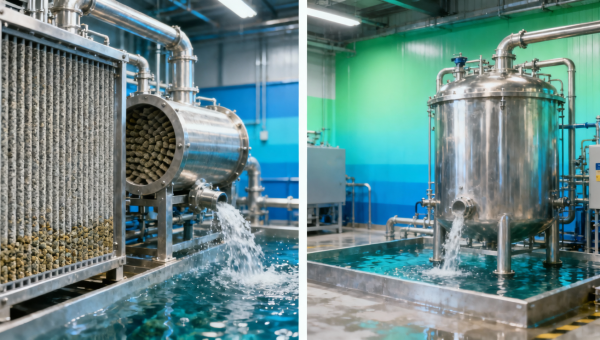
In recirculating aquaculture systems, choosing biofilter media for RAS is not simply a race for maximum surface area. For operators, engineers, and buyers comparing aquaculture drum filters, commercial protein skimmers, surge wave aerator options, and automatic fish feeder commercial setups, real performance depends on oxygen transfer, solids control, and system stability. This article explains when more media becomes less efficient—and how to evaluate smarter design for reliable fish and shrimp production.
Why more biofilter surface area can reduce RAS performance
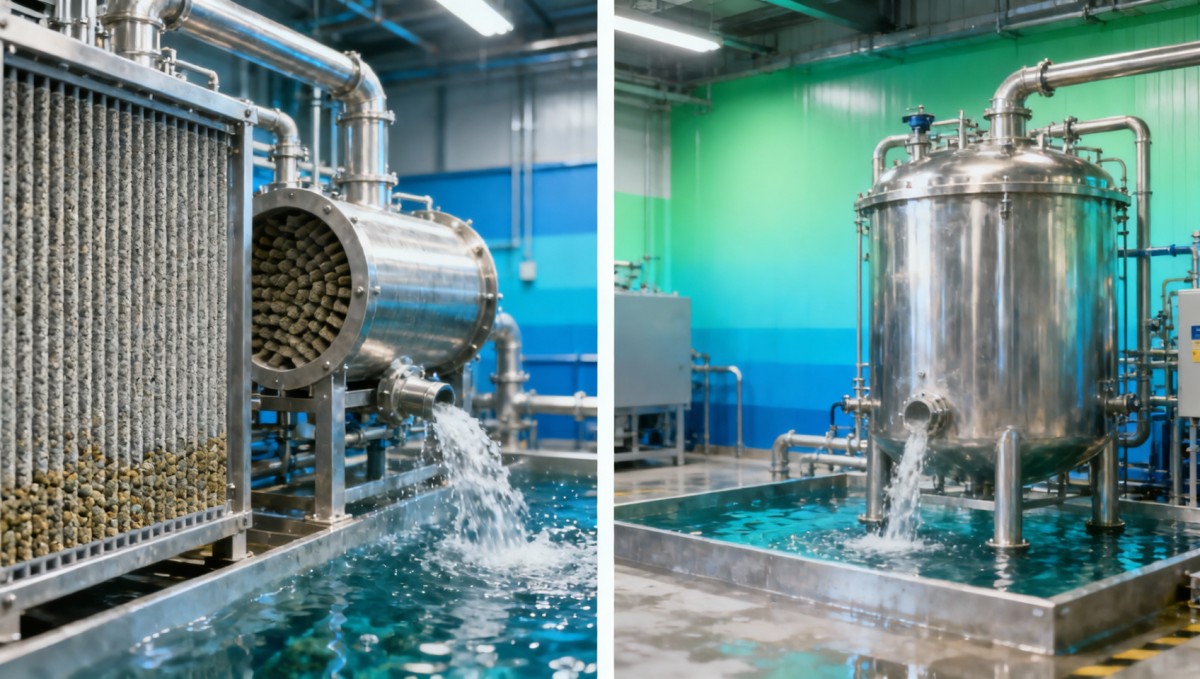
In many procurement discussions, biofilter media for RAS is marketed by quoting the highest possible specific surface area. That sounds logical because nitrifying bacteria need attachment area. Yet in commercial operation, the useful area is not the same as the theoretical area. If water distribution is uneven, solids loading is high, or dissolved oxygen falls below the working range, a large share of that area stops contributing to stable nitrification.
This matters to several stakeholders at once. Operators care about ammonia control during 24-hour recirculation. Technical evaluators want predictable head loss, cleaning intervals, and oxygen availability. Procurement teams need to compare media claims across suppliers without overpaying for numbers that look impressive on paper but deliver weak system resilience in practice.
A common failure pattern appears when fine solids accumulate inside tightly packed media. Instead of acting as an efficient biological reactor, the bed starts behaving like an unintended solids trap. That raises maintenance frequency from occasional checks to weekly intervention in some systems, and it can create anaerobic pockets that interfere with nitrification and overall water quality control.
In warm-water fish and shrimp production, where feeding intensity can rise over 2–4 growth phases, the biological load changes quickly. The better question is not “Which media has the highest area?” but “Which media keeps active area accessible under actual loading, aeration, and cleaning conditions?” That question aligns better with production uptime, survival rate, and feed conversion management.
The difference between theoretical area and effective area
Theoretical surface area is usually measured under ideal conditions. Effective area is the portion that remains wet, oxygenated, and biologically active during continuous farm operation. In RAS, these two values can diverge sharply when suspended solids are not adequately removed before the biofilter or when flow paths create channeling through only part of the bed.
For this reason, biofilter media for RAS should be evaluated together with upstream and downstream equipment. A drum filter that removes a large fraction of settleable and fine solids, a commercial protein skimmer that lowers dissolved organics, and properly matched aeration all help preserve active biofilm function. Media performance is therefore inseparable from the rest of the treatment train.
Three operational signals that surface area is being overvalued
- Ammonia and nitrite instability appears after feeding increases, even though the installed media volume seems oversized on the data sheet.
- Cleaning intervals shorten to every 7–14 days because solids accumulate faster than the bed can stay biologically open.
- Aeration demand rises noticeably, indicating oxygen transfer limits rather than bacterial attachment area are becoming the real bottleneck.
What operators and buyers should compare instead of headline numbers
For practical selection, buyers should compare at least 5 dimensions: protected area accessibility, clogging tendency, oxygen transfer compatibility, media movement or backwash behavior, and solids tolerance. These dimensions help determine whether biofilter media for RAS will remain productive across startup, peak feeding, and seasonal operating changes rather than only under laboratory assumptions.
Technical teams should also review hydraulic residence time and system turnover. A media option that performs well in a lightly loaded nursery loop may underperform in a high-density grow-out line. In many farms, design decisions made during the first 2–3 weeks of planning affect not just water quality but pump sizing, blower energy use, and tank-side management for years.
The table below summarizes how common evaluation criteria should be interpreted in a commercial aquaculture context. It is intended for engineers, procurement managers, and project owners who need a decision framework that goes beyond brochure language.
The key takeaway is that media selection is a system decision, not a single-component decision. A lower quoted surface area may outperform a denser alternative if it stays cleaner, receives better oxygen exposure, and avoids hydraulic dead zones. For project managers and financial approvers, that can mean fewer unplanned interventions and more stable production economics over a 12-month operating cycle.
AgriChem Chronicle regularly analyzes equipment choices in exactly this way: by connecting aquaculture biology, mechanical design, and procurement risk. That perspective is valuable when buyers must compare biofilter media for RAS alongside drum filtration, foam fractionation, aeration hardware, and feeding automation rather than in isolation.
Four checks before you approve a media specification
- Confirm the expected solids removal performance upstream, especially from the aquaculture drum filter.
- Estimate oxygen demand during peak feeding, not only during startup biomass conditions.
- Review cleaning frequency, labor needs, and whether shutdown is required during service.
- Check compatibility with future expansion if stocking density increases in 6–18 months.
How biofilter media interacts with drum filters, skimmers, aerators, and feeders
Biofilter media for RAS never works alone. If an aquaculture drum filter is undersized, fine solids pass downstream and occupy media void space. If a commercial protein skimmer is omitted where dissolved organics are high, foamable compounds and fines can increase fouling pressure. If surge wave aerator selection is weak, oxygen becomes the production limit even when media volume appears generous.
Automatic fish feeder commercial systems also influence biological demand. More precise feeding can improve feed conversion and reduce wasted feed, but it can also create sharper hourly loading peaks. Biofilters and aeration must be designed for these peaks, not just average daily feed input. In high-intensity loops, even a 10%–15% rise in effective feeding can expose hidden weaknesses in media choice and solids handling.
For this reason, integrated engineering matters more than isolated component pricing. A buyer may save on media cost yet lose much more through oxygen inefficiency, blower oversizing, or cleaning downtime. Technical assessment should therefore model at least 3 linked flows: solids flow, oxygen flow, and nitrogen conversion flow across the entire water treatment sequence.
The comparison below helps teams understand where system bottlenecks usually develop. It is especially useful for distributors, EPC-style project leaders, and farm owners assessing upgrades rather than greenfield installations.
This comparison shows why a balanced RAS often outperforms a media-heavy design. When each component is matched properly, media can operate closer to its effective capacity. When upstream or support equipment is weak, installing more media often treats the symptom, not the cause. That distinction is critical for quality managers and safety teams monitoring fish health, water clarity, and treatment consistency.
Application scenarios where “more media” often fails
High-solids warm-water systems
In shrimp or intensive warm-water fish systems, solids generation can be high relative to flow volume. If pre-filtration is marginal, densely structured media can foul faster than expected. In such cases, improved solids capture and manageable media geometry often outperform a simple increase in packed volume.
Retrofit projects with limited blower capacity
Older facilities sometimes add biofilter media for RAS without upgrading aeration. The result is predictable: oxygen transfer cannot support the larger bacterial mass, and the system gains little usable treatment capacity. Retrofit planning should include blower review, hydraulic checks, and maintenance access evaluation within the same 4-step engineering scope.
Procurement guide: how to select media for stable fish and shrimp production
A strong procurement process starts with production goals, not supplier claims. Define species, target biomass, feeding regime, water temperature range, and expected expansion path. For many projects, a practical review window is 12–24 months because loading conditions often change after the initial commissioning phase. Biofilter media for RAS should be selected for that trajectory, not just the first stocking cycle.
Procurement and finance teams should ask for more than a quotation. They should request media geometry data, recommended pretreatment conditions, cleaning method, expected service support, and any installation limitations. This reduces change-order risk later, especially when several vendors are supplying interdependent equipment.
For technical due diligence, the following selection matrix is useful during bid comparison. It does not assume one media type is always superior. Instead, it highlights the conditions under which a choice becomes more or less suitable.
For compliance-minded buyers, remember that commercial aquaculture systems may also need to align with environmental permitting, discharge expectations, and site-specific operational protocols. While media itself may not carry the same certification profile as a chemical input, the complete RAS design should still support documented process control, water quality traceability, and consistent operating procedures.
This is where an editorial and technical intelligence partner adds value. AgriChem Chronicle helps institutional buyers and project stakeholders interpret claims across machinery, biochemical processes, and regulated supply chains. The goal is to shorten evaluation time, reduce specification blind spots, and improve confidence before capital is committed.
A practical 6-point checklist for RFQ review
- State the target species, stocking density range, and expected feed load profile clearly in the RFQ.
- Ask how the proposed biofilter media for RAS behaves under residual solids rather than only under clean-water assumptions.
- Request aeration and oxygen demand assumptions used in the supplier’s sizing method.
- Clarify startup support, commissioning guidance, and operator training requirements.
- Check whether spare parts, replacement media, and logistics lead times fit your operational risk tolerance.
- Review whether the proposal supports future integration with skimmers, feeders, sensors, and control upgrades.
Common misconceptions, FAQ, and what to ask before moving forward
Decision-makers often inherit simplified assumptions from product catalogs or early design meetings. The most common one is that more media automatically means more safety margin. In reality, the usable margin depends on how the entire RAS handles solids, oxygen, and flow distribution over time. Understanding this can prevent expensive overdesign and disappointing performance after installation.
The following FAQ addresses questions that appear frequently during technical research, procurement reviews, and project approval discussions. These answers are intentionally practical so that operators, distributors, and engineering teams can convert them into actionable specification checks.
How do I know whether a biofilter is limited by surface area or oxygen?
Look at performance during peak feeding periods, not only average conditions. If ammonia control worsens when feeding rises but the media bed is already heavily fouled or dissolved oxygen trends downward, oxygen transfer and solids control may be the real limits. In many systems, the answer becomes clear after reviewing 2–4 weeks of water quality and maintenance records together.
Is high surface area media always bad?
No. High surface area media can work well when pretreatment is strong, flow distribution is controlled, and aeration is well matched. The issue is not the number itself but whether that area remains accessible and oxygenated. In clean, well-engineered loops, higher area can be beneficial. In dirtier or retrofit environments, it may become harder to use effectively.
What should procurement teams ask about delivery and implementation?
Ask for standard lead time ranges, installation sequence requirements, and commissioning dependencies. On complex projects, delivery of media, aeration equipment, controls, and upstream filtration should be synchronized within a realistic 2–8 week coordination window, depending on project scope and import conditions. Misalignment here can delay startup more than the media choice itself.
What is the most overlooked risk in biofilter media for RAS selection?
The most overlooked risk is treating media selection as separate from solids management. A biofilter is biological, but many failures start as mechanical or hydraulic problems. If the aquaculture drum filter, skimmer, or aeration package is not sized and operated coherently, the media cannot deliver its intended value.
Why choose us for technical intelligence and next-step planning
AgriChem Chronicle supports institutional buyers, engineering teams, and industrial aquaculture stakeholders with decision-ready analysis that connects equipment selection, process reliability, and supply chain transparency. Our coverage spans aquaculture and fishery technology alongside regulated industrial sectors, which helps readers compare technical claims with a more disciplined procurement lens.
If you are reviewing biofilter media for RAS, we can help structure the conversation around the questions that actually affect outcomes: effective area versus advertised area, compatibility with aquaculture drum filters and commercial protein skimmers, aeration matching, maintenance intervals, and expansion planning. That is especially useful when multiple departments must align before budget approval.
Contact us if you need support with parameter confirmation, media selection logic, comparative vendor review, expected delivery coordination, certification and compliance context, or a clearer shortlist for fish or shrimp RAS upgrades. We also help clarify what documentation to request before quotation review, including pretreatment assumptions, implementation sequence, and risk points for retrofit projects.
For manufacturers, OEMs, and solution providers seeking stronger visibility among global institutional buyers, ACC also offers an authoritative publishing environment for validated technical capabilities, whitepaper-driven communication, and market-facing thought leadership. The result is more informed engagement with decision-makers who care about measurable process fit, not just product claims.
Related Intelligence
- RAS SystemsIndia Removes Import Tariff on RAS Systems for AquacultureIndia removes import tariffs on RAS systems for aquaculture—unlocking $170M+ equipment demand. Key opportunity for exporters, technical documentation & after-sales providers.
- RAS SystemsLFP Battery Recycling Enters Deep Water: RAS & Feed Pellet Firms Tap Regenerated PhosphateLFP Battery Recycling breakthrough: Regenerated phosphate now powers RAS systems & feed pellets—EU/US-compliant, 20% cheaper, live since April 2026.
- RAS SystemsIntel Launches World’s Thinnest GaN Chip, Boosts RAS Power ModulesIntel's world’s thinnest GaN chip (19μm) boosts RAS power modules—40% smaller, 22% more efficient. Key for aquaculture exporters, equipment makers & supply chain partners.
The Morning Broadsheet
Daily chemical briefings, market shifts, and peer-reviewed summaries delivered to your terminal.
