
When commercial protein skimmers are oversized for the system
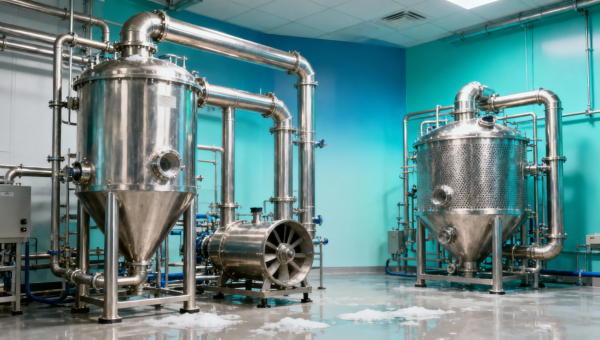
When commercial protein skimmers are oversized for the system, operators may face unstable foam fractionation, wasted energy, and disrupted water quality across recirculating aquaculture systems. For buyers and technical teams comparing aquaculture drum filters, biofilter media for RAS, surge wave aerator setups, or automatic fish feeder commercial solutions, understanding correct skimmer sizing is essential to balancing performance, compliance, and long-term operating cost.
Why an oversized commercial protein skimmer becomes a system problem, not a system upgrade
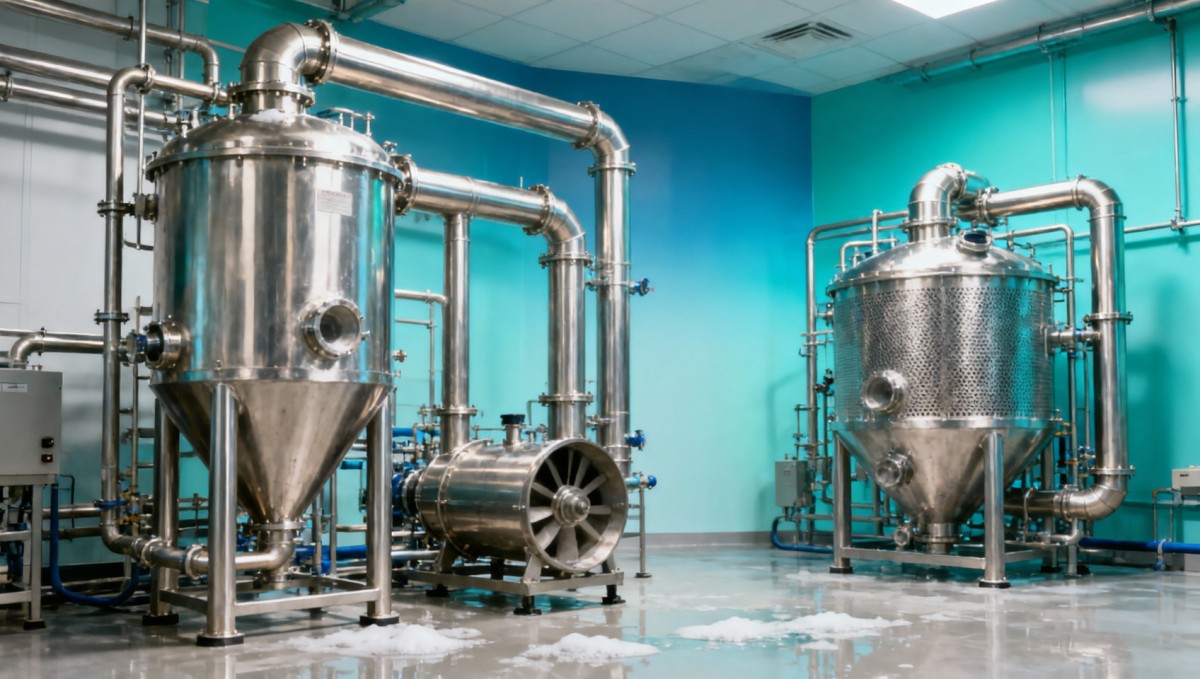
In commercial aquaculture, a larger protein skimmer is often assumed to offer better dissolved organic compound removal. In practice, oversizing can reduce stability. A skimmer designed for a much higher flow or organic loading range than the actual RAS can produce weak, inconsistent foam heads, short contact times, and poor fractionation efficiency during normal operation. This becomes especially visible in hatcheries, nursery systems, and low-biomass phases where feed input can change sharply over 24–72 hours.
The issue is not only technical. It affects procurement, budgeting, maintenance scheduling, and regulatory confidence. Operators may end up running pumps and air injection equipment at higher energy draw than necessary, while water quality managers see unstable removal of proteins, fines, and surfactant-like compounds. For project managers and financial approvers, that means capital expenditure is not translating into predictable operating performance over the typical 12–36 month equipment review cycle.
In integrated aquaculture projects, the skimmer must work with drum filters, oxygenation, biofilter media for RAS, UV or ozone loops, and feeding control. If one component is incorrectly scaled, the rest of the treatment train may appear unreliable even when the root cause is a mismatch in skimmer sizing. This is why technical evaluation teams increasingly review skimmer duty against actual hydraulic load, air-to-water ratio, and solids management strategy rather than relying on headline capacity claims.
AgriChem Chronicle focuses on this decision layer because industrial buyers need more than product descriptions. They need a framework that links equipment sizing to operating reality, compliance expectations, and procurement risk. In heavily regulated supply chains, technical precision at the specification stage helps reduce change orders, startup delays, and water quality nonconformities during commissioning.
What “oversized” usually means in a commercial RAS context
A commercial protein skimmer is usually considered oversized when its effective hydraulic and air processing capacity materially exceeds the routine organic load of the system for long periods, not just peak events. A unit selected for emergency headroom may still be justified, but a unit that spends most of its time far below its efficient operating window often struggles to maintain a stable foam column and consistent waste export.
- The system runs at less than roughly 50%–60% of the skimmer’s intended loading range for extended periods.
- Feed input fluctuates by phase, but the skimmer cannot be turndowned effectively to match daily or weekly changes.
- Foam production appears active, yet waste concentration in the collection stream remains dilute and inconsistent.
- The unit requires repeated tuning after cleaning, salinity shifts, or changes in ozone and aeration settings.
How oversizing affects foam fractionation, energy use, and downstream water quality
The first operational symptom is unstable foam fractionation. Protein skimmers depend on contact between air bubbles and dissolved or suspended organics. If flow velocity, dwell time, or air injection is too high for the available waste load, bubbles can pass through without carrying a concentrated waste fraction upward. Operators then see intermittent foam collapse, wet skimmate, and inconsistent neck fouling. In practical terms, the unit looks active but removes less useful waste per kilowatt-hour.
Oversizing also drives avoidable energy demand. A commercial skimmer may include circulation pumps, venturi or aspirating systems, control valves, ozone compatibility features, and washdown functions. Running a large unit at a lightly loaded duty point can mean paying for 5 kW–20 kW auxiliary consumption ranges that are not producing proportional treatment benefit. Across continuous operations, even moderate overspecification can materially affect annual operating budgets, especially where energy tariffs vary by season or demand period.
Water quality impacts can be indirect but serious. If the skimmer removes organics unevenly, the biofilter may receive changing dissolved and particulate loads, making nitrification performance appear erratic. Fine suspended matter can also persist longer, affecting turbidity, fish health observation, and UV transmittance. In systems using ozone, poor skimmer balance may further complicate oxidation control and off-gas management, increasing the burden on safety protocols and operator oversight.
For quality and safety teams, these are not isolated equipment nuisances. They can alter cleaning intervals, sludge handling frequency, alarm thresholds, and maintenance labor planning. A system that needs intervention every few days rather than every 2–4 weeks changes staffing assumptions and raises the probability of avoidable process deviations.
Typical symptoms by operating area
The table below helps technical evaluators connect visible symptoms to likely oversizing-related mechanisms and procurement implications. This is useful when comparing new skimmer offers with drum filter upgrades, biofilter media expansion, or aeration redesign.
The key point is that oversizing rarely presents as a single catastrophic failure. More often, it creates a pattern of instability, diluted waste capture, and elevated operating cost. That pattern is easy to miss if departments review equipment only in isolation rather than as part of the full recirculating aquaculture system.
Three downstream areas that deserve special review
- Mechanical pretreatment: check whether drum filter micron rating and flushing frequency are aligned with what the skimmer is expected to remove.
- Biological treatment: confirm whether biofilter media for RAS is being exposed to avoidable dissolved and fine particulate variability.
- Feeding and biomass phases: compare automatic fish feeder commercial schedules with real organic peaks over daily and weekly cycles.
How buyers and engineers should size a skimmer against the full treatment train
Correct sizing starts with process definition, not catalog capacity. Technical teams should begin with four operating references: system flow, peak and average feed input, target water quality outcomes, and the role of adjacent unit operations. A skimmer sized without reference to drum filtration, oxygen transfer, ozone use, and biofilter media for RAS can easily be oversized even if the nominal system volume appears to justify it.
In procurement reviews, it is useful to separate three design states: startup biomass, routine production biomass, and peak production biomass. Many installations are oversized because equipment is selected only for the highest future load, even though the facility may spend 6–12 months operating well below that condition. If turndown capability, variable-speed pumping, or modular parallel skimmers are not considered, the system can remain inefficient for long stretches of its service life.
Project managers should also ask how the supplier defines capacity. Some offers refer to tank volume, some to circulation flow, and others to feed-based or loading-based assumptions. These are not interchangeable. For institutional buyers and distributors, this is a common source of bid comparison errors because two suppliers may quote similar “system capacity” while assuming very different feed regimes, salinity conditions, or pretreatment quality.
ACC recommends treating skimmer sizing as a cross-functional review item involving operations, engineering, quality, procurement, and finance. This avoids the frequent mistake of approving a large unit based on contingency logic alone, without testing how it will perform at 40%–70% of planned final load during the first commissioning phases.
Practical selection checkpoints for commercial procurement
The following table is designed for B2B aquaculture procurement teams comparing commercial protein skimmers alongside related system components. It helps convert engineering concerns into purchasing criteria that are easier to verify before order placement.
When this evaluation is done early, buyers can compare skimmer proposals on the same basis as aquaculture drum filters, surge wave aerator layouts, and automatic fish feeder commercial integrations. That makes capital decisions more defensible and reduces the risk of discovering mismatch only after installation.
A four-step sizing workflow
- Map average and peak feed input over at least one full production cycle, including low-biomass startup periods.
- Review actual process flow through mechanical filtration, skimming, biofiltration, aeration, and disinfection as one line.
- Check the supplier’s preferred operating window and control range rather than relying on maximum advertised capacity.
- Model operating cost over 12 months, including power, cleaning labor, waste handling, and commissioning adjustments.
Cost, compliance, and implementation: what decision-makers often miss
An oversized commercial protein skimmer can look conservative on paper, yet create hidden cost layers after installation. These include higher power consumption, greater chemical or ozone tuning effort, more diluted waste handling, and avoidable troubleshooting hours during commissioning. For finance teams, the issue is not only purchase price. It is whether the equipment reaches stable operation within the expected startup window of 2–8 weeks without repeated intervention from vendors or internal engineering staff.
Compliance teams should consider how skimmer instability interacts with broader environmental and operational requirements. While specific obligations depend on jurisdiction and facility type, commercial aquaculture systems commonly operate under frameworks influenced by EPA water discharge expectations, workplace safety rules, and documented sanitation procedures. If the skimmer is paired with ozone, off-gas control, material compatibility, and operator protection become more important, not less.
There is also a procurement governance issue. Oversized equipment can complicate acceptance testing because suppliers and buyers may disagree on what successful performance looks like during low-load periods. A better contract approach is to define 3–5 acceptance conditions, such as operating load range, controllability, maintenance access, and interface compatibility with drum filters or automated feeding systems. This reduces ambiguity and supports clearer sign-off.
From a channel perspective, distributors and project integrators benefit when they present the skimmer as part of a balanced water treatment package rather than a stand-alone “bigger is safer” item. That positioning aligns better with how institutional buyers evaluate risk, especially in multi-site aquaculture programs and export-oriented operations with tighter documentation requirements.
Common misconceptions that lead to oversizing
- “Future expansion always justifies a larger skimmer.” Expansion may be valid, but only if control range or modular staging is built into the design.
- “Tank volume alone determines skimmer size.” In reality, feed loading, solids management, salinity, and process flow pattern matter as much as nominal volume.
- “If the skimmer is producing foam, it is performing well.” Foam appearance without concentrated waste export can be misleading.
- “Oversizing is a low-risk way to protect water quality.” In many systems, it shifts risk into instability, energy waste, and operator burden.
FAQ for procurement teams and technical reviewers
How do I know whether a protein skimmer is too large for my RAS?
Look beyond stated system volume. Review average feed input, low-biomass operating phases, controllability, and skimmate concentration. If the unit is expected to run far below its efficient loading range for months at a time, or if stable foam depends on frequent manual tuning, the skimmer may be oversized for the actual commercial duty.
Is modular skimming better than one large skimmer?
In many commercial settings, modular design improves flexibility. Two smaller units or staged parallel trains can match seasonal biomass changes more efficiently than one large unit. This can simplify maintenance planning and provide partial redundancy, though the best choice depends on piping layout, floor space, and service access.
What related equipment should be reviewed at the same time?
At minimum, review aquaculture drum filters, biofilter media for RAS, oxygenation or degassing equipment, surge wave aerator configuration where relevant, and automatic fish feeder commercial schedules. These determine the solids and organic profile reaching the skimmer and strongly affect whether the selected capacity is appropriate.
What delivery and implementation details should buyers ask about?
Ask for typical lead time, installation requirements, commissioning support, spare parts list, and recommended maintenance interval. For imported equipment, also confirm documentation package, material specifications, electrical standards, and any site conditions that may affect startup within the first 7–15 days after installation.
Why informed industrial buyers use ACC before requesting quotations
For complex equipment decisions, the value of market intelligence lies in reducing ambiguity before a quotation stage begins. AgriChem Chronicle serves readers across aquaculture, agricultural processing, and fine chemical supply chains by turning technical questions into procurement-ready evaluation criteria. That matters when equipment selection must satisfy operators, engineers, quality managers, project leads, procurement teams, and financial approvers at the same time.
Our editorial approach is especially relevant for commercial protein skimmer decisions because sizing errors often originate at the interface between disciplines. A system may be mechanically sound, yet poorly matched to organic loading, feeding profile, or compliance strategy. ACC helps decision-makers compare claims, identify practical operating windows, and connect whitepaper-level information with real purchasing questions.
If you are evaluating commercial protein skimmers, aquaculture drum filters, biofilter media for RAS, surge wave aerator options, or automatic fish feeder commercial systems, ACC can help structure the next conversation. You can consult on parameter confirmation, load assumptions, equipment matching, expected lead times, documentation needs, maintenance implications, and quotation scope before entering supplier negotiations.
To move efficiently, prepare 4 core inputs: process flow diagram, target biomass and feed range, available utility conditions, and compliance or documentation requirements. With those details, discussions around product selection, integration strategy, customization, and budget screening become faster, more comparable, and more useful for both technical and commercial stakeholders.
Related Intelligence
- RAS SystemsIndia Removes Import Tariff on RAS Systems for AquacultureIndia removes import tariffs on RAS systems for aquaculture—unlocking $170M+ equipment demand. Key opportunity for exporters, technical documentation & after-sales providers.
- RAS SystemsLFP Battery Recycling Enters Deep Water: RAS & Feed Pellet Firms Tap Regenerated PhosphateLFP Battery Recycling breakthrough: Regenerated phosphate now powers RAS systems & feed pellets—EU/US-compliant, 20% cheaper, live since April 2026.
- RAS SystemsIntel Launches World’s Thinnest GaN Chip, Boosts RAS Power ModulesIntel's world’s thinnest GaN chip (19μm) boosts RAS power modules—40% smaller, 22% more efficient. Key for aquaculture exporters, equipment makers & supply chain partners.
The Morning Broadsheet
Daily chemical briefings, market shifts, and peer-reviewed summaries delivered to your terminal.
