
Aquaculture drum filters: mesh size mistakes that hurt water quality
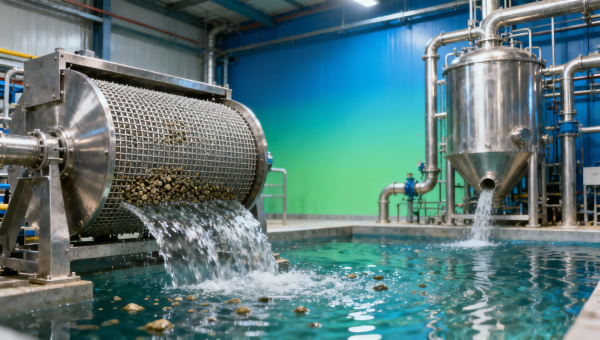
In recirculating aquaculture systems, choosing the wrong mesh for aquaculture drum filters can quietly damage water quality, stress stock, and increase operating costs. For buyers, operators, and technical evaluators comparing biofilter media for RAS, commercial protein skimmers, surge wave aerator setups, and automatic fish feeder commercial options, understanding this common filtration mistake is essential before scaling performance and compliance.
Why mesh size errors in aquaculture drum filters create bigger water quality problems than expected
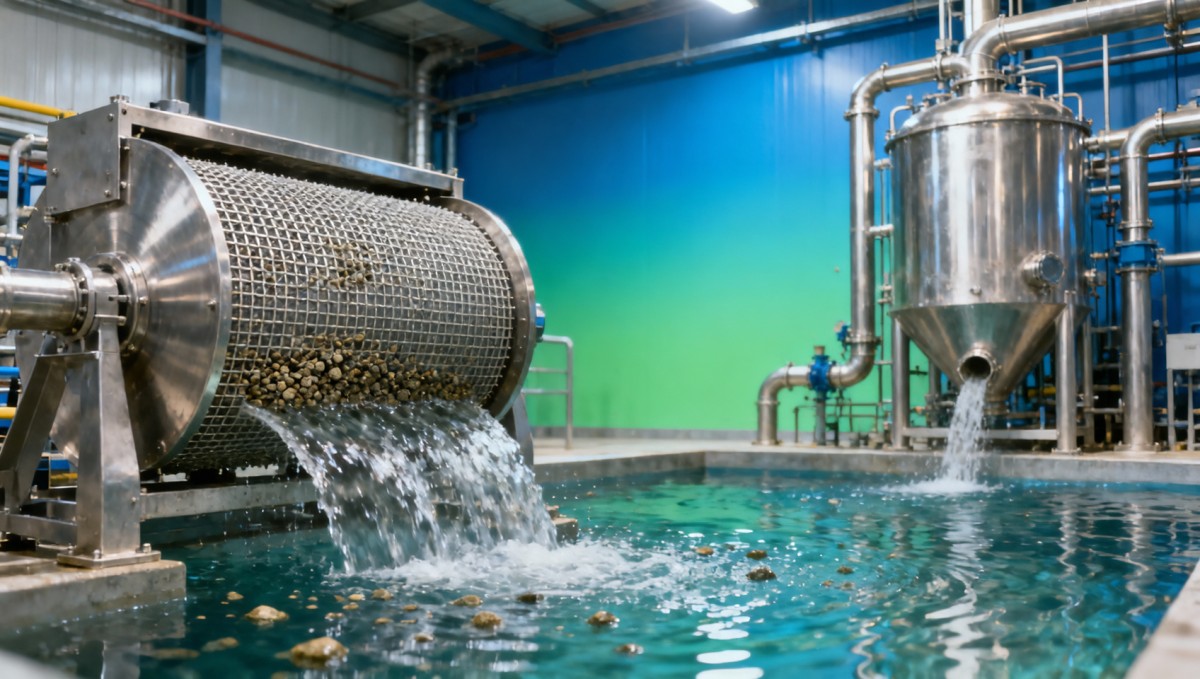
Aquaculture drum filters are often treated as a simple solids removal step, yet mesh size selection directly affects suspended solids loading, dissolved oxygen stability, and downstream treatment efficiency. In most RAS layouts, the drum filter sits ahead of biofilter media for RAS and sometimes before foam fractionation or commercial protein skimmers. A mismatch of only one mesh grade can shift the balance between waste capture and hydraulic performance over 24-hour operation.
The core mistake is assuming that finer mesh always means cleaner water. In practice, a screen that is too fine may blind quickly, trigger more frequent backwash cycles, and reduce effective flow. A screen that is too coarse may let feces, uneaten feed, and flocculated particles pass downstream, raising biochemical oxygen demand and increasing biofilter cleaning pressure within 7–30 days of operation.
For operators, the symptoms usually appear indirectly: more variable turbidity, higher labor for spray nozzles and sludge handling, unstable foam production in commercial protein skimmers, and inconsistent solids capture after feeding peaks. For procurement teams and project managers, the cost shows up later as oversized pumps, excess flushing water, and avoidable replacement of consumables rather than as an obvious initial purchasing error.
This matters across hatcheries, nursery systems, grow-out loops, and mixed-species facilities. In high-density aquaculture, even short periods of weaker mechanical filtration can elevate stress, especially where feed rates are high and tanks rely on tight oxygen and ammonia control. The wrong mesh does not usually fail dramatically; it erodes system reliability in small increments that compound over 2–4 production cycles.
What decision-makers should evaluate first
- Particle profile: feces consistency, feed fines, mucus, and biofloc behavior change the effective capture requirement more than a generic species label.
- Hydraulic loading: flow rate per hour, surge behavior, and peak feeding windows determine whether a fine mesh remains workable or becomes a bottleneck.
- Downstream equipment sensitivity: biofilter media for RAS, UV units, ozone contact chambers, and protein skimmers all respond differently to remaining solids.
- Cleaning regime: spray pressure, backwash frequency, and sludge discharge handling should be reviewed over a 1–2 week operating pattern, not a single day.
How to match mesh size to solids load, flow pattern, and system goals
A practical selection process begins with system intent. If the main goal is protecting biofilter media for RAS from excess solids loading, buyers often prioritize stable capture of medium-sized particles without choking flow. If the goal is tighter water polishing for sensitive life stages, a finer screen may be appropriate, but only if the hydraulic design can absorb increased backwash frequency and head loss. There is no single best mesh for every facility.
Commercial aquaculture systems commonly evaluate drum filter screens in broad ranges such as 20–30 µm, 40–60 µm, and 80–100 µm, but these ranges should not be used blindly. Fine feed programs, fragile fecal structure, salinity, and tank hydraulics can all change what actually reaches the drum. A site processing one particle spectrum in a hatchery may need a different mesh than the same operator uses in a grow-out loop.
The table below summarizes typical decision logic for aquaculture drum filters in relation to water quality control, maintenance load, and downstream equipment protection. These are selection references rather than fixed rules, because final sizing still depends on actual solids characteristics and cleaning water availability.
For many technical evaluators, the best answer is not to choose the finest mesh on paper, but to align mesh size with a 3-part control logic: acceptable suspended solids level, allowable backwash frequency, and downstream equipment tolerance. That approach is more useful than chasing aggressive filtration numbers that later disrupt pump loading, sludge concentration, or routine maintenance schedules.
Three operating questions before finalizing the specification
First, what happens during peak feeding? Systems with 4–8 feeding events per day often show a short solids spike that can overload a fine screen even when average loading appears acceptable. Second, how robust is the backwash package? Spray bar pressure, nozzle cleanliness, and rinse water quality strongly affect real performance. Third, how much residual fine solids can the rest of the treatment train absorb without reducing oxygen transfer, nitrification stability, or skimmer efficiency?
These questions are especially important for buyers comparing aquaculture drum filters with other equipment packages such as automatic fish feeder commercial systems or surge wave aerator layouts. Mechanical filtration does not work in isolation. A mesh specification that looks efficient in a brochure may be weak when connected to real feed density, fish behavior, sludge handling capacity, and daily labor limits.
Where wrong mesh selection disrupts the rest of the RAS process train
When mesh size is too coarse, the first downstream victim is often the biofilter. Fine suspended solids accumulate on biofilter media for RAS, reducing effective surface contact and creating zones with weaker oxygen penetration. Over 2–6 weeks, operators may see more frequent media rinsing, unstable nitrification, or higher energy use for recirculation. The filter screen may seem operational, yet the biology starts carrying a preventable solids burden.
Commercial protein skimmers can also behave differently under poor upstream filtration. If too many solids and organics bypass the drum filter, foam fractionation may become inconsistent. Foam can collapse faster, sludge can become wetter, and skimmer cleaning intervals may shorten. Instead of complementing the drum filter, the skimmer ends up compensating for a mechanical filtration gap it was not designed to solve alone.
Aeration and hydraulic devices feel the impact as well. In systems using a surge wave aerator, particle carryover can change foam formation and dirty contact surfaces, lowering predictable gas exchange performance over time. Likewise, automatic fish feeder commercial programs that increase precision feeding can still fail to improve water quality if drum filters are letting feed fines circulate repeatedly through the loop.
From a quality and compliance standpoint, this matters because water quality instability raises more than production risk. It can complicate internal records, sanitation routines, discharge monitoring, and environmental reporting. Facilities working under stricter customer audits or local environmental permits need a filtration strategy that remains stable not just on commissioning day, but through seasonal biomass changes and maintenance intervals.
Common signs that the mesh is not matched to the system
- Backwash cycles become unusually frequent within the first 3–5 days after cleaning, even though flow demand has not changed materially.
- Water clarity remains inconsistent after feeding, and biofilter maintenance increases despite normal dissolved oxygen control.
- Protein skimmer sludge becomes dilute or unstable, suggesting that particle and dissolved load balance is shifting downstream.
- Operators compensate by increasing flushing, labor time, or emergency cleaning, which raises operating cost without fixing the source issue.
A useful cross-functional review method
Project managers and technical teams should review mesh selection with four stakeholders at the same table: operations, maintenance, water quality, and procurement. In many facilities, each group sees only one piece of the problem. A screen chosen for low capex may increase wash-water consumption. A screen chosen for maximum capture may increase downtime. Cross-functional review shortens the correction cycle and improves total cost visibility before purchase approval.
Procurement guide: what buyers, engineers, and finance teams should compare
For B2B procurement, mesh size should never be quoted as a standalone number. Buyers should compare aquaculture drum filters using a structured matrix that includes screen range, hydraulic capacity, backwash water demand, control logic, spare parts availability, and service response. A slightly lower purchase price may become expensive if replacement screens have long lead times of 4–8 weeks or if nozzle fouling causes unplanned labor every month.
The next table highlights practical selection criteria used by procurement teams and technical evaluators when balancing water quality protection against capex, opex, and implementation risk. It is particularly useful when comparing a new drum filter package with other investments in the same budget cycle, such as biofilter media for RAS upgrades or automatic fish feeder commercial systems.
Finance approvers usually respond best when the selection case is framed around total operating impact over 12–24 months rather than equipment price alone. Mesh-related mistakes can increase water consumption, labor time, sludge disposal volume, and unplanned interventions. In many aquaculture projects, these recurring costs are harder to reverse than the initial purchase decision, especially after piping and control interfaces are already installed.
A practical 5-point buying checklist
- Define the solids profile at current biomass and at projected peak biomass, not only at commissioning load.
- Request mesh change options and ask how long a screen replacement takes in normal maintenance conditions.
- Verify wash-water demand, nozzle service intervals, and control responses during a high-solids event.
- Check how the selected drum filter supports biofilter media for RAS and protein skimmer performance downstream.
- Review spare parts lead time, commissioning support, and operator training requirements before PO approval.
Standards, implementation timing, and common mistakes to avoid
While aquaculture drum filters are not purchased solely by certification label, compliance still matters. Buyers should ask how materials, cleaning procedures, wastewater handling, and electrical controls align with local environmental rules and plant safety practice. In export-oriented or tightly audited operations, recordability of maintenance, sanitation, and performance checks can be almost as important as the mechanical specification itself.
Implementation normally works best in 4 stages: solids characterization, equipment matching, commissioning review, and post-start optimization. For retrofits, a realistic planning cycle may be 2–6 weeks for specification and approval, followed by delivery and integration depending on project complexity. The key is to reserve time for operating verification after startup, because mesh behavior often changes once full feeding levels are restored.
One common mistake is using supplier standard mesh as a default without testing how it interacts with local feed type and fish waste consistency. Another is treating poor water clarity as solely a biofilter or aeration issue when the root cause is mechanical bypass. A third is failing to review wash-water quality; if rinse water carries scaling or debris, even an appropriate mesh may perform badly after a short period.
AgriChem Chronicle addresses these decisions from a broader primary industries and processing perspective. That means the evaluation is not isolated to one component. ACC helps readers compare filtration choices in the context of upstream feeding strategy, downstream water treatment, compliance pressure, and procurement risk, so technical teams and commercial teams can work from the same evidence base.
FAQ for technical evaluators and buyers
How do I know if my drum filter mesh is too fine?
Look for repeated backwash activation, rising head loss, unstable flow, and higher wash-water use within days of normal production. If solids capture improves on paper but labor and hydraulic instability increase, the mesh may be too fine for the actual feed load or spray system capacity.
How do I know if the mesh is too coarse?
The usual clues are persistent turbidity after feeding, heavier solids deposition downstream, and more cleaning demand on biofilter media for RAS or skimmers. If downstream units are carrying avoidable particulate load over 2–3 weeks, the drum filter may be passing too many fines.
Can one mesh size cover all production stages?
Sometimes, but not always. Hatchery, nursery, and grow-out conditions often produce different solids behavior and flow sensitivity. Multi-stage sites often benefit from changeable screens or at least a validated compromise range rather than one fixed mesh specification for every loop.
What should I request during quotation review?
Ask for mesh options, expected wash cycle behavior, water and power demand, spare parts list, operator maintenance points, and integration notes with skimmers, aeration, and controls. If possible, request guidance based on your feed regime, biomass target, and water reuse percentage rather than a generic catalog recommendation.
Why consult ACC when evaluating aquaculture drum filters and related RAS equipment
For institutional buyers, OEM partners, and aquaculture project leaders, the challenge is rarely a lack of product claims. The challenge is connecting mechanical filtration choices to the wider realities of compliance, utility cost, process reliability, and long-term procurement transparency. ACC is built for that decision environment, with editorial coverage spanning aquaculture and fishery technology, agricultural machinery, biochemical processing, and regulated industrial supply chains.
That cross-sector view is useful when a buyer needs more than a component comparison. It supports evaluation of how aquaculture drum filters interact with biofilter media for RAS, commercial protein skimmers, surge wave aerator design, and automatic fish feeder commercial systems within one operating model. This reduces the risk of choosing isolated equipment specifications that look acceptable individually but perform poorly together.
If you are planning a new RAS build, a retrofit, or a distributor line review, ACC can help clarify the questions that matter before commercial negotiation. Typical consultation topics include parameter confirmation, mesh range suitability, integration with downstream treatment, expected delivery windows, maintenance planning, documentation expectations, and how to compare supplier proposals without relying on vague performance language.
Contact ACC if you need support in shortlisting aquaculture drum filters, reviewing product selection logic, mapping specification gaps, or preparing an internal approval case for procurement and finance. The most valuable discussions usually begin with 6 core inputs: system flow rate, target biomass, feed profile, current solids issues, downstream treatment setup, and required implementation timeline.
Related Intelligence
- RAS SystemsIndia Removes Import Tariff on RAS Systems for AquacultureIndia removes import tariffs on RAS systems for aquaculture—unlocking $170M+ equipment demand. Key opportunity for exporters, technical documentation & after-sales providers.
- RAS SystemsLFP Battery Recycling Enters Deep Water: RAS & Feed Pellet Firms Tap Regenerated PhosphateLFP Battery Recycling breakthrough: Regenerated phosphate now powers RAS systems & feed pellets—EU/US-compliant, 20% cheaper, live since April 2026.
- RAS SystemsIntel Launches World’s Thinnest GaN Chip, Boosts RAS Power ModulesIntel's world’s thinnest GaN chip (19μm) boosts RAS power modules—40% smaller, 22% more efficient. Key for aquaculture exporters, equipment makers & supply chain partners.
The Morning Broadsheet
Daily chemical briefings, market shifts, and peer-reviewed summaries delivered to your terminal.
