
When fish skinning machine wholesale pricing hides extra costs
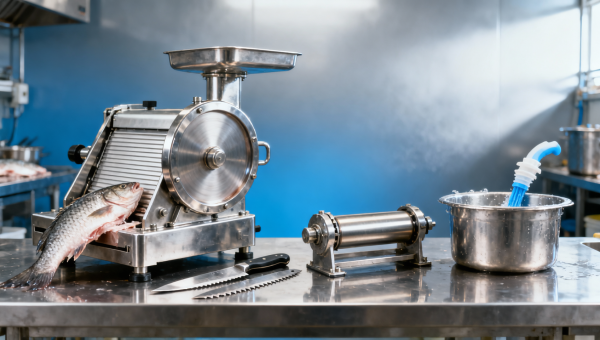
At first glance, fish skinning machine wholesale quotes can seem highly competitive, but hidden expenses in installation, blade wear, sanitation compliance, and operator training often reshape the real budget. For buyers comparing fish processing machinery, from fish filleting machine commercial systems to squid peeling machine and commercial fish scaling machine options, understanding total cost is essential before committing capital.
In industrial seafood processing, the purchase price rarely reflects the full financial commitment. A machine quoted at 15% below competing offers may still cost more over 12 to 36 months once spare parts, sanitation modifications, productivity losses, and downtime risk are included. This matters not only to procurement teams, but also to operators, quality managers, project leaders, finance approvers, and distributors evaluating resale viability.
For B2B buyers in aquaculture and fishery technology, the smarter question is not “What is the fish skinning machine wholesale price?” but “What will the line actually cost per processed kilogram, per shift, and per year?” That wider lens helps align technical evaluation with operating margin, food safety expectations, and long-term asset performance.
Why the quoted wholesale price often understates the real investment
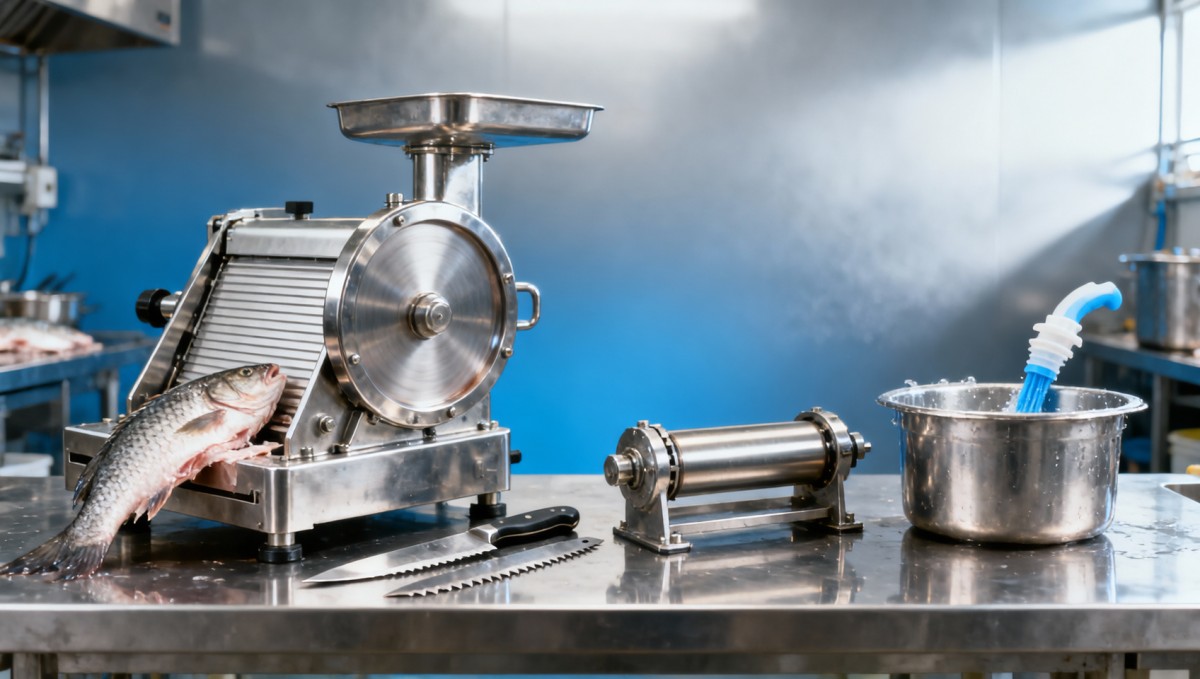
A wholesale quotation usually centers on the base machine: frame, motor, roller, blade assembly, and standard electrical setup. However, fish skinning machine wholesale pricing often excludes line integration, on-site commissioning, voltage adaptation, drainage redesign, guarding upgrades, and local compliance preparation. In many plants, these add-ons increase total project cost by 10% to 30%, depending on facility readiness.
This pattern is common when a processor compares a fish filleting machine commercial package with a standalone skinner. The skinner may appear inexpensive in isolation, but if the upstream filleting yield is inconsistent, the skinner requires more manual trimming, slower feed speed, and more frequent blade adjustment. The consequence is not only labor cost, but also throughput instability across 1 or 2 production shifts.
Sanitation is another overlooked line item. In wet processing environments, machine surfaces must allow rapid washdown, reduce bacterial harborage points, and support routine cleaning between batches. If the quoted unit lacks splash protection, removable contact parts, or suitable stainless steel specifications for saltwater environments, retrofit spending can appear within the first 3 to 6 months.
Buyers should also remember that wholesale pricing may be based on minimum order logic or ex-works terms. Freight, marine insurance, customs duty, local transport, installation labor, and start-up delays can materially alter landed cost. For import-dependent buyers, a 7% to 12% logistics fluctuation is not unusual during volatile shipping periods.
The most common hidden cost categories
The table below summarizes the most frequent cost areas that sit outside the initial machine quote but directly affect budget accuracy.
The key takeaway is simple: the lower the quote transparency, the higher the chance that total ownership cost will drift upward after delivery. A credible supplier should clarify what is included, what is optional, and what the plant must prepare before shipment.
How hidden costs affect yield, labor, and compliance
In seafood processing, cost leakage is often disguised as performance variability. A fish skinning machine that removes skin too aggressively may reduce usable fillet yield by 1% to 3%. At industrial volume, that small ratio can outweigh any upfront discount. For a plant processing 2,000 kg per shift, even a 2% yield loss means 40 kg of product impact in a single run.
Labor is another major factor. If machine setup is inconsistent, operators spend more time adjusting blade pressure, refeeding damaged fillets, or manually correcting incomplete skin removal. A machine that appears economical on paper can require 1 to 2 additional workers per line, especially when handling variable species sizes or soft-flesh products.
Compliance adds a third layer. Quality and safety personnel increasingly scrutinize cleanability, material finish, splash control, lockout procedures, and allergen changeover time. If the equipment design creates cleaning dead zones or requires partial disassembly that takes 45 to 60 minutes per cycle, sanitation labor cost rises and production windows shrink.
These issues are not limited to fish skinners. A squid peeling machine or commercial fish scaling machine can present similar hidden costs through water consumption, abrasive component wear, and wastewater handling requirements. Buyers should assess the entire processing cell rather than treating each machine as an isolated purchase.
Operational indicators procurement teams should ask for
Before approving a purchase, cross-functional teams should request measurable operating indicators instead of relying on generic promises.
- Expected throughput range in kg/hour under real product conditions, not only ideal test samples.
- Average blade life by species type, such as salmon, tilapia, catfish, or flatfish, and by daily production hours.
- Changeover time for cleaning, blade replacement, and pressure setting reset between batches.
- Recommended operator skill level and training duration for stable output within the first 2 weeks.
- Target yield consistency and acceptable trim loss under routine operation.
A practical rule for finance and operations
If a lower fish skinning machine wholesale quote cannot be matched with clear estimates for yield retention, wear-part consumption, and cleaning time, finance teams should treat the discount as incomplete information rather than true savings. The cheapest quote is often the least predictable quote.
What to compare when evaluating fish skinning, filleting, peeling, and scaling systems
Buyers frequently benchmark multiple machine categories at the same time because line efficiency depends on sequence compatibility. A fish filleting machine commercial setup feeding an underspecified skinner can create a bottleneck within minutes. Likewise, a commercial fish scaling machine with high splash output may complicate downstream hygiene control if floor drainage or shielding is inadequate.
The best evaluations compare not only price, but also product type, flesh firmness, daily capacity, labor model, cleaning procedure, and support response. A distributor may prioritize resale margin and spare parts standardization, while a plant operator will focus more on ergonomics and downtime frequency. That is why decision criteria should be structured before quotation review begins.
In most facilities, 4 evaluation dimensions are essential: processing performance, maintenance burden, sanitation suitability, and supply-chain support. Ignoring one of these usually leads to cost transfer from capital expenditure into operating expenditure within the first year.
The matrix below helps technical evaluators and buyers compare equipment types under total-cost thinking rather than headline pricing alone.
This comparison shows why “wholesale” is not a sufficient decision label. Machines that process different species and textures create different hidden costs. Buyers should define product mix first, then shortlist equipment based on operating fit.
A 5-point screening checklist before you request final pricing
- Confirm target species, average size range, and daily shift volume.
- Map upstream and downstream equipment to identify line-speed mismatch.
- Ask for spare-part consumption assumptions over 6 and 12 months.
- Review cleaning method, disassembly steps, and sanitation time per cycle.
- Clarify delivery terms, training scope, and after-sales response window.
When used consistently, this screening process improves bid comparability and reduces surprises during financial approval. It also helps distributors evaluate whether the machine can be supported locally without excessive parts inventory.
How to calculate total cost of ownership before signing a purchase order
A disciplined total cost of ownership model should cover at least 12 months, and ideally 24 to 36 months for capital equipment. For a fish skinning machine wholesale purchase, buyers should calculate five cost layers: acquisition, installation, operation, maintenance, and productivity impact. Without all five, the financial model remains incomplete.
Acquisition includes machine price, freight, duties, and insurance. Installation includes utilities, line modification, technician visits, and start-up testing. Operation includes labor, power, water, and cleaning chemicals. Maintenance includes blades, rollers, bearings, seals, and emergency service. Productivity impact includes yield preservation, downtime, and batch consistency.
A practical evaluation method is to convert all major costs into a per-kilogram or per-shift figure. This allows finance teams to compare machines with different purchase prices but similar output claims. In some cases, a machine with a 12% higher upfront price delivers a lower cost per kilogram after 9 to 14 months because it reduces rework and blade consumption.
Project managers should also assign a risk factor to support availability. If essential spare parts require 3 to 5 weeks lead time, the business should include contingency stock cost. That inventory carrying cost is still part of ownership, especially in export-oriented seafood plants where delayed orders can disrupt customer contracts.
Sample TCO framework for procurement review
The following framework can be adapted for internal approval meetings or supplier comparison files.
Using a structured model makes negotiations more efficient. Instead of arguing over headline price alone, buyers can ask suppliers to explain blade life, sanitation design, and service commitment in measurable commercial terms.
Three warning signs in budget submissions
- The quotation lists machine price only and omits commissioning scope.
- Spare-parts recommendations are unavailable for the first 6 months of use.
- No one can specify cleaning time, operator training duration, or response time for breakdown support.
If any of these signs appear, the procurement file should remain open until the missing commercial and technical details are documented. That protects both project execution and financial accountability.
Implementation, risk control, and buyer questions before approval
Even a well-priced machine can underperform if implementation is rushed. Successful deployment usually follows 4 stages: pre-installation review, utility confirmation, operator training, and production verification. Depending on plant readiness, this process may take 3 days for a simple standalone unit or 2 to 4 weeks for an integrated line upgrade.
Pre-installation review should confirm floor drainage, washdown access, power compatibility, guarding, and product flow. Quality and safety managers should participate early, because sanitation constraints discovered after delivery often create avoidable delays and retrofit cost. This is especially important in plants processing multiple species with different cleaning frequencies.
Operator training should not be treated as a one-time formality. In practice, the most stable lines assign at least 1 lead operator and 1 maintenance contact to receive deeper machine instruction. That approach improves blade setup consistency, speeds fault detection, and reduces misuse during shift changes.
For distributors and resellers, support planning is equally important. A machine that cannot be backed by local spare-parts stock or remote troubleshooting capacity can damage channel reputation even if the purchase price is attractive. Service readiness is part of the wholesale value proposition.
FAQ for technical and procurement teams
How should buyers compare two fish skinning machine wholesale offers that differ by 10% to 20%?
Compare landed cost, blade life, cleaning time, expected yield, and support response. If one supplier is 15% cheaper but requires blade changes twice as often and adds 20 minutes of cleaning per shift, the annual operating cost may erase the initial savings.
What processing plants are most exposed to hidden costs?
Plants with mixed species, variable fish sizes, export compliance requirements, or 2-shift production schedules are typically more exposed. In these environments, setup inconsistency and sanitation delays scale quickly into labor inefficiency and missed throughput targets.
How long is a reasonable delivery and start-up window?
For standard units, production and shipment may take 3 to 8 weeks, while commissioning can require 1 to 5 days depending on site conditions. Integrated lines with filleting, skinning, and scaling sections often need longer planning and utility checks before final acceptance.
Which documents should be requested before approval?
At minimum, request equipment layout, utility requirements, wear-parts list, cleaning procedure, training scope, acceptance criteria, and after-sales contact process. These documents reduce ambiguity and make internal review more objective.
For serious buyers, the most reliable procurement decisions come from matching fish skinning machine wholesale pricing with full operating context: species mix, expected yield, sanitation workload, maintenance rhythm, and support readiness. The same principle applies when comparing fish filleting machine commercial systems, squid peeling machine equipment, and commercial fish scaling machine options.
A transparent quote is not just a purchasing convenience; it is a risk-control tool for finance, production, quality, and project teams. If you are evaluating seafood processing machinery and need a more defensible cost framework, now is the right time to request a detailed specification review, total-cost comparison, or customized equipment consultation. Contact us to discuss your application, compare configurations, and identify the most practical solution for your processing line.
Related Intelligence
- Commercial FishingGaode Launches First Quadruped Robot, ABot-M0 Open-Source Model for Aquaculture & Poultry InspectionABot-M0: Gaode's open-source quadruped robot for aquaculture & poultry inspection—80.5% task success, field-tested in Brazil & Vietnam. Discover how it transforms autonomous farm inspections.
- Commercial FishingGaode Launches First Quadruped Robot, Open-Sources ABot-M0 for Aquaculture & PoultryGaode launches first quadruped robot & open-sources ABot-M0 — an embodied AI model for aquaculture and poultry automation, with 80.5% Libero-Plus task success.
- Commercial FishingLobster Creels Bulk Orders: Where Shipping Costs Get HiddenLobster creels bulk costs can hide in freight, packing, and compliance. Compare suppliers smarter across fish processing machinery, longline fishing gear, and block ice machine for fishery projects.
The Morning Broadsheet
Daily chemical briefings, market shifts, and peer-reviewed summaries delivered to your terminal.
