
What affects scaling quality in a commercial fish scaling machine?
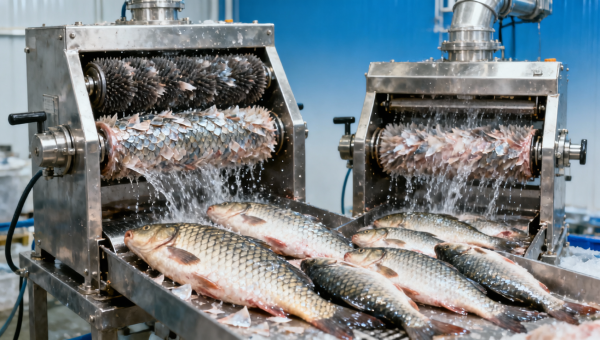
Scaling quality in a commercial fish scaling machine depends on fish species, scale hardness, drum or brush configuration, feed speed, water flow, and operator settings. For buyers comparing fish processing machinery with a fish filleting machine commercial line, fish skinning machine wholesale options, or even a squid peeling machine, understanding these variables is essential to improve yield, hygiene, and processing consistency.
In industrial fish processing, scaling is not a minor pre-treatment step. It directly affects downstream filleting accuracy, skin integrity, wastewater load, labor input, and final product presentation. For processors handling 300 kg/hour or 3 tons/hour, even small scaling inconsistencies can lead to measurable loss in usable flesh, higher rework rates, and slower line balancing.
This matters to multiple stakeholders. Operators need stable settings that do not damage fish skin. Technical evaluators must match machine configuration to species and throughput. Procurement teams compare capital cost against maintenance frequency and yield retention. Quality and safety managers focus on sanitation, cross-contamination control, and washdown design. For all of them, the key question is the same: what truly determines scaling quality in a commercial fish scaling machine?
Species, Scale Structure, and Raw Material Condition
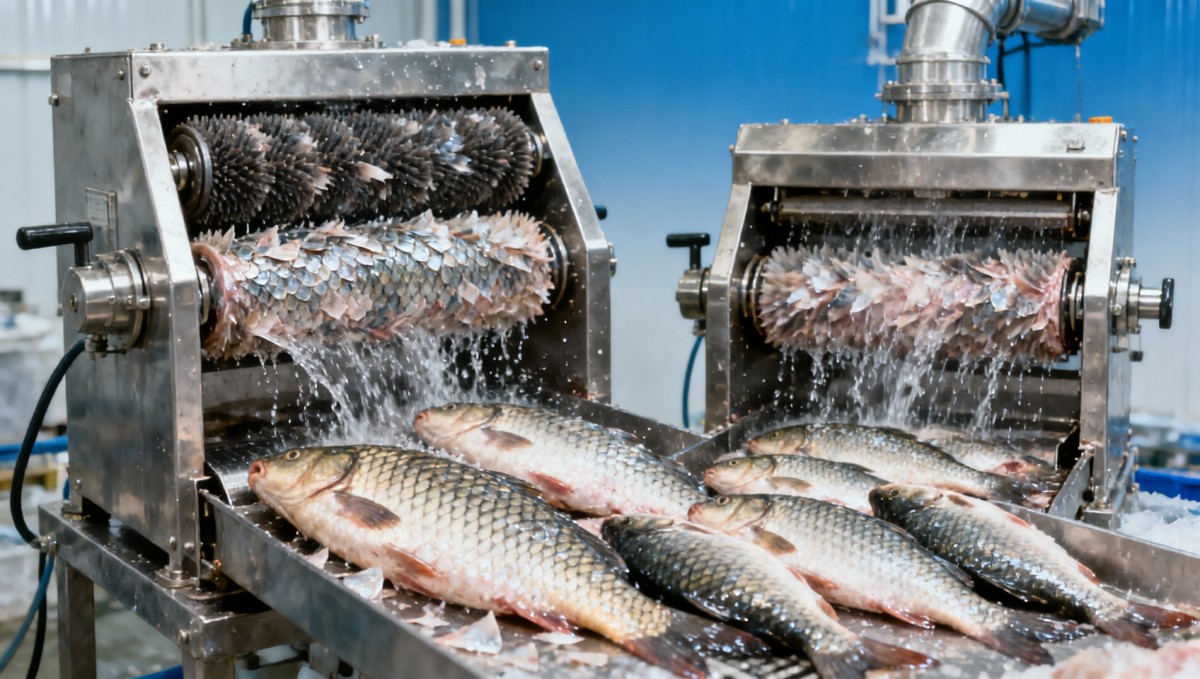
The first factor is the fish itself. A commercial fish scaling machine that performs well on tilapia may not produce the same result on carp, sea bream, mullet, or perch. Species differ in scale size, adhesion strength, mucus content, skin elasticity, and body contour. In practice, these variables often create a 10%–25% difference in scaling efficiency under the same machine settings.
Scale hardness is especially important. Fish with thicker, more embedded scales require greater mechanical contact and often longer dwell time. However, aggressive treatment raises the risk of skin tearing, bruising near the lateral line, and reduced visual grade. This is why processors should test at least 2–3 species samples before approving a machine for mixed-species production.
Raw material temperature also changes scaling behavior. Fish processed at 0°C–4°C after icing may feel firmer and more resistant to abrasion, while fish held too long above 8°C can soften, making skin more vulnerable. Freshness matters as well. Fish stored for 24–48 hours after harvest may respond differently from fish scaled within 6–12 hours.
Why species matching should be tested early
For technical assessment teams, species matching should be part of factory acceptance testing, not an afterthought. A machine sized for 500–800 mm fish may underperform on smaller fish under 250 mm because contact pressure becomes inconsistent. Similarly, a batch of fish with high size variation can reduce uniformity if feed orientation is uncontrolled.
The table below summarizes how material characteristics influence scaling quality and machine selection.
The key takeaway is simple: scaling quality starts upstream. If species mix, fish size, and raw condition are not controlled, even a well-built commercial fish scaling machine will struggle to deliver repeatable results.
Machine Configuration: Drum, Brush, Contact Pressure, and Water Flow
The second major influence is machine design. Commercial fish scaling equipment generally relies on rotating drums, abrasive or flexible brushes, contact plates, or combined systems. The configuration determines how force is distributed across the fish body. A poor match between the machine head and the target species can create either incomplete scale removal or excessive skin damage.
Brush density, filament stiffness, and rotational speed all matter. Softer brushes are often better for delicate species, while harder abrasive elements may suit species with stronger scales. In many commercial lines, brush speed ranges from roughly 150 rpm to 450 rpm, but the best operating point depends on fish length, body thickness, and scale adhesion rather than speed alone.
Water flow is frequently underestimated. Water is not only for rinsing scales away; it reduces heat build-up, clears the contact zone, and prevents detached scales from reattaching to mucus-covered skin. Insufficient flow can leave residue on the belly and fin areas, while excessive flow may reduce friction and lower removal efficiency. In practical line design, water delivery should be adjustable and directed at critical contact points.
Configuration choices that affect performance
- Drum internal geometry influences dwell time and fish tumbling behavior, especially in batch systems.
- Brush arrangement affects whether the head, tail, dorsal area, and belly receive uniform coverage.
- Pressure control determines whether scales are removed cleanly or the skin is scratched.
- Spray nozzle position affects wash effectiveness and visibility for the operator.
Typical equipment comparison for buyers
When comparing a commercial fish scaling machine with adjacent processing equipment such as a fish filleting machine commercial setup, fish skinning machine wholesale supply, or a squid peeling machine, buyers should not evaluate these units in isolation. Scaling performance must fit the total line logic, including infeed rhythm, sanitation layout, and downstream trimming requirements.
The table below can help procurement and engineering teams compare common configuration impacts.
For most B2B buyers, adjustability is worth paying for. Plants that process more than 2 species per week or handle seasonal weight changes often benefit from configurable brush pressure, variable speed control, and quick-clean nozzle access.
Operating Parameters and the Human Factor
Even the right machine can produce poor scaling quality if operating parameters are not controlled. Feed speed is one of the most common causes of inconsistency. If fish pass through too quickly, scales remain on the shoulder, belly flap, and near fins. If feed is too slow, the skin may become overworked. A line set for 40 fish/minute may need to be reduced to 28–32 fish/minute for larger or harder-scaled fish.
Operator settings are equally important. In commercial fish processing, small changes in contact pressure, brush angle, water flow, or loading density can alter results within a single shift. This is why standard operating procedures should specify target settings by species, average fish size, and target defect rate. Without that discipline, quality becomes dependent on operator habit rather than process control.
Batch loading also requires attention. Overloading a drum reduces fish-to-surface contact and creates fish-to-fish shielding. Underloading may cause excessive tumbling and damage. Many processors see better consistency when batch fill is kept within 70%–85% of the effective working volume rather than pushing for maximum load every cycle.
Practical control points for daily operation
- Verify fish size band and species before startup, not after defects appear.
- Run a 10–20 fish trial lot at the start of each shift and after any species changeover.
- Inspect 4 critical zones: head, dorsal line, belly, and tail root.
- Record scaling residue, skin damage, and rework count every 1–2 hours.
- Adjust one parameter at a time so cause and effect remain traceable.
Training reduces variability
For plant managers, operator training is often a faster quality upgrade than machine replacement. A 2-hour training module covering species behavior, startup checks, and defect recognition can reduce adjustment errors significantly. This is especially relevant in facilities where one crew handles scaling, filleting, and skinning across multiple line formats.
The operational goal is not maximum aggression. It is stable, repeatable scale removal with acceptable skin condition, minimal rework, and predictable output for downstream equipment.
Quality Control, Hygiene, and Maintenance Requirements
Scaling quality should be measured, not guessed. In a commercial setting, quality control usually includes three practical indicators: scale removal completeness, skin damage rate, and line cleanliness after processing. Some processors define pass criteria such as less than 3% visible residual scale area on inspected fish and less than 2% of fish showing unacceptable skin tearing. The exact threshold varies by product grade and customer specification.
Hygiene design is a second quality dimension. Detached scales, mucus, and protein residue can accumulate in guards, shafts, splash zones, and drain channels. If the machine does not support easy washdown and inspection, performance declines over time and sanitation risk increases. For food plants operating 1 or 2 shifts daily, end-of-shift cleaning and a deeper weekly inspection are often the minimum practical standard.
Maintenance affects scaling quality more than many buyers expect. Worn brushes, damaged drum lining, misaligned shafts, or reduced nozzle pressure can quietly reduce removal efficiency before a major breakdown happens. In many cases, preventive replacement at fixed operating-hour intervals is more economical than waiting for visible failure.
Key inspection and maintenance points
The following checklist is useful for operators, QA teams, and engineering supervisors who need stable hygiene and product consistency.
A commercial fish scaling machine should therefore be evaluated not only for throughput, but also for cleanability, inspection access, spare-part logic, and maintenance interval predictability. These factors influence total cost of ownership over 12–36 months.
How Buyers Should Evaluate a Commercial Fish Scaling Machine
For procurement and decision-making teams, the best purchase is rarely the lowest quoted price. The correct question is whether the machine fits the plant’s species profile, labor model, hygiene standard, and downstream line design. A processor running 8 hours/day on one species may prioritize simplicity. A contract processor handling 4–6 product types may need broader adjustability and faster changeover.
A structured evaluation should combine technical and commercial checkpoints. Technical teams should request test conditions, expected size range, material contact components, sanitation access, utility requirements, and spare-part recommendations. Commercial teams should ask about lead time, commissioning support, wear-part consumption, and after-sales response windows. A realistic delivery timeline for standard equipment may be 4–8 weeks, while customized layouts can take 8–16 weeks.
It is also useful to assess line compatibility. If the same project includes a fish filleting machine commercial unit, fish skinning machine wholesale procurement, or other seafood processing equipment, layout integration can reduce handling steps and labor transfer points. Better line continuity often improves hygiene and lowers rework more than a stand-alone machine upgrade.
A practical buyer checklist
- Confirm target species, size range, and hourly throughput before requesting proposals.
- Ask for trial data or demonstration on fish comparable in scale hardness and body shape.
- Review wear parts, replacement intervals, and local service availability.
- Check washdown access, drain design, and food-contact material suitability.
- Compare rework risk, not just stated capacity in kg/hour.
Common buying mistakes
Three mistakes appear frequently in B2B seafood equipment sourcing. First, buyers assume higher speed means better scaling quality. Second, they underestimate species variation and buy a machine proven only on one fish type. Third, they ignore sanitation and maintenance access during evaluation, then face hidden downtime later. Each of these mistakes can affect product quality and budget approval.
The most effective purchase process brings operators, quality staff, engineering, and finance into the same review cycle. That reduces the risk of selecting equipment that looks efficient on paper but performs poorly under real production conditions.
FAQ: Common Questions About Scaling Quality
How do I know if poor scaling is caused by the machine or the fish?
Start with a controlled trial using one species, one size band, and one temperature range. If scaling results improve after grading fish by size or reducing temperature variation to within about 2°C–3°C, the issue is likely raw material variability. If defects remain in the same body areas across stable batches, machine setup or component wear is more likely the cause.
What throughput should a processor target without sacrificing quality?
There is no universal number. Throughput must match species, machine geometry, and quality grade. In many plants, reducing nominal speed by 10%–20% produces a better first-pass result and lowers rework enough to improve total effective output. The right target is the highest stable rate that still meets residue and skin-damage criteria.
Is a more aggressive scaling setup always better for downstream filleting?
No. Excessive aggression can damage skin, reduce product appearance, and create handling problems before filleting or skinning. Downstream yield often benefits more from controlled, even scaling than from maximum force. This is especially important when the process line includes premium fillet or skin-on product formats.
How often should settings be reviewed?
At minimum, review settings at startup, after species change, after major fish size changes, and whenever defect frequency rises. In mixed-product facilities, a review every 1–2 hours is common. Frequent light checks are more effective than waiting for a full shift of inconsistent product.
Scaling quality in a commercial fish scaling machine is shaped by a combination of species characteristics, machine configuration, operating discipline, hygiene control, and maintenance practice. Buyers who assess these factors together can improve yield, reduce rework, and build a more reliable seafood processing line.
For processors, distributors, OEM partners, and project teams evaluating fish scaling, filleting, skinning, or related seafood equipment, a specification-led approach delivers better long-term value than a price-only comparison. If you need a tailored equipment assessment, line matching advice, or a sourcing-oriented technical review, contact us to get a customized solution and explore more processing options.
Related Intelligence
- Commercial FishingGaode Launches First Quadruped Robot, ABot-M0 Open-Source Model for Aquaculture & Poultry InspectionABot-M0: Gaode's open-source quadruped robot for aquaculture & poultry inspection—80.5% task success, field-tested in Brazil & Vietnam. Discover how it transforms autonomous farm inspections.
- Commercial FishingGaode Launches First Quadruped Robot, Open-Sources ABot-M0 for Aquaculture & PoultryGaode launches first quadruped robot & open-sources ABot-M0 — an embodied AI model for aquaculture and poultry automation, with 80.5% Libero-Plus task success.
- Commercial FishingLobster Creels Bulk Orders: Where Shipping Costs Get HiddenLobster creels bulk costs can hide in freight, packing, and compliance. Compare suppliers smarter across fish processing machinery, longline fishing gear, and block ice machine for fishery projects.
The Morning Broadsheet
Daily chemical briefings, market shifts, and peer-reviewed summaries delivered to your terminal.
