
Fish processing machinery upgrades that reduce washdown downtime
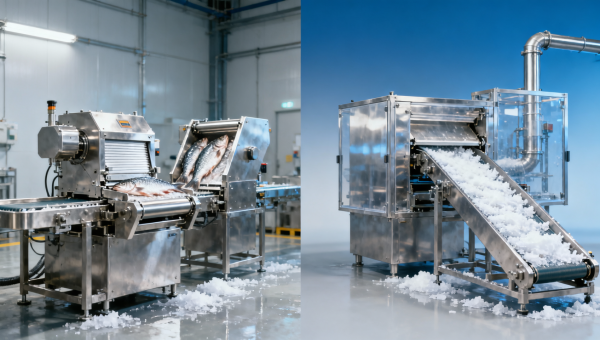
Reducing washdown downtime is now a top priority for seafood processors seeking higher throughput, safer sanitation, and lower operating costs. From fish processing machinery upgrades to smarter integrations with a commercial ice flaker machine, fish filleting machine commercial systems, and commercial fish scaling machine lines, the right investments can improve hygiene compliance while keeping production moving. This article explores practical upgrade paths for technical evaluators, buyers, and plant decision-makers.
In modern fish plants, washdown is no longer treated as a simple cleaning interval between shifts. It directly affects line availability, labor utilization, sanitation verification, and the economics of every kilogram processed. In facilities running 1 to 3 shifts per day, even a 20- to 30-minute reduction in washdown time can translate into meaningful output gains across filleting, scaling, trimming, chilling, and packing operations.
For operators, the issue is practical: easier access, fewer dead zones, faster drainage, and fewer tools required for teardown. For engineering teams, it is about hygienic design, water and chemical control, and compatibility with existing conveyors, pumps, and cold-chain equipment. For procurement and finance, the focus shifts to payback periods, maintenance intervals, spare parts planning, and total cost of ownership over 3 to 7 years.
The most effective upgrade strategies are rarely based on a single machine replacement. They typically combine hygienic mechanical redesign, sensor-driven sanitation controls, modular components, and tighter integration with adjacent assets such as ice delivery, dewatering, grading, and filleting systems. Plants that approach washdown downtime as a system-level issue usually achieve more stable sanitation results and lower unplanned stoppages.
Why washdown downtime is rising on fish processing lines
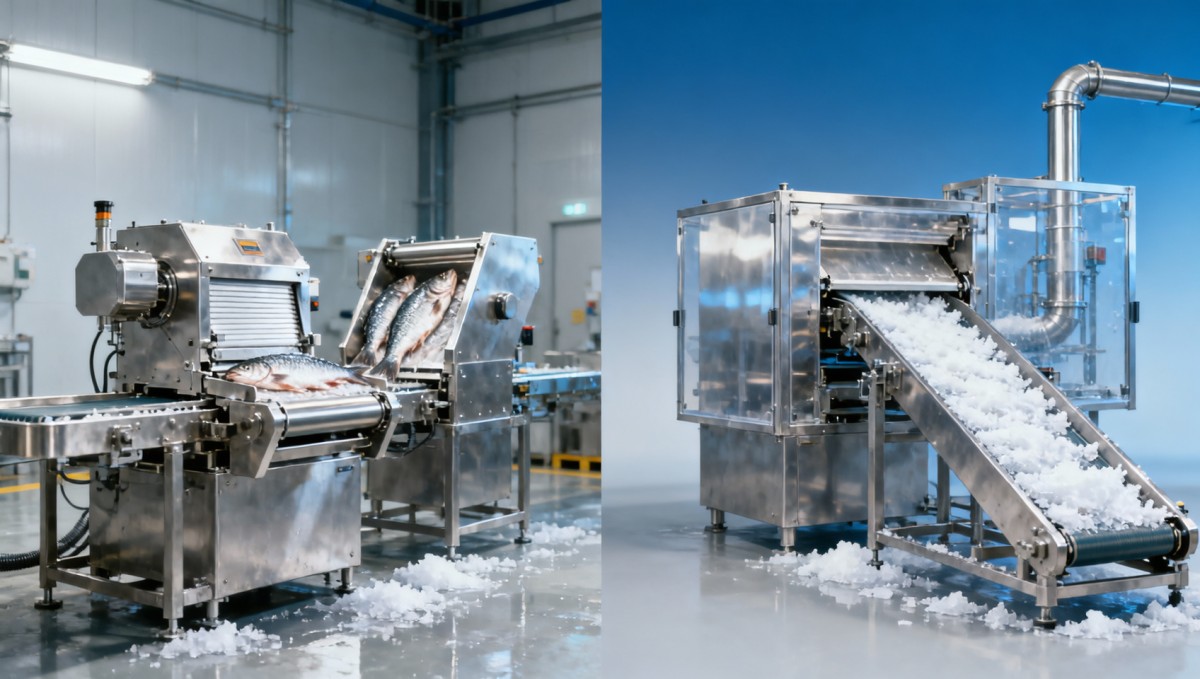
Washdown time tends to expand when production lines become faster, more segmented, and more regulated. A compact fish processing layout may contain 8 to 15 sanitation touchpoints in one zone alone, including infeed tables, scaling heads, filleting blades, trim conveyors, ice dosing points, and waste discharge interfaces. If any one of these areas is difficult to access or inspect, the full cleaning cycle slows down.
Seafood plants also face a unique sanitation burden because fish protein, skin residue, scales, and oil deposits behave differently from dry materials or red meat by-products. In a line processing pelagic or whitefish species, residue can spread to guards, hinges, bearings, and cable runs within a single 6- to 10-hour shift. If equipment surfaces are not designed for fast rinse-off, operators spend more time on manual scrubbing, disassembly, and revalidation.
Another factor is the mismatch between old machinery frames and current hygiene expectations. Many legacy machines still include flat ledges, exposed threads, hollow sections, or poor water runoff angles. These features create retention points, increasing both washdown duration and verification effort. In regulated export environments, delays can compound because sanitation teams often need ATP checks, visual inspection, and restart approval before production resumes.
Common root causes inside the plant
The most common causes can be grouped into four categories: equipment geometry, process integration, utility instability, and labor dependence. A machine that needs 12 to 18 fasteners removed during cleaning will almost always underperform a tool-less design. Likewise, a poorly integrated commercial fish scaling machine can spread debris to nearby conveyors, extending sanitation beyond its own footprint.
- Hard-to-reach product contact zones behind belts, guards, or drive assemblies.
- Excessive water pooling caused by shallow frame angles or inadequate drainage channels.
- Disconnected sanitation workflow between filleting, scaling, icing, and waste recovery equipment.
- Manual changeovers that require 2 to 4 operators instead of a single trained sanitation technician.
When these issues occur together, a washdown cycle that should take 45 to 60 minutes can easily stretch to 90 minutes or more. Over a 5-day operating week, that difference can remove several productive hours from the line, while also increasing water, detergent, and labor consumption.
Machinery upgrades that shorten cleaning and restart time
Not every upgrade requires a full line replacement. In many fish plants, the fastest gains come from replacing the sanitation-critical components that dictate teardown time. These include open-frame supports, hinged guards, quick-release belts, removable blade cartridges, sealed cable routing, and improved spray coverage. For facilities operating commercial filleting and scaling systems, these mechanical changes often produce quicker results than purely software-based upgrades.
A high-value target is the fish filleting machine commercial segment, where product contact parts and trim discharge areas often determine whether cleaning takes 25 minutes or 55 minutes. Filleting systems with fewer retention points, visible product paths, and faster blade access allow sanitation crews to complete rinse, foam, inspect, and reassemble steps more consistently. This is especially important in mixed-species processing where changeovers may occur 1 to 3 times per shift.
Another practical upgrade area is the commercial fish scaling machine line. Scaling generates scattered residue that can contaminate nearby equipment if splash containment, drainage, and waste capture are weak. Installing enclosed splash management, sloped collection trays, and easier-to-clean scale discharge modules can reduce cross-contamination risk while minimizing the area that requires intensive washdown.
Priority retrofit options
The table below summarizes retrofit options that are commonly evaluated when reducing washdown downtime on fish processing machinery.
The key takeaway is that sanitation speed improves most when accessibility and residue control are upgraded together. If a processor installs faster-release guards but leaves pooling water and open splash zones unresolved, the net downtime reduction will remain limited.
What buyers should verify before approval
- Count the number of tool-assisted disassembly points on each machine and compare current versus proposed configuration.
- Ask for estimated cleaning access time by module, not just overall throughput specifications.
- Check whether contact surfaces, seals, hinges, and bearings are compatible with the detergents and temperatures used on site.
- Confirm spare parts lead times, especially for wear components with replacement cycles of 3 to 12 months.
Integrating ice, filleting, and scaling systems to reduce sanitation bottlenecks
Washdown downtime is often caused by system boundaries rather than by a single machine. A commercial ice flaker machine, for example, supports temperature control and product quality, but if its delivery chute, bin interface, or drain design is poorly integrated with the fish line, sanitation teams end up cleaning more floor area, more transfer points, and more surrounding structures than necessary.
In seafood processing, ice handling should be viewed as part of hygienic line design. Compact, sealed transfer routes and controlled discharge points help prevent wet zones from expanding into filleting, trimming, or packing areas. In plants handling 5 to 20 tons per day, this matters because moisture migration can increase both washdown scope and slip hazards, while also delaying restart inspections.
The same principle applies to the interface between fish filleting machine commercial units and commercial fish scaling machine lines. When the scaling section throws residue into open conveyors or unprotected supports, sanitation labor rises sharply downstream. A coordinated layout with targeted splash containment, synchronized waste extraction, and shared drainage planning can remove recurring choke points.
Integration checkpoints by equipment type
The table below highlights practical integration checkpoints that can lower washdown time while protecting process flow and hygiene control.
Plants that improve these interfaces often see more stable cleaning times because sanitation no longer depends on ad hoc workarounds. Instead of cleaning outward from each machine, crews can clean through a planned flow path with fewer interruptions and fewer areas requiring repeat verification.
Signs that integration is underperforming
- Operators need to move ice manually around sanitation zones more than once per shift.
- Scaling residue consistently reaches adjacent supports, sensors, or belt returns.
- Restart approval is delayed because hidden interfaces cannot be visually inspected in less than 5 to 10 minutes.
- Water use increases but actual cleaning time does not improve, indicating poor runoff and containment.
Selection criteria for technical, procurement, and finance teams
A sound purchasing decision should balance throughput benefits with sanitation efficiency, maintenance discipline, and compliance confidence. In practice, that means comparing at least 5 dimensions: hygienic design, cleaning labor demand, utility consumption, spare parts availability, and expected payback period. Focusing only on rated capacity can lead to poor outcomes when downtime reduction is the actual strategic objective.
For technical evaluators, the first screening point should be sanitation accessibility. Ask how many minutes are required to expose all product contact areas, how many operators are needed, and whether routine cleaning can be completed without removing major drives or guards. For procurement teams, the next priority is supply continuity, especially where critical parts may have lead times of 2 to 8 weeks depending on region and supplier stock.
Finance approvers should look beyond purchase price and model the cost of downtime per hour. On medium-volume lines, even a modest gain of 30 to 45 production minutes per day can justify a retrofit sooner than expected, particularly where labor and chilled utility costs are rising. Maintenance managers, meanwhile, should verify lubrication points, seal change frequency, and whether washdown chemicals accelerate wear in moving assemblies.
Practical evaluation matrix
The following matrix can support cross-functional reviews before a fish processing machinery upgrade is approved.
Using a matrix like this keeps the conversation grounded in measurable factors. It also helps distributors, project managers, and OEM partners align technical language with business outcomes, which is often necessary when approval requires both operational and capital expenditure justification.
Questions that improve supplier discussions
- Which components are removed during daily washdown, and how long does each removal step take?
- Can the proposed design support 1, 2, or 3-shift operation without increasing sanitation labor headcount?
- What is the recommended preventive service schedule during the first 12 months?
- Which utilities or layout changes are required to achieve the quoted sanitation performance?
Implementation roadmap, risk control, and common mistakes
Successful implementation usually follows a phased approach rather than a one-time shutdown overhaul. A practical roadmap begins with sanitation mapping, then pilot retrofits on the worst-performing stations, followed by line-wide integration and verification. In many seafood plants, a 3-stage approach completed over 4 to 12 weeks is more manageable than replacing multiple systems at once.
The first step is to document the real cleaning sequence. Time the current washdown by zone, count re-clean events, and note where two teams interfere with each other. This baseline often reveals hidden delays, such as waiting for access to a commercial ice flaker machine drain or repeatedly dismantling guards on a fish filleting machine commercial unit because residue keeps reappearing after rinse.
The second step is targeted intervention. Start with the modules that combine high contamination load and poor accessibility. In many cases, scaling discharge, blade access, and drainage improvements deliver more benefit than visible cosmetic changes. Once the new configuration is installed, restart protocols should be updated so quality, safety, and production teams share the same acceptance criteria.
Common implementation mistakes
- Replacing one machine without addressing adjacent conveyors, drains, or waste handling, which shifts the sanitation problem instead of solving it.
- Approving equipment based on throughput only, while ignoring how many minutes are needed for cleaning access and restart checks.
- Skipping operator training and assuming new hygienic design features will be used correctly without updated standard operating procedures.
- Failing to stock critical seals, blades, or release components, leading to downtime during the first 3 to 6 months of operation.
FAQ for buyers and plant teams
How much washdown reduction is realistic from upgrades alone? In many facilities, targeted hygienic retrofits can reduce sanitation-related downtime by 10% to 30%, but actual results depend on layout, residue load, and workforce discipline. If the line still has poor drainage or fragmented utilities, machinery upgrades alone will not deliver full benefit.
Which equipment should be prioritized first? Focus on machines with the highest residue burden and the lowest cleaning accessibility. In fish plants, this often means the commercial fish scaling machine, filleting sections, and ice transfer points before less critical downstream equipment.
What is a typical implementation timeline? A focused retrofit can be planned in 2 to 6 weeks and installed during a scheduled shutdown, while broader line integration may require 6 to 12 weeks depending on utility modifications, supplier lead time, and validation requirements.
How should project success be measured? Use four metrics: average washdown duration, number of reclean incidents, restart approval time, and water or chemical use per sanitation cycle. Tracking these for at least 4 weeks before and after installation provides a more reliable view than relying on throughput alone.
Building a stronger business case for long-term upgrade decisions
For decision-makers, the strongest business case links machinery upgrades to operational continuity, sanitation confidence, and product quality protection. A fish processing machinery project should not be justified only as an engineering improvement. It should be framed as a throughput protection measure that reduces cleaning bottlenecks, supports compliance, and helps plants operate more predictably during seasonal volume peaks.
Distributors and OEM partners can support this case by presenting upgrade options in tiers: essential retrofits, mid-level integration improvements, and full hygienic line modernization. This gives procurement and finance teams clearer choices across budget bands, whether the goal is a short payback in 12 to 24 months or a broader modernization plan across several production areas.
In many seafood operations, the best return comes from coordinated decisions. A commercial ice flaker machine upgrade may improve temperature handling, but the real value increases when paired with cleaner transfer design and reduced floor contamination. Likewise, a fish filleting machine commercial retrofit becomes more compelling when it also shortens restart checks and reduces sanitation labor variance between shifts.
Processors, technical evaluators, and commercial teams should therefore assess upgrades as part of a broader hygiene and uptime strategy. If you are reviewing line modernization options, planning a plant expansion, or comparing fish processing machinery suppliers, now is the right time to map downtime losses, prioritize sanitation-critical assets, and request a tailored upgrade path. Contact us to discuss your application, compare practical retrofit options, and get a customized solution for faster washdown recovery and more reliable seafood processing performance.
Related Intelligence
- Commercial FishingGaode Launches First Quadruped Robot, ABot-M0 Open-Source Model for Aquaculture & Poultry InspectionABot-M0: Gaode's open-source quadruped robot for aquaculture & poultry inspection—80.5% task success, field-tested in Brazil & Vietnam. Discover how it transforms autonomous farm inspections.
- Commercial FishingGaode Launches First Quadruped Robot, Open-Sources ABot-M0 for Aquaculture & PoultryGaode launches first quadruped robot & open-sources ABot-M0 — an embodied AI model for aquaculture and poultry automation, with 80.5% Libero-Plus task success.
- Commercial FishingLobster Creels Bulk Orders: Where Shipping Costs Get HiddenLobster creels bulk costs can hide in freight, packing, and compliance. Compare suppliers smarter across fish processing machinery, longline fishing gear, and block ice machine for fishery projects.
The Morning Broadsheet
Daily chemical briefings, market shifts, and peer-reviewed summaries delivered to your terminal.
