
What Slows a Commercial Fish Filleting Machine in Peak Season
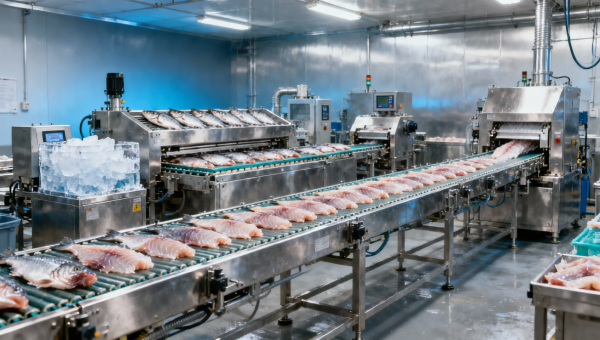
During peak season, even a high-capacity fish filleting machine commercial line can lose output due to bottlenecks in fish processing machinery, inconsistent ice control, and operator handling errors. From pairing with a commercial ice flaker machine or block ice machine for fishery to upstream impacts from a fish skinning machine wholesale setup, understanding what slows performance is essential for buyers, plant managers, and technical teams seeking stable throughput, quality, and ROI.
Where does a commercial fish filleting line actually lose speed in peak season?
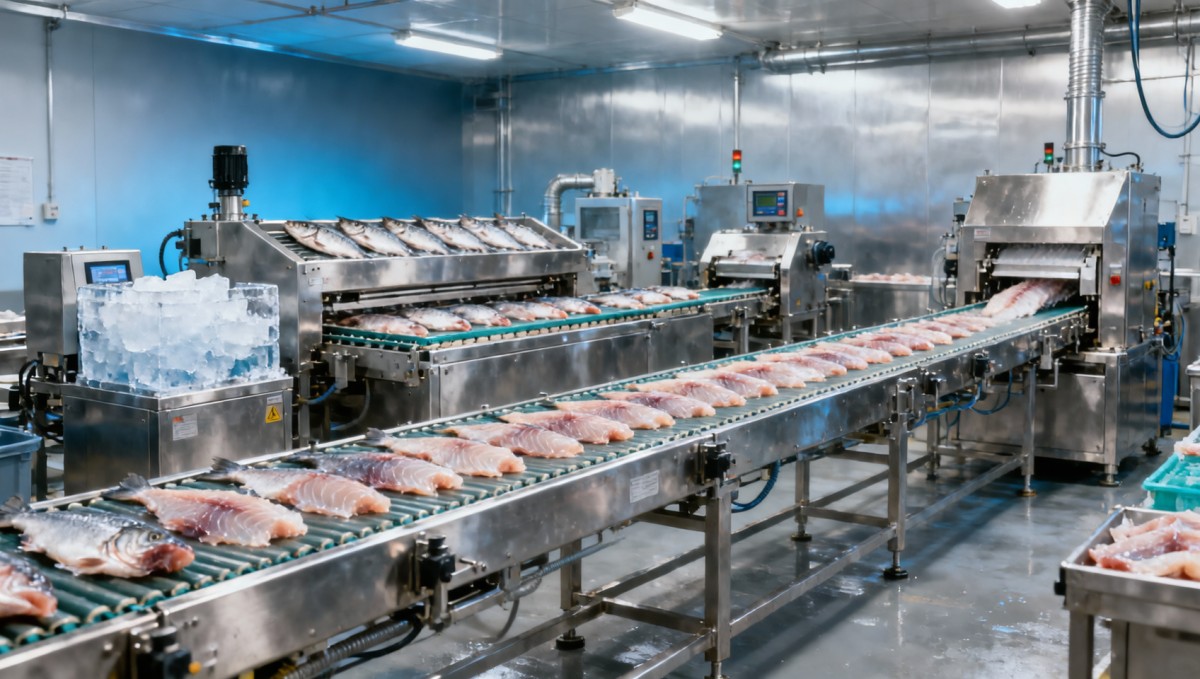
A commercial fish filleting machine rarely slows down because of one isolated defect. In most plants, the problem appears as a chain reaction across feeding, grading, chilling, trimming, skinning, sanitation, and packing. When seasonal landings rise within a 6–12 week window, even a well-specified fish filleting machine commercial setup can underperform if upstream fish size variation increases or downstream operators cannot clear finished fillets fast enough.
For operators, the most visible symptom is reduced pieces per minute. For technical evaluators, the real issue is throughput instability: the line may process well for 45–90 minutes, then slow after blade fouling, uneven feeding, or temperature drift. Procurement teams often focus on nameplate capacity, yet peak season performance depends more on matched line balance than on the headline output of a single machine.
This matters across the broader primary processing sector covered by AgriChem Chronicle. In regulated, margin-sensitive operations, machine performance must be judged in context: raw material variability, hygiene cycles, labor availability, spare parts lead times, and compliance demands. A filleting line that looks efficient in a factory demonstration may behave very differently under 2 shifts, wet-floor conditions, and mixed fish lots arriving from multiple vessels or farms.
In practice, most slowdowns cluster into 4 categories: raw fish inconsistency, mechanical or setup mismatch, temperature and ice management issues, and human-factor losses. Decision-makers who map these categories early can reduce emergency downtime, protect fillet yield, and avoid expensive peak-season outsourcing.
- Raw material factors: fish size spread, soft flesh, delayed chilling, scale load, and gut residue.
- Machine factors: blade wear, belt tracking, sensor contamination, feed lane mismatch, and poor machine-to-machine synchronization.
- Utility factors: unstable water pressure, compressed air fluctuation, and insufficient ice from a commercial ice flaker machine or block ice machine for fishery.
- Operational factors: inconsistent loading rhythm, rushed sanitation, weak shift handover, and limited preventive maintenance discipline.
Why peak season exposes hidden bottlenecks
In low season, processors often run below maximum design load, so weak points remain hidden. During peak arrivals, however, line utilization can rise from 55%–70% to 85%–95%, leaving little buffer for micro-stops. A few seconds lost at the infeed, skinning station, or trim table can create queue buildup across the entire line.
This is why experienced project managers review not just machine speed, but also buffer design, conveyor spacing, and labor handoff timing. If one module cannot sustain the takt time of the others, the whole fish processing machinery layout slows to the speed of the weakest station.
For distributors and commercial teams, this creates a practical sales lesson: a larger machine is not always the right answer. Sometimes the faster return comes from correcting line balance, improving ice handling, or upgrading a fish skinning machine wholesale package that is feeding poor-quality product into the filleting stage.
Which technical and process factors slow a fish filleting machine commercial setup most often?
The most common technical reason for reduced throughput is mismatch between the machine and the fish profile being processed. Many commercial fish filleting machines perform best within a defined size band. If the incoming lot shifts beyond that range, the machine may require slower feeding, repeated adjustment, or more manual correction. That loss is often greater than expected because every rework loop adds labor and breaks rhythm.
Temperature control is the second major factor. Fish flesh condition changes quickly if chilling is inconsistent. When the product arrives too warm, flesh can become softer and harder to guide accurately through filleting and skinning modules. When the product is over-hardened by poor ice contact or uneven storage, cut quality can also decline. In either case, machine speed is reduced to protect yield and presentation.
Blade condition, lubrication discipline, and sanitation residue are also frequent causes. A line may lose 8%–15% of practical output before teams identify that the issue is not motor power but blade dullness, sticky protein buildup, or washdown moisture affecting sensors. Quality and safety personnel should treat performance loss and hygiene control as linked, not separate, management topics.
The table below summarizes common causes of slowdown in fish processing machinery and the operational signals that technical evaluators should track during peak season audits.
For procurement and finance teams, the key takeaway is simple: practical throughput is a system metric. It should be measured over a full shift, including washdown, blade change, micro-stops, and product changeovers. A line advertised for one speed may deliver a much lower effective hourly average when seasonal complexity is added.
How ice handling changes filleting performance
A commercial ice flaker machine or a block ice machine for fishery is not a side utility; it is part of filleting performance control. If ice particle size, application frequency, or storage practice is poor, fish may enter the line outside the desired processing condition. That increases machine drag, handling damage, and trimming variability.
Plants usually review 3 checkpoints: ice production capacity per shift, time from receiving to re-icing, and temperature consistency during staging. In many operations, maintaining disciplined chilling intervals of 30–60 minutes in staging areas is more valuable than adding nominal machine speed at the filleting station itself.
A practical audit checklist for technical teams
- Review fish size distribution by batch rather than relying on daily averages.
- Track output for at least 2 complete production cycles, including washdown and restart.
- Inspect blade condition and sensor cleanliness every 2–4 hours during peak operation.
- Confirm that chilling support from flake ice or block ice is matched to receiving volume.
- Check whether the fish skinning machine wholesale package and trim tables can sustain the same line pace.
How should buyers compare line configurations before procurement?
Peak-season procurement should not begin with a single machine quotation. It should start with a line architecture question: what capacity band, product mix, labor model, and sanitation cadence must the plant support over the busiest 8–16 weeks of the year? Buyers who answer this clearly can compare offers on effective operating value instead of headline specifications alone.
For technical assessment teams, a useful comparison framework includes 5 dimensions: fish size adaptability, actual hourly throughput, downtime sensitivity, sanitation complexity, and integration with chilling and skinning equipment. For business evaluators and financial approvers, these dimensions translate directly into labor cost, product yield, maintenance exposure, and payback stability.
AgriChem Chronicle consistently emphasizes procurement transparency because industrial buyers need more than sales claims. They need validated manufacturing logic, operating assumptions, and compatibility insight across primary processing systems. In fishery technology, that means comparing the commercial fish filleting machine as part of a larger processing ecosystem, not as a standalone capital item.
The following table helps purchasing teams compare common commercial line options by operational fit rather than by marketing language.
A stronger line is not automatically the most complex line. If product variability is high and shift skills are mixed, a simpler system with better ice control and disciplined maintenance may produce better seasonal ROI than a highly automated setup that operators cannot stabilize.
What should procurement ask suppliers before approval?
Ask for the operating assumptions behind the quoted speed: fish size range, temperature condition, operator count, and expected upstream preparation standard. Also request the recommended preventive maintenance interval, key wear parts list, and realistic lead time for replacement blades, belts, and sensors. In peak season, a 7–15 day spare part delay can erase the value of a lower purchase price.
Project leaders should also verify site conditions. A line that requires stable water pressure, compressed air quality, and floor drainage discipline may need civil or utility upgrades before installation. Those hidden costs often decide whether the investment delivers a predictable payback within 12–24 months or becomes an ongoing operational headache.
What standards, maintenance routines, and implementation steps reduce peak-season slowdown?
In food processing, speed is only useful if it remains compatible with hygiene, safety, and traceability. A commercial fish filleting line should be reviewed through common food plant expectations such as cleanable surfaces, documented sanitation procedures, material suitability for washdown environments, and handling controls aligned with applicable FDA, EPA, HACCP, or local food safety requirements where relevant. The exact compliance route depends on market and plant type, but the discipline is universal.
Maintenance routines should be short, repeatable, and tied to actual operating hours. Many plants wait for obvious performance decline before intervening, but peak-season risk is better managed through scheduled checks every shift and deeper inspections weekly. The objective is to prevent the 3 most expensive losses: unplanned stoppage, yield drift, and sanitation non-conformity.
Implementation is also critical. Even a technically sound machine can underperform if commissioning is rushed. A practical rollout usually follows 4 stages over 2–6 weeks: site preparation, mechanical installation, wet testing with chilled product, and operator validation under realistic production loads. This staged approach helps plants identify bottlenecks before the seasonal peak arrives.
The table below outlines a workable implementation and control framework for processors that want to reduce fish filleting machine commercial slowdowns while protecting quality and compliance.
For quality managers and engineering leads, this framework supports both production stability and audit readiness. It also helps distributors and OEM partners explain value in operational language instead of relying on generic performance claims.
Common mistakes that delay ROI
The first mistake is buying for peak theoretical speed instead of average effective output. The second is ignoring line dependencies such as ice generation, skinning capacity, and pack-out labor. The third is underestimating training. In many installations, 2–3 days of focused operator coaching can prevent months of avoidable slowdowns and unnecessary service calls.
Another mistake is treating maintenance inventory as optional. If the line is business-critical during a short seasonal window, holding essential consumables and wear parts on-site is often cheaper than carrying downtime risk. Financial approvers should view this as throughput insurance rather than excess stock.
FAQ for buyers, plant managers, and technical reviewers
How do I know whether a slowdown is caused by the filleting machine or by another part of the line?
Measure throughput across the full process, not just at one station. Compare feed rate, actual fillet discharge, and downstream clearing speed over at least one full shift. If product accumulates before packing or after skinning, the bottleneck may not be the fish filleting machine commercial unit itself. A simple time-and-queue study over 4–8 operating hours often reveals the true restriction.
Is a commercial ice flaker machine always better than a block ice machine for fishery support?
Not always. Flake ice is often easier to apply uniformly and may suit high-turnover processing flows. Block ice systems can still be viable where crushing, storage, and transport logistics are already established. The right choice depends on receiving pattern, re-icing frequency, labor availability, and whether the plant needs fast, repeatable coverage close to the filleting line.
What should be included in a commercial evaluation before purchase?
At minimum, review 6 items: target species and size range, expected shift hours, chilling method, sanitation cycle time, downstream skinning or trimming capacity, and spare parts lead time. If any of these remain undefined, quotations are difficult to compare on a real operational basis.
How long is a typical delivery and commissioning window?
This varies by scope and customization level, but buyers should plan separately for manufacturing lead time, shipping or inland logistics, installation readiness, and trial production. For planning purposes, many teams use a staged timeline rather than one date: procurement approval, pre-installation checks, commissioning, and production validation. That approach is especially important when seasonal demand leaves no room for slippage.
Why consult AgriChem Chronicle when evaluating fish processing machinery?
In commercial aquaculture and primary processing, the challenge is not finding more information. It is filtering technical claims, supply chain statements, and machinery proposals into decision-ready intelligence. AgriChem Chronicle serves this need by connecting equipment evaluation with regulatory awareness, manufacturing credibility, and cross-sector processing knowledge relevant to industrial buyers.
For operators and plant managers, that means clearer guidance on what slows a commercial fish filleting machine in real production. For procurement teams, it means sharper comparison logic across fish processing machinery, chilling support, and integration requirements. For executives and finance approvers, it means a more reliable basis for judging risk, uptime exposure, and investment timing.
If you are reviewing a fish filleting machine commercial project, a commercial ice flaker machine, a block ice machine for fishery, or a fish skinning machine wholesale package, you can consult ACC for parameter confirmation, line matching logic, procurement evaluation points, compliance considerations, delivery planning, and content-led market visibility for qualified industrial audiences.
Contact AgriChem Chronicle to discuss your processing scenario, target throughput, species profile, sanitation routine, certification expectations, and project timeline. You can also request support for equipment positioning, technical content integration, buyer-facing editorial exposure, and quotation-stage comparison frameworks that help internal stakeholders reach faster, better-grounded decisions.
Related Intelligence
- Commercial FishingGaode Launches First Quadruped Robot, ABot-M0 Open-Source Model for Aquaculture & Poultry InspectionABot-M0: Gaode's open-source quadruped robot for aquaculture & poultry inspection—80.5% task success, field-tested in Brazil & Vietnam. Discover how it transforms autonomous farm inspections.
- Commercial FishingGaode Launches First Quadruped Robot, Open-Sources ABot-M0 for Aquaculture & PoultryGaode launches first quadruped robot & open-sources ABot-M0 — an embodied AI model for aquaculture and poultry automation, with 80.5% Libero-Plus task success.
- Commercial FishingFish Processing Machinery Upgrades That Cut ReworkFish processing machinery upgrades cut rework fast. Compare block ice machine for fishery, commercial ice flaker machine, squid peeling machine, and filleting solutions to boost yield.
The Morning Broadsheet
Daily chemical briefings, market shifts, and peer-reviewed summaries delivered to your terminal.
