
Commercial Fish Scaling Machine Problems That Hurt Yield
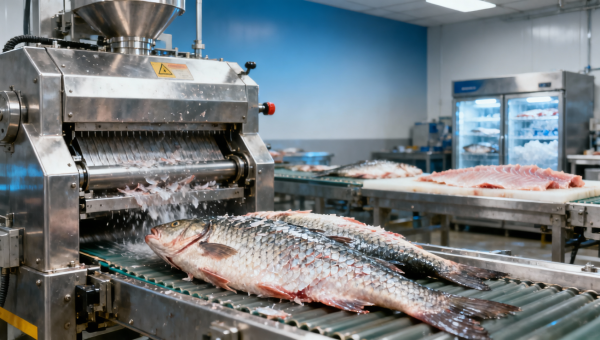
When a commercial fish scaling machine underperforms, the result is not just slower throughput but lost yield, higher labor costs, and greater quality risk across fish processing machinery lines. For buyers comparing a fish filleting machine commercial setup, fish skinning machine wholesale options, or supporting systems such as a commercial ice flaker machine and block ice machine for fishery, understanding the root causes of scaling inefficiency is essential before procurement or plant upgrades.
Why scaling problems reduce yield faster than many processors expect
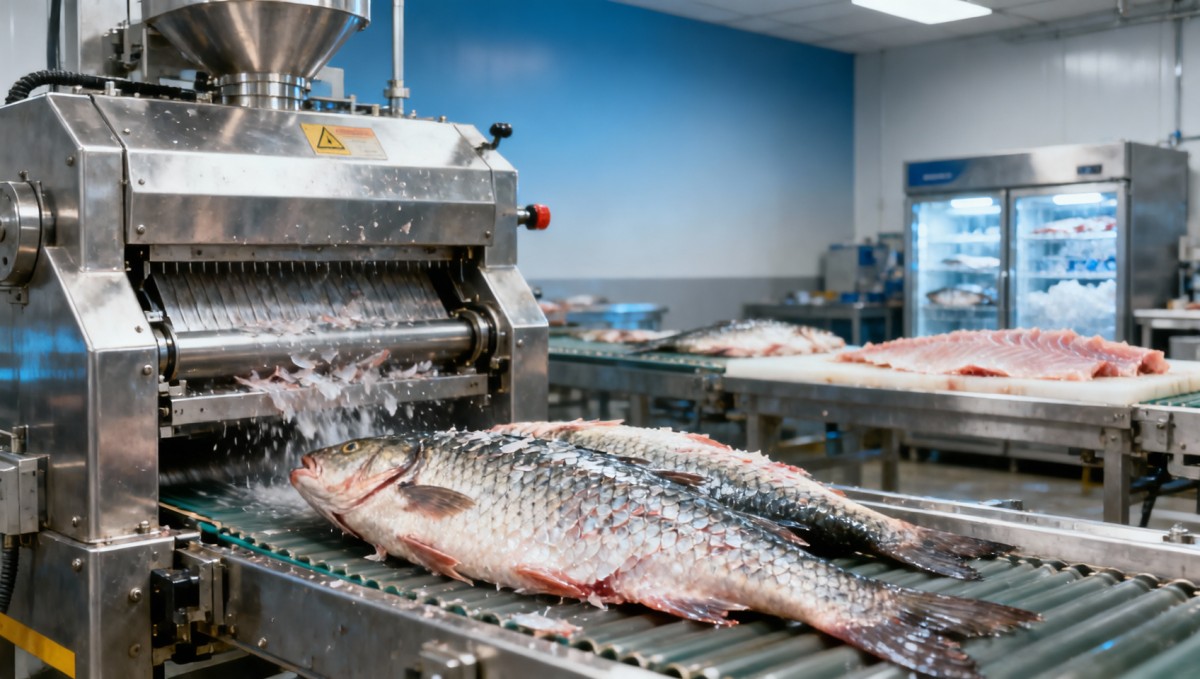
In commercial fish processing, scaling is often treated as a preparatory step. In practice, it is a yield-protection step. If scales remain on the skin, downstream fish skinning, washing, grading, and filleting can become less stable. If the scaling action is too aggressive, skin damage increases and edible surface loss follows. Across medium- and high-throughput plants, even a small drop in usable flesh recovery per batch can affect margin, labor planning, and customer complaints within 1 to 3 production cycles.
Operators usually notice the symptom first: uneven descaling, more manual touch-up, or fish moving unpredictably through the line. Technical evaluators, however, should look deeper at feed consistency, drum or brush wear, water flow, and fish size variation. A commercial fish scaling machine that performs well on one species or one weight band may struggle when raw material shifts from small pelagic fish to larger farmed species or mixed lots in the same 8 to 10 hour shift.
Procurement teams also make a common mistake. They compare only quoted capacity, motor power, or initial price. Yet actual yield loss usually comes from mismatch between machine configuration and process conditions. This is why ACC places scaling equipment within the broader aquaculture and fishery tech workflow, not as an isolated machine. Throughput claims matter, but line compatibility, sanitation design, and raw-material variability matter more when plants seek stable output over 2 to 4 quarters.
For financial approvers and plant managers, the core question is simple: does the machine protect saleable product while controlling labor and rework? A machine that requires 2 extra workers for manual finishing, causes more rejects at quality inspection, or slows handoff to a fish filleting machine commercial line is not lower cost, even when the purchase price appears attractive.
The most common production signals that point to a scaling bottleneck
The warning signs are usually operational before they become financial. If these patterns appear repeatedly over 7 to 14 days, the problem is likely systemic rather than temporary:
- Visible residual scales on belly, collar, or fin-adjacent zones after the first pass, forcing a second pass or manual scraping.
- Increased skin tears before a fish skinning machine wholesale line or reduced stability on conveyors due to uneven surface friction.
- Rising water usage, splash contamination, or more frequent cleaning interruptions during continuous operation beyond 4 to 6 hours.
- Output inconsistency between operators, shifts, or species groups, indicating settings are too sensitive to raw-material variability.
These signals matter because scaling performance affects not only appearance but also process stability. Once inconsistency enters the line, it tends to multiply in trimming, filleting, skinning, icing, and packing.
What usually goes wrong inside a commercial fish scaling machine
Most scaling failures fall into 5 technical categories: contact pressure mismatch, worn scaling elements, poor species adaptation, unstable feed control, and weak sanitation design. These causes rarely appear alone. In many plants, two or three factors interact. For example, a worn brush surface may seem minor, but when combined with variable fish size and excessive conveyor speed, the result can be lower scale removal and more surface bruising within the same shift.
Contact pressure is one of the most underestimated issues. Too little pressure leaves scales on the fish. Too much pressure increases skin damage and can reduce product value in fresh or premium chilled markets. Machines handling different species often need an adjustable window rather than one fixed setting. When buyers ask only for capacity in kg/h but not the adjustment range for contact elements, they risk buying a machine optimized for ideal test conditions rather than real factory conditions.
Wear is the next issue. Scaling heads, brushes, abrasive surfaces, bearings, and guide parts gradually lose effectiveness. In many facilities, maintenance teams replace them only after obvious failure. That is late. A more practical rule is condition-based inspection at weekly intervals for heavy use or every 150 to 250 operating hours, depending on species mix, water quality, and production intensity. This approach helps protect both yield and sanitation.
Feed control matters just as much as the scaling mechanism itself. If fish enter head-first, tail-first, or sideways without repeatable alignment, contact becomes random. This is where project managers should review the upstream interface: receiving tables, manual loading rhythm, prewash condition, and whether a commercial ice flaker machine or block ice machine for fishery keeps fish within a stable temperature band before processing. Very cold, partially stiff fish and warm, softened fish do not behave the same under scaling contact.
Technical causes and their line-level consequences
The table below helps technical, procurement, and quality teams connect machine faults with operational outcomes. It is especially useful during factory audits or when comparing retrofit versus replacement.
A useful takeaway is that yield loss is not always direct flesh loss. It often appears as downgraded product, added labor, slower transfer to the fish filleting machine commercial stage, or greater rejection risk at quality inspection. Those indirect costs can be more serious than spare-part expense.
Three diagnostic checks before blaming the machine
Before deciding that the commercial fish scaling machine is undersized or defective, teams should verify three surrounding variables. First, confirm the fish temperature and firmness at entry, ideally within a controlled process band defined by the plant. Second, check batch uniformity by species and size class. Third, review whether upstream icing and holding practices are consistent across shifts. Many “machine problems” begin with process variability rather than machine failure.
This cross-functional review is where ACC’s editorial approach adds value. Fishery technology cannot be assessed by equipment alone. It must be evaluated through raw-material handling, compliance expectations, utilities, workforce behavior, and downstream integration.
How buyers should compare scaling equipment with the rest of the processing line
A commercial fish scaling machine should not be selected in isolation. The right comparison framework looks at the entire line: descaling, skinning, filleting, washing, icing, and packing. Procurement teams often compare one machine against another using nameplate specifications only. A stronger method is to assess 4 linked dimensions: raw-material fit, line compatibility, sanitation and maintenance burden, and total operating cost over 12 to 24 months.
For distributors and agents, this matters as well. A machine that appears flexible on paper may create support issues later if the buyer processes multiple species, works in humid coastal environments, or runs seasonal peaks. Business evaluators should ask whether the configuration supports expansion, dual-shift operation, and integration with a fish skinning machine wholesale package or chilled handling system. If not, the lower entry cost may become a commercial disadvantage.
The comparison below is designed for technical reviews, budget meetings, and supplier discussions. It can help separate machines built for occasional throughput from those intended for stable industrial duty. The goal is not to find the cheapest unit, but the most controllable one under real plant conditions.
This type of matrix helps finance and project teams move beyond simple capex comparison. It identifies whether the machine will protect output and reduce hidden operating cost. In many cases, a unit with better sanitation access and more stable feed control creates better payback than a cheaper alternative with higher manual correction demand.
A practical 4-step evaluation path
- Define the actual species mix, average batch size, and shift pattern over the next 6 to 12 months rather than using a single peak-day figure.
- Map line interfaces with fish skinning, fish filleting, prechilling, and ice handling equipment so the scaling machine is not assessed alone.
- Ask for sanitation access, wear-part replacement logic, and utility requirements in writing before budget approval.
- Review supplier responsiveness on documentation, spare parts, and commissioning support, especially for remote or export installations.
This process improves decision quality for operators, engineers, procurement teams, and enterprise decision-makers alike.
Which standards, hygiene checks, and operating controls should not be overlooked
In fish processing, yield and hygiene are inseparable. A scaling machine that is difficult to clean can compromise food safety controls, extend washdown time, and increase inspection pressure on quality teams. While exact compliance obligations vary by market, buyers should assess equipment against broadly accepted food-contact and sanitation principles, traceable material selection, and practical cleanability. For exporters, documentation quality can be almost as important as machine performance.
Quality control and safety managers should focus on 5 inspection points during technical review: exposed versus hidden debris zones, ease of disassembly, drainage performance, splash control, and safe access during cleaning. If a machine requires extended manual scraping during washdown or leaves trapped scales in guards and corners, it adds both hygiene risk and labor cost. Over a 5 to 7 day production week, this inefficiency becomes significant.
Temperature discipline also matters. Fish arriving from ice storage, chilled transport, or a block ice machine for fishery should enter the line in a predictable condition. Large temperature swings make skin firmness less consistent, which can alter scaling behavior. In integrated plants, this means the scaling unit, commercial ice flaker machine, and raw-material staging process should be reviewed together, not as separate capex items.
Documentation should include at least a practical operating manual, cleaning procedure, wear-part list, and installation requirements. For project managers, missing documentation often causes more delay than missing hardware. Commissioning issues, operator retraining, and acceptance disputes typically increase when technical files are incomplete or too generic.
Minimum review checklist for quality, safety, and engineering teams
- Confirm the machine can be cleaned within the plant’s daily sanitation window, whether that is 30 minutes, 60 minutes, or longer.
- Verify contact surfaces, drainage paths, and access panels are suitable for repeated washdown in fish-processing environments.
- Check lockout and safe-access procedures for routine inspection after every shift or every defined operating interval.
- Require a spare-parts and preventive-maintenance plan aligned with expected runtime and species variability.
This checklist helps quality, engineering, and purchasing departments speak the same language when assessing commercial fish scaling machine risk.
Common misconceptions that lead to weak procurement decisions
One misconception is that bigger capacity automatically means better productivity. In reality, if the machine is oversized for the typical batch and poorly matched to the species profile, product control can worsen. Another misconception is that scaling performance can be fixed later through operator skill alone. Skilled operators help, but they cannot fully compensate for poor geometry, limited adjustability, or unstable line integration.
A third misconception is that descaling quality has little effect on later stages. Plants often discover the opposite. Inconsistent scaling can influence skinning yield, trimming effort, wash water load, inspection speed, and even final pack appearance. This is why line-level thinking is more reliable than machine-only thinking.
FAQ and next-step guidance for procurement, retrofit, and plant upgrades
The questions below reflect typical concerns from operators, engineering teams, distributors, and investment approvers. They are useful whether you are replacing one commercial fish scaling machine, upgrading a full fish processing line, or comparing a combined package that includes skinning, filleting, and ice handling equipment.
How do we know whether we need adjustment, retrofit, or full replacement?
Start with a 3-part review: current yield stability, downtime frequency, and compatibility with the rest of the line. If the machine still has sound structure and acceptable sanitation access, adjustment of pressure, feed guides, or wear parts may be enough. If the unit repeatedly causes rework, cleaning difficulty, or mismatch with a fish filleting machine commercial line, retrofit or replacement becomes more likely. A decision window of 2 to 6 weeks is often enough to gather practical operating evidence.
What should procurement teams ask before requesting a quotation?
Provide suppliers with species type, approximate size range, daily output target, shift pattern, and available utilities. Also describe whether the line connects to a fish skinning machine wholesale package, chilled storage, a commercial ice flaker machine, or a block ice machine for fishery. Quotations become more useful when they are based on real plant conditions rather than generic throughput assumptions.
How long is a typical delivery and implementation cycle?
For standard industrial equipment, buyers often work with a 4 to 8 week production and shipping window, followed by installation planning and commissioning. More customized projects may take longer, especially when line integration, documentation, or export packaging is involved. Project teams should confirm not only shipping time but also spare-part readiness, operator training, and acceptance criteria.
Why involve ACC when evaluating fish processing machinery?
Because fish processing equipment selection now sits inside a more complex industrial context. Buyers must weigh machine performance, line integration, compliance expectations, supply-chain transparency, and commercial risk. ACC supports this decision process with sector-focused analysis across aquaculture and fishery tech, agricultural and processing machinery, and regulated primary-industry supply chains. That perspective is especially valuable for teams that need to justify procurement technically and commercially at the same time.
Why choose us for your evaluation and supplier communication process?
AgriChem Chronicle is positioned for industrial buyers who need more than promotional claims. We help frame discussions around measurable decision points: species fit, sanitation risk, line integration, documentation quality, operating burden, and supplier transparency. This is useful for operators seeking fewer bottlenecks, technical evaluators reviewing process fit, procurement teams comparing offers, and financial approvers seeking clearer capex logic.
You can contact us to clarify commercial fish scaling machine parameters, compare replacement versus retrofit options, review fish filleting machine commercial and fish skinning machine wholesale compatibility, estimate delivery windows, assess utility requirements, and organize supplier-side documentation before formal quotation. If your project also involves a commercial ice flaker machine or block ice machine for fishery, we can help structure the evaluation so cold-chain handling and processing performance are considered together rather than separately.
For companies preparing a plant upgrade, distributor pitch, or technical procurement package, a well-structured inquiry saves time and reduces commercial risk. Share your target species, expected throughput band, current bottlenecks, sanitation expectations, and installation timeline. That allows a more precise discussion around configuration, implementation steps, and realistic procurement decisions.
Related Intelligence
- Commercial FishingGaode Launches First Quadruped Robot, ABot-M0 Open-Source Model for Aquaculture & Poultry InspectionABot-M0: Gaode's open-source quadruped robot for aquaculture & poultry inspection—80.5% task success, field-tested in Brazil & Vietnam. Discover how it transforms autonomous farm inspections.
- Commercial FishingGaode Launches First Quadruped Robot, Open-Sources ABot-M0 for Aquaculture & PoultryGaode launches first quadruped robot & open-sources ABot-M0 — an embodied AI model for aquaculture and poultry automation, with 80.5% Libero-Plus task success.
- Commercial FishingLobster Creels Bulk Orders: Where Shipping Costs Get HiddenLobster creels bulk costs can hide in freight, packing, and compliance. Compare suppliers smarter across fish processing machinery, longline fishing gear, and block ice machine for fishery projects.
The Morning Broadsheet
Daily chemical briefings, market shifts, and peer-reviewed summaries delivered to your terminal.
