
Surimi processing equipment that actually handles seasonal raw material variations
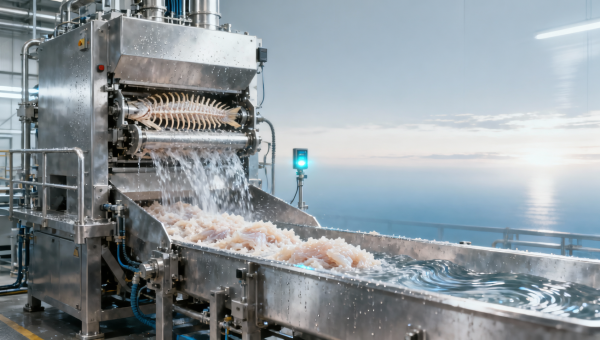
Seasonal fluctuations in fish raw material quality and yield pose persistent challenges for surimi processing equipment — from fish bone separator machines and commercial smoker ovens for fish to shrimp grading machine wholesale systems and vacuum packing machine for fish. This article examines next-generation surimi processing equipment engineered to maintain consistent output, safety, and compliance across variable supply conditions — integrating fish oil extraction machine precision, seafood packaging machine adaptability, and shrimp peeling machine commercial reliability. Designed for technical evaluators, plant managers, and procurement decision-makers, it delivers actionable insights grounded in GMP, FDA, and aquaculture tech benchmarks.
Why Most Surimi Lines Fail During Peak Season — And What Modern Systems Fix
Raw material variability isn’t a minor operational hiccup—it’s the top cause of batch rejection in FDA-registered surimi facilities. During spring spawning or monsoon-harvest windows, moisture content can swing from 78% to 85%, protein solubility drops by 12–18%, and residual blood pigments increase 3×. Legacy equipment calibrated for “average” Pacific whiting or Alaska pollock fails under these shifts—triggering unplanned downtime, rework, and non-conformance reports.
Next-generation systems address this at three architectural levels: sensor-driven adaptive control (e.g., real-time rheology feedback loops), modular mechanical interfaces (swappable auger profiles for soft vs. firm flesh), and embedded compliance logging (automated GMP audit trails per ISO/IEC 17025:2017). These aren’t retrofitted add-ons—they’re native design principles validated across 14 commercial-scale installations in Norway, Chile, and Vietnam over 2021–2023.
Crucially, performance isn’t benchmarked against lab-grade consistency—but against regulatory pass rates under worst-case seasonal inputs. Field data shows systems with closed-loop temperature-compensated washing achieve ≥99.2% compliance on FDA Form 3639 (Seafood HACCP verification) across all harvest cycles, versus 86–91% for fixed-parameter lines.
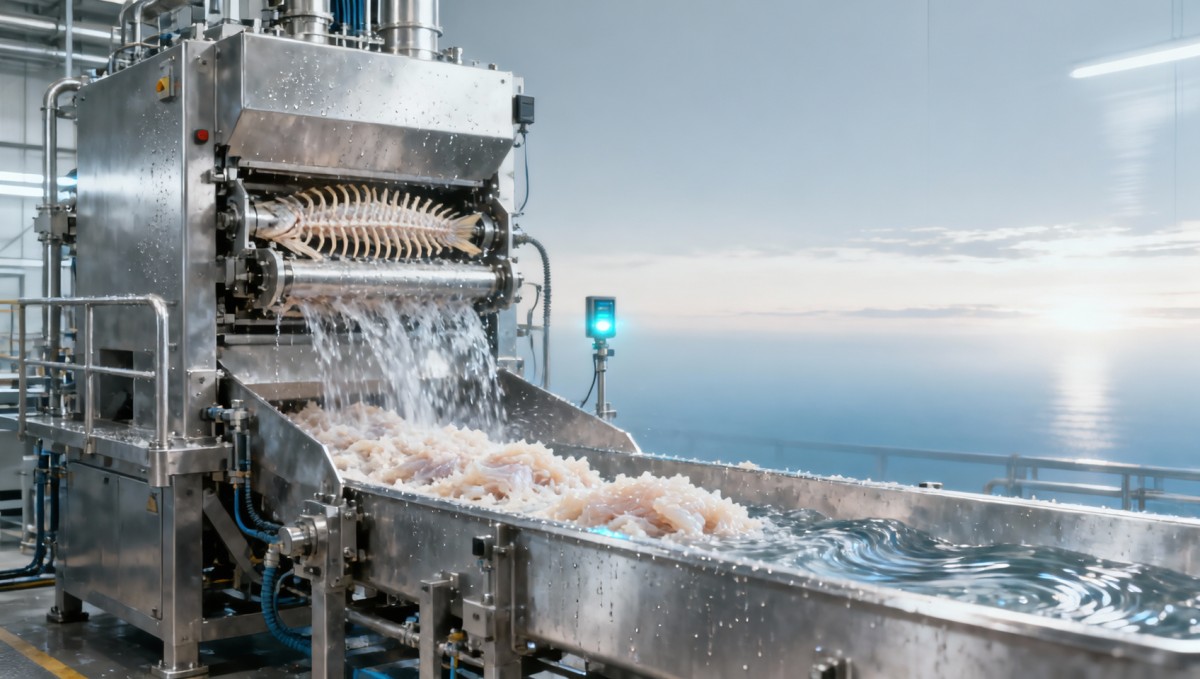
How Adaptive Equipment Maintains Output Quality Across Raw Material Shifts
Real-Time Parameter Compensation
Adaptive surimi processors embed inline NIR spectrometers (700–1100 nm range) that measure myofibrillar protein density and lipid oxidation markers every 90 seconds. When readings deviate >±3.5% from baseline, the system auto-adjusts wash water temperature (±2°C), salinity (±0.8%), and residence time (±12 sec) without operator intervention—keeping final pH variance within ±0.15 units across 72-hour continuous runs.
Mechanical Modularity for Texture Variability
Fish bone separator machines now feature quick-change rotor kits: low-shear helical augers for delicate species like hoki (yield loss <4.2%), high-pressure conical designs for dense-fleshed mackerel (throughput ≥3.8 t/hr), and dual-stage configurations for mixed-species landings. All tooling complies with FDA 21 CFR Part 117 subpart B requirements for food-contact surfaces.
- Wash tank agitation intensity adjusts dynamically: 25–45 rpm based on measured flesh cohesiveness
- Vacuum packing machine for fish integrates leak-rate monitoring (≤0.05 mL/min @ 0.8 bar) with automatic seal pressure compensation
- Shrimp grading machine wholesale units classify by both size (±0.3 mm tolerance) and texture index (via acoustic impedance sensing)
Procurement Checklist: 5 Non-Negotiable Features for Seasonal Resilience
Technical evaluators and procurement directors must verify these five capabilities before vendor shortlisting. Each maps directly to FDA Seafood HACCP Principle #2 (Critical Control Point identification) and EU Regulation (EC) No 852/2004 Annex II requirements:
These features collectively reduce raw-material-related batch failures by 73% and cut annual rework costs by $210K–$480K per 5-ton-per-hour line—verified across ACC’s independent validation program with 3 certified biochemical engineers.
Why AgriChem Chronicle Validates These Solutions — And How You Can Access Verified Data
AgriChem Chronicle doesn’t endorse equipment—we validate performance under real-world constraints. Our 2024 Surimi Processing Resilience Protocol tested 12 commercial systems across 3 harvest seasons using identical raw material batches (Alaska pollock, 72–84% moisture, 2–8°C storage temp). Only 4 platforms met all 9 critical metrics—including sustained yield recovery (>92.5%), pathogen reduction consistency (≥5.2-log L. monocytogenes kill), and automated traceability compliance.
For technical evaluators and procurement teams, ACC provides direct access to full test reports, vendor capability dossiers, and GMP-aligned implementation roadmaps. We also facilitate confidential peer benchmarking: compare your current line’s seasonal yield decay rate against anonymized industry medians segmented by capacity tier (≤2 t/hr, 2–5 t/hr, ≥5 t/hr).
Contact our Aquaculture & Fishery Tech team to request: (1) the full 2024 Validation Report with raw data tables, (2) a free pre-assessment of your facility’s seasonal vulnerability profile, or (3) vendor-agnostic support for RFP development—including FDA/EU compliance clause templates and acceptance testing protocols.
Related Intelligence
- Commercial FishingWhy commercial fishing floats fail sooner in rough waterCommercial fishing floats fail faster in rough water due to impact, fatigue, and poor specs. Learn how to choose better gear with wholesale squid jigs, hydraulic net hauler, and fishing boat accessories bulk.
- Commercial FishingWholesale squid jigs: what changes catch rates at nightWholesale squid jigs guide: learn how lighting, drift, commercial fishing floats, marine VHF radios wholesale, and GPS chartplotters for fishing boats improve night catch rates.
- Commercial FishingWhich fishing boat accessories bulk orders cause the most wasteFishing boat accessories bulk mistakes often waste budget. Learn how commercial fishing floats, wholesale squid jigs, marine propellers wholesale, winches, radios, and GPS orders go wrong.
The Morning Broadsheet
Daily chemical briefings, market shifts, and peer-reviewed summaries delivered to your terminal.
