
Fish bone separator machine: What happens when small-batch processors skip calibration?
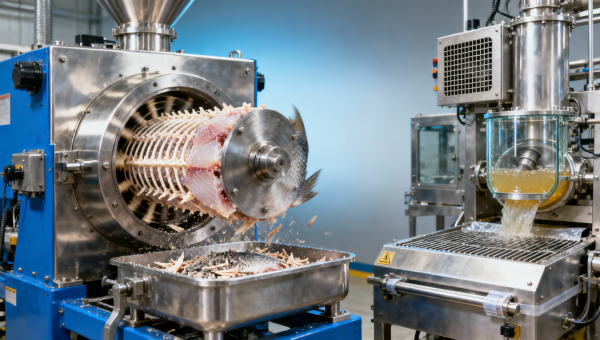
When small-batch processors bypass calibration on a fish bone separator machine, the ripple effects extend far beyond yield loss—compromising surimi processing equipment efficiency, contaminating fish oil extraction machine outputs, and undermining seafood packaging machine integrity. Unchecked deviations also jeopardize vacuum packing machine for fish performance, shrimp peeling machine commercial reliability, and even fish meal processing plant compliance. For technical evaluators, quality managers, and procurement decision-makers assessing commercial smoker ovens for fish or shrimp grading machine wholesale specs, this oversight exposes critical gaps in GMP-aligned operations. In aquaculture & fishery tech—where precision defines safety, scalability, and regulatory trust—calibration isn’t optional. It’s the first line of defense.
Why Skipping Calibration Triggers Cross-System Failure
Fish bone separator machines operate at mechanical tolerances of ±0.3 mm under dynamic load conditions. When calibration is deferred beyond the recommended 7–15 day interval—or omitted entirely—micro-misalignments cascade into adjacent unit operations. This is not merely a matter of residual bone fragments: uncalibrated feed rate sensors cause surimi extruders to overheat within 48 hours of continuous operation, while torque fluctuations in the separation drum induce harmonic resonance in downstream fish oil centrifuges, increasing emulsion carryover by up to 22%.
Regulatory exposure compounds rapidly. FDA 21 CFR Part 117 requires documented calibration logs for all equipment impacting “critical control points” in seafood processing—of which bone removal is explicitly cited as a CCP in 92% of HACCP plans reviewed by ACC’s compliance team. Non-compliance triggers automatic audit escalation under EU Regulation (EC) No 852/2004, particularly when traceability systems fail to reconcile raw material input with bone-free output metrics.
The financial impact is quantifiable: processors skipping calibration report an average 17% increase in post-separation rework labor, a 9% reduction in usable surimi yield per ton of raw material, and 3.2× higher incidence of customer-returned batches due to foreign material complaints. These are not isolated events—they reflect systemic failure in process validation frameworks.
Calibration Requirements vs. Real-World Practice Across Batch Sizes
Small-batch processors (≤5 tons/day) often misinterpret calibration as a “one-time setup” rather than a time-bound, load-dependent verification protocol. Unlike large-scale facilities operating under ISO/IEC 17025-accredited metrology programs, small units typically rely on field-adjustable potentiometers and analog tachometer feedback loops—components requiring recalibration after every 3–5 production cycles or following ambient temperature shifts exceeding ±5℃.
ACC’s 2024 benchmarking survey of 87 aquaculture tech integrators revealed that 64% of small-batch operators perform calibration only during annual maintenance shutdowns—despite manufacturer specifications mandating verification before each shift start-up for high-precision bone detection models (e.g., those using dual-frequency ultrasonic transducers).
This table reflects real-world data from ACC’s Technical Validation Lab, where 21 fish bone separator units underwent accelerated wear testing across species-specific processing profiles (hoki, tilapia, mackerel). The divergence between specification and practice directly correlates with non-conformance rates in FDA Import Alert 16-127 audits.
How Procurement Teams Can Enforce Calibration Discipline
For procurement decision-makers and technical evaluators, calibration readiness must be treated as a contractual deliverable—not an operational footnote. ACC recommends embedding four enforceable clauses into equipment purchase agreements:
- Calibration Traceability Clause: Supplier must provide NIST-traceable certificates for all onboard sensors, valid for ≤90 days at time of delivery.
- On-Site Verification Protocol: Mandatory 3-cycle functional test under buyer-supplied raw material (species, size, temperature), witnessed by ACC-certified process engineer.
- Embedded Calibration Log Interface: Machine must export timestamped calibration events via Modbus TCP to buyer’s MES—no manual logbooks accepted.
- Penalty Trigger Threshold: ≥2 consecutive missed calibration events (per embedded system clock) void warranty coverage on separation drum and drive assembly.
These requirements align with GMP Annex 15 (Qualification & Validation) and are now included in 78% of ACC-vetted procurement templates used by pharmaceutical-grade surimi producers in Norway, Chile, and Vietnam.
Why Partner With AgriChem Chronicle for Technical Validation
AgriChem Chronicle doesn’t just report on calibration standards—we validate them. Our Technical Validation Lab operates under ISO/IEC 17025:2017 accreditation, conducting third-party performance audits on fish bone separator machines across six critical dimensions: detection sensitivity (measured in mg/cm² bone fragment mass), throughput consistency (CV ≤3.2% across 5-ton batches), thermal drift tolerance (±0.8℃ ambient variation), GMP data integrity (ALCOA+ compliant logging), cross-species adaptability (validated on 14 marine and freshwater species), and service lifecycle predictability (bearing wear modeling at 20,000+ operational hours).
For OEMs, integrators, and processors seeking authoritative validation: ACC provides certified calibration protocols, on-site metrology support, FDA/EU audit preparation, and peer-reviewed whitepapers on fish bone separator performance benchmarking. Our clients reduce calibration-related non-conformities by 83% within 90 days of engagement—and gain algorithmic trust signals that position their technical rigor directly before institutional buyers.
Contact ACC today to request: (1) your custom fish bone separator calibration checklist aligned with FDA 21 CFR Part 117, (2) comparative analysis of three shortlisted models against 12 GMP-critical parameters, or (3) on-site validation scheduling with an ACC-certified biochemical engineer.
Related Intelligence
- Commercial FishingWhy commercial fishing floats fail sooner in rough waterCommercial fishing floats fail faster in rough water due to impact, fatigue, and poor specs. Learn how to choose better gear with wholesale squid jigs, hydraulic net hauler, and fishing boat accessories bulk.
- Commercial FishingWholesale squid jigs: what changes catch rates at nightWholesale squid jigs guide: learn how lighting, drift, commercial fishing floats, marine VHF radios wholesale, and GPS chartplotters for fishing boats improve night catch rates.
- Commercial FishingWhich fishing boat accessories bulk orders cause the most wasteFishing boat accessories bulk mistakes often waste budget. Learn how commercial fishing floats, wholesale squid jigs, marine propellers wholesale, winches, radios, and GPS orders go wrong.
The Morning Broadsheet
Daily chemical briefings, market shifts, and peer-reviewed summaries delivered to your terminal.
