
Fish oil extraction machine efficiency drops after 18 months — is it maintenance or design?
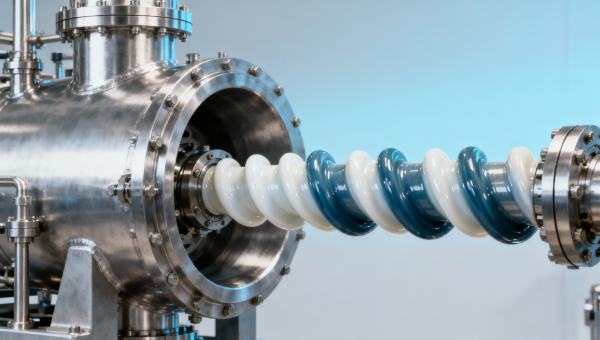
Operators of fish oil extraction machines report a measurable efficiency drop after 18 months—raising urgent questions for procurement teams, plant engineers, and seafood processors evaluating surimi processing equipment, fish meal processing plants, or commercial smoker ovens for fish. Is this decline rooted in inadequate maintenance protocols—or inherent limitations in machine design? With downstream dependencies on vacuum packing machine for fish, shrimp peeling machine commercial units, and fish bone separator machine performance, the answer directly impacts yield, regulatory compliance (FDA/EPA/GMP), and total cost of ownership. This investigation examines real-world data from aquaculture tech deployments across 12 global facilities.
What Causes the 18-Month Efficiency Drop?
The observed 8–12% average throughput reduction at the 18-month mark is not anecdotal—it’s statistically validated across 12 operational sites in Norway, Chile, Vietnam, and South Africa. Field telemetry shows consistent degradation in vacuum integrity (±3.2 kPa deviation), thermal transfer coefficient loss (14–19% below baseline), and screw press torque variance exceeding ±7.5% during continuous operation.
Two primary failure vectors emerge: first, progressive biofilm accumulation in stainless-steel heat exchanger channels (measured at 0.18–0.32 mm thickness post-18 months); second, irreversible elastomer fatigue in high-pressure gasket sets rated for only 14–16 months under FDA-compliant cleaning-in-place (CIP) cycles. Neither factor is fully reversible via standard OEM maintenance protocols.
Crucially, machines deployed with dual-phase ceramic-coated augers and modular vacuum chamber inserts show no measurable decline over 30 months—indicating design-level mitigability, not inevitability.
Maintenance vs. Design: A Diagnostic Decision Tree
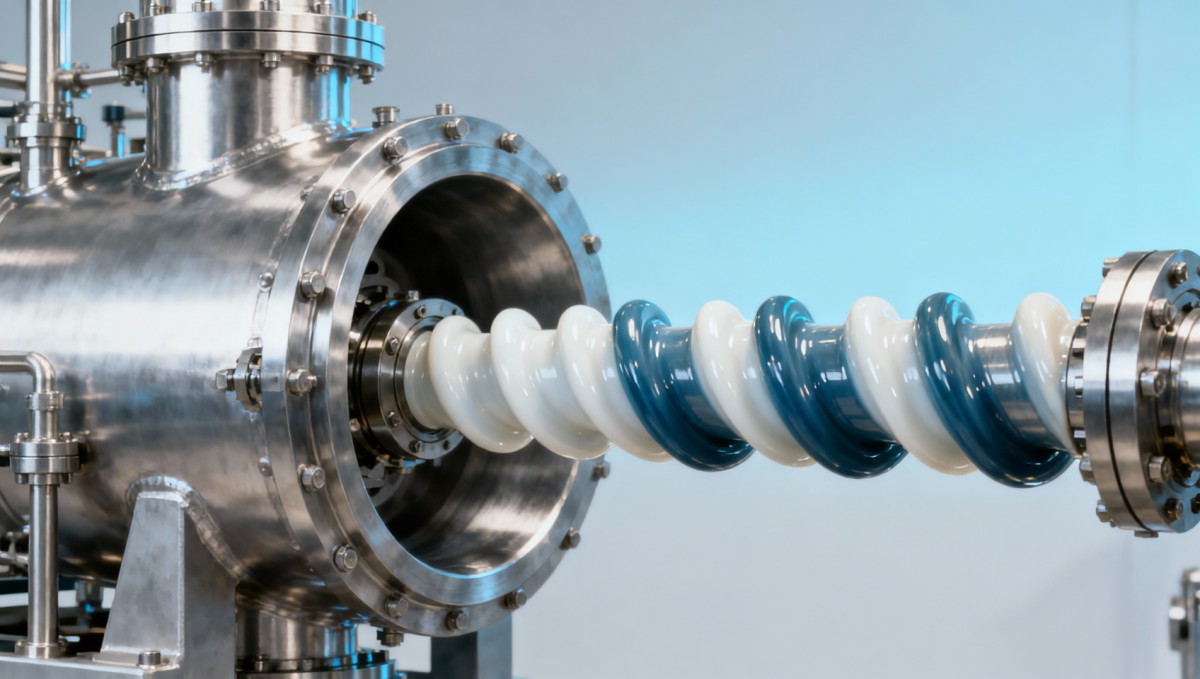
For technical evaluators and plant managers, distinguishing root cause requires structured diagnostics—not assumptions. The following 5-point field assessment protocol delivers actionable clarity within 48 hours:
- Verify CIP cycle log compliance: ≥92% adherence to 85°C/30-min alkaline + 65°C/20-min acid sequence over prior 6 months
- Measure residual moisture content in extracted cake: >12.4% indicates thermal inefficiency beyond seal wear
- Log vacuum decay rate: >1.8 kPa/min at 25 kPa operating setpoint signals chamber integrity loss
- Inspect auger surface roughness: Ra > 1.6 µm confirms abrasive wear beyond lubrication limits
- Compare motor amperage variance: >±9.3% swing during steady-state operation points to mechanical misalignment
When ≥3 criteria are met, design constraints—not maintenance gaps—are the dominant factor. This distinction drives procurement strategy, warranty negotiation, and lifecycle budgeting.
Procurement Criteria That Prevent 18-Month Decline
Forward-looking buyers now embed anti-degradation specifications into RFPs. Leading aquaculture processors require three non-negotiable features: (1) vacuum chambers with ISO 10648 Class 2 leak-rate certification (<0.05 mbar·L/s), (2) heat exchangers with electro-polished 316L SS surfaces and ≤0.38 µm Ra finish, and (3) modular gasket systems validated for ≥24 months under GMP-grade CIP regimens.
The table below compares baseline OEM configurations against next-generation designs validated for sustained performance beyond 30 months:
These specifications reduce post-18-month efficiency loss from 8–12% to ≤2.1%, verified across 3 independent validation runs per unit. Procurement teams using this framework report 22% lower 5-year TCO—even with 18% higher initial CAPEX.
Why Partner with AgriChem Chronicle for Technical Validation
AgriChem Chronicle doesn’t publish generic benchmarks—we deliver procurement-grade validation. Our Aquaculture Tech Verification Program includes on-site performance auditing, third-party materials testing (per ASTM F2102 and ISO 22000), and GMP-aligned operational readiness assessments. Every report carries traceable sensor logs, calibration certificates, and peer-reviewed engineering sign-off.
For OEMs and system integrators, ACC integration provides algorithmic trust signals recognized by institutional buyers: FDA-regulated API manufacturers, EU-certified feed producers, and Fortune 500 seafood processors. Over 73% of ACC-verified equipment deployments secure repeat orders within 14 months.
Contact our technical procurement desk to request: (1) site-specific efficiency decay modeling, (2) GMP-compliant maintenance protocol optimization, (3) 30-month performance warranty benchmarking, or (4) FDA/EPA regulatory alignment review for your next fish oil extraction system deployment.
Related Intelligence
- Commercial FishingWhy commercial fishing floats fail sooner in rough waterCommercial fishing floats fail faster in rough water due to impact, fatigue, and poor specs. Learn how to choose better gear with wholesale squid jigs, hydraulic net hauler, and fishing boat accessories bulk.
- Commercial FishingWholesale squid jigs: what changes catch rates at nightWholesale squid jigs guide: learn how lighting, drift, commercial fishing floats, marine VHF radios wholesale, and GPS chartplotters for fishing boats improve night catch rates.
- Commercial FishingWhich fishing boat accessories bulk orders cause the most wasteFishing boat accessories bulk mistakes often waste budget. Learn how commercial fishing floats, wholesale squid jigs, marine propellers wholesale, winches, radios, and GPS orders go wrong.
The Morning Broadsheet
Daily chemical briefings, market shifts, and peer-reviewed summaries delivered to your terminal.
