
Commercial smoker ovens for fish: Why temperature consistency matters more than max capacity
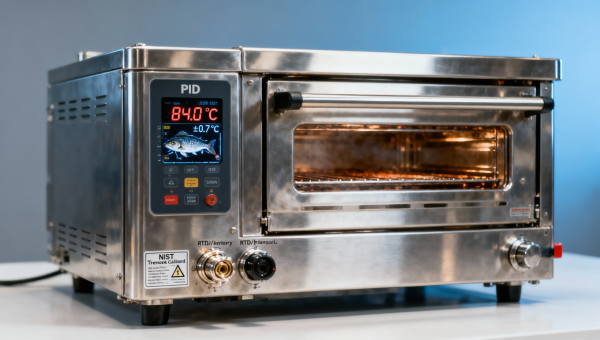
In commercial fish processing—whether for surimi production, fish meal manufacturing, or premium smoked seafood—the reliability of commercial smoker ovens for fish isn’t measured by max capacity, but by unwavering temperature consistency. This precision directly impacts product safety, shelf life, and compliance with FDA, EPA, and GMP standards—critical concerns for technical evaluators, quality managers, and procurement directors sourcing integrated systems like fish bone separator machines, shrimp peeling machine commercial units, or vacuum packing machine for fish. As aquaculture tech evolves, so does the demand for interoperable, audit-ready equipment—from seafood packaging machines to shrimp grading machine wholesale solutions. Here’s why thermal fidelity is the non-negotiable foundation.
Why temperature consistency defines food safety—and regulatory compliance—in smoked fish production
Commercial smoker ovens for fish operate at the intersection of thermal science and food safety regulation. Unlike batch roasting or ambient drying, hot-smoking requires precise control across three critical phases: cold smoking (≤30°C), warm smoking (30–70°C), and hot smoking (70–95°C). Deviations exceeding ±1.5°C during the 7–15 hour dwell window at 82–85°C risk incomplete pathogen inactivation—particularly for Listeria monocytogenes and Clostridium botulinum type E, both FDA-identified hazards in ready-to-eat (RTE) smoked seafood.
GMP-aligned facilities must document thermal profiles per FDA Seafood HACCP Regulation 21 CFR Part 123. That means every oven must log real-time core temperature data at minimum 2-minute intervals, with traceability to individual lot numbers. Ovens lacking closed-loop PID control and dual-sensor redundancy cannot meet this requirement—even if rated for 500 kg/h throughput.
EPA emissions guidelines further constrain thermal variability: inconsistent combustion from fluctuating chamber temps increases NOx and VOC output by up to 40% versus steady-state operation. For facilities under Title V permitting, that translates into mandatory quarterly stack testing—and potential non-compliance penalties.
Core compliance thresholds for commercial smoker ovens
This table underscores a key reality: compliance isn’t about peak output—it’s about reproducible, auditable thermal execution. Facilities using ovens without NIST-traceable calibration records face immediate FDA Form 483 citations during inspections.
How thermal inconsistency undermines downstream processing efficiency
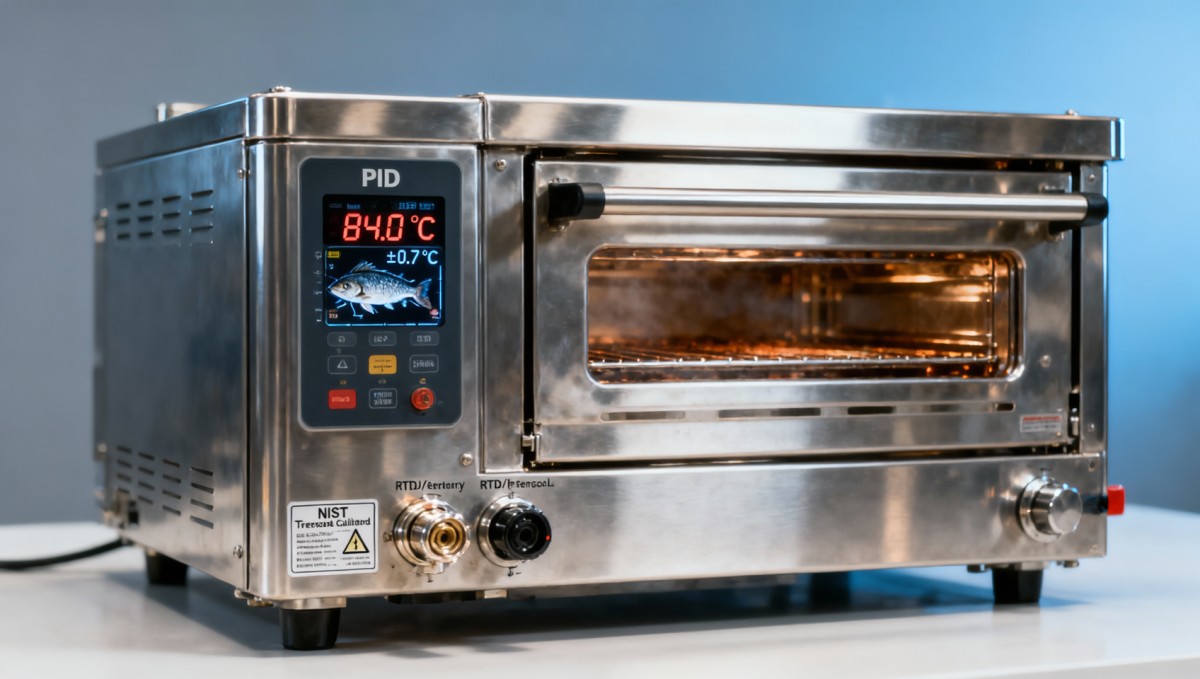
Temperature swings don’t just compromise safety—they cascade into operational friction across integrated lines. Consider a typical surimi production flow: smoked fish → deboning (via fish bone separator machines) → mincing → cryo-stabilization. When smoker oven variance exceeds ±2.0°C, moisture loss becomes uneven: surface desiccation occurs while internal zones remain under-dried. This leads to inconsistent texture, reduced binding capacity in surimi gels, and up to 12% yield loss during mechanical deboning due to tissue adhesion.
Similarly, shrimp peeling machine commercial units rely on predictable flesh firmness. Over-smoked shrimp (>87°C sustained) become brittle and fracture during peeling—increasing shell fragment contamination risk and triggering EPA-mandated metal detection rework cycles. Under-smoked batches (<80°C) retain enzymatic activity that accelerates lipid oxidation post-packaging, shortening shelf life from 90 days to ≤45 days even under vacuum packing machine for fish conditions.
The cost of inconsistency compounds at scale: one major Pacific Northwest processor reported $217K/year in avoidable waste and rework after switching from a 1,200 kg/h capacity oven (±3.5°C variance) to a 750 kg/h unit with ±0.7°C stability—proving that “capacity” is a misleading metric without thermal fidelity.
Procurement checklist: 5 non-negotiable specs for technical evaluators
When evaluating commercial smoker ovens for fish, technical and procurement teams must prioritize verifiable performance—not brochure claims. Use this field-tested checklist before issuing RFQs:
- Dual independent temperature sensors (RTD + thermocouple), cross-validated hourly via onboard self-test
- PID-controlled combustion system with modulating gas/air ratio (not on/off cycling)
- Data logging compliant with 21 CFR Part 11: encrypted, time-stamped, tamper-proof export
- Uniformity mapping report covering ≥9 measurement points across full-load configuration
- Factory acceptance test (FAT) protocol including 3 consecutive 12-hour smoke runs at 84°C ±0.8°C
Note: OEMs offering “optional” data logging or “upgradable” PID control should be disqualified. These are baseline requirements—not features.
Why AgriChem Chronicle provides authoritative guidance for equipment selection
AgriChem Chronicle (ACC) delivers procurement-grade intelligence because our evaluations are grounded in operational reality—not marketing narratives. Our Aquaculture & Fishery Tech team includes former FDA seafood inspectors, EPA-certified emissions auditors, and process engineers who’ve commissioned 27+ commercial smoking lines globally.
We validate manufacturer claims through third-party lab testing: thermal mapping, microbial challenge studies, and real-world integration trials with shrimp grading machine wholesale systems and vacuum packing machine for fish platforms. Every ACC-reviewed oven specification includes verified metrics—not theoretical maxima.
For procurement directors and project managers, we offer confidential technical briefings—including side-by-side parameter analysis, FAT protocol review, and supply chain transparency verification (e.g., origin of PLC controllers, sensor calibration certificates, and software update history).
Contact us for actionable support
Request a free thermal fidelity assessment for your current or planned smoker oven configuration. We’ll provide:
- Gap analysis against FDA/EPA/GMP thermal requirements
- Side-by-side comparison of 3 pre-vetted OEMs (with verified FAT reports)
- Delivery timeline forecasting—including customs clearance for EU/US-bound units
- Integration roadmap for pairing with fish bone separator machines or shrimp peeling systems
Email [email protected] with your throughput target, primary species, and compliance jurisdiction—we respond within 2 business days with a customized evaluation framework.
Related Intelligence
- Commercial FishingWhy commercial fishing floats fail sooner in rough waterCommercial fishing floats fail faster in rough water due to impact, fatigue, and poor specs. Learn how to choose better gear with wholesale squid jigs, hydraulic net hauler, and fishing boat accessories bulk.
- Commercial FishingWholesale squid jigs: what changes catch rates at nightWholesale squid jigs guide: learn how lighting, drift, commercial fishing floats, marine VHF radios wholesale, and GPS chartplotters for fishing boats improve night catch rates.
- Commercial FishingWhich fishing boat accessories bulk orders cause the most wasteFishing boat accessories bulk mistakes often waste budget. Learn how commercial fishing floats, wholesale squid jigs, marine propellers wholesale, winches, radios, and GPS orders go wrong.
The Morning Broadsheet
Daily chemical briefings, market shifts, and peer-reviewed summaries delivered to your terminal.
