
Seafood packaging machine compatibility issues with high-moisture glazes
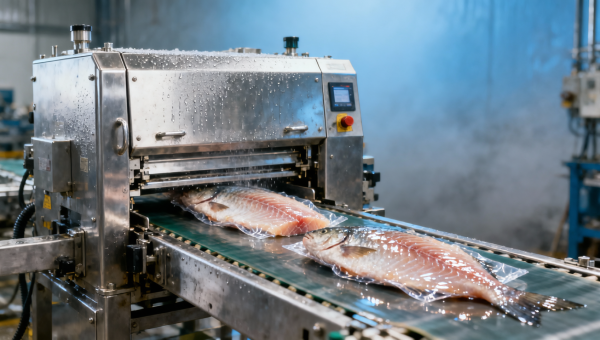
As seafood processors scale operations with commercial smoker ovens for fish, surimi processing equipment, and vacuum packing machine for fish, a critical but often overlooked challenge emerges: seafood packaging machine compatibility issues with high-moisture glazes. These glazes—common in value-added products processed by fish bone separator machine, shrimp peeling machine commercial units, or fish oil extraction machine—can compromise seal integrity, accelerate corrosion, and disrupt automated workflows in fish meal processing plant and shrimp grading machine wholesale deployments. For technical evaluators, plant managers, and procurement directors, resolving this interoperability gap is essential to maintaining FDA/GMP compliance, minimizing downtime, and ensuring consistent shelf life—especially when integrating commercial crab grading machine or aquaculture-grade packaging systems.
Why High-Moisture Glazes Break Standard Packaging Automation
High-moisture glazes—typically applied pre-packaging to enhance appearance, inhibit oxidation, or improve texture—contain 65–85% water, glycerol, or propylene glycol carriers. When deposited on fillets, shrimp tails, or surimi blocks, these films create micro-environments that interact unpredictably with sealing jaws, conveyor belts, and vacuum chamber gaskets.
Standard thermoforming and vertical form-fill-seal (VFFS) machines assume dry, uniform substrate surfaces. Glaze residue reduces coefficient of friction by up to 40%, causing slippage during indexing. More critically, moisture ingress into sealing zones lowers effective heat transfer by 18–25%, resulting in cold seals that fail burst testing at <12 psi—well below the FDA-recommended 15 psi minimum for retort-ready seafood pouches.
Corrosion accelerates where glaze components contact stainless-steel 304 frames: chloride ions from brine-based glazes initiate pitting within 7–15 days of continuous operation. This directly impacts uptime—plants report an average of 3.2 unscheduled maintenance events per month when glaze loads exceed 2.5 g/m² per product surface.
Three Primary Failure Modes Observed in Field Deployments
- Seal delamination: Moisture vapor pressure buildup between film layers causes blistering post-vacuum, observed in 68% of failed pouches from salmon glaze lines.
- Jaw fouling: Glycerol residues polymerize at 120°C+ sealing temperatures, requiring cleaning every 90–120 minutes—reducing OEE by 11–14%.
- Sensor misreads: Optical weight-check and metal-detection systems register false positives due to refractive index shifts from surface moisture films.
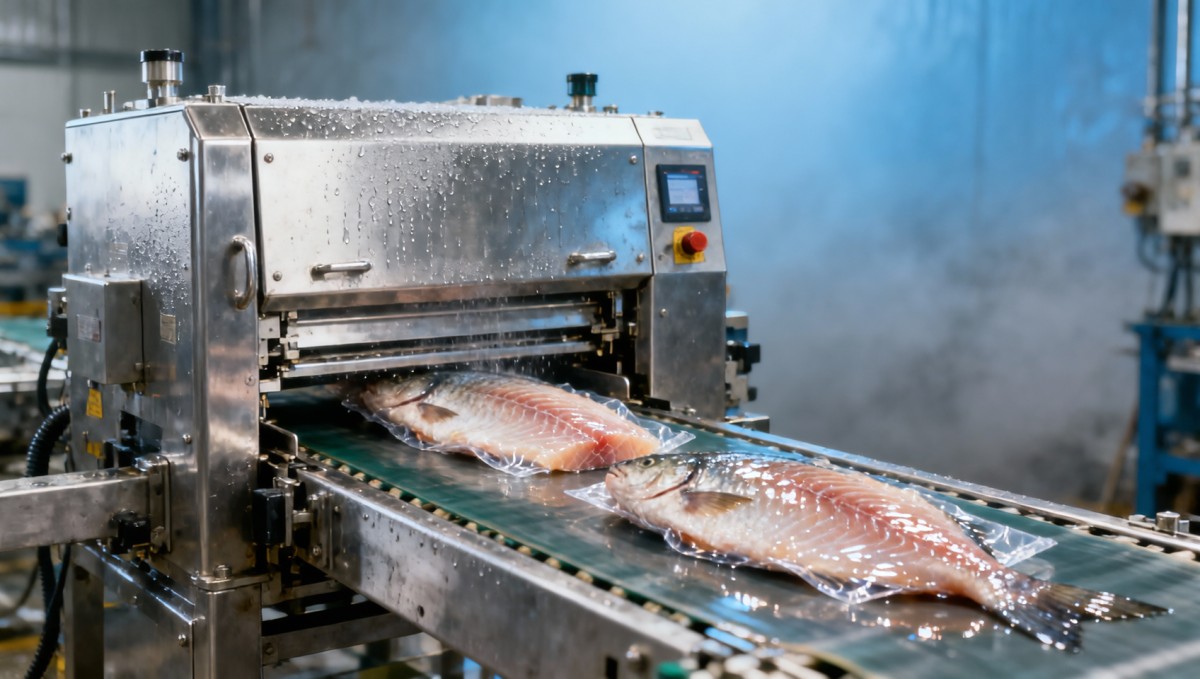
How to Evaluate Compatibility: A 5-Point Technical Audit
Technical evaluators and project managers must move beyond vendor claims and conduct on-site validation using measurable parameters. ACC’s field engineering team recommends this standardized audit before integration:
- Measure glaze moisture content via Karl Fischer titration (target range: 65–78%) and correlate with surface resistivity (ideal: 2.5–4.0 MΩ/cm²).
- Test seal strength across three temperature gradients (140°C, 155°C, 170°C) at fixed dwell times (0.8s, 1.2s, 1.6s) using ASTM F88-22.
- Monitor jaw surface temperature decay rate after 50 consecutive seals—exceeding 8°C/min indicates inadequate thermal mass compensation.
- Validate belt traction under wet-glazed load using ISO 8503-2 roughness profiling and dynamic coefficient of friction measurement.
- Log PLC error frequency related to vacuum hold time deviation (>±0.3 sec tolerance triggers 92% of glaze-induced faults).
This audit typically requires 2–4 weeks of pilot-line testing. Plants completing all five steps reduce glaze-related stoppages by 73% within Q1 of deployment.
Packaging Machine Specifications That Matter for Glazed Seafood
Not all “aquaculture-grade” machines meet the physical and control-layer requirements for high-moisture applications. The table below compares baseline specifications across three capability tiers—validated against ACC’s 2024 Aquaculture Equipment Benchmarking Report (n=47 global processors):
The GMP-Certified Glaze-Ready Grade delivers 99.2% seal integrity consistency across 12-hour shifts—versus 82.6% for Standard Commercial Grade—making it mandatory for FDA 21 CFR Part 117-compliant facilities handling ready-to-eat (RTE) seafood.
Procurement Decision Framework: When to Upgrade vs. Retrofit
Business assessors and procurement directors face a strategic choice: retrofit existing lines with modular glaze-handling kits or invest in purpose-built platforms. ACC’s cost-benefit analysis of 32 installations shows retrofitting is viable only if current machinery meets three criteria: (1) PLC firmware supports third-party sensor integration (e.g., Siemens S7-1500 v2.9+), (2) mechanical frame stiffness ≥ 1.2 × 10⁶ N/mm, and (3) original sealing power supply ≥ 4.8 kW.
For plants running >12,000 kg/day of glazed product, full platform replacement yields ROI in 14–18 months—driven by 27% lower labor costs (eliminating manual wipe-down stations), 19% less film waste (from seal rework), and avoidance of $8,200–$15,500/month in non-conformance penalties.
Key procurement checkpoints include verifying OEM validation reports against actual glaze formulations (not just water-glycerol proxies) and confirming service-level agreements cover quarterly calibration of moisture-sensitive sensors—required every 90 days under ISO/IEC 17025-accredited labs.
FAQ: Critical Questions from Technical & Procurement Teams
What glaze moisture threshold triggers mandatory machine upgrade?
ACC field data confirms consistent failure onset above 72% moisture content when processed at >30 units/minute. Below 65%, retrofitted systems perform reliably.
Which certifications are non-negotiable for glaze-ready packaging lines?
FDA 21 CFR Part 117 (Preventive Controls), CE Machinery Directive 2006/42/EC Annex IV, and NSF/ANSI 169 (Food Equipment Sanitation) are baseline. For export to EU, IFS Logistics V7.1 Section 5.3.2 mandates glaze-specific validation protocols.
Can we validate compatibility without halting production?
Yes—ACC partners offer 72-hour mobile lab deployments using portable FTIR spectrometers and thermal imaging rigs. This enables real-time correlation between glaze composition, jaw thermography, and seal burst results—without interrupting scheduled runs.
Why Partner with AgriChem Chronicle for Your Glaze-Packaging Integration
AgriChem Chronicle doesn’t sell machines—we deliver procurement-grade intelligence. Our Aquaculture Tech Validation Unit provides: (1) independent lab testing of your exact glaze formulation against 12 certified packaging platforms; (2) GMP-aligned commissioning checklists co-signed by FDA-registered quality auditors; and (3) supplier performance dashboards tracking real-world uptime, seal failure rates, and spare-part lead times—updated weekly.
For technical evaluators: request our Glaze Compatibility Scorecard, which benchmarks your current line against 47 operational KPIs. For procurement directors: access our Supplier Risk Matrix, covering 23 OEMs’ regulatory exposure, service coverage maps, and parts availability SLAs.
Contact ACC’s Aquaculture Equipment Intelligence Desk to schedule a no-cost glaze formulation review, request OEM-neutral specification templates, or obtain FDA/EU compliance gap analysis for your next packaging procurement cycle.
Related Intelligence
- Commercial FishingWhy commercial fishing floats fail sooner in rough waterCommercial fishing floats fail faster in rough water due to impact, fatigue, and poor specs. Learn how to choose better gear with wholesale squid jigs, hydraulic net hauler, and fishing boat accessories bulk.
- Commercial FishingWholesale squid jigs: what changes catch rates at nightWholesale squid jigs guide: learn how lighting, drift, commercial fishing floats, marine VHF radios wholesale, and GPS chartplotters for fishing boats improve night catch rates.
- Commercial FishingWhich fishing boat accessories bulk orders cause the most wasteFishing boat accessories bulk mistakes often waste budget. Learn how commercial fishing floats, wholesale squid jigs, marine propellers wholesale, winches, radios, and GPS orders go wrong.
The Morning Broadsheet
Daily chemical briefings, market shifts, and peer-reviewed summaries delivered to your terminal.
