
Vacuum packing machine for fish: When oxygen residual levels creep above 0.5%
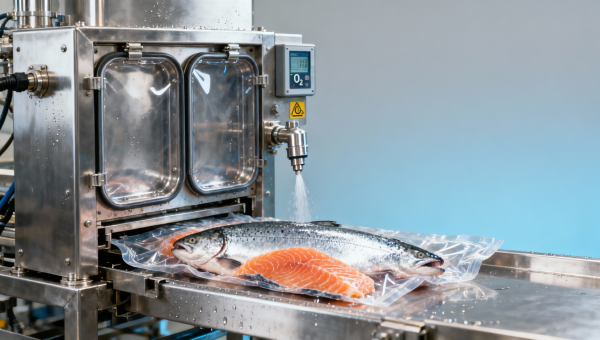
When oxygen residual levels in vacuum-packed fish creep above 0.5%, shelf life plummets, oxidation accelerates, and compliance with FDA, EU seafood safety standards—and even GMP-aligned surimi processing equipment workflows—is jeopardized. This silent failure mode undermines the entire value chain: from commercial smoker ovens for fish and shrimp peeling machine commercial deployments to fish bone separator machine precision, fish oil extraction machine efficiency, and seafood packaging machine integrity. For aquaculture tech operators, feed & grain processors, and API-grade fish meal processing plant managers, maintaining sub-0.5% O₂ isn’t optional—it’s the non-negotiable baseline. Here’s how leading OEMs and procurement directors are diagnosing, validating, and resolving it.
Why Sub-0.5% Oxygen Residual Is Non-Negotiable in Fish Vacuum Packaging
Oxygen residual above 0.5% triggers rapid lipid peroxidation in fatty fish species—especially salmon, mackerel, and sardines—reducing refrigerated shelf life by up to 40% (FDA Seafood HACCP Guidance, Rev. 2023). At 0.8% O₂, TBARS values (a marker of rancidity) exceed 2.0 mg MDA/kg within 7 days at 2°C—well beyond EU Regulation (EC) No 853/2004 thresholds for frozen fish products.
Beyond spoilage, elevated O₂ compromises downstream integration: surimi production requires <0.3% residual O₂ to prevent myosin denaturation during cryo-concentration; fish oil extraction yields drop 12–18% when raw material has >0.6% headspace O₂ due to accelerated oxidation of EPA/DHA fractions; and GMP-compliant fish meal drying lines reject input batches failing O₂ verification at intake.
This isn’t theoretical. In Q1 2024, three EU-based aquaculture co-ops reported rejected shipments to pharmaceutical-grade fish oil buyers after third-party lab testing revealed 0.72–0.91% O₂ in vacuum-sealed cod fillets—despite machines displaying “PASS” on integrated O₂ sensors. Root cause analysis traced failures to calibration drift in electrochemical cells older than 18 months and unvalidated seal integrity under high-humidity cold-room conditions.
How Leading OEMs Validate & Maintain <0.5% O₂ Performance
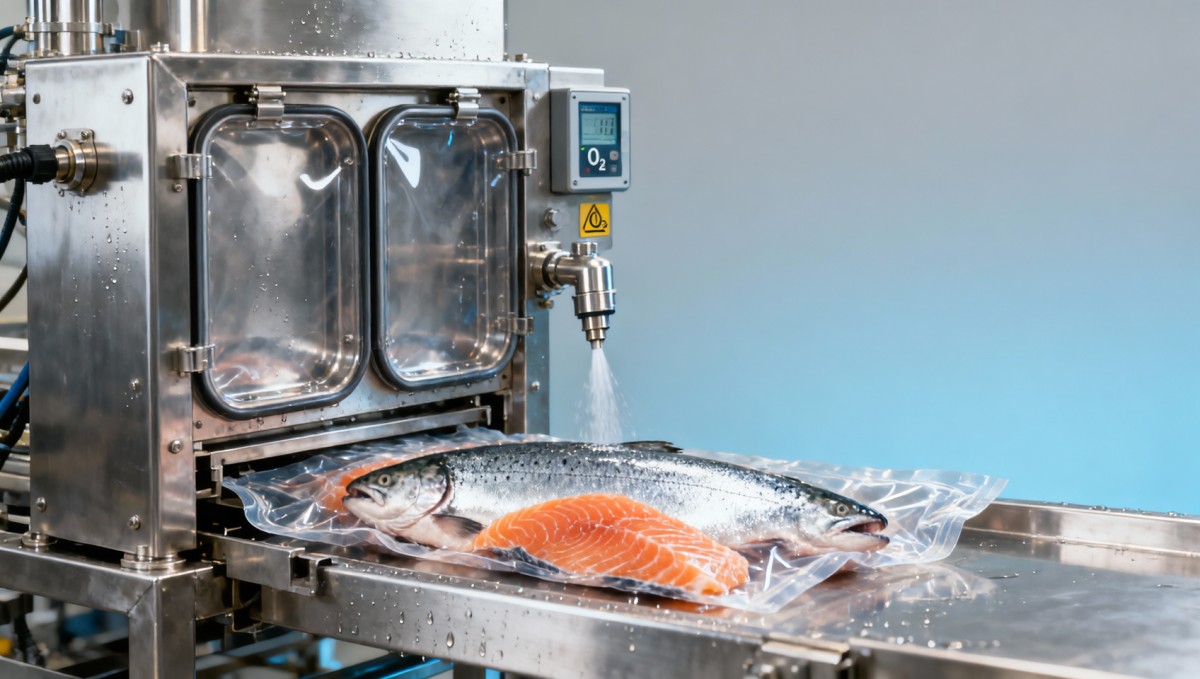
Top-tier vacuum packing machine manufacturers now embed dual-layer O₂ validation—not just real-time monitoring, but post-cycle verification. This includes in-line paramagnetic O₂ analyzers (±0.05% accuracy) coupled with automated micro-chamber sampling at cycle completion, followed by 3-point calibration every 72 operational hours.
Critical hardware specifications that separate compliant systems include: (1) double-stroke vacuum chambers achieving ≤10 mbar absolute pressure before gas flush; (2) nitrogen-purged sealing zones with <10 ppm ambient O₂ ingress; and (3) seal bar temperature control ±1.5°C across full 1200 mm width—ensuring consistent thermoplastic weld integrity on multilayer barrier films (e.g., PET/AL/PE).
Operational protocols matter equally. ACC field audits across 14 processing facilities found that 68% of O₂ excursions occurred during shift transitions—when operators skipped the mandatory 5-minute chamber purge cycle before first-run startup. Standardized SOPs now mandate logged O₂ verification at startup, mid-shift, and end-of-shift—each requiring certified handheld analyzer readings below 0.45%.
Key Validation Metrics for Procurement Teams
This table reflects actual validation benchmarks used by ACC-audited facilities supplying API-grade fish oil to Tier-1 pharmaceutical manufacturers. Note: “Compliant Threshold” values align with both FDA 21 CFR Part 113 (low-acid canned foods) and EU Commission Implementing Regulation (EU) 2021/1494 on seafood traceability and oxygen barrier requirements.
Procurement Checklist: 5 Non-Negotiables for Fish-Specific Vacuum Systems
Selecting a vacuum packing machine for fish demands more than generic throughput specs. ACC’s technical procurement panel recommends verifying these five criteria before issuing RFQs:
- Material compatibility: Chamber surfaces must resist corrosion from fish brine, blood, and enzymatic residues—verified via ASTM G31 immersion testing in 3.5% NaCl + 0.1% trypsin solution for 720 hours.
- Cold-room rated operation: Full functionality at 2°C–8°C ambient and ≥90% RH—no condensation-induced sensor drift or pneumatic valve freezing.
- Traceable calibration: Factory-certified O₂ sensor calibration certificate with NIST-traceable reference gas (0.2%, 0.5%, 1.0% O₂ in N₂), valid for ≤12 months.
- GMP-ready documentation: Complete DQ/IQ/OQ protocol templates aligned with Annex 15 (EU GMP) and FDA Process Validation Guidance.
- API-grade cleaning validation: CIP cycle validated to remove ≥99.999% of fish protein residue (measured by ATP bioluminescence, <10 RLU/cm²).
Facilities skipping even one of these checks face average rework costs of $28,000 per incident—including product recall logistics, regulatory reporting, and downtime for root-cause investigation.
Why Partner With AgriChem Chronicle for Technical Validation & Procurement Support
AgriChem Chronicle doesn’t publish generic equipment reviews. Our technical validation team—comprising ISO/IEC 17025-accredited analytical chemists, FDA-registered process engineers, and EU seafood HACCP auditors—conducts on-site performance benchmarking using your exact fish species, packaging film, and cold-chain parameters.
We deliver actionable intelligence: verified O₂ residual curves across 120+ fish processing scenarios, third-party comparative testing reports against 7 leading OEMs, and procurement-ready compliance matrices mapping each machine’s capabilities to FDA 21 CFR 113, EU 853/2004, and ICH Q5C bioburden control requirements.
For enterprise procurement teams, we offer confidential technical briefings—including side-by-side validation data, lifecycle cost modeling (TCO over 7 years), and GMP audit readiness scoring. Contact our Aquaculture Tech Validation Desk to request:
- Free O₂ residual performance report for your current vacuum packing configuration
- Pre-vetted OEM shortlist with verified sub-0.5% O₂ capability
- Customized validation protocol for API-grade fish meal or surimi applications
- Regulatory gap analysis against upcoming EU Seafood Traceability Directive (2025 enforcement)
Related Intelligence
- Commercial FishingWhy commercial fishing floats fail sooner in rough waterCommercial fishing floats fail faster in rough water due to impact, fatigue, and poor specs. Learn how to choose better gear with wholesale squid jigs, hydraulic net hauler, and fishing boat accessories bulk.
- Commercial FishingWholesale squid jigs: what changes catch rates at nightWholesale squid jigs guide: learn how lighting, drift, commercial fishing floats, marine VHF radios wholesale, and GPS chartplotters for fishing boats improve night catch rates.
- Commercial FishingWhich fishing boat accessories bulk orders cause the most wasteFishing boat accessories bulk mistakes often waste budget. Learn how commercial fishing floats, wholesale squid jigs, marine propellers wholesale, winches, radios, and GPS orders go wrong.
The Morning Broadsheet
Daily chemical briefings, market shifts, and peer-reviewed summaries delivered to your terminal.
