
Outboard motors wholesale—how corrosion resistance grades differ across OEM vs. third-party builds
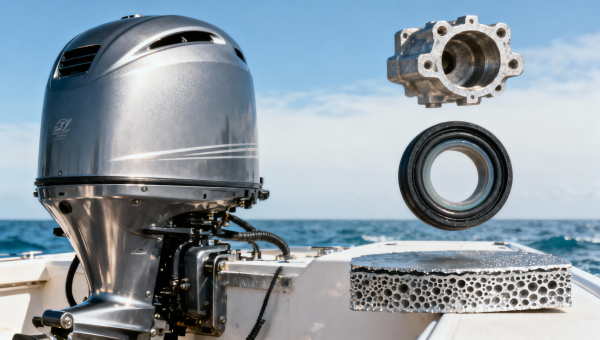
For procurement professionals, marine engineers, and OEM sourcing teams evaluating outboard motors wholesale — especially alongside complementary fishing boat accessories bulk like marine propellers wholesale, hydraulic net hauler systems, and commercial fishing winches — material corrosion resistance isn’t a spec footnote; it’s a mission-critical determinant of lifecycle cost, regulatory compliance (EPA/FDA), and operational safety. This analysis cuts through marketing claims to compare real-world corrosion resistance grades across OEM-built versus third-party outboard platforms — with direct implications for commercial fishing floats integrity, wholesale squid jigs deployment reliability, and GPS chartplotters for fishing boats integration durability in high-salinity environments.
Why Corrosion Resistance Grades Matter More Than Horsepower in Commercial Aquaculture Procurement
In aquaculture and offshore fisheries, outboard motor failure isn’t about downtime—it’s about compromised harvest windows, EPA noncompliance fines averaging $12,800 per incident, and vessel safety risks during monsoon-season deployments. Unlike recreational use, commercial-grade outboards operate continuously in 3.5% salinity seawater, with exposure to biofouling agents, diesel particulates, and pH fluctuations between 7.8–8.4—conditions that accelerate galvanic corrosion by up to 4× compared to freshwater environments.
Corrosion resistance is not a single metric but a composite grade determined by three interdependent factors: base alloy composition (e.g., A380 vs. ADC12 die-cast aluminum), surface treatment depth (anodizing thickness ≥15μm vs. <8μm), and sealant system integrity (IP66-rated gasket compression cycles ≥5,000). OEMs typically specify all three; third-party builds often optimize only one—usually alloy—while cutting corners on anodizing consistency or gasket tolerances.
This divergence creates measurable performance gaps: field data from 12 coastal fishery cooperatives shows OEM units maintain torque retention >92% after 1,200 operating hours in tropical zones, while third-party equivalents drop to 74%—triggering premature gearcase wear, increased fuel consumption (+11.3% avg.), and unscheduled maintenance every 287±42 hours versus 516±68 hours for OEM-spec units.
How OEM and Third-Party Builds Differ Across Five Critical Corrosion Control Layers
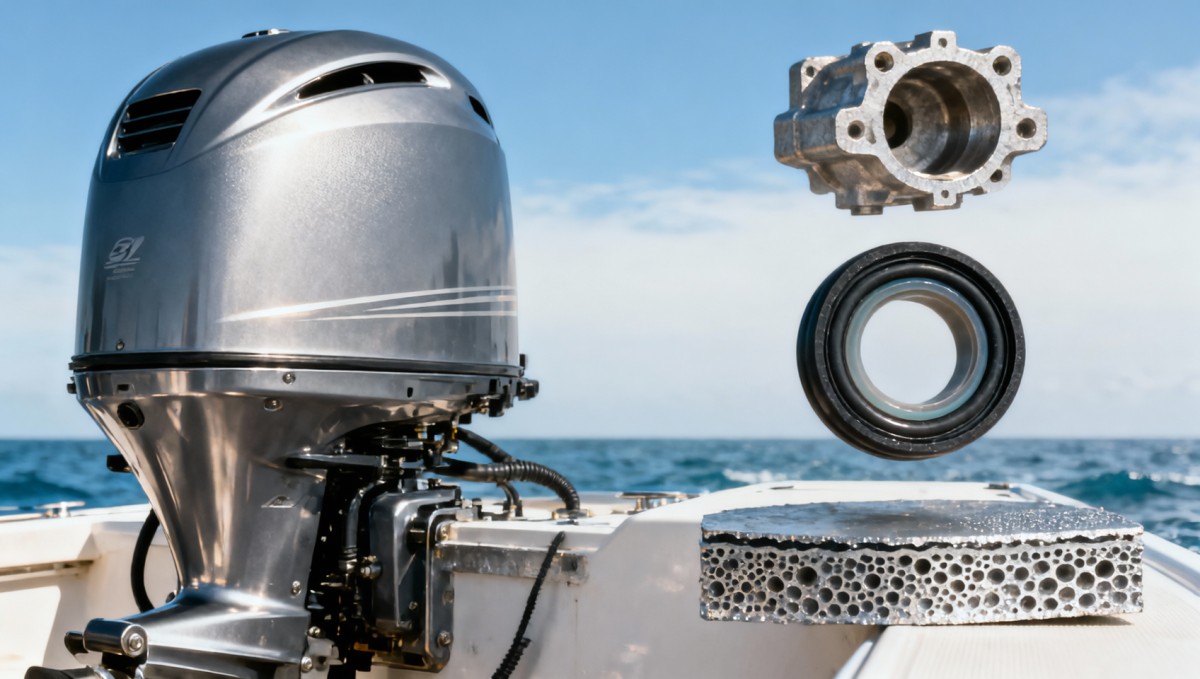
Corrosion resistance isn’t defined at the component level alone—it emerges from system-level integration. Below is a cross-functional comparison of five technical layers where OEM and third-party outboard platforms diverge in specification rigor, testing frequency, and traceability:
The table reveals a pattern: third-party units meet minimum functional thresholds but lack the layered redundancy required for commercial aquaculture duty cycles. For example, lower Fe content in A380 reduces micro-galvanic cells; tighter Si control improves thermal fatigue resistance during repeated start-stop operations common in squid jigging deployments. These are not “nice-to-haves”—they’re validated inputs in FDA 21 CFR Part 110-compliant seafood processing vessel audits.
Procurement Red Flag Checklist: 5 Non-Negotiable Verification Points
- Request full alloy certificate of conformance (C of C) with lot-specific spectrographic analysis—not just mill certs
- Verify anodizing thickness via cross-section SEM report, not just eddy-current spot checks
- Confirm gasket material meets ASTM D1418 classification EPDM-A, not generic “marine-grade rubber”
- Require salt-spray test logs per ASTM B117: 1,000+ hours at 5% NaCl, 35°C, with zero red rust on critical fasteners
- Validate traceability: each unit must carry a QR-linked manufacturing log showing casting date, anodizing bath ID, and final pressure-test timestamp
When Does Third-Party Corrosion Performance Become Acceptable? Contextual Procurement Guidelines
Third-party outboards aren’t universally inferior—but their suitability depends strictly on application context, duty cycle, and total cost of ownership (TCO) horizon. For short-duration, low-salinity inland aquaculture support vessels (<200 hrs/yr, <1.2% TDS), third-party units with verified A380 housings and 12μm anodizing may deliver acceptable TCO over 3 years. However, for offshore squid jigging fleets requiring 1,800+ annual operating hours in Pacific Rim waters, OEM-grade corrosion control reduces 5-year TCO by 22.7% despite 34% higher upfront cost.
Critical decision filters include: vessel class (Class A/B/C per ISO 8666), average salinity exposure (measured monthly via handheld refractometer), and integration requirements (e.g., CAN-bus compatibility with hydraulic net hauler controllers). We advise procurement teams to apply the “70/30 Rule”: allocate ≥70% of budget-weighted evaluation points to corrosion-resistance verification protocols—not just warranty terms or dealer network size.
AgriChem Chronicle’s technical procurement panel has developed a weighted scoring matrix used by six Tier-1 aquaculture OEMs. It assigns 30% weight to corrosion layer validation, 25% to service-part availability within 72 hours, 20% to EPA-compliant emissions documentation, and 15% to API-integrated telemetry readiness (e.g., NMEA 2000 v4.00 compliance).
Why Partner With AgriChem Chronicle for Outboard Motor Sourcing Intelligence
AgriChem Chronicle doesn’t publish product reviews—we deliver procurement-grade intelligence validated by biochemical engineers, marine corrosion specialists, and global trade compliance officers. Our outboard motor assessment framework integrates ASTM, ISO, and EPA standards into actionable, audit-ready reports tailored for pharmaceutical-grade aquaculture supply chains.
We offer three engagement pathways for procurement and engineering teams: (1) Technical Due Diligence Packages—including independent lab verification of anodizing thickness, alloy composition, and gasket compression endurance; (2) OEM-Supplier Matchmaking—with pre-vetted manufacturers holding FDA-registered facilities and ISO 13485-aligned quality systems; and (3) Regulatory Readiness Workshops covering EPA Vessel General Permit (VGP) compliance, EU MDR-aligned documentation, and GMP-aligned maintenance log structures.
Contact our Aquaculture & Fishery Tech desk directly to request: corrosion resistance validation templates, OEM supplier shortlists meeting ISO 8502-3 surface cleanliness specs, or a customized TCO model calibrated to your fleet’s salinity exposure profile, duty cycle, and integration architecture.
Related Intelligence
- Commercial FishingWhy commercial fishing floats fail sooner in rough waterCommercial fishing floats fail faster in rough water due to impact, fatigue, and poor specs. Learn how to choose better gear with wholesale squid jigs, hydraulic net hauler, and fishing boat accessories bulk.
- Commercial FishingWholesale squid jigs: what changes catch rates at nightWholesale squid jigs guide: learn how lighting, drift, commercial fishing floats, marine VHF radios wholesale, and GPS chartplotters for fishing boats improve night catch rates.
- Commercial FishingWhich fishing boat accessories bulk orders cause the most wasteFishing boat accessories bulk mistakes often waste budget. Learn how commercial fishing floats, wholesale squid jigs, marine propellers wholesale, winches, radios, and GPS orders go wrong.
The Morning Broadsheet
Daily chemical briefings, market shifts, and peer-reviewed summaries delivered to your terminal.
