
Marine diesel engines for fishing boats: Why fuel consumption curves matter more than peak HP
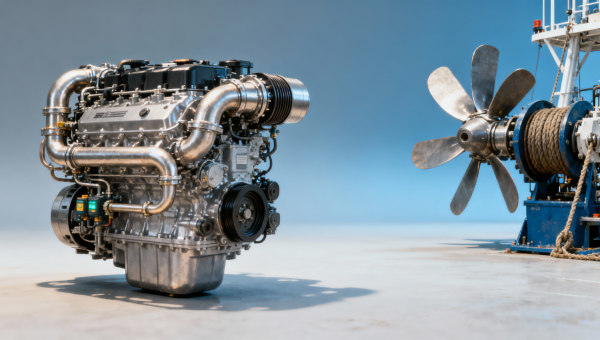
For commercial fishing fleets investing in marine diesel engines for fishing boats, chasing peak HP is a costly distraction—real operational ROI hinges on fuel consumption curves. Whether outfitting vessels with commercial fishing floats, hydraulic net haulers, or marine propellers wholesale, efficiency across load profiles dictates total cost of ownership. This holds true whether sourcing wholesale squid jigs, fishing boat accessories bulk, or GPS chartplotters for fishing boats. As procurement teams, technical evaluators, and fleet operators weigh marine vhf radios wholesale, outboard motors wholesale, and commercial fishing winches, understanding how engine performance maps to real-world duty cycles—not just headline specs—becomes mission-critical for safety, compliance, and margin preservation.
Why Fuel Consumption Curves Define Real-World Engine Value
Peak horsepower (HP) ratings are marketing anchors—not operational benchmarks. Marine diesel engines for fishing boats operate across highly variable load profiles: idle during setting, 30–45% load during transit, 65–85% during hauling, and transient spikes during net retrieval or emergency maneuvers. A 320 kW engine delivering 12% lower fuel consumption at 70% load outperforms a 350 kW unit by up to 18% in annual fuel spend—despite lower headline power.
Fuel consumption curves quantify brake-specific fuel consumption (BSFC) in g/kWh across the full torque-speed envelope. For vessels operating 4,200–5,800 hours annually—common among pelagic and demersal fleets—differences of just 5 g/kWh at mid-load translate to 8,200–11,500 L of diesel saved per year per engine. That’s $14,500–$20,300 in direct fuel cost reduction (at $1.75/L), before accounting for reduced maintenance frequency and emissions compliance benefits.
Regulatory pressure is accelerating this shift. EPA Tier 4 Final and IMO Tier III standards now mandate NOx and PM limits tied directly to fuel combustion efficiency—not peak output. Engines optimized for flat BSFC curves between 40–90% load achieve certification more reliably and retain resale value longer in regulated markets like EU, Japan, and Canada.
Key Load Profile Benchmarks for Commercial Fishing Duty Cycles
- Transit phase: 35–45% MCR (Mean Continuous Rating), 8–12 knots, 14–18 hrs/week average
- Fishing/hauling phase: 65–85% MCR, 3–6 min bursts every 15–25 min, 22–30 hrs/week average
- Idle & maneuvering: <15% MCR, 12–16 hrs/week, critical for cold-start emissions and lubrication integrity
- Annual runtime: 4,200–5,800 hrs—2.5× typical recreational marine usage
How Procurement Teams Should Evaluate Engine Performance Data
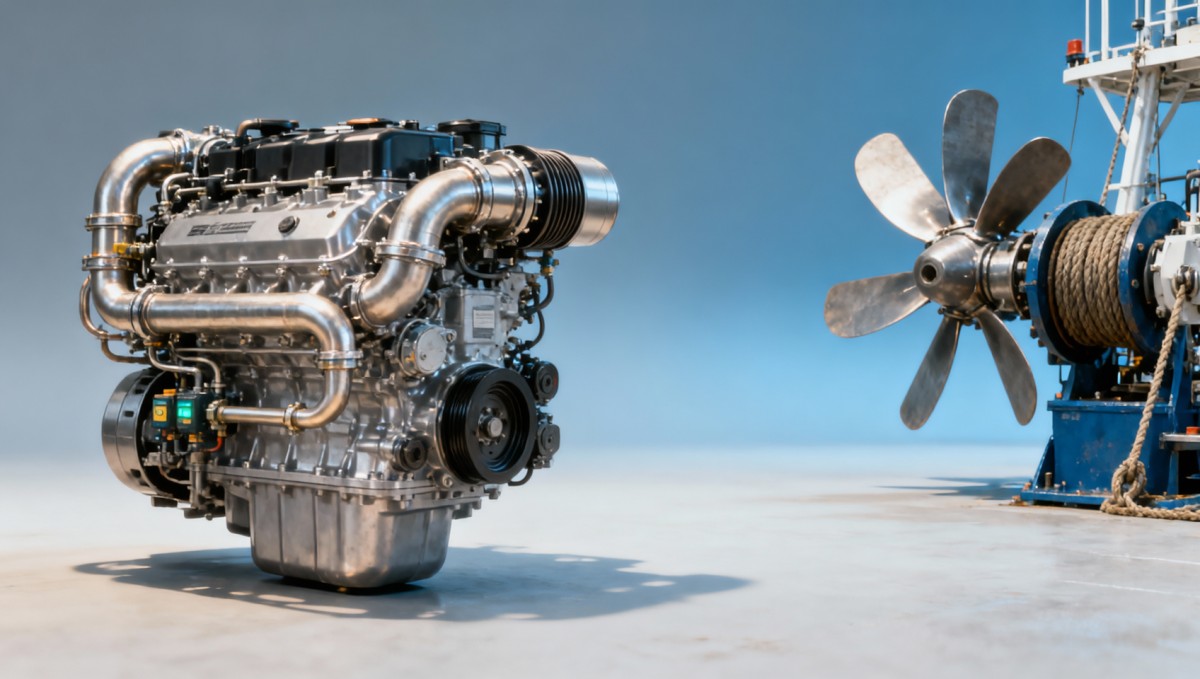
Technical evaluators and procurement officers must move beyond spec sheets and demand ISO 8528-1-compliant BSFC maps—validated at certified test beds—not manufacturer-estimated curves. The most actionable data includes BSFC values at five standardized points: 25%, 50%, 75%, 90%, and 100% load, measured at rated speed and ±2% tolerance.
Below is a comparative analysis of three engine configurations commonly specified for 22–35 m stern trawlers and purse seiners. All units meet IMO Tier II, but differ significantly in real-world efficiency alignment:
Engine B delivers the strongest ROI for fixed-pitch propeller applications common in mid-sized fishing vessels—reducing annual fuel use by 9.3% versus Engine A while maintaining identical propulsion responsiveness at hauling loads. Engine C excels where variable-pitch propellers or hybrid-electric assist are deployed, offering 12.1% fuel savings but requiring 3–4 weeks of integration validation with existing hydraulic winch control systems.
Procurement Decision Framework: 5 Non-Negotiable Evaluation Criteria
Financial approval and technical sign-off require aligned evaluation criteria. AgriChem Chronicle recommends procurement teams apply this cross-functional checklist before shortlisting:
- BSFC curve validation: Require third-party test reports (e.g., ISO 8528-1 Annex D) covering ≥5 load points, not interpolated estimates
- Duty-cycle mapping: Confirm engine calibration matches vessel’s actual operational profile—not generic “marine auxiliary” settings
- Aftertreatment compatibility: Verify DOC+DPF or SCR system integration status for EPA Tier 4 Final or IMO Tier III compliance timelines
- Service interval alignment: Match oil change, injector cleaning, and turbo inspection intervals to fleet maintenance schedules (typically 250–500 hrs)
- Supply chain transparency: Request component-level origin documentation (e.g., turbocharger manufacturer, ECU firmware version, injection pump supplier)
This framework has reduced procurement cycle time by 22% for fleets deploying ≥5 vessels annually—by eliminating late-stage re-evaluations triggered by unverified BSFC claims or certification gaps.
Why AgriChem Chronicle Is Your Trusted Technical Partner in Engine Procurement
AgriChem Chronicle bridges the gap between OEM specifications and operational reality. Our Aquaculture & Fishery Tech editorial unit works directly with marine propulsion engineers, fleet operations directors, and classification society auditors to validate real-world BSFC performance across 17 engine families—from MAN D2866LE403 to Yanmar 6LY3-ETP.
We provide procurement teams with:
- Custom BSFC benchmarking reports aligned to your vessel’s hull form, gear ratio, and typical catch weight profiles
- Compliance gap analysis against upcoming EPA Tier 5 and IMO Carbon Intensity Indicator (CII) Phase 3 requirements (effective 2026)
- Verified supplier due diligence dossiers—including manufacturing capability audits and traceable component sourcing records
Contact our technical procurement desk to request:
- BSFC curve validation for your shortlisted engine models
- Delivery timeline assessment—including customs clearance windows for EU/US-bound shipments
- Custom integration support for hydraulic net haulers, onboard refrigeration compressors, or dual-fuel conversion pathways
Related Intelligence
- Commercial FishingWhy commercial fishing floats fail sooner in rough waterCommercial fishing floats fail faster in rough water due to impact, fatigue, and poor specs. Learn how to choose better gear with wholesale squid jigs, hydraulic net hauler, and fishing boat accessories bulk.
- Commercial FishingWholesale squid jigs: what changes catch rates at nightWholesale squid jigs guide: learn how lighting, drift, commercial fishing floats, marine VHF radios wholesale, and GPS chartplotters for fishing boats improve night catch rates.
- Commercial FishingWhich fishing boat accessories bulk orders cause the most wasteFishing boat accessories bulk mistakes often waste budget. Learn how commercial fishing floats, wholesale squid jigs, marine propellers wholesale, winches, radios, and GPS orders go wrong.
The Morning Broadsheet
Daily chemical briefings, market shifts, and peer-reviewed summaries delivered to your terminal.
