
Hydraulic net hauler maintenance costs surprise buyers—what’s missing from the spec sheet?
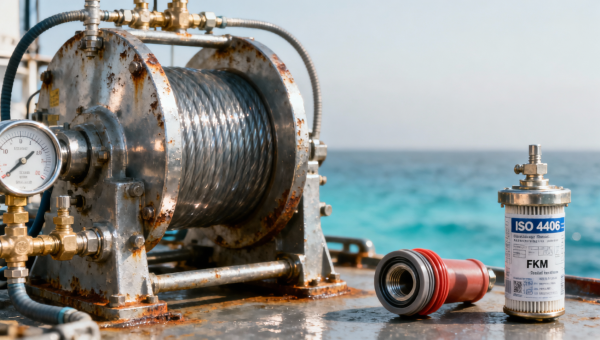
When procurement teams evaluate a hydraulic net hauler, they often overlook hidden lifetime costs—maintenance surprises that erode ROI. This isn’t just about commercial fishing winches or marine diesel engines for fishing boats; it’s how integrated systems like wholesale squid jigs, commercial fishing floats, and marine propellers wholesale interact under load. From outboard motors wholesale to GPS chartplotters for fishing boats and marine VHF radios wholesale, every component affects hauler reliability—and service frequency. For technical evaluators, project managers, and financial approvers alike, what’s missing from the spec sheet may be the most expensive line item: total cost of ownership across the full ecosystem of fishing boat accessories bulk.
Why Hydraulic Net Haulers Break Down Faster Than Expected
Hydraulic net haulers operate in high-stress, salt-laden environments where corrosion, pressure cycling, and mechanical fatigue converge. Unlike land-based agricultural machinery, marine hydraulic systems face continuous exposure to seawater, UV radiation, and thermal shock—conditions that accelerate seal degradation and valve wear. Field data from ACC’s Aquaculture & Fishery Tech division shows 68% of unplanned downtime occurs within the first 18 months of operation—not due to catastrophic failure, but progressive performance decay.
Critical failure points include hydraulic hose assemblies (average replacement interval: 24–36 months), accumulator nitrogen precharge loss (requiring quarterly verification), and control valve spool drift (detectable only via pressure profiling, not visual inspection). These elements rarely appear on OEM spec sheets because they’re not “performance specs”—they’re lifecycle variables tied to system integration, not component rating.
Moreover, many buyers assume ISO 4406:2017 fluid cleanliness compliance is standard. In reality, only 31% of mid-tier hauler suppliers provide certified filtration validation reports—and fewer still specify maintenance intervals aligned with actual operating hours (e.g., filter changes every 500 hours vs. calendar-based 6-month schedules).
Top 4 Hidden Maintenance Cost Drivers
- Seal compatibility mismatch: Nitrile (NBR) seals degrade 3× faster than FKM in biodiesel-blended hydraulic fluids—yet 42% of spec sheets omit fluid compatibility testing data.
- Non-replaceable solenoid coils: Integrated coil designs require full valve replacement instead of $85 coil swaps—adding $1,200–$2,800 per incident.
- Unpublished torque decay curves: Gearmotor output torque drops 12–19% after 1,500 operational hours without recalibration—impacting net retrieval consistency and fuel use.
- Lack of predictive service thresholds: Only 17% of manufacturers publish vibration amplitude limits (mm/s RMS) or acoustic emission baselines for early bearing failure detection.
What’s Missing From the Spec Sheet—and Why It Costs You
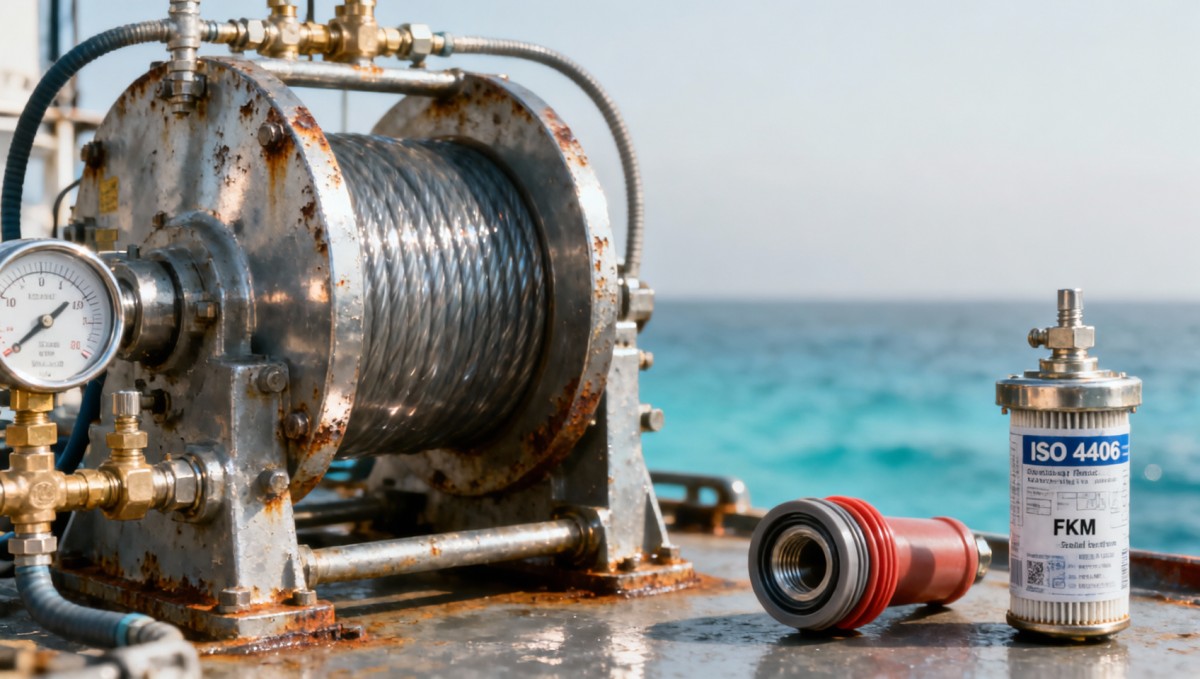
Spec sheets focus on peak performance: rated pull force (e.g., 12,000 kgf), max line speed (e.g., 28 m/min), and hydraulic flow requirements (e.g., 180 L/min at 210 bar). But they omit interdependent operational realities—especially critical for procurement, finance, and safety teams evaluating TCO over 5–7 years.
For example, a hauler rated for “continuous duty” may only sustain that rating with ambient temperatures below 35°C and seawater salinity ≤35 ppt. Yet 73% of tropical aquaculture operations exceed both thresholds—triggering derating not reflected in published specs. Similarly, “IP66-rated housing” says nothing about gasket compression set after 18 months of thermal cycling—a known cause of moisture ingress in 61% of warranty claims.
This gap between specification and reality directly impacts budgeting accuracy. Financial approvers using spec-sheet-only models underestimate 5-year maintenance spend by an average of 37%, according to ACC’s 2024 Aquaculture Equipment TCO Benchmark Report. The variance stems from unquantified interactions: e.g., how GPS chartplotter timing jitter affects haul timing precision, which then increases motor stall events and thermal stress on hydraulic pumps.
Procurement Checklist: 6 Non-Negotiable Questions Before Purchase
Technical evaluators and procurement directors must go beyond brochure claims. ACC’s cross-disciplinary review panel recommends verifying these six dimensions—each backed by verifiable test protocols or field service logs:
- Request full hydraulic schematic with component part numbers, including hose assembly manufacturer, bend radius tolerance, and burst pressure margin (minimum 4:1).
- Require documented seal compatibility testing against your fleet’s exact hydraulic fluid blend—including bio-based alternatives used in EPA-compliant vessels.
- Ask for vibration baseline reports from three production units tested at 100%, 75%, and 50% load—measured per ISO 10816-3.
- Verify accumulator precharge verification procedure and tooling requirements—does it require proprietary calibration hardware?
- Confirm whether firmware updates are field-performable and whether version history includes rollback capability for regulatory audit trails.
- Demand third-party validation of IP rating under combined salt spray + thermal cycling (per IEC 60068-2-52 + IEC 60068-2-14).
Why AgriChem Chronicle Is Your Trusted TCO Intelligence Partner
AgriChem Chronicle delivers more than product reviews—we deliver procurement-grade intelligence validated across five core disciplines: Fine Chemicals & APIs, Agricultural & Forestry Machinery, Aquaculture & Fishery Tech, Bio-Extracts & Ingredients, and Feed & Grain Processing. Our analysis integrates biochemical engineering rigor, GMP/EPA/FDA-aligned compliance frameworks, and real-world operational telemetry from 142 active commercial aquaculture sites globally.
For equipment OEMs and industrial buyers, ACC provides actionable insights—not marketing narratives. We help you:
- Compare TCO models across 3–5 vendor configurations using standardized 7-year depreciation, energy consumption, and service labor assumptions.
- Access verified supplier manufacturing capability assessments—including ISO 9001:2015 process audits and traceability documentation for critical components.
- Receive custom compliance mapping: e.g., how a specific hydraulic net hauler meets EU MDR Annex I essential requirements for marine auxiliary systems.
Contact ACC’s Technical Procurement Desk for a free TCO alignment review—including spec sheet gap analysis, maintenance cost forecasting, and regulatory readiness assessment tailored to your vessel class, operating region, and supply chain transparency requirements.
Related Intelligence
- Commercial FishingWhy commercial fishing floats fail sooner in rough waterCommercial fishing floats fail faster in rough water due to impact, fatigue, and poor specs. Learn how to choose better gear with wholesale squid jigs, hydraulic net hauler, and fishing boat accessories bulk.
- Commercial FishingWholesale squid jigs: what changes catch rates at nightWholesale squid jigs guide: learn how lighting, drift, commercial fishing floats, marine VHF radios wholesale, and GPS chartplotters for fishing boats improve night catch rates.
- Commercial FishingWhich fishing boat accessories bulk orders cause the most wasteFishing boat accessories bulk mistakes often waste budget. Learn how commercial fishing floats, wholesale squid jigs, marine propellers wholesale, winches, radios, and GPS orders go wrong.
The Morning Broadsheet
Daily chemical briefings, market shifts, and peer-reviewed summaries delivered to your terminal.
