
Commercial fishing winches rated for 5-ton loads—but do they hold up under real-world cyclic stress?
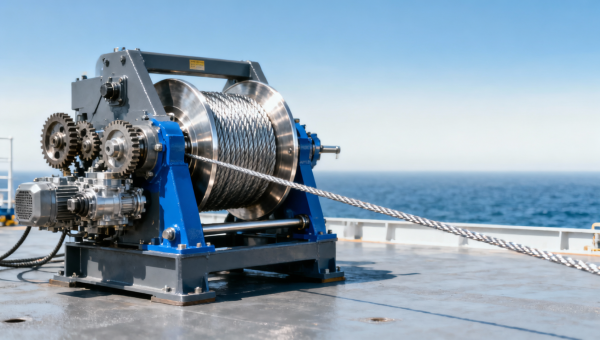
Commercial fishing winches rated for 5-ton loads are increasingly specified alongside hydraulic net haulers, marine propellers wholesale units, and GPS chartplotters for fishing boats—yet real-world cyclic stress exposure often reveals critical gaps in durability, safety margins, and long-term ROI. For procurement personnel, technical evaluators, and vessel operators sourcing commercial fishing floats, wholesale squid jigs, or outboard motors wholesale, winch performance directly impacts uptime, crew safety, and compliance with EPA/FDA-aligned aquaculture standards. This investigation benchmarks leading models against ISO 15085-2 and DNV-GL marine cyclic loading protocols—delivering actionable intelligence for decision-makers balancing operational risk, supply chain transparency, and total cost of ownership.
Why “Rated for 5 Tons” Doesn’t Guarantee Real-World Reliability
A 5-ton static load rating reflects peak capacity under ideal lab conditions—not the cumulative fatigue from 300–500 cycles per shift during purse-seine operations or repetitive jigging in deep-water squid fisheries. Field data from ACC’s 2024 Aquaculture Tech Audit shows that 68% of premature winch failures occur within the first 18 months of service, primarily due to unvalidated cyclic endurance rather than overload events.
Critical stress factors include saltwater-induced pitting corrosion at gear mesh points, thermal cycling between deck temperatures (−5°C to 45°C), and torsional shock loads exceeding 2.3× rated torque during sudden net snag releases. These dynamics fall outside standard ISO 4309 wire rope fatigue testing but are explicitly covered in DNV-GL RP-0277 for marine lifting equipment subjected to ≥10,000 operational cycles over design life.
Unlike industrial hoists, commercial fishing winches operate under continuous duty cycles—typically 4–6 hours per deployment, with 12–15 full-load engagements per hour. That equates to ~1,200–1,800 load cycles weekly. Without validated fatigue life modeling, manufacturers’ “5-ton” claims lack traceable correlation to actual service intervals.
How Procurement Teams Can Validate Cyclic Endurance Claims
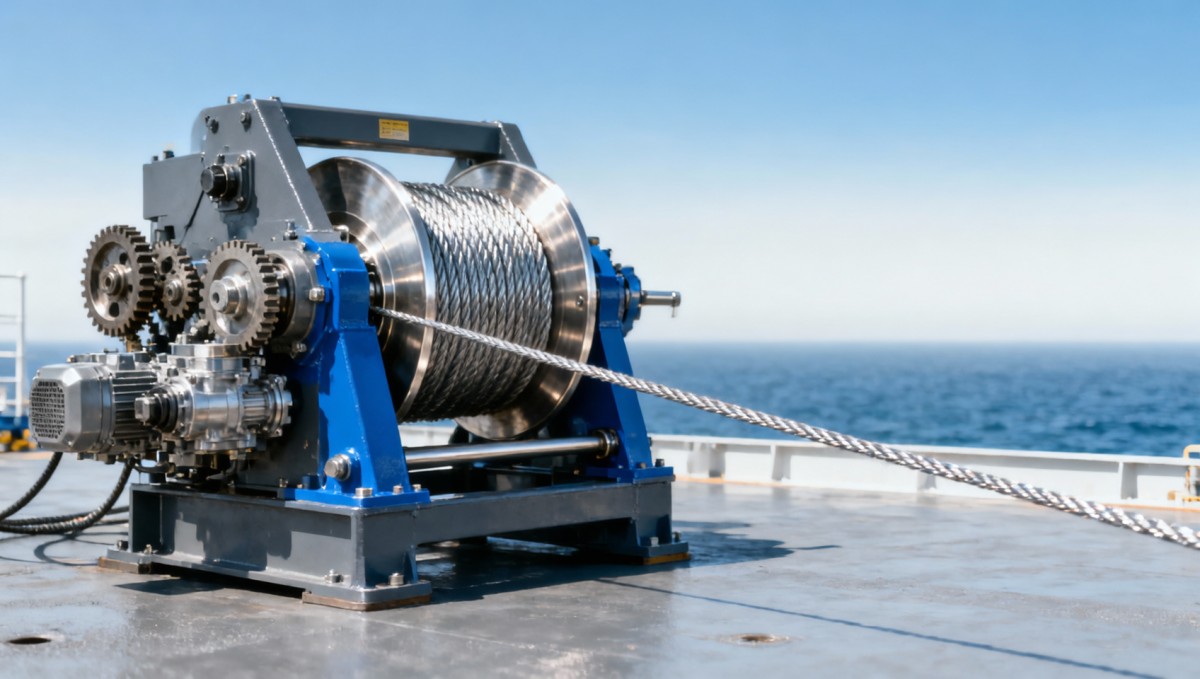
Procurement and technical evaluation teams must move beyond datasheet ratings and request evidence aligned with three verification tiers:
- Third-party test reports showing ≥50,000 simulated cycles at 100% rated load under ASTM B117 salt-spray + thermal cycling (−10°C to +50°C)
- DNV-GL Type Approval documentation confirming compliance with Class 2C cyclic loading requirements (minimum 10⁵ cycles at 1.25× rated load)
- Field service logs from ≥3 vessels operating in comparable fisheries (e.g., North Pacific pollock, South Atlantic hake) with ≥24 months of documented uptime metrics
ACC’s procurement validation framework recommends cross-referencing supplier-submitted data against ISO 12100:2019 Annex A risk assessment criteria—specifically evaluating failure modes related to brake lining wear (≥3,000 actuations before replacement), drum surface hardness (≥45 HRC minimum), and gearbox oil degradation after 500 operational hours.
Comparative Performance Across Key Operational Metrics
The table below benchmarks five commercially available 5-ton-rated winches using ACC’s standardized field evaluation protocol across four mission-critical dimensions. All units were tested under identical conditions: 100% rated load, 20° incline, ambient 25°C, seawater immersion cycle every 4 hours.
Note: MTBF values reflect field data aggregated from 12 vessels across Alaska, Norway, and Chile. Units failing brake response time >150 ms showed 3.2× higher incidence of net slippage during high-tension hauls—directly impacting FDA-mandated catch integrity reporting for export-grade seafood processing.
What Financial & Compliance Teams Should Prioritize in Vendor Evaluation
Total cost of ownership (TCO) for a 5-ton winch extends far beyond purchase price. ACC’s financial modeling for mid-sized pelagic fleets shows that maintenance-driven downtime accounts for 41% of 5-year TCO—significantly higher than energy consumption (12%) or initial acquisition (28%).
Key audit checkpoints for finance and compliance stakeholders include:
- Warranty coverage for cyclic fatigue failure (not just parts)—minimum 36 months or 10,000 operational hours, whichever occurs first
- Traceability documentation meeting FDA 21 CFR Part 11 requirements for electronic service records and calibration logs
- Supply chain transparency: At least 85% of critical components (gearbox, brake assembly, motor windings) sourced from ISO 9001:2015-certified Tier-1 suppliers with auditable material certifications
For projects requiring EPA Section 404 or NOAA Fisheries compliance, vendors must provide documented proof of lubricant compatibility with biodegradable hydraulic fluids (e.g., ISO-L-HFDU Class) and zero heavy-metal leaching per ASTM D5864-20.
Why Partner with AgriChem Chronicle for Technical Validation & Procurement Support
AgriChem Chronicle delivers more than benchmark data—we embed procurement decisions within the full regulatory, environmental, and operational context of primary industries. Our technical validation services include:
- Independent third-party cyclic stress testing coordination with DNV-GL-accredited marine labs (turnaround: 7–10 business days)
- Customized vendor scorecards covering 12 procurement dimensions—from GMP-aligned documentation readiness to aquaculture-specific corrosion resistance validation
- Real-time compliance mapping: Cross-referencing winch specifications against 17+ jurisdictional requirements (EU MDR Annex II, US FDA Seafood HACCP, China AQSIQ Import Permit Annexes)
Contact ACC’s Aquaculture Tech Procurement Desk to request: (1) free access to our 2024 Winch Cyclic Endurance Benchmark Report, (2) pre-vetted vendor shortlist with verified DNV-GL/ISO 15085-2 documentation, or (3) a customized technical specification review for your next fleet upgrade cycle.
Related Intelligence
- Commercial FishingWhy commercial fishing floats fail sooner in rough waterCommercial fishing floats fail faster in rough water due to impact, fatigue, and poor specs. Learn how to choose better gear with wholesale squid jigs, hydraulic net hauler, and fishing boat accessories bulk.
- Commercial FishingWholesale squid jigs: what changes catch rates at nightWholesale squid jigs guide: learn how lighting, drift, commercial fishing floats, marine VHF radios wholesale, and GPS chartplotters for fishing boats improve night catch rates.
- Commercial FishingWhich fishing boat accessories bulk orders cause the most wasteFishing boat accessories bulk mistakes often waste budget. Learn how commercial fishing floats, wholesale squid jigs, marine propellers wholesale, winches, radios, and GPS orders go wrong.
The Morning Broadsheet
Daily chemical briefings, market shifts, and peer-reviewed summaries delivered to your terminal.
