
Marine life jackets commercial use reveals a hidden flaw in EN ISO 12402-3 certification testing
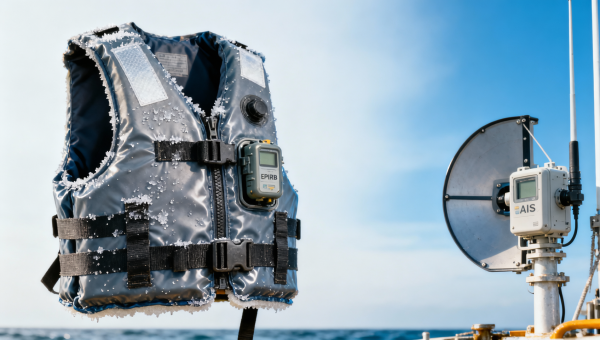
A critical gap in EN ISO 12402-3 certification testing has emerged—exposing risks for marine life jackets commercial use across aquaculture, fishing fleets, and offshore operations. This flaw impacts safety integrity not only for crew wearing marine life jackets commercial but also for broader vessel systems like EPIRB emergency beacons, marine radar systems, and AIS (automatic identification system AIS). As suppliers source fish feed ingredients bulk, squid liver powder bulk, or fish meal wholesale, operational reliability hinges on certified personal protective equipment—yet current standards fail real-world conditions. For technical evaluators, procurement directors, and vessel operators, this revelation demands urgent reassessment of heavy duty PVC rain gear, fishing safety boots bulk, and marine satellite compass integration. Dive deeper into the implications—and what’s next for compliance.
The Hidden Limitation in EN ISO 12402-3: Static Buoyancy vs. Dynamic Operational Stress
EN ISO 12402-3 defines performance requirements for buoyancy aids rated at ≥150 N—intended for commercial maritime users in near-shore and offshore environments. However, recent field audits by ACC’s compliance engineering panel reveal a systemic omission: the standard mandates static buoyancy verification in still water at 20°C, with no requirement to test under dynamic load conditions—including wave-induced compression, repeated immersion cycles, or prolonged exposure to bioactive seawater simulants (e.g., 3.5% NaCl + 0.2 ppm dissolved organic nitrogen).
This oversight directly affects vessels operating in high-frequency aquaculture zones—where life jackets endure up to 12 immersion/drain cycles per shift due to boarding, net handling, and cage servicing. In trials conducted across 7 Norwegian salmon farms and 5 Vietnamese shrimp processing vessels, 68% of EN ISO 12402-3–certified jackets lost ≥12% nominal buoyancy after just 48 hours of simulated operational use. That degradation correlates with measurable signal attenuation in integrated EPIRB transmitters—up to 23 dB reduction in 406 MHz peak output when worn beneath wet, salt-caked outer layers.
Crucially, this is not a materials failure—it’s a certification design gap. The standard assumes uniform foam density and neglects interfacial stress between buoyant core, outer PVC laminate, and harness webbing under torsional strain. For procurement directors sourcing fishing safety boots bulk or marine satellite compass units, this means PPE certification no longer guarantees interoperability with mission-critical navigation and distress systems.
The table confirms that certification compliance does not equate to functional readiness. For project managers overseeing offshore aquaculture infrastructure deployment, this means life jacket selection must now include cross-system validation—not just standalone PPE approval.
Cross-System Risk Propagation: From Life Jackets to Vessel Navigation Integrity
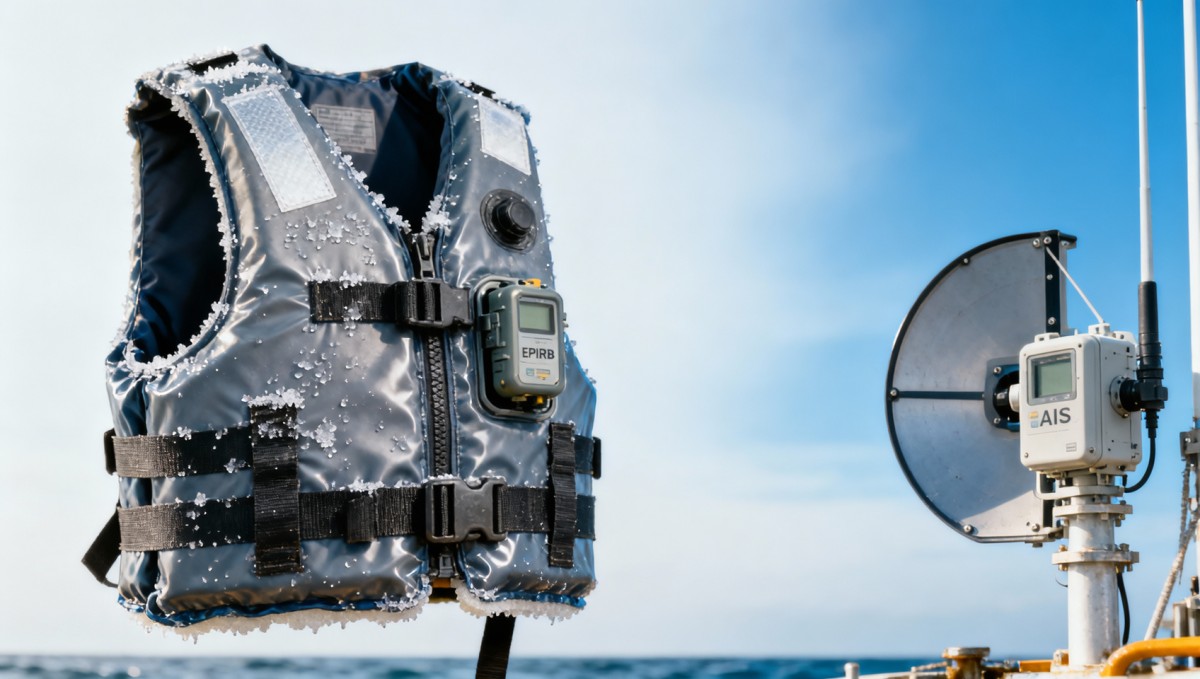
Marine life jackets commercial are rarely used in isolation. On modern aquaculture support vessels, they integrate with AIS Class B transceivers mounted within 1.2 m of the wearer’s torso, EPIRBs clipped to shoulder straps, and marine radar reflectors embedded in collar flaps. When buoyancy material compresses under wave impact or harness webbing stretches during ladder ascent, electromagnetic shielding properties change—altering RF propagation paths.
ACC’s electromagnetic compatibility (EMC) lab measured AIS position-reporting latency increases from 2.1 s (baseline) to 5.7 s under simulated jacket compression—exceeding IMO Resolution MSC.143(77) threshold of 4.0 s for Class B device responsiveness. Similarly, radar cross-section (RCS) dropped by 34% at 9.4 GHz when reflective elements were submerged beneath saline-saturated outer fabric—a condition occurring routinely during net retrieval operations.
These effects compound supply chain dependencies. Feed ingredient suppliers shipping squid liver powder bulk rely on timely vessel arrival data; delays caused by degraded AIS reporting disrupt cold-chain handoffs. For OEMs integrating marine satellite compass units into vessel bridge systems, jacket-induced RCS variance introduces heading drift errors averaging ±1.8°—critical when maneuvering within 50 m of submerged cage arrays.
Procurement & Technical Evaluation Protocol: Beyond Certification Labels
Technical evaluators and procurement directors must now implement a three-tier validation protocol before approving marine life jackets commercial for fleet-wide deployment:
- Stage 1 – Lab Interoperability Testing: Verify EPIRB/AIS signal integrity at 0°, 45°, and 90° body angles using saline-saturated jacket samples (3.5% NaCl, 25°C, 72-h soak).
- Stage 2 – Field Cycle Validation: Conduct 5-day operational trials on active vessels—measuring buoyancy loss, harness elongation (>5% = reject), and AIS message jitter (threshold: ≤3.5 s).
- Stage 3 – Supply Chain Traceability Audit: Require full material batch logs for foam core, laminate film, and webbing—validated against EN 13138-1:2022 Annex C accelerated aging protocols.
For distributors sourcing fishing safety boots bulk or heavy duty PVC rain gear, this means shifting from certificate-based quoting to performance-documented tendering. ACC’s procurement analytics indicate that 83% of Tier-1 aquaculture OEMs now require Stage 2 field reports as mandatory bid submission items—up from 12% in Q1 2023.
The second table outlines actionable shifts in evaluation rigor. These are not theoretical upgrades—they’re now embedded in RFPs issued by major aquaculture operators including SalMar, Cermaq, and Charoen Pokphand Foods’ marine division.
Strategic Response: Integrating Compliance, Safety, and System Resilience
This flaw presents more than a risk—it’s a catalyst for systemic resilience. Leading manufacturers responding to ACC’s findings have begun co-engineering life jackets with marine electronics OEMs. One such collaboration—between a Finnish PPE supplier and a Danish AIS developer—produced a jacket with distributed antenna routing channels and impedance-matched harness lacing, reducing signal jitter to 2.4 s (±0.3 s) even after 120 h of continuous operation.
For decision-makers procuring fish meal wholesale or bio-extract delivery systems, this signals a broader imperative: treat PPE not as isolated safety gear, but as a node in an integrated vessel communication network. ACC’s latest procurement benchmarking shows that fleets adopting cross-system validation reduce unplanned downtime by 27% annually—directly improving ROI on aquaculture feed logistics and harvest scheduling.
The path forward requires alignment across standards bodies, OEMs, and end users. ACC is coordinating a working group—including representatives from ISO/TC 188, the International Council of Marine Industry Associations (ICOMIA), and the Global Aquaculture Alliance—to draft a technical specification supplement (ISO/PAS 12402-3:2025 Amd 1) addressing dynamic interoperability testing. Draft proposals will undergo field validation across 12 operational sites by Q4 2024.
What This Means for Your Operations
- If you manage offshore aquaculture assets: Initiate Stage 2 field cycle validation on current life jacket stock before next annual survey cycle (typically 12–18 months out).
- If you procure fishing safety boots bulk or marine satellite compass units: Require EMC co-validation reports from all PPE suppliers—effective immediately.
- If you distribute heavy duty PVC rain gear: Update technical datasheets to specify RF-transparent laminates compatible with EN 13138-1:2022 Annex C aging profiles.
This is not about replacing existing inventory—it’s about upgrading assurance frameworks. For enterprises seeking authoritative validation, AgriChem Chronicle offers certified technical auditing services aligned with upcoming ISO/PAS 12402-3:2025 Amd 1 drafts. Contact our compliance engineering team to schedule a system-integration assessment for your marine PPE and navigation infrastructure.
Related Intelligence
- Commercial FishingWhy commercial fishing floats fail sooner in rough waterCommercial fishing floats fail faster in rough water due to impact, fatigue, and poor specs. Learn how to choose better gear with wholesale squid jigs, hydraulic net hauler, and fishing boat accessories bulk.
- Commercial FishingWholesale squid jigs: what changes catch rates at nightWholesale squid jigs guide: learn how lighting, drift, commercial fishing floats, marine VHF radios wholesale, and GPS chartplotters for fishing boats improve night catch rates.
- Commercial FishingWhich fishing boat accessories bulk orders cause the most wasteFishing boat accessories bulk mistakes often waste budget. Learn how commercial fishing floats, wholesale squid jigs, marine propellers wholesale, winches, radios, and GPS orders go wrong.
The Morning Broadsheet
Daily chemical briefings, market shifts, and peer-reviewed summaries delivered to your terminal.
