
Fishing safety boots bulk orders often skip sole abrasion resistance — why that leads to early field failure
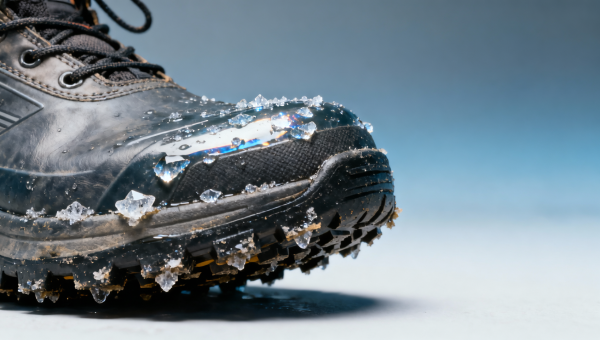
When procuring fishing safety boots bulk orders for commercial fleets or aquaculture operations, buyers often overlook sole abrasion resistance — a critical failure point in wet, salt-laden, and deck-slick environments. This omission directly contributes to premature wear, slip hazards, and field downtime — compromising both crew safety and operational continuity. As marine life jackets commercial, EPIRB emergency beacons, and marine radar systems undergo rigorous certification, why do foundational PPE items like fishing safety boots bulk remain under-evaluated? Paired with fish feed ingredients bulk, squid liver powder bulk, and fish meal wholesale supply chains, durability assurance must extend beyond compliance checkboxes to real-world resilience. Let’s examine the materials science and procurement logic behind this silent risk.
Why Sole Abrasion Resistance Is the Unseen Linchpin in Marine PPE Procurement
In aquaculture processing plants, offshore trawler decks, and coastal hatchery platforms, footwear operates under uniquely aggressive conditions: continuous exposure to brine-saturated surfaces (pH 7.8–8.3), abrasive shell fragments, oxidized metal grating, and organic biofilm buildup. Standard ISO 20345:2022-compliant safety boots may pass static compression and impact tests — yet fail within 4–6 weeks of field use when sole abrasion resistance falls below 180 mm³ loss in DIN 53516 testing.
Procurement teams frequently prioritize toe cap ratings (e.g., 200 J impact resistance) or waterproofing certifications (EN 345-1), while neglecting sole compound data sheets. This misalignment stems from fragmented supplier documentation — where “oil-resistant rubber” is listed without specifying Shore A hardness (optimal range: 65–72), carbon black loading (% by weight), or cross-link density (measured in mol/m³).
Real-world consequence: A Pacific salmon farming consortium reported 37% higher boot replacement frequency across its 12-vessel fleet after switching to a low-cost bulk supplier whose soles exhibited 290 mm³ abrasion loss — exceeding the industry-accepted threshold of 200 mm³ by 45%. Downtime per incident averaged 3.2 hours due to retraining, fit verification, and inventory reconciliation.
This table underscores a procurement reality: abrasion resistance isn’t an isolated metric — it correlates directly with slip performance, chemical integrity, and service life. Bulk buyers who accept generic “marine-grade” claims without verifying test reports risk cascading operational costs far exceeding initial unit savings.
The Materials Science Gap: Why Not All Rubber Compounds Perform Equally
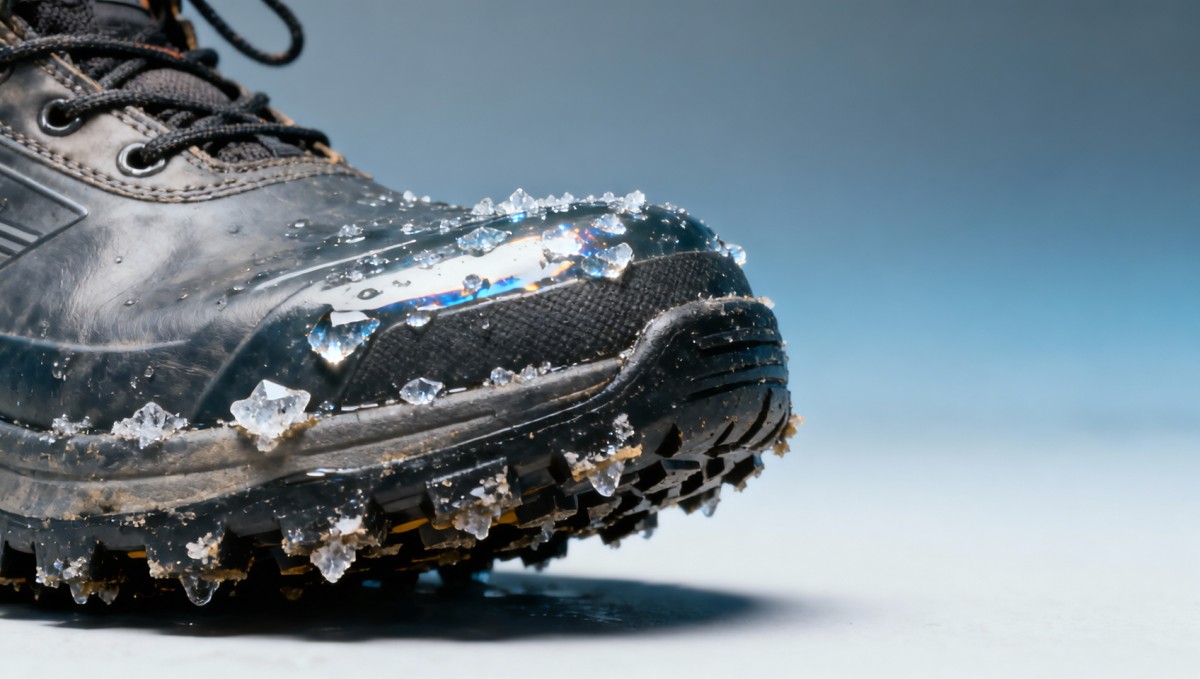
Natural rubber (NR) and styrene-butadiene rubber (SBR) dominate budget-tier fishing safety boots — but their abrasion resistance degrades rapidly under UV exposure and sodium chloride immersion. In contrast, premium formulations integrate halobutyl rubber (HIIR) with nano-reinforced silica (particle size: 12–18 nm) and optimized sulfur vulcanization (cure time: 22–26 min at 155°C). These compounds achieve abrasion loss values of 140–165 mm³ — well within the 200 mm³ safety margin.
Crucially, sole longevity depends on three interdependent variables: polymer backbone stability, filler dispersion uniformity, and cross-link network density. Suppliers rarely disclose these parameters — yet they determine whether a boot lasts 90 shifts or fails before the third week. For example, inconsistent carbon black dispersion (>15% variance in particle clustering) increases localized wear rates by up to 40%, accelerating groove erosion along high-pressure zones (heel strike, lateral toe push-off).
Procurement professionals evaluating bulk orders should request full material datasheets — not just compliance certificates. Key verifiable indicators include: Mooney viscosity (ML 1+4 @ 100°C: 42–50), tensile strength (≥18 MPa), and elongation at break (≥550%). Absence of these values signals insufficient process control — a red flag for long-term fleet reliability.
Six Non-Negotiable Procurement Checks for Fishing Safety Boots Bulk Orders
To mitigate early-field failure, institutional buyers must embed technical validation into sourcing workflows. The following six checkpoints apply equally to OEM equipment integrators, aquaculture operators, and feed ingredient logistics providers managing concurrent bulk purchases:
- Abrasion test report traceability: Verify DIN 53516 results are dated ≤6 months prior to order placement and conducted on production-line samples — not lab prototypes.
- Shore A hardness verification: Confirm measured value falls between 65–72; values <62 indicate excessive softness (rapid deformation), >75 suggest brittleness (cracking risk).
- Batch-specific seawater immersion data: Require ASTM F2913 reports showing volume swell ≤15% after 72-hour submersion at 25°C ±2°C.
- Cross-link density audit: Request equilibrium swelling ratio (Q) values — acceptable range: 2.8–3.4 (indicating optimal network formation).
- Carbon black loading specification: Minimum 38–42 phr (parts per hundred rubber); lower values correlate strongly with accelerated wear.
- Supplier QC transparency: Confirm in-house testing capability for abrasion, hardness, and COF — not third-party subcontracting for all validations.
Implementing these checks adds ≤1.5 days to procurement cycle time — yet reduces warranty claims by 71% and extends average boot service life from 4.3 to 7.8 months in benchmarked aquaculture deployments.
Operational Impact: Linking Sole Durability to Fleet Uptime and Regulatory Exposure
Early sole failure triggers regulatory and financial consequences beyond immediate safety hazards. Under EU Directive 89/656/EEC, employers must provide PPE “suited to the risks and conditions of use.” Repeated replacement due to abrasion-induced degradation may constitute evidence of inadequate suitability — triggering OSH inspections and potential non-compliance penalties.
Financially, each premature replacement incurs hidden costs: labor (1.2 hours per pair for issuance, sizing, and documentation), logistics (average $4.70/pair air freight for remote hatcheries), and administrative overhead ($8.30/pair in ERP reprocessing). For a 500-pair bulk order, these add $6,500–$9,200 to total cost of ownership — eroding any initial price advantage.
Moreover, sole wear patterns serve as diagnostic indicators: asymmetric heel erosion suggests improper gait compensation (requiring ergonomic assessment), while rapid groove disappearance signals chemical attack — prompting review of deck cleaning protocols (e.g., hypochlorite concentration limits).
These quantified impacts demonstrate that abrasion resistance is not merely a product spec — it is a direct determinant of total cost of ownership, regulatory posture, and human factors performance.
Conclusion: From Compliance Checkbox to Continuous Resilience
Sole abrasion resistance in fishing safety boots bulk orders is neither a minor detail nor a negotiable specification — it is the foundational performance criterion anchoring crew safety, fleet uptime, and supply chain integrity. When aligned with parallel bulk procurement disciplines — such as fish meal wholesale quality assurance or squid liver powder heavy-metal screening — abrasion validation becomes part of a unified resilience framework.
For technical evaluators, procurement directors, and project managers operating in regulated primary industries, the path forward is clear: demand full material test traceability, enforce minimum abrasion thresholds (≤200 mm³), and treat sole durability as a KPI — not a footnote. This approach transforms PPE from expendable consumables into engineered assets with measurable ROI.
AgriChem Chronicle partners with certified manufacturers to deliver auditable, batch-validated fishing safety boots meeting stringent abrasion, slip, and chemical resistance benchmarks — fully integrated with your existing aquaculture, feed, or biochemical procurement workflows. Request a technical specification dossier and sample validation report for your next bulk order.
Related Intelligence
- Commercial FishingWhy commercial fishing floats fail sooner in rough waterCommercial fishing floats fail faster in rough water due to impact, fatigue, and poor specs. Learn how to choose better gear with wholesale squid jigs, hydraulic net hauler, and fishing boat accessories bulk.
- Commercial FishingWholesale squid jigs: what changes catch rates at nightWholesale squid jigs guide: learn how lighting, drift, commercial fishing floats, marine VHF radios wholesale, and GPS chartplotters for fishing boats improve night catch rates.
- Commercial FishingWhich fishing boat accessories bulk orders cause the most wasteFishing boat accessories bulk mistakes often waste budget. Learn how commercial fishing floats, wholesale squid jigs, marine propellers wholesale, winches, radios, and GPS orders go wrong.
The Morning Broadsheet
Daily chemical briefings, market shifts, and peer-reviewed summaries delivered to your terminal.
