
Marine diesel engines for fishing boats: rebuild or replace?
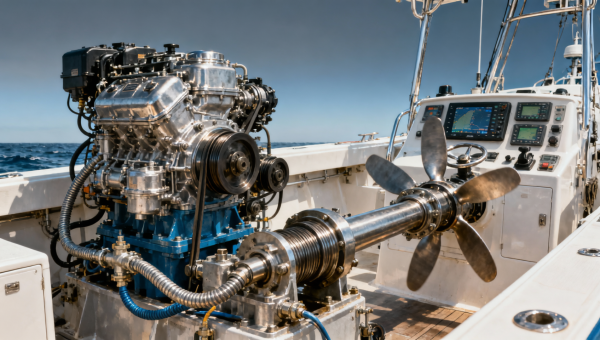
For operators, buyers, and technical evaluators, deciding between rebuilding or replacing marine diesel engines for fishing boats affects uptime, fuel economy, compliance, and lifecycle cost. This guide examines repair-versus-replacement choices in the wider context of commercial fishing winches, hydraulic net hauler systems, marine propellers wholesale options, gps chartplotters for fishing boats, and other fishing boat accessories bulk procurement decisions.
In commercial fisheries, the engine is not an isolated asset. It works as part of a tightly linked operating system that includes propulsion, hydraulics, navigation electronics, deck handling equipment, safety controls, and planned maintenance budgets. A poor engine decision can increase fuel burn by 8%–20%, extend docking time from 3 days to 3 weeks, or create compatibility issues with existing gearboxes and propellers.
For procurement teams and project managers, the rebuild-versus-replace question is therefore a capital allocation issue as much as a mechanical one. The right answer depends on engine hours, block condition, emissions expectations, spare parts access, crew skill level, and the expected service life of the entire vessel. For fleets buying fishing boat accessories in bulk, engine strategy also influences how other systems should be upgraded or retained.
When rebuilding a marine diesel engine makes operational sense
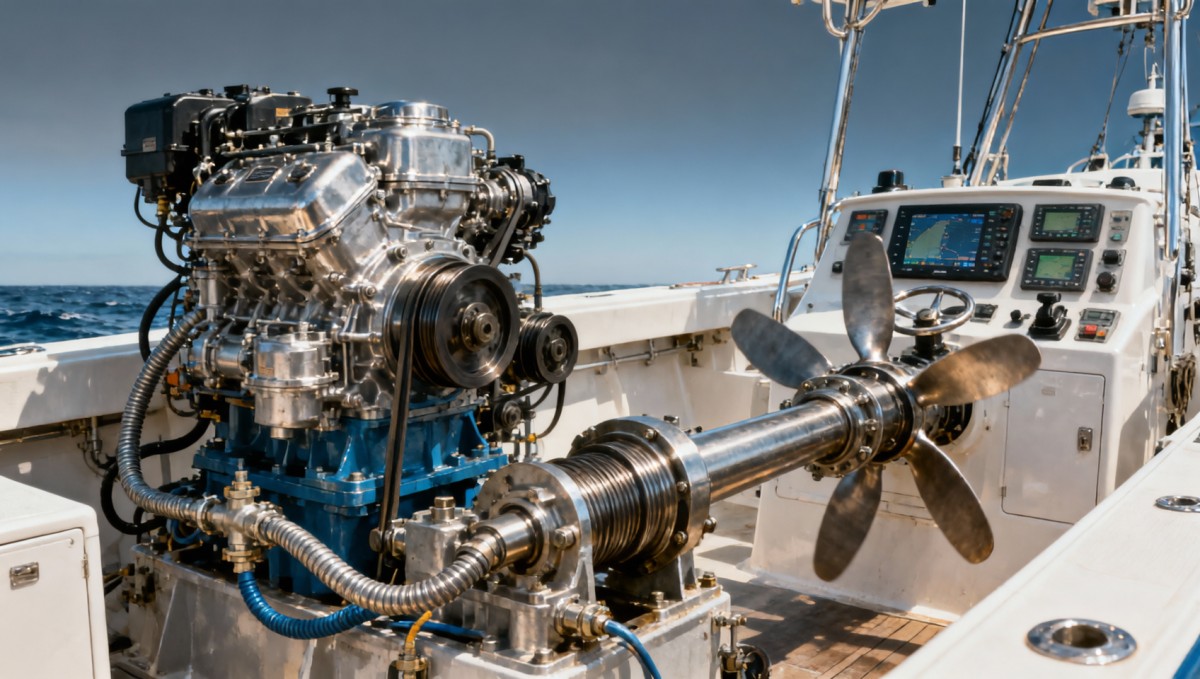
A rebuild is often justified when the engine block, crankshaft alignment, and core cooling passages remain structurally sound, while wear is concentrated in serviceable parts such as liners, pistons, bearings, injectors, pumps, and seals. In many fishing boats operating 1,500–3,000 hours per year, a midlife overhaul can restore dependable output without the full capital burden of a replacement package.
Rebuilding is especially attractive where the vessel’s shaft line, gearbox ratio, propeller pitch, and hydraulic power take-off are already matched to the existing engine. Changing engine dimensions, torque curves, or mounting geometry can trigger secondary costs in alignment, bed modifications, couplings, exhaust routing, and control integration. Those hidden costs can raise a “simple replacement” by 15%–35% beyond the engine price itself.
For owner-operators and fleet maintenance teams, rebuilds also reduce transition risk. Crew members already understand the engine’s service behavior, parts catalog, and alarm patterns. That familiarity matters on fishing trips where weather windows are narrow and any offshore stoppage can jeopardize catch quality, safety, and quota utilization.
Typical conditions that favor rebuilding
- Engine age is moderate, but total hours are still within a realistic overhaul cycle, often below 18,000–24,000 hours for many commercial-duty applications.
- Compression loss, oil consumption, or injector inefficiency are present, yet there is no major block cracking or terminal corrosion in water jackets.
- Parts availability is stable within 7–21 days through OEM or trusted aftermarket channels.
- Downtime targets are tight, and a controlled workshop rebuild can be completed faster than a full repower plus system reconfiguration.
Before approving a rebuild, technical evaluators should inspect oil analysis history, blow-by levels, turbocharger play, injector balance, bearing wear, coolant contamination, and cylinder measurements. A rebuild decision made without these checks can turn into a partial repair cycle that fails within one peak fishing season.
The table below summarizes common rebuild indicators against their practical procurement implications for fishing vessels and related deck equipment planning.
The strongest rebuild case appears when the engine is mechanically recoverable and the vessel’s wider propulsion ecosystem is still fit for another 5–8 years. In that situation, rebuilding can preserve operating continuity while leaving budget available for higher-priority upgrades such as net haulers, chartplotters, or safety systems.
When replacement delivers a better lifecycle return
Replacement becomes the better choice when core engine integrity is doubtful, emissions expectations are tightening, or the vessel is entering a longer production horizon that justifies new-asset reliability. If a fishing boat is expected to remain active for another 8–12 years, installing a new marine diesel engine may reduce cumulative downtime, stabilize parts sourcing, and improve fuel efficiency enough to offset the higher upfront spend.
A replacement is also easier to justify where repeated repairs have created maintenance uncertainty. If the vessel has already experienced 2 or 3 major interventions within 24 months, the issue is often no longer the cost of a single overhaul but the operational unpredictability that disrupts trip scheduling, labor use, and cold-chain commitments after landing.
For financial approvers, the decision should not rest only on invoice comparison. A replacement may offer lower cost per operating hour when fuel savings, warranty support, lower oil consumption, and fewer emergency call-outs are included. In high-use boats, even a modest 6%–12% gain in fuel economy can materially improve annual margins.
Signals that replacement should move to the front
- The engine block or head shows cracking, advanced corrosion, or repeated overheating damage.
- Critical components are obsolete, with lead times stretching beyond 30–60 days.
- The vessel requires updated power output for new hydraulic net hauler systems, larger winches, or higher auxiliary loads.
- Compliance, smoke limits, or local inspection requirements make older engines harder to keep in service.
Replacement is also worth considering when the engine change aligns with a wider vessel modernization project. If the owner is already reviewing marine propellers wholesale supply, electrical refits, steering upgrades, or gps chartplotters for fishing boats, the installation window can be used more efficiently. Combining projects may shorten total yard disruption by 10%–25% compared with separate interventions.
Replacement risks that must be budgeted early
Not every new engine creates immediate savings. Procurement teams should verify mount spacing, engine height, torque curve, gearbox compatibility, cooling arrangement, exhaust diameter, and control interface. If these are overlooked, installation delays can extend by 1–3 weeks and erode the economic advantage of repowering.
The following comparison helps decision-makers weigh full replacement against rebuilding in a vessel lifecycle context rather than as a parts-only transaction.
The key takeaway is simple: replacement is usually justified when the vessel still has strong economic life ahead and the old engine is becoming a recurring source of cost, uncertainty, or compliance exposure.
How engine decisions affect propellers, hydraulics, electronics, and bulk accessory procurement
A fishing boat engine decision should never be isolated from the rest of the vessel’s work systems. Marine propellers wholesale purchases, hydraulic net hauler systems, commercial fishing winches, alternators, pumps, steering circuits, and gps chartplotters for fishing boats all interact with the power profile and electrical stability of the main engine.
If a rebuilt engine maintains the same power band and torque delivery, most downstream systems can remain unchanged. That lowers engineering complexity. But if a replacement engine alters rated horsepower, RPM, or PTO characteristics, the propeller may need to be re-pitched, and hydraulic flow demand may need recalculation to avoid underperformance or overloading.
This is particularly relevant for boats engaged in trawling, purse seining, and crab or lobster operations, where deck machinery cycles are intense. A mismatch between engine output and hydraulic demand can reduce hauling speed, increase oil temperatures, and shorten hose or seal life. In practical terms, that means lower deck productivity even if the new engine itself is technically sound.
Integrated procurement checkpoints
- Confirm engine continuous-duty rating against hydraulic peak load, not just cruising demand.
- Check shaft speed and gearbox ratio before ordering marine propellers wholesale or changing blade geometry.
- Review alternator output if new electronics, refrigeration controls, lighting, and chartplotters increase electrical draw.
- Align spare parts planning so filters, belts, hoses, sensors, and impellers can be stocked in bulk for 6–12 months.
Distributors and project managers often achieve better total procurement efficiency by bundling engine work with selected accessories rather than replacing every item at once. For example, a fleet may rebuild engines on 4 vessels, but replace propellers and chartplotters only on the 2 hulls with the highest annual operating hours. That staged approach supports cash flow while still improving mission-critical systems.
The matrix below shows how engine strategy influences adjacent fishing boat accessories and deck machinery decisions.
For procurement departments, the lesson is clear: marine diesel engines for fishing boats should be evaluated together with propulsion, hydraulics, electronics, and bulk accessories. A technically correct engine choice can still become a commercially poor decision if adjacent systems are ignored.
A practical evaluation framework for technical, financial, and safety stakeholders
Because multiple departments influence the final decision, a structured evaluation framework is more reliable than a workshop recommendation alone. Operators focus on starting reliability and fuel burn. Technical assessors focus on wear patterns and integration risk. Finance teams prioritize payback period and downtime cost. Safety and quality personnel examine smoke, leak risk, overheating history, and inspection readiness.
A useful method is to score each option across 5 categories: mechanical condition, downtime exposure, lifecycle cost, compliance outlook, and system compatibility. Assigning a 1–5 score to each area often reveals whether the engine problem is really mechanical failure, fleet modernization pressure, or poor maintenance discipline.
For example, a vessel with fair engine health but weak navigation electronics and aging deck hydraulics may not benefit from a full repower first. In contrast, a boat with frequent overheating, unstable oil pressure, and limited spare parts access may require replacement even if some accessories are still serviceable.
Five-step decision process
- Document operating profile: annual engine hours, average trip length, fuel use per trip, and idle-to-load ratio.
- Complete technical inspection: compression, oil analysis, cooling system checks, vibration, and alignment review.
- Map integration impacts: gearbox, shafting, propeller, hydraulic PTO, exhaust, and electrical loads.
- Estimate total project cost: engine or rebuild kit, labor, yard time, accessory adjustments, training, and spares.
- Model service horizon: compare expected 3-year and 5-year cost per operating hour for both options.
Common evaluation mistakes
One common mistake is using only current repair cost as the decision anchor. Another is assuming all rebuilt engines perform equally, regardless of inspection quality, machining tolerances, or injector calibration. A third error is ignoring seasonal timing. A 2-week delay during peak catch periods can cost more than the price gap between a rebuild and replacement.
Quality and safety managers should also verify whether older engines create persistent oil leaks, smoke events, or hot-surface risks around the engine room. These may not stop the vessel immediately, but they increase inspection findings and maintenance burden over time. In commercial fleets, small recurring defects often consume more labor than one large planned intervention.
A disciplined framework helps distributors, fleet owners, and project leaders communicate with a shared set of numbers instead of subjective preferences. That leads to faster approvals and fewer post-installation disputes.
Implementation timing, supplier coordination, and procurement recommendations
Once the decision is made, execution quality becomes the next determinant of value. Whether rebuilding or replacing marine diesel engines for fishing boats, successful projects depend on realistic lead times, clear supplier responsibilities, and coordinated ordering for related fishing boat accessories. Poor sequencing can create idle labor, delayed sea trials, or missing components that keep a finished boat tied to the dock.
For rebuilds, plan for 1–2 weeks of diagnostic confirmation before final parts release if the engine must be opened first. For replacements, allow 2–6 weeks for engine delivery, mounting checks, accessory adaptation, and commissioning, depending on stock availability and vessel complexity. Imported parts, custom couplings, and propeller revisions can extend that timeline.
Procurement teams should request a single integrated bill of materials covering filters, hoses, mounts, sensors, belts, cooling components, fasteners, and any hydraulic or electrical interfaces. This reduces the risk of low-cost items delaying restart. In many projects, consumables worth less than 3% of project value cause the final 20% of delays.
Supplier and contractor checklist
- Define who is responsible for measurement, machining, alignment, and sea trial validation.
- Confirm whether warranty covers parts only or parts plus labor for 6, 12, or 24 months.
- Ask for commissioning documentation, baseline operating temperatures, and maintenance intervals.
- Coordinate accessories procurement so chartplotters, winch controls, and monitoring sensors are ready before final wiring and testing.
FAQ for buyers and technical teams
How many hours justify replacing instead of rebuilding?
There is no universal threshold, but once engines move beyond roughly 18,000–24,000 commercial hours, the case for replacement strengthens if structural wear, parts obsolescence, or repeated failures are present. Hours alone are not enough; load profile and maintenance history matter equally.
Can a rebuilt engine support modern hydraulic net hauler systems?
Yes, if the rebuild restores continuous-duty output and the PTO arrangement remains properly matched. However, pump flow, oil cooling, and peak hauling load should be recalculated before expanding deck machinery demands.
Should propellers be reviewed during an engine project?
Absolutely. Even if marine propellers wholesale replacement is not planned, pitch, diameter, and shaft compatibility should be checked. An engine that cannot reach its intended load range because of poor propeller matching will waste fuel and shorten service life.
What is the safest buying approach for fleets?
Use a phased fleet plan. Prioritize vessels by annual hours, failure history, and revenue importance. Rebuild engines on lower-risk hulls, replace on high-utilization boats, and standardize spare parts where possible to improve inventory control.
For most commercial operators, there is no one-size-fits-all answer. Rebuilding is often the best route when the engine’s core structure is sound, compatibility with existing propulsion and hydraulic systems is critical, and the vessel has a moderate remaining service horizon. Replacement is usually stronger when reliability has become erratic, compliance pressure is rising, or the boat is being modernized for another 8–12 years of intensive work.
The most effective decisions are made by looking beyond the engine itself and assessing marine propellers, deck hydraulics, electronics, spare parts, and yard scheduling as one procurement package. That approach gives operators, buyers, and technical evaluators a clearer view of true lifecycle cost and operational risk. To review your engine strategy, compare rebuild and replacement scenarios, or obtain a tailored plan for fishing boat accessories and propulsion upgrades, contact us today for a customized solution.
Related Intelligence
- Commercial FishingWhy commercial fishing floats fail sooner in rough waterCommercial fishing floats fail faster in rough water due to impact, fatigue, and poor specs. Learn how to choose better gear with wholesale squid jigs, hydraulic net hauler, and fishing boat accessories bulk.
- Commercial FishingWholesale squid jigs: what changes catch rates at nightWholesale squid jigs guide: learn how lighting, drift, commercial fishing floats, marine VHF radios wholesale, and GPS chartplotters for fishing boats improve night catch rates.
- Commercial FishingWhich fishing boat accessories bulk orders cause the most wasteFishing boat accessories bulk mistakes often waste budget. Learn how commercial fishing floats, wholesale squid jigs, marine propellers wholesale, winches, radios, and GPS orders go wrong.
The Morning Broadsheet
Daily chemical briefings, market shifts, and peer-reviewed summaries delivered to your terminal.
