
Longline fishing gear choices that affect catch consistency
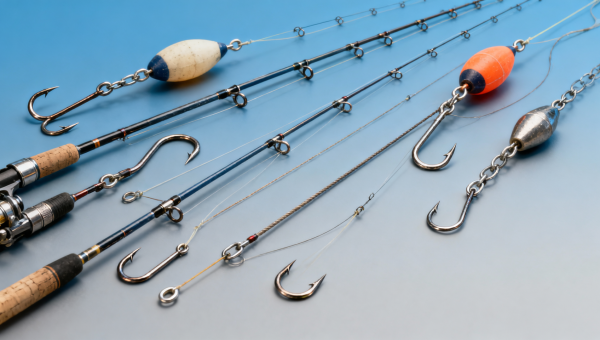
Selecting the right longline fishing gear is a decisive factor in catch consistency, labor efficiency, and product quality across modern fishery operations. From commercial fishing hooks bulk procurement to integration with fish processing machinery such as fish filleting machine commercial systems, every equipment choice influences yield, handling speed, and downstream value. This overview helps technical evaluators, buyers, and operators assess practical gear combinations that support stable performance and smarter investment decisions.
In commercial longline operations, catch consistency is rarely determined by a single component. It is the result of how hooks, branch lines, swivels, floats, mainline material, bait deployment, hauling speed, and onboard handling systems work together under real operating conditions. A gear set that performs well in one region or species profile may become inefficient when current speed, soak time, target size, or compliance rules change.
For procurement teams and technical reviewers, the challenge is not only choosing durable gear, but also matching gear specifications to vessel workflow, crew capacity, target catch grade, and downstream processing requirements. A longline setup that lowers hook loss by 8% to 15%, reduces fish bruising, or shortens sorting time by 20 to 30 minutes per set can materially improve trip economics.
Core longline gear components that influence catch consistency
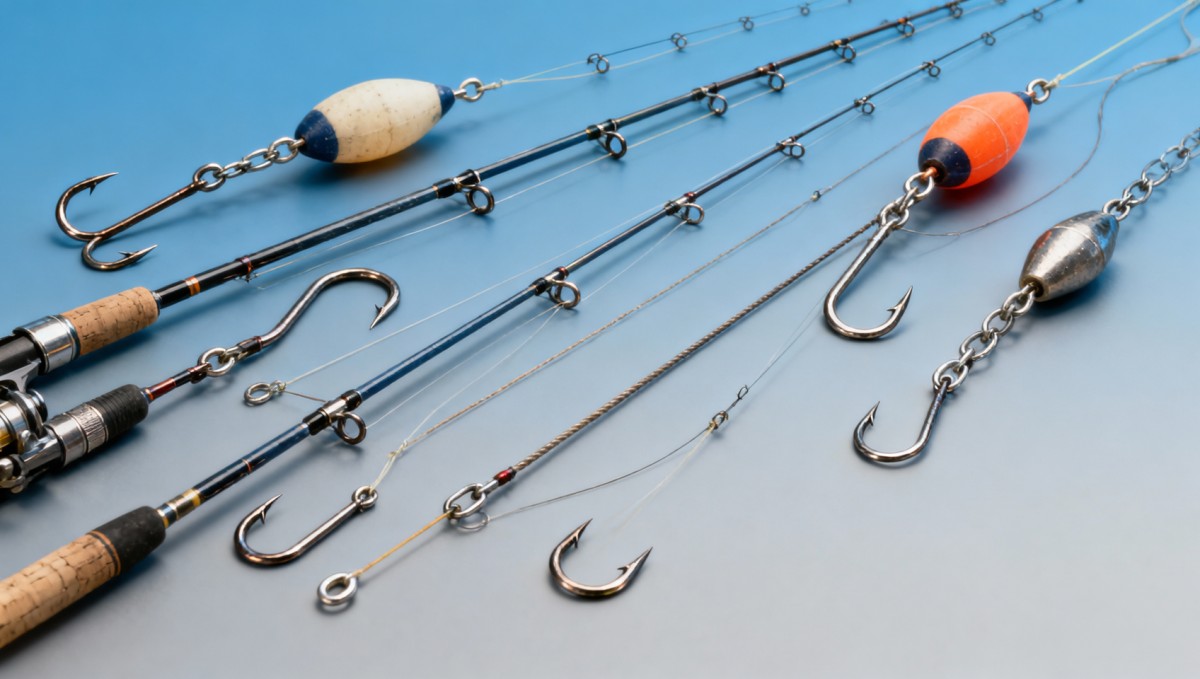
A consistent catch profile starts with component compatibility. In most offshore or nearshore longline systems, the key variables include hook pattern, snood or branch line length, mainline diameter, float spacing, leader material, and line setting rhythm. Even minor mismatches, such as overly rigid leaders or poorly spaced hooks, can reduce bait presentation quality and increase escape rates during haulback.
Hook selection is often the first procurement decision. Circle hooks are commonly favored where operators want improved jaw hooking and lower gut-hook incidence, while J-hooks may still be chosen for specific species behavior or baiting methods. In many fleets, hook sizes in the 12/0 to 16/0 range are evaluated against bait size, target mouth structure, and retention performance over soak periods of 4 to 12 hours.
Mainline and branch line material also shape consistency. Monofilament can provide lower visibility and better bait action, but braided lines may offer stronger abrasion resistance in rough grounds. A practical evaluation should include break strength, stretch behavior, memory, UV exposure tolerance, and replacement interval, which in active operations may range from every 3 to 8 months depending on cycle intensity.
Float and weight arrangement affect hook depth stability. If current velocity shifts gear depth by more than 1 to 3 meters from the target feeding zone, catch rates can become erratic across the same trip. Operators targeting pelagic species usually pay close attention to float interval, weight placement, and branch line length to keep the baited hook within a repeatable depth band.
Why component matching matters more than single-item quality
High-grade hooks alone cannot stabilize catches if the branch line twists excessively or if the mainline tension profile causes bait spin. Technical assessment should therefore treat the longline as a system. A durable but overly stiff leader can lower natural bait movement, while a soft but weak branch line may raise break-off rates under larger fish loads.
This is especially important where vessels must balance target yield with onboard quality preservation. If hook removal time is too long, or if fish arrive with scale loss and compression marks, downstream equipment such as a fish filleting machine commercial unit may deliver less uniform output. Catch consistency is therefore connected to both gear capture efficiency and post-catch handling compatibility.
The table below summarizes how several major gear choices affect operational consistency across different commercial conditions.
The main takeaway is that operators should evaluate gear combinations rather than isolated products. Consistency improves when hook retention, depth control, bait presentation, and hauling workflow are treated as a linked performance chain.
How hook, leader, and bait decisions affect usable yield
The difference between gross catch volume and usable landed value often comes down to three linked choices: hook configuration, leader design, and bait strategy. A vessel may report acceptable catch numbers, yet still lose margin if fish are damaged, undersized, or poorly presented for grading and processing. For buyers and finance approvers, this is where gear choice shifts from a consumables question to a yield management question.
Commercial fishing hooks bulk procurement should therefore account for more than price per thousand units. Coating durability, point sharpness retention, corrosion behavior in 24 to 72 hour deck exposure cycles, and packaging suitability for rapid baiting all influence actual operating cost. A lower-priced hook that dulls after one or two heavy sets can raise missed strikes and labor burden faster than the purchase saving justifies.
Leader material must also match target species and handling conditions. Wire leaders may be preferred in toothy species fisheries, while monofilament or fluorocarbon options can support lower visibility and smoother presentation in clearer waters. The trade-off is straightforward: greater bite resistance may reduce cut-offs, but can also alter bait movement and sometimes lower strike confidence in pressured grounds.
Bait size and attachment method are equally important. If bait is too small for hook geometry, it may wash out early or fail to present properly. If it is oversized, it can mask the hook point and reduce effective hook-up ratio. Across many operations, standardizing bait dimensions within a narrow range, such as within 10% to 15% size variation per set, can improve strike repeatability and crew speed.
Selection priorities for technical and procurement teams
- Confirm whether the target fishery prioritizes hook retention, species selectivity, reduced bycatch, or the fastest deck handling time.
- Review corrosion resistance under actual washdown, salt exposure, and storage conditions rather than catalog claims alone.
- Match leader stiffness and abrasion resistance to both seabed risk and fish landing method, especially where gaffing is minimized.
- Evaluate baiting efficiency per crew member per hour, because slower bait prep can offset any theoretical gain in catch quality.
Typical operational mistakes
One frequent mistake is standardizing on one hook pattern for all target seasons. Migratory timing, bait species availability, and fish size composition can shift enough within 6 to 10 weeks to justify a revised hook or leader setup. Another mistake is changing bait type without retesting hook gap exposure and deck baiting speed.
A second issue is failing to connect catch method with processing requirements. If fish are intended for premium fillet programs, gear should support lower bruising, cleaner hook placement, and shorter time-to-chill. When integrated properly with bleeding, washing, and fish filleting machine commercial workflows, gear choices can improve fillet uniformity and reduce trim waste.
Matching longline setups to vessel workflow and onboard processing
Catch consistency should be evaluated not only in the water, but across the full vessel workflow from setting to chilled storage. A technically strong longline system can still underperform if the deck layout, line hauler pace, hook removal station, and chilling capacity are not balanced. In many medium-scale operations, even a 10 to 15 minute delay between landing and bleeding can influence flesh appearance, core temperature progression, and final product grade.
This is why project managers and operational decision-makers increasingly assess longline gear as part of a broader fishery tech chain. Gear that produces steadier fish size distribution and fewer heavily damaged specimens is easier to pair with grading tables, deheading lines, and fish processing machinery. Consistency on deck often translates into more predictable throughput downstream.
For example, if a vessel processes part of the catch onboard or transfers rapidly to shore-based lines, the target should be uniform handling windows. Hook type, dehooking speed, and branch line management all affect whether fish can move to washing and filleting within 20 to 40 minutes of haulback. That matters when the end market values clean cuts, bright flesh, and reduced drip loss.
Operators should also consider crew fatigue. A setup that is slightly more expensive upfront but reduces tangles, hand injuries, and repeated re-rigging can stabilize output across multi-day trips. In practice, labor efficiency and catch consistency are closely linked because crew performance usually declines when rig handling becomes inconsistent or physically excessive.
Workflow checkpoints to review before gear approval
- Measure average time required to set 100 hooks and retrieve 100 hooks under normal sea conditions.
- Record tangling incidents per set and identify whether branch line length or float spacing is the main cause.
- Compare hook removal speed and fish condition across at least 2 gear configurations before bulk purchase approval.
- Check whether landed fish size distribution fits the intake capacity of chilling bins or automated processing stations.
- Review maintenance burden, including replacement of worn swivels, clips, and leaders after each trip cycle.
The table below helps align gear choices with vessel handling and product-quality objectives.
The strongest operations are usually those that connect gear selection with deck workflow, not those that purchase components in isolation. This systems view is especially relevant for distributors, fleet managers, and OEM-linked buyers serving integrated capture-to-processing chains.
Procurement criteria, quality control, and total cost of ownership
For B2B buyers, longline fishing gear should be assessed using total cost of ownership rather than unit price alone. A cheaper hook, swivel, or leader assembly may appear attractive at tender stage, but the true cost includes loss rate, replacement frequency, corrosion tolerance, storage damage, and labor time. In a fleet using 5,000 to 20,000 hooks over repeated cycles, small differences in failure rate can materially affect seasonal operating cost.
Quality control teams should define clear incoming inspection rules. Common checkpoints include hook point consistency, barb integrity where permitted, eye closure uniformity, coating coverage, leader crimp integrity, and packaging count accuracy. A practical acceptance protocol may inspect 1% to 3% of each incoming batch, with additional sampling if visible variation exceeds the agreed tolerance.
Procurement teams should also review supplier capability in terms of lot traceability, repeatability, and shipping protection. Even without proprietary certifications, a supplier that can provide material declarations, packaging specifications, and consistent dimensional tolerance is usually easier to qualify for recurring contracts. This matters when purchase decisions must pass through operations, quality, finance, and risk review.
Lead time is another overlooked factor. Standard consumable items may ship within 7 to 21 days, but customized pack formats, private labeling, or mixed component kits can require 3 to 6 weeks. Buyers planning seasonal peaks should therefore align forecasted usage with replacement rates and safety stock assumptions, especially where port access or customs timing is variable.
A practical supplier evaluation framework
- Batch consistency: Are dimensions and finish stable across repeat orders of the same specification?
- Traceability: Can the supplier distinguish production lots and support quality investigation if failures appear?
- Packing efficiency: Are bulk cartons or inner packs arranged to reduce rust risk and deck-side handling time?
- Commercial reliability: Does the supplier communicate realistic lead times, MOQ levels, and replacement policies?
- Application understanding: Can the supplier discuss target species, soak duration, and compatibility with onboard processing?
Common purchasing errors to avoid
One common error is buying mixed gear from multiple low-visibility sources without compatibility checks. Another is evaluating only dry-lab dimensions while ignoring actual deformation, corrosion, or tangle rates after 2 to 4 trips. A third mistake is underestimating storage conditions; poorly protected hooks and leaders can degrade before they ever reach the vessel.
Where fleets aim to support premium product channels, procurement should include a trial phase with operating feedback. A controlled comparison across at least 2 voyages or several standardized sets often reveals more value than catalog comparison alone.
Implementation, maintenance, and field optimization for stable results
Even well-selected longline fishing gear will not deliver stable performance without disciplined implementation. New gear should be introduced with a simple field protocol that records catch per set, damaged fish count, tangle incidents, hook loss, and average retrieval time. Tracking these 5 indicators for the first 2 to 4 weeks allows teams to distinguish between supplier issues, setup issues, and crew adaptation issues.
Maintenance routines should be practical and repeatable. Hooks must be checked for tip wear, corrosion spots, and bending; swivels should be inspected for rotation stiffness; leaders need review for abrasion and crimp deformation. Depending on fishing intensity, a weekly inspection cycle for active components and a deeper monthly audit can significantly reduce unplanned gear failure offshore.
Optimization is often incremental rather than dramatic. Adjusting branch line length by 1 to 2 meters, changing float spacing, or standardizing bait attachment technique across crews can improve set-to-set repeatability more effectively than a full system replacement. Technical evaluators should therefore focus on controlled adjustment rather than frequent wholesale changes.
For fleets connected to shore processing, feedback loops matter. If plant teams report increased trim waste, bruising, or variable fillet size, gear settings should be reviewed alongside handling time and chilling practice. The highest-value longline programs are those that link fishing gear decisions with actual commercial outcomes at grading, filleting, packing, and sale stages.
FAQ
How often should longline hooks and leaders be replaced?
There is no universal cycle, but many operators inspect after every trip and replace based on wear, corrosion, deformation, or reduced sharpness. In heavy commercial use, some components may require partial replacement after 1 to 3 trips, while others remain serviceable for longer if cleaning and storage are controlled.
What should buyers prioritize in commercial fishing hooks bulk orders?
Priority points include dimensional consistency, coating durability, point retention, packaging integrity, and lot traceability. It is also useful to confirm whether the hook specification has been matched to bait size, target species, and expected soak duration before approving larger volumes.
Can longline gear selection influence processing line efficiency?
Yes. Gear that improves fish condition and size consistency can support smoother grading and better compatibility with fish filleting machine commercial systems. This may reduce rework, trim loss, and interruptions at the processing stage.
How long does a practical gear evaluation usually take?
A meaningful operational review often takes 2 to 6 weeks, depending on voyage frequency and weather conditions. The goal is to compare enough sets to see stable patterns in catch profile, loss rate, fish condition, and labor time rather than drawing conclusions from one short trial.
Longline fishing gear choices affect far more than capture mechanics. They shape catch consistency, labor efficiency, usable yield, and the performance of downstream fish processing systems. For technical evaluators, procurement teams, quality managers, and commercial decision-makers, the best results come from selecting gear as an integrated operating system rather than a list of separate consumables.
If your operation is reviewing commercial fishing hooks bulk options, optimizing longline configurations, or aligning capture methods with fish filleting machine commercial workflows, a structured specification review can reduce risk and improve return on investment. Contact us to discuss application requirements, compare gear strategies, and obtain a more tailored solution for stable, scalable fishery performance.
Related Intelligence
- Commercial FishingGaode Launches First Quadruped Robot, ABot-M0 Open-Source Model for Aquaculture & Poultry InspectionABot-M0: Gaode's open-source quadruped robot for aquaculture & poultry inspection—80.5% task success, field-tested in Brazil & Vietnam. Discover how it transforms autonomous farm inspections.
- Commercial FishingGaode Launches First Quadruped Robot, Open-Sources ABot-M0 for Aquaculture & PoultryGaode launches first quadruped robot & open-sources ABot-M0 — an embodied AI model for aquaculture and poultry automation, with 80.5% Libero-Plus task success.
- Commercial FishingFish Processing Machinery Upgrades That Cut ReworkFish processing machinery upgrades cut rework fast. Compare block ice machine for fishery, commercial ice flaker machine, squid peeling machine, and filleting solutions to boost yield.
The Morning Broadsheet
Daily chemical briefings, market shifts, and peer-reviewed summaries delivered to your terminal.
