
Lobster creels bulk orders often fail on these spec details
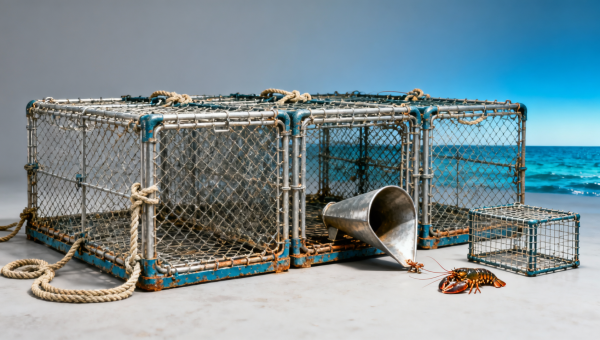
Bulk sourcing lobster creels bulk often goes wrong not on price, but on overlooked specification details that affect durability, compliance, and catch efficiency. For buyers comparing fish processing machinery, longline fishing gear, commercial fishing hooks bulk, or even block ice machine for fishery systems, the real procurement risk lies in technical mismatches. This article highlights the critical spec checkpoints institutional buyers and project teams should verify before placing volume orders.
In commercial fishery procurement, a creel is not just a cage. It is a working asset exposed to saltwater corrosion, seabed abrasion, repeated hauling, variable soak times, and jurisdiction-specific gear rules. A mismatch in mesh gauge, frame material, entrance geometry, or rope configuration can turn a seemingly competitive bulk order into a maintenance burden within 1–2 seasons.
That is why procurement teams, technical evaluators, operators, quality controllers, distributors, and financial approvers should assess lobster creels the same way they assess other industrial fishery inputs: by specification discipline, lifecycle cost, compliance readiness, and field suitability. The checkpoints below are designed for institutional buying decisions rather than retail comparison.
Why bulk lobster creel orders fail at the specification stage
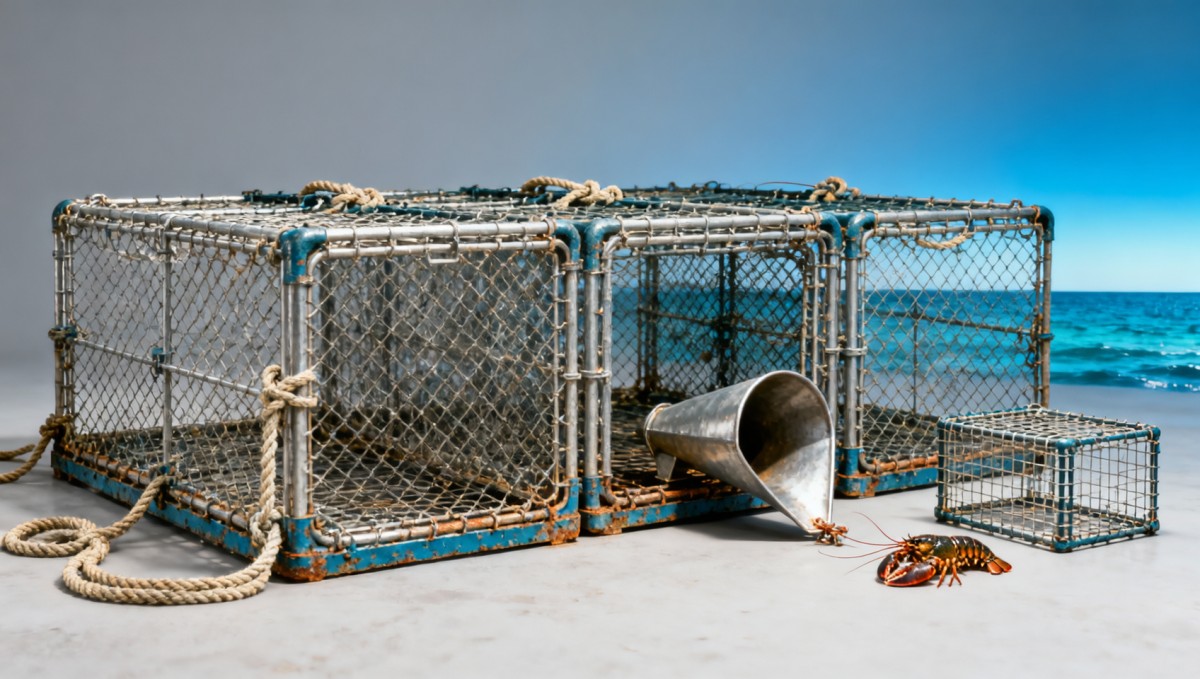
The most common failure in lobster creels bulk purchasing is assuming that all creels of similar dimensions perform similarly. In practice, two creels listed at 900 mm x 500 mm x 350 mm can behave very differently if one uses lighter wire, weaker weld points, or an entrance funnel that collapses under repeated impact. On a 500-unit or 2,000-unit order, that difference quickly multiplies into repair labor, lower catch retention, and premature replacement.
Another recurring issue is buying from a sample that does not represent production consistency. A pre-shipment sample may look acceptable, but bulk lots can show variation in wire diameter tolerance, coating thickness, hinge fit, or bait compartment fastening. For commercial operators, even a deviation of 0.3–0.5 mm in wire gauge can materially affect rigidity during hauling cycles.
Institutional buyers also underestimate operating context. Creels used in rocky seabeds, tidal currents above 2 knots, or soak cycles of 24–72 hours require different structural assumptions than gear used in calmer inshore waters. A supplier who is not asked about seabed type, target lobster size, string length, and hauling frequency may quote a unit that is technically acceptable on paper but operationally unfit in the field.
There is also a compliance gap. Different fisheries may require escape gaps, biodegradable panels, specific entrance counts, or marked buoy line arrangements. A low-cost order that overlooks these points can create customs delays, port inspection issues, or the need for retrofit work before deployment. That adds cost not only in materials, but in lost fishing days and project disruption.
Typical root causes seen in procurement reviews
- Specifications defined only by outer dimensions, without wire gauge, coating, or funnel geometry.
- No acceptable tolerance sheet for weld quality, door alignment, and mesh opening variance.
- No distinction between trial samples, pilot lot of 20–50 units, and full production release.
- Failure to confirm local fishery rules before finalizing escape vents, biodegradable weak links, or tag positions.
- Price comparison done per unit only, not per usable season or per 100 hauling cycles.
Core creel specifications buyers should lock before signing a volume contract
The specification sheet should be detailed enough that production, inspection, and receiving teams can all measure against the same standard. For lobster creels bulk orders, the minimum set usually includes frame dimensions, wire diameter, mesh opening, frame material, coating type, number of entrances, entrance angle, door structure, bait holder design, and stacking arrangement. Without this level of detail, disputes after delivery become difficult to resolve.
Wire diameter is one of the most overlooked items. In many commercial applications, common ranges may run from 4 mm to 8 mm depending on trap size and local fishing conditions. A lighter wire lowers initial cost and shipping weight, but may deform under repeated hauling or seabed impact. Heavier wire improves rigidity, but can alter sink rate, handling weight, and logistics cost. The right choice depends on operating depth, current, and vessel handling systems.
Mesh opening also matters for both legal and biological reasons. Openings that are too small can increase drag and trap undersized bycatch. Openings that are too large may reduce target retention or weaken the structure if the wire quality is poor. Buyers should define not only nominal mesh size, but tolerance, panel consistency, and whether mesh is welded or woven in the relevant sections.
Entrance funnels deserve even closer review. A creel may use 1, 2, or more funnel entrances, but performance depends on throat diameter, taper angle, and rebound behavior after repeated impacts. If the funnel deforms after 30–50 hauling cycles, catch efficiency can fall long before the frame itself fails. For that reason, procurement should request close-up construction details, not just external product photos.
Specification checkpoints to put into the RFQ
The table below summarizes the technical details that should appear in any serious RFQ or purchase contract for commercial lobster creels. It is especially useful when comparing multiple suppliers whose quotations look similar at headline level but differ in structural quality.
The key takeaway is simple: dimensions alone are not a usable commercial specification. Buyers should insist on measurable items, tolerance language, and photo or drawing references. That reduces disagreement during inspection and creates a clearer basis for supplier accountability.
Minimum document package before order confirmation
- Approved production drawing with dimensions and materials.
- Inspection checklist covering welds, mesh, doors, funnels, and finish.
- Pilot sample sign-off record, ideally on 5–10 units rather than one piece.
- Packaging and loading plan for container efficiency and damage control.
Durability, corrosion resistance, and lifecycle cost in fishery operations
For finance approvers and project managers, unit price is only the first layer. In lobster creels bulk orders, the more relevant question is cost per working season. A creel that costs 8% less but requires repairs after 4 months may be more expensive than a heavier-duty unit that remains field serviceable over 12–24 months, depending on operating intensity and maintenance discipline.
Saltwater exposure rapidly exposes weak material choices. If galvanizing is thin or uneven, rust can appear at weld points, hinges, and mesh intersections first. Coated systems can extend protection, but only if surface preparation and adhesion are controlled. Buyers should ask how the finish performs at joints, not just on flat wire sections shown in marketing images.
Mechanical durability is equally important. During commercial handling, creels are dropped, stacked, dragged, and hauled repeatedly. If stacking legs deform or doors lose alignment, operators spend more time on deck correcting issues. Across a fleet using 1,000 units, even an extra 20–30 seconds of handling inefficiency per cycle can turn into significant labor drag over a season.
This is where lifecycle costing should be built into supplier comparison. Procurement teams should evaluate replacement frequency, repairability, spare mesh or clips availability, and expected maintenance intervals. For many institutional buyers, a practical review period is 100 hauling cycles or 1 full season, whichever comes first.
A practical durability comparison framework
The following comparison model helps buyers move from unit-price thinking to operating-cost thinking. It is also useful when comparing lobster creels against other fishery assets where corrosion and handling stress are major value drivers.
The financial conclusion is not that every operation should buy the heaviest possible creel. It is that the selected durability level must match the work profile. A nearshore operator and a high-intensity commercial fleet should not buy to the same specification, even if both request “standard lobster creels bulk.”
Compliance, operational fit, and the hidden cost of wrong configurations
Compliance is often treated as an afterthought in gear procurement, but that is risky. Lobster creels may need escape gaps, biodegradable release panels, legal tag positions, or other fishery-specific features. If these are missing or incorrectly sized, operators may face delayed deployment or costly modifications at dockside. For a project launching 300–800 units before season opening, a one-week delay can affect both revenue timing and labor planning.
Operational fit is the second hidden cost. A creel may be compliant yet still unsuitable for vessel handling systems. Weight per unit, stacking height, line attachment position, and buoy rope compatibility all affect workflow on deck. If the gear does not align with the hauler, storage pattern, or crew routine, operational friction appears immediately.
This is especially relevant for buyers evaluating multiple fishery systems together. Teams sourcing lobster creels, commercial fishing hooks bulk, longline gear, or block ice machine for fishery support often manage mixed budgets and mixed technical interfaces. A seemingly small mismatch in one category can disrupt installation sequence, deck arrangement, or cold-chain planning in the broader project.
A disciplined procurement review should therefore include legal fit, vessel fit, handling fit, and maintenance fit. That four-part approach reduces the chance of buying gear that passes quotation review but fails during deployment. It also helps distributors and resellers protect their downstream reputation by avoiding avoidable complaints.
Pre-order operational review questions
- Does the target fishery require escape vents or biodegradable panels, and who confirms the dimensions before production?
- What is the loaded handling weight per creel, and is it acceptable for the crew’s hauling pattern?
- Can the creels be stacked in stable layers of 10, 20, or 30 units without deformation during transport?
- Are line attachment points reinforced for the expected current load and hauling speed?
- Is spare hardware available locally for minor repairs during the season?
Three common mistakes in cross-functional procurement
First, procurement finalizes price before the technical team signs off on the drawing. Second, operators are asked for feedback only after the pilot lot is already packed. Third, compliance review is delegated to the supplier without internal verification. These three mistakes are avoidable, and correcting them usually adds only a few days to the procurement cycle while reducing far larger downstream losses.
A practical buying workflow for lobster creels bulk orders
A robust buying process is the best defense against specification drift. For bulk projects, the recommended model is a 5-step workflow: requirement mapping, technical RFQ, pilot evaluation, production inspection, and receiving verification. Each step should have a named owner from procurement, technical review, operations, and quality control.
Requirement mapping should define at least 8 inputs before sending RFQs: target fishery, seabed conditions, expected soak time, hauling frequency, vessel constraints, local compliance requirements, target service life, and budget range. Without these basics, suppliers tend to quote generic options that create later comparison confusion.
Pilot evaluation should not rely on appearance alone. Teams should inspect rigidity, weld finish, funnel resilience, door function, line attachment strength, and stacking stability. If possible, a field test over 7–14 days provides better insight than a dockside visual check. For larger projects, a pilot batch of 20–50 units is often more informative than a single approval sample.
Production inspection is where many losses can still be prevented. Random checks should verify agreed tolerances, coating consistency, count accuracy, and packaging protection. Receiving verification then confirms whether delivered goods match approved production samples rather than the earliest prototype. This distinction matters because deviations often appear only after scale-up.
Recommended procurement workflow by stage
The table below can be used as an internal alignment tool across procurement, engineering, operations, finance, and distribution teams.
For B2B buyers, this workflow improves more than quality control. It also supports internal approval by giving finance and management a clear decision trail. That is valuable when purchases must be justified across technical and commercial criteria rather than unit price alone.
FAQ for technical evaluators, buyers, and project teams
How many sample units should be reviewed before a bulk lobster creel order?
For low-risk repeat orders, 3–5 units may be enough for dimensional and finish confirmation. For a new supplier or modified design, a pilot lot of 20–50 units is safer because it reveals production consistency, not just prototype quality. If the order exceeds 1,000 units, a pilot stage is strongly advisable.
What matters more: galvanized finish or heavier wire?
They solve different risks. Heavier wire mainly improves structural durability, while galvanizing or other protective finishing addresses corrosion resistance. In rough commercial conditions, both need to be balanced. A heavy frame with poor finish can still corrode prematurely, and a well-coated but light frame can still deform under handling stress.
What is a realistic delivery planning window for bulk fishery gear?
For standard designs, planning 3–6 weeks for production plus shipping time is common, though project complexity and order size affect this. If custom compliance features, new drawings, or pilot testing are required, buyers should add extra lead time rather than force compression that raises quality risk.
Which departments should approve the order before release?
At minimum, procurement, technical evaluation, operations, and quality control should sign off. For larger institutional projects, finance and project management should also review lifecycle cost, delivery timing, and deployment compatibility. This cross-functional approval model reduces the chance of buying a technically acceptable but operationally inconvenient product.
Large-volume lobster creels purchasing succeeds when the order is built around measurable specifications, real operating conditions, and a disciplined approval process. Buyers who verify wire gauge, mesh, funnel design, coating quality, compliance features, and production consistency are far less likely to face hidden costs after delivery.
For organizations working across aquaculture and fishery technology, these procurement principles also apply when comparing adjacent assets such as longline systems, fish processing machinery, commercial fishing hooks bulk, and cold-support equipment. Stronger specification control leads to better field performance, smoother approvals, and more defensible capital decisions.
If your team is evaluating lobster creels bulk orders and needs help refining specification sheets, comparing suppliers, or structuring a lower-risk procurement workflow, contact us to discuss your application, request a tailored checklist, or explore more fishery equipment sourcing solutions.
Related Intelligence
- Commercial FishingGaode Launches First Quadruped Robot, ABot-M0 Open-Source Model for Aquaculture & Poultry InspectionABot-M0: Gaode's open-source quadruped robot for aquaculture & poultry inspection—80.5% task success, field-tested in Brazil & Vietnam. Discover how it transforms autonomous farm inspections.
- Commercial FishingGaode Launches First Quadruped Robot, Open-Sources ABot-M0 for Aquaculture & PoultryGaode launches first quadruped robot & open-sources ABot-M0 — an embodied AI model for aquaculture and poultry automation, with 80.5% Libero-Plus task success.
- Commercial FishingFish Processing Machinery Upgrades That Cut ReworkFish processing machinery upgrades cut rework fast. Compare block ice machine for fishery, commercial ice flaker machine, squid peeling machine, and filleting solutions to boost yield.
The Morning Broadsheet
Daily chemical briefings, market shifts, and peer-reviewed summaries delivered to your terminal.
