
How to size a block ice machine for fishery cold chain needs
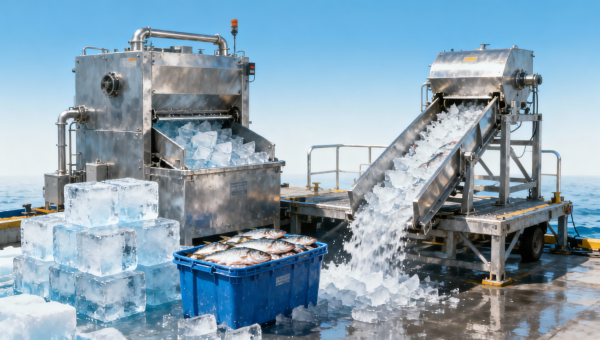
Choosing the right block ice machine for fishery operations is critical to protecting catch quality, controlling energy costs, and keeping the cold chain stable from vessel to market. For buyers comparing a block ice machine for fishery with a commercial ice flaker machine and other fish processing machinery, correct sizing depends on daily output, storage time, species handled, ambient conditions, and processing line demand.
In commercial fisheries, block ice is not simply a cooling medium. It is a core part of product preservation, handling discipline, and logistics planning from landing site to wholesale channel. A machine that is too small creates supply interruptions and quality loss, while an oversized system increases capital cost, compressor cycling, and avoidable power consumption.
For technical evaluators, procurement teams, project managers, and operating crews, the sizing decision should be based on measurable process variables rather than nameplate capacity alone. Daily catch volume, melt loss, peak loading windows, storage duration, and delivery rhythm all matter. This guide explains how to size a block ice machine for fishery cold chain needs with practical calculation logic and procurement checkpoints.
Define the real ice demand before choosing machine capacity
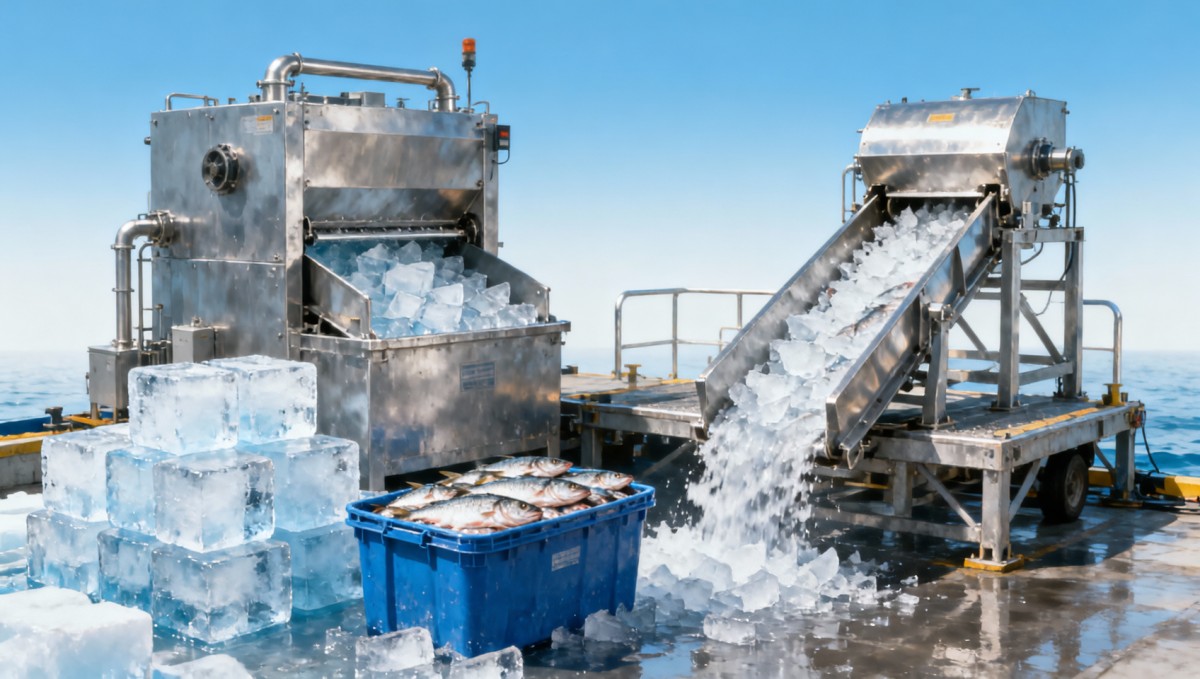
The first step is to calculate actual ice demand per 24 hours, not just the rated tonnage of fish processed. In many fishery operations, the useful ice requirement includes direct chilling of catch, packing for transport, buffer stock for peak landings, and contingency volume for hot weather or delayed unloading. A basic sizing error of even 15% to 20% can create a weak point in the cold chain.
A practical rule used in many coastal and inland fish handling scenarios is to estimate ice at 20% to 60% of fish weight, depending on species, handling time, and ambient temperature. Small pelagic species and shrimp often need heavier icing than larger whole fish packed in insulated bins. If fish remain in transport for 6 to 12 hours, the required ice ratio is usually higher than for same-day auction movement.
For example, if a landing station handles 30 tons of fish per day and the operating team uses a 30% ice-to-fish ratio, daily ice demand starts at 9 tons. Add 10% melt loss during handling and storage, and another 15% safety reserve for peak arrivals, and the corrected daily requirement becomes about 11.25 tons. In this case, a nominal 10-ton machine may be too tight, while a 12-ton to 15-ton block ice machine for fishery use would be more realistic.
It is also important to separate average demand from peak-hour demand. A site may average 8 tons per day but need 5 tons within a 4-hour unloading window. That difference affects not only machine capacity but also the number of ice cans, harvesting schedule, storage bin size, and crushing capacity if blocks are reduced before use.
Key variables that change sizing results
- Daily fish volume in tons, including seasonal peaks rather than annual average only.
- Ice-to-fish ratio, often ranging from 0.2:1 to 0.6:1 depending on species and route length.
- Storage time before sale or processing, such as 4 hours, 12 hours, or 24 hours.
- Ambient temperature, with tropical conditions often requiring a larger reserve margin.
- Shift pattern, because 1 shift versus 2 shifts changes how much ice must be available at one time.
Simple daily sizing formula
A practical formula is: Daily ice demand = fish volume × icing ratio + expected process loss + reserve stock. Reserve stock is commonly set at 10% to 25% where vessel arrival times are inconsistent or grid power is unstable. This simple approach gives a better planning base than relying on sales brochures listing only “tons per day” under ideal conditions.
The following table shows how different handling scenarios can change the required size of a block ice machine for fishery operations.
The table highlights why a machine cannot be sized by catch tonnage alone. Two sites handling the same 20 tons of fish can have very different ice demand profiles based on route time, species sensitivity, and local temperature. For decision-makers, the most reliable approach is to calculate by scenario, then validate with peak-day operations.
Match machine output to block size, freezing cycle, and plant workflow
Once daily demand is known, the next question is whether the machine can produce usable ice in the right block size and cycle time. A block ice machine for fishery service may produce blocks from 5 kg to 100 kg, but larger blocks usually need longer freezing cycles. In practical terms, a machine rated for 10 tons per day under one block size may not deliver the same throughput under another.
Typical freezing cycles range from 6 to 12 hours depending on brine temperature, block weight, refrigerant system design, and ambient heat load. A system running two 12-hour cycles has less flexibility than one running three 8-hour cycles. For fisheries with irregular vessel arrivals, shorter cycles often improve operational control even if theoretical energy efficiency looks slightly lower on paper.
Workflow matters as much as refrigeration. If the site needs crushed ice for bins, the sizing scope should include block thawing, lifting, crushing, and transfer speed. A 15-ton machine can still become a bottleneck if workers can only harvest and crush 6 tons during the morning peak. In that case, the project team may need a larger crusher, a better rail system, or a separate storage bunker rather than a larger compressor alone.
This is where many buyers compare block ice with a commercial ice flaker machine. Flake ice is ready for immediate use and offers faster heat transfer, but block ice usually has advantages in lower melt rate during storage and easier transport in areas where ice is sold or delivered in bulk. The right choice depends on whether the fishery needs on-demand processing ice, transport ice, or mixed-use cold chain support.
Block ice versus flake ice in fishery applications
The following comparison helps buyers understand when a block ice machine for fishery use is preferable and when a commercial ice flaker machine should be considered as a complementary or alternative solution.
The comparison shows that sizing should reflect the whole process chain, not the ice machine alone. In many projects, block ice covers vessel unloading and transport, while flake ice serves trimming, packing, and line cooling. This hybrid arrangement can reduce handling loss and improve temperature consistency across different stages.
Questions to confirm with operations teams
- What block weight is practical for lifting, transport, and crushing at the site?
- How many freezing cycles are needed per day to support landing peaks?
- Is the output used as full blocks, crushed ice, or a mix of both?
- Can operators safely demold, move, and store the required tonnage within each shift?
Consider environmental conditions, utilities, and installation constraints
Rated output from ice machinery is usually based on defined water and ambient conditions. In real fishery locations, summer temperatures may run at 32°C to 38°C, seawater humidity can accelerate corrosion, and power supply may fluctuate. These factors can reduce effective capacity, extend freezing cycles, and increase maintenance intervals if not considered early in the project.
Water quality is another overlooked sizing issue. If source water contains high mineral content, suspended solids, or unstable salinity where treated freshwater is limited, scale buildup can affect heat transfer and reduce ice quality. For food-contact use, water treatment and sanitation planning should be part of the machine specification, especially if the ice is in direct contact with whole fish or shellfish.
Electrical infrastructure can decide whether a nominally suitable machine is actually deployable. A block ice machine for fishery applications may require 3-phase power, stable voltage, and enough starting capacity for compressors, pumps, and lifting systems. In remote ports, adding a larger machine can trigger extra costs for transformer upgrades, backup generation, or soft-start systems.
Site layout also affects performance. The distance between machine room, ice storage, crushing station, and loading point can add labor minutes to every ton handled. Over one season, poor layout can cause more temperature loss and labor cost than a small difference in machine efficiency. For project managers, an equipment layout review is often as important as comparing compressor specifications.
Typical technical checks before final sizing
- Ambient design temperature, often set around 35°C for conservative tropical planning.
- Water inlet temperature and treatment quality, because warmer water lengthens freezing time.
- Power stability, including voltage fluctuation and planned backup during outages longer than 30 minutes.
- Corrosion exposure near saltwater, which may require upgraded coatings or stainless steel contact surfaces.
- Available floor area for machine, storage, crane path, crusher, and maintenance access.
The checklist below helps procurement and engineering teams map installation conditions to sizing decisions and risk control measures.
These conditions explain why two identical machines can deliver very different field performance. For quality-control teams and financial approvers, it is usually better to budget for site-specific adaptation at the beginning than to absorb recurring downtime, sanitation risk, or under-capacity during the high season.
Build a procurement model around lifecycle cost, not equipment price alone
A common procurement mistake is choosing the cheapest machine that meets nominal tonnage. In reality, the better comparison is total delivered cost per usable ton of ice over 3 to 5 years. This includes electricity, water, labor for block handling, spare parts, downtime risk, and the cost of fish quality deterioration if ice supply becomes unstable during peak season.
For distributors, agents, and institutional buyers, supplier evaluation should also include documentation quality, commissioning support, spare parts access, and response time. Even a technically suitable block ice machine for fishery use can become a weak investment if the supplier cannot provide operating manuals, electrical drawings, parts lists, and remote troubleshooting within a reasonable service window.
Commercial due diligence should also verify what is included in the offer. Some quotations cover only the main machine, while crusher units, hoists, brine tanks, installation materials, and operator training are priced separately. This can change the project budget by 10% to 30%. A structured bid comparison helps procurement teams avoid low-entry quotations that become expensive during implementation.
Where fish quality directly affects resale value, reliability has financial weight. If a cold chain interruption causes just 2% to 5% quality loss on a high-volume catch, that loss can exceed the savings from selecting a lower-grade system. For decision-makers, sizing and procurement should therefore be linked to product value protection, not only machine acquisition cost.
Practical procurement checklist
- Confirm net daily usable ice output under local ambient conditions, not only brochure conditions.
- Request freezing cycle time, block weight options, and labor needs per cycle.
- Review energy consumption range, maintenance intervals, and critical spare parts list.
- Check delivery scope: machine, crusher, storage, lifting system, piping, startup, and training.
- Assess after-sales response expectations such as 24-hour remote support or local partner capability.
Common sizing and buying mistakes
- Using average daily catch instead of seasonal peak catch as the sizing basis.
- Ignoring melt loss during transfer, especially in open-air handling areas.
- Assuming the machine rating already includes reserve stock and future expansion.
- Comparing a block ice machine and commercial ice flaker machine without mapping actual usage points.
- Underestimating labor, safety, and throughput needs for harvesting and crushing heavy blocks.
A disciplined procurement process usually includes 4 stages: demand validation, technical comparison, site review, and commercial negotiation. For larger projects, adding a pilot handling simulation or a supplier reference call can further reduce implementation risk before final approval.
Implementation, maintenance, and FAQ for long-term fishery cold chain performance
Sizing does not end with equipment selection. Commissioning quality, operator training, sanitation control, and preventive maintenance all influence whether a block ice machine for fishery applications actually delivers stable performance across the season. Many operators see the first 90 days as the critical period for adjusting cycle timing, labor routines, and cleaning frequency.
A practical startup plan should include installation verification, trial freezing, demolding checks, crusher alignment, and temperature monitoring at the point where fish is packed. If the machine output meets nameplate tonnage but the ice warms excessively before use, the issue may lie in handling layout rather than refrigeration itself. This is why cold chain validation should cover the entire process from production to fish contact point.
Preventive maintenance is especially important in coastal locations. Condensers, pumps, lifting systems, and electrical panels should be inspected on a weekly or monthly schedule depending on exposure and load. Even simple routines such as cleaning heat exchange surfaces and checking brine conditions can protect freezing efficiency and limit unplanned stoppages during high-demand periods.
For enterprises planning expansion, it is often wise to evaluate whether the current site should be sized for 12 months only or for a 2- to 3-year growth horizon. In some cases, a modular layout with space for a second unit is more cost-effective than installing one oversized machine immediately. This approach supports phased capital spending while protecting operational flexibility.
FAQ: How should buyers interpret daily capacity claims?
Daily capacity claims should be read together with block size, cycle length, ambient temperature, and water temperature. A 10-ton rating under mild conditions may not deliver 10 tons in a hot, humid fish landing station. Ask suppliers for output assumptions and request expected production at your actual design conditions.
FAQ: When is a commercial ice flaker machine better than block ice?
A commercial ice flaker machine is often better for processing lines that need immediate, direct-contact cooling and uniform ice distribution. Block ice is usually better for transport, remote delivery, and situations where slower melt and bulk storage are more valuable. Many fish processing machinery setups use both systems to cover different stages.
FAQ: What maintenance interval is typical?
Basic operator inspections may be daily, sanitation checks weekly, and more technical service monthly or quarterly depending on operating hours. In corrosive marine environments, inspection frequency often needs to be tighter. Buyers should request a maintenance schedule tied to actual site conditions, not just a generic manual.
FAQ: How much reserve capacity is reasonable?
A reserve margin of 10% to 25% is common where vessel arrivals fluctuate, ambient temperatures are high, or power reliability is uncertain. The correct figure depends on the commercial risk of stockout. If fish value drops quickly with poor icing, a stronger reserve position is usually justified.
The right sizing method combines demand calculation, freezing cycle review, site condition analysis, and lifecycle procurement logic. For fisheries, processors, and distributors, that means selecting a block ice machine for fishery cold chain needs based on usable output, handling workflow, and quality protection rather than catalog tonnage alone. If you are evaluating new fish processing machinery, planning a landing site upgrade, or comparing block ice with flake ice systems, now is the time to request a tailored capacity assessment, review your cold chain risks, and get a solution matched to your operating profile. Contact us to discuss specifications, sizing assumptions, and practical project options.
Related Intelligence
- Commercial FishingGaode Launches First Quadruped Robot, ABot-M0 Open-Source Model for Aquaculture & Poultry InspectionABot-M0: Gaode's open-source quadruped robot for aquaculture & poultry inspection—80.5% task success, field-tested in Brazil & Vietnam. Discover how it transforms autonomous farm inspections.
- Commercial FishingGaode Launches First Quadruped Robot, Open-Sources ABot-M0 for Aquaculture & PoultryGaode launches first quadruped robot & open-sources ABot-M0 — an embodied AI model for aquaculture and poultry automation, with 80.5% Libero-Plus task success.
- Commercial FishingFish Processing Machinery Upgrades That Cut ReworkFish processing machinery upgrades cut rework fast. Compare block ice machine for fishery, commercial ice flaker machine, squid peeling machine, and filleting solutions to boost yield.
The Morning Broadsheet
Daily chemical briefings, market shifts, and peer-reviewed summaries delivered to your terminal.
