
Commercial ice flaker machine output drops? Check these causes
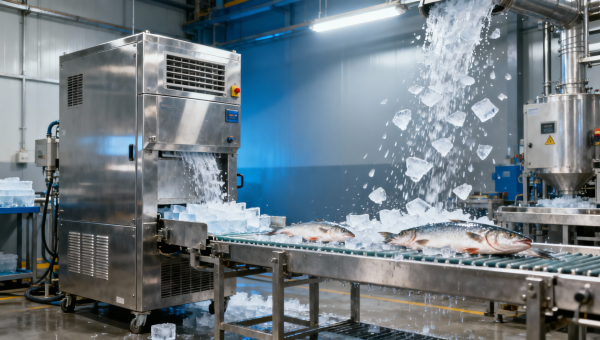
When a commercial ice flaker machine starts producing less ice, the issue may go far beyond routine wear. For fisheries, cold-chain plants, and fish processing machinery operators, reduced output can disrupt workflows tied to block ice machine for fishery systems, fish filleting machine commercial lines, and commercial fish scaling machine performance. This guide outlines the most common causes, helping technicians, buyers, and plant managers identify faults quickly and make smarter maintenance or procurement decisions.
In B2B processing environments, an output drop of even 10% to 20% can create downstream bottlenecks in chilling, filleting, packing, and transport. Ice is not only a utility item; it is a process-control element that directly affects hygiene, holding temperature, product shelf life, and labor scheduling. For technical evaluators and procurement teams, identifying whether the problem is operational, mechanical, environmental, or design-related is essential before approving repair budgets or replacement plans.
The most effective approach is to diagnose the machine in layers: verify water supply, check refrigeration performance, review scale buildup, inspect wear parts, and compare the unit’s actual output against its rated conditions. In many plants, the machine itself is not failing completely; instead, it is operating outside the temperature, water quality, maintenance, or load assumptions under which the published capacity was specified.
How to define an output drop before troubleshooting
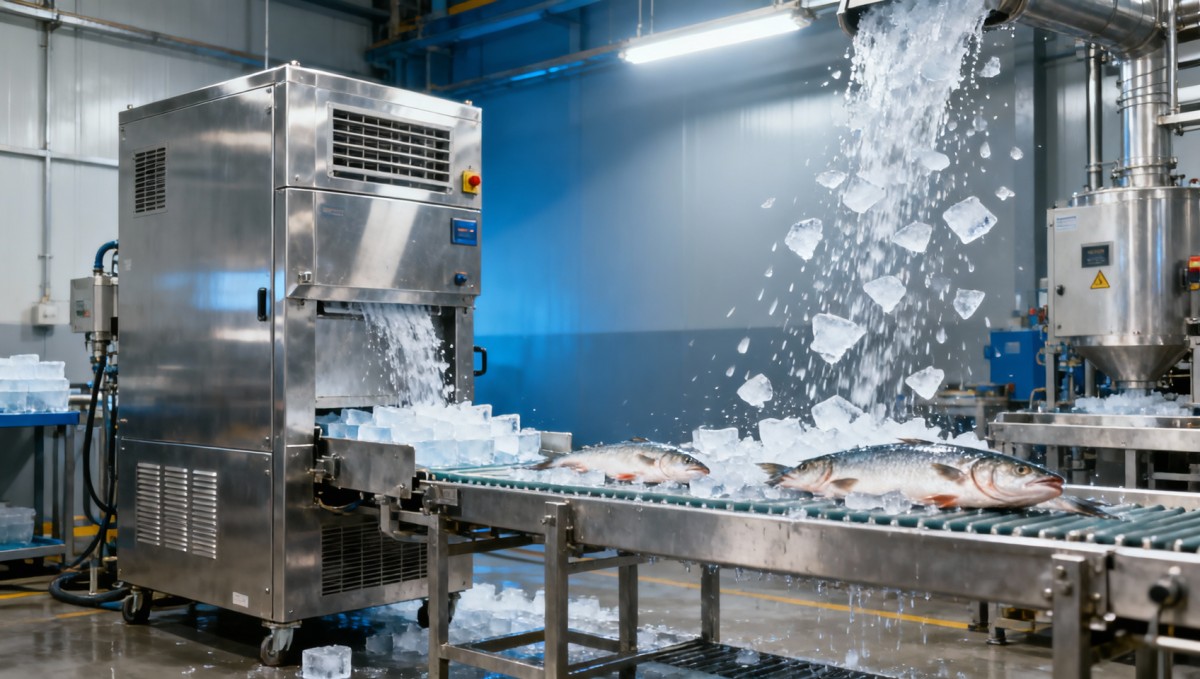
A commercial ice flaker machine should be assessed against a measurable baseline, not a visual impression. Rated capacity is usually stated in kilograms or tons per 24 hours, often under standard test conditions such as ambient temperature of 25°C and inlet water temperature of 20°C. If a machine rated at 2 tons per day is now delivering 1.5 tons under similar conditions, the output loss is material and should trigger inspection.
Operators should also distinguish between true production decline and perceived shortage caused by increased demand. If filleting lines, scaling stations, and fish bins expanded from 2 shifts to 3 shifts, the same machine may appear underperforming while still producing near its original level. A simple 7-day production log can prevent misdiagnosis and reduce unnecessary parts replacement.
In fishery and aquaculture plants, output must also be linked to process timing. If flake ice is required every 30 to 45 minutes for catch handling, even short production gaps matter. That makes cycle consistency, not only total daily tonnage, a key evaluation metric for plant managers and project engineers.
Before opening the machine, compare four variables: actual output, inlet water temperature, ambient temperature, and compressor running pattern. These 4 checkpoints often reveal whether the problem is environmental or equipment-based. If the machine runs longer than normal but produces thinner flakes or wetter ice, the issue often points toward refrigeration efficiency or evaporator condition.
Key indicators to record during the first inspection
The first inspection should focus on observable and recordable data. This is especially useful for maintenance teams that need to justify corrective action to procurement, finance, or plant leadership.
- Daily output versus rated output over the last 3 to 7 days.
- Ambient temperature range, especially if the machine room exceeds 30°C.
- Inlet water temperature and pressure consistency.
- Evaporator freezing behavior, ice thickness, and discharge continuity.
- Compressor on/off frequency, unusual noise, and condenser cleanliness.
These records improve fault isolation and help technical teams decide whether to service the existing unit, redesign the installation, or evaluate a larger-capacity replacement.
Water supply, temperature, and scale are among the most common causes
Water-related issues are one of the most underestimated reasons why a commercial ice flaker machine output drops. If water pressure is unstable, the ice-making surface may not receive a uniform film of water, reducing both flake formation and harvesting consistency. In many industrial facilities, pressure below the manufacturer’s recommended range can reduce production by 5% to 15%, especially during peak utility demand.
Inlet water temperature matters as much as water volume. Every increase of several degrees can reduce refrigeration efficiency and extend the freezing cycle. In tropical fish processing zones, water entering above 25°C may lead to noticeably lower output than catalog figures based on cooler conditions. Buyers comparing machines should always ask whether capacity is specified at 15°C, 20°C, or 25°C water input.
Scale buildup is another frequent issue, especially where untreated groundwater or high-mineral municipal supply is used. Mineral deposits form on the evaporator surface, reducing heat transfer and changing ice release behavior. A unit may continue operating but produce thinner, wetter, or fragmented flakes. If descaling intervals stretch from the recommended 1 to 3 months to 6 months or more, output loss becomes increasingly likely.
For quality control and safety personnel, poor water quality also raises hygiene concerns. Biofilm, sediment, and mineral accumulation can compromise both machine efficiency and sanitation outcomes. In food and fishery applications, water treatment should be viewed as a production stability measure, not only a cleanliness issue.
Typical water-related symptoms and likely causes
The table below helps operators connect visible symptoms with likely water-side faults and practical first actions.
For procurement and engineering teams, the key conclusion is that site utilities can influence performance as much as machine size. A well-specified water filtration and pretreatment setup often protects output more effectively than replacing a machine prematurely.
Practical water-side checks
- Measure inlet water temperature at 3 different times in one shift.
- Inspect strainers and filters for blockage every 2 to 4 weeks.
- Review hardness levels and set descaling intervals accordingly.
- Confirm water pressure remains stable when nearby equipment starts up.
These checks are low-cost and often resolve output concerns without major downtime. In facilities with multiple ice demand points, they should be part of the monthly maintenance routine.
Refrigeration inefficiency often reduces capacity before a full breakdown occurs
A commercial ice flaker machine can continue running while refrigeration performance has already degraded. This is why many plants miss the early warning signs. A condenser coated with dust, grease, or salt residue cannot reject heat efficiently, causing higher condensing temperatures and lower ice-making capacity. In seafood environments, airborne salt and organic particles can accelerate fouling within weeks if ventilation is poor.
Low refrigerant charge, restricted flow, or control valve problems may also reduce output. The machine may seem mechanically active, but the evaporator does not reach the intended freezing condition fast enough. Instead of a sudden stop, operators notice slower production, longer compressor runtime, and less consistent flake texture. These symptoms should be escalated before they lead to compressor overload or unplanned shutdown.
Ambient conditions are equally important. If the machine room operates at 35°C instead of the assumed 25°C, output may fall significantly depending on design. That is especially relevant in enclosed fish handling areas where block ice systems, washing equipment, and packing lines release heat simultaneously. Installation quality therefore affects performance just as much as component quality.
For technical evaluators, it is useful to separate refrigeration faults into three categories: heat rejection problems, refrigerant circuit problems, and control problems. Each category requires a different inspection path and a different service budget. This classification also helps finance approvers understand why some output issues are solved with cleaning while others require specialist intervention.
Refrigeration-related checkpoints for operators and service teams
Use the following comparison to prioritize inspection efforts before deciding on major repairs or replacement.
The main takeaway is that refrigeration issues are rarely isolated to one part. Plants should examine condenser cleanliness, refrigerant health, and ventilation as a linked system. This approach reduces repeat service calls and improves procurement decisions for spare parts and maintenance contracts.
When to call a qualified refrigeration technician
- If output drops more than 15% under normal load conditions.
- If compressor running time increases sharply over 2 to 3 operating days.
- If suction or discharge behavior appears abnormal or unstable.
- If basic cleaning and water checks do not restore capacity.
For facilities subject to food safety audits or strict cold-chain commitments, delaying specialist service can create broader operational risk than the repair cost itself.
Mechanical wear, control settings, and operating mistakes can silently cut production
Not every output problem is caused by refrigeration or water quality. Mechanical wear on the scraper, bearings, gearbox, or drive system can gradually reduce the efficiency of ice formation and discharge. In a commercial ice flaker machine, these components operate continuously, and small changes in clearance, alignment, or friction can accumulate over thousands of runtime hours.
Control settings are another overlooked factor. Some units are adjusted after servicing, seasonal temperature changes, or power interruptions. If the control logic no longer matches the site’s actual operating conditions, the machine may short-cycle, delay ice release, or fail to maintain steady output. This is especially relevant in mixed-use plants where operating schedules change between fish season peaks and lower-demand periods.
Operator practices also influence performance. Common examples include delayed cleaning, running the machine with partially blocked discharge, skipping shutdown checks, or overloading adjacent storage systems so ice backs up into the outlet zone. A well-maintained machine can still underperform if it is used outside the intended duty pattern.
For distributors and project managers, this is where service training creates real commercial value. A machine specification sheet alone cannot guarantee output. Standardized operating procedures, daily inspection routines, and spare-part planning often determine whether the plant achieves stable production over 12 to 24 months.
Frequent operational and mechanical faults
- Worn scraper edges causing incomplete ice harvesting and irregular flake thickness.
- Drive or gearbox wear increasing friction and reducing rotational stability.
- Sensor drift or incorrect control settings causing erratic cycle timing.
- Blocked discharge chute causing accumulation and intermittent ice release.
- Inadequate lubrication or missed maintenance intervals after 2,000 to 4,000 hours of operation.
Each of these faults can appear minor in isolation, but together they often explain chronic underperformance in plants that otherwise have acceptable water and refrigeration conditions.
A practical decision path for plant teams
- Confirm the output drop with a measured 24-hour log.
- Rule out demand increase and storage bottlenecks.
- Inspect water, temperature, and condenser condition.
- Check wear parts, discharge path, and control settings.
- Escalate to refrigeration diagnostics only after basic factors are verified.
This sequence prevents costly guesswork and supports better communication between operators, maintenance staff, and purchasing departments.
When maintenance is no longer enough: repair, retrofit, or replacement planning
A commercial ice flaker machine output drops problem sometimes reflects a broader mismatch between current production demand and original equipment sizing. If a plant has expanded from a single handling line to multiple fish processing stations, the installed ice capacity may no longer be sufficient even after full servicing. In that case, repeatedly repairing the unit may only postpone the need for a system upgrade.
Procurement and business evaluation teams should compare three options: targeted repair, partial retrofit, or replacement. Targeted repair is suitable when the machine structure remains sound and the root cause is limited to serviceable components. Retrofit may make sense if utilities, controls, or auxiliary components need modernization. Replacement is usually justified when downtime frequency rises, spare-part lead times extend, or measured output remains below acceptable operating thresholds after corrective work.
Financial approvers should assess not only equipment price but also process cost. If output shortfall forces overtime labor, delayed loading, or compromised fish chilling windows, the hidden cost can exceed the repair invoice. In some plants, a 1 to 2 ton daily shortfall can affect receiving schedules, packaging efficiency, and transport temperature compliance across the whole cold chain.
The decision should also account for installation environment, service capability, and utility readiness. Replacing a machine without addressing hot ambient conditions, poor water treatment, or insufficient drainage may recreate the same performance problem within months.
Repair-versus-replacement evaluation matrix
The matrix below helps decision-makers align technical findings with budget and operational priorities.
The most important conclusion is that output loss should be evaluated in relation to present-day throughput, not only original design capacity. That makes replacement planning a strategic production decision rather than a simple maintenance event.
Questions procurement teams should ask suppliers
- What is the rated output at specific ambient and water temperatures?
- What preventive maintenance tasks are required weekly, monthly, and quarterly?
- Which wear parts are typically replaced within the first 12 months?
- Can the supplier support integration with existing fishery block ice or processing lines?
- What commissioning and operator training are included in the scope?
These questions reduce lifecycle risk and help distributors, agents, and end users compare offers on real operating value rather than headline capacity alone.
FAQ for operators, buyers, and technical reviewers
How much output loss is considered serious?
In most commercial settings, a sustained drop of 10% or more under similar operating conditions deserves investigation. If the decline reaches 15% to 20%, especially during stable ambient temperature and normal demand, the issue is likely affecting efficiency, cost, or product handling quality.
Can poor installation conditions make a new machine seem undersized?
Yes. High room temperature, poor ventilation, untreated water, and restricted drainage can reduce actual output from the first weeks of operation. A new unit installed in a 35°C room may perform very differently from the same model tested at 25°C. That is why site review is critical before procurement approval.
How often should a commercial ice flaker machine be cleaned and inspected?
Basic visual checks should be performed daily, condenser and filters inspected every 2 to 4 weeks, and descaling frequency set according to water hardness, often every 30 to 90 days. Facilities with heavy seafood residue, saline air, or continuous operation may need shorter intervals.
What should be included in an acceptance test after repair or replacement?
At minimum, verify 24-hour output, ice consistency, discharge stability, power behavior, and operation under actual site water and ambient conditions. For industrial buyers, it is advisable to document at least 3 acceptance dimensions: capacity, sanitation readiness, and integration with downstream handling or storage systems.
When a commercial ice flaker machine output drops, the root cause is often traceable through a structured review of water conditions, refrigeration efficiency, mechanical wear, and actual production demand. For fisheries, aquaculture operations, cold-chain plants, and fish processing facilities, a disciplined diagnostic process protects uptime, product quality, and procurement accuracy.
Whether you are an operator trying to restore stable ice supply, a technical reviewer comparing repair options, or a buyer evaluating replacement capacity, the right decision depends on site-specific data rather than assumptions. If you need support assessing machine performance, selecting the right capacity range, or planning an upgrade aligned with your processing line, contact us to discuss your application, request a tailored solution, or learn more about practical equipment strategies for fishery and cold-chain operations.
Related Intelligence
- Commercial FishingGaode Launches First Quadruped Robot, ABot-M0 Open-Source Model for Aquaculture & Poultry InspectionABot-M0: Gaode's open-source quadruped robot for aquaculture & poultry inspection—80.5% task success, field-tested in Brazil & Vietnam. Discover how it transforms autonomous farm inspections.
- Commercial FishingGaode Launches First Quadruped Robot, Open-Sources ABot-M0 for Aquaculture & PoultryGaode launches first quadruped robot & open-sources ABot-M0 — an embodied AI model for aquaculture and poultry automation, with 80.5% Libero-Plus task success.
- Commercial FishingFish Processing Machinery Upgrades That Cut ReworkFish processing machinery upgrades cut rework fast. Compare block ice machine for fishery, commercial ice flaker machine, squid peeling machine, and filleting solutions to boost yield.
The Morning Broadsheet
Daily chemical briefings, market shifts, and peer-reviewed summaries delivered to your terminal.
