
Heavy Duty PVC Rain Gear Feels Tough, But Is It Breathable?
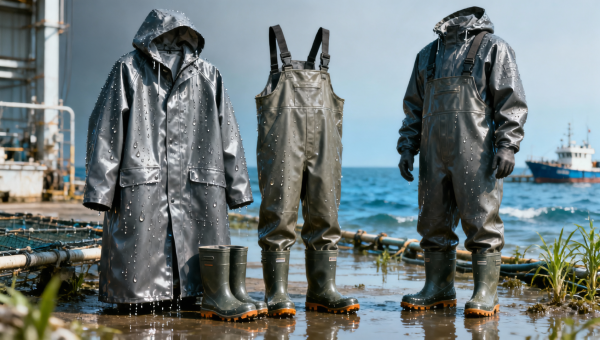
Heavy duty PVC rain gear is built for punishing work, but many buyers still ask the same question: is it truly breathable enough for long shifts on deck or in harsh field conditions? For procurement teams, safety managers, and operators comparing marine life jackets commercial, fishing safety boots bulk, and other protective essentials, understanding the balance between durability, waterproofing, and wearer comfort is critical before making a cost-effective decision.
In industrial fishing, aquaculture, agriculture, forestry, and chemical handling environments, protective outerwear is rarely judged on waterproofing alone. A jacket or bib that resists water but traps sweat for 8- to 12-hour shifts can reduce mobility, increase fatigue, and create secondary safety issues. That makes breathability a practical procurement question, not a comfort luxury.
For B2B buyers, the right answer depends on task intensity, exposure level, temperature range, and whether the gear is used as a primary barrier against rain, splash, slurry, fish waste, oils, or diluted chemicals. Heavy duty PVC rain gear remains a staple because of its ruggedness and low maintenance, but its breathable performance must be understood in realistic operational terms.
This article examines how PVC rainwear performs in real work settings, where it fits, where it falls short, and how technical evaluators, safety officers, and procurement teams can compare it against alternative materials without overlooking cost, compliance, and service life.
What Heavy Duty PVC Rain Gear Really Delivers on the Job
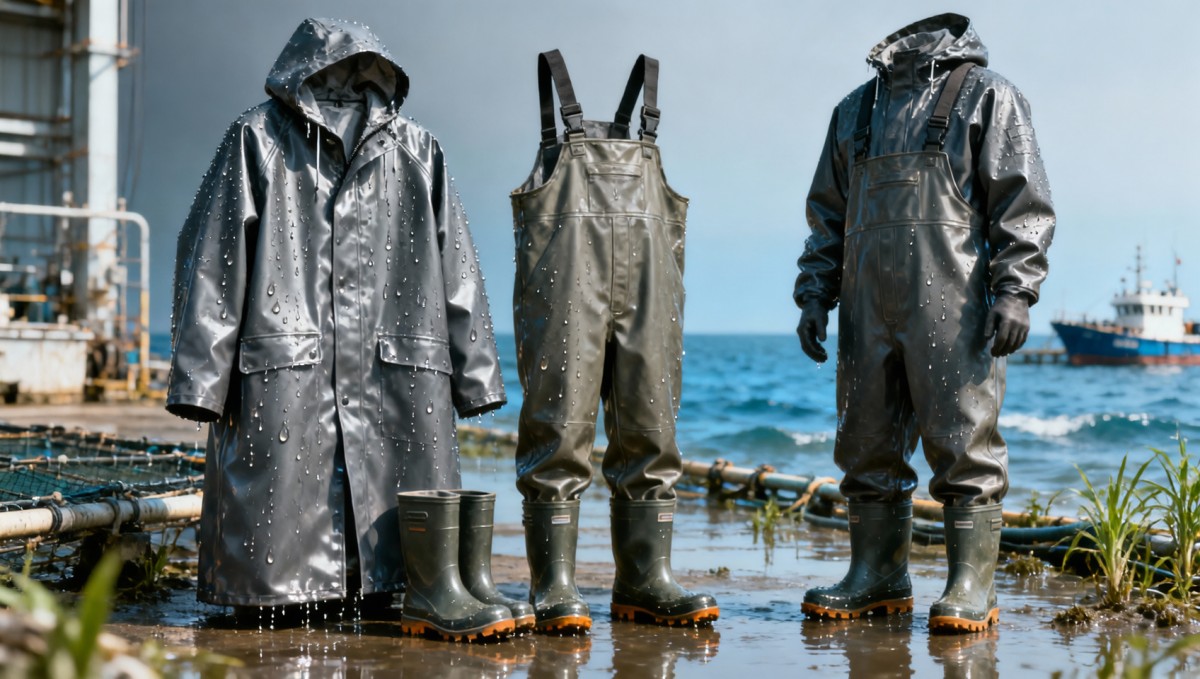
Heavy duty PVC rain gear is typically built around a polyester or similar fabric backing coated with polyvinyl chloride. In commercial-grade configurations, total material weight often ranges from 300 gsm to 650 gsm, depending on whether the garment is intended for light processing work, offshore fishing, or abrasive agricultural use. That construction gives it a strong advantage in liquid resistance and tear tolerance.
In sectors such as aquaculture, feed handling, and wet-field operations, the value proposition is straightforward. PVC sheds water, mud, fish slime, and many common contaminants with minimal care. It is also easier to wash down than many textile-based waterproof garments. For crews working around salt spray, slurry runoff, or frequent deck wash, this low-maintenance profile can reduce replacement friction over a 6- to 18-month use cycle.
However, buyers should distinguish between waterproof performance and moisture management. PVC functions as a barrier material. In most heavy duty versions, it does not allow meaningful vapor transmission through the fabric itself. Any comfort improvement usually comes from garment design features such as underarm vents, cape backs, loose fit, shorter wear intervals, or layered clothing strategies, not from inherent fabric breathability.
That means the answer to “is it breathable?” is usually “not in the way breathable membranes are.” Yet that does not make PVC unsuitable. In low-temperature, high-rain, high-splash environments where external moisture protection matters more than internal heat release, PVC can still be the more effective and economical choice.
Where PVC rainwear performs best
- Commercial fishing decks with constant spray, sharp surface contact, and washdown exposure.
- Aquaculture farms where workers move between wet tanks, feed areas, and outdoor service zones.
- Agricultural operations during sustained rain, manure handling, or muddy field inspection work.
- Processing areas where garments need frequent wipe-down or hose cleaning in less than 5 minutes.
The practical point is that heavy duty PVC rain gear is chosen for barrier durability first. Breathability, when present at all, is usually secondary and design-assisted rather than fabric-driven.
Is Heavy Duty PVC Rain Gear Breathable? The Technical Answer
From a technical standpoint, heavy duty PVC rain gear is generally non-breathable. Unlike microporous or hydrophilic membrane systems that permit water vapor to escape while blocking liquid water, PVC-coated fabrics are largely impermeable. In high-output work, perspiration remains inside the garment until it evaporates slowly through openings or is absorbed by inner layers.
This matters most in warm or mixed climates. If an operator is lifting feed bags, hauling lines, climbing ladders, or walking wet fields for 2 to 4 continuous hours, trapped heat can become a larger issue than rainfall. Workers may describe the garment as “sweaty” or “stuffy,” even when it is fully protecting them from external water. That user feedback often gets misinterpreted as a quality problem when it is actually a material limitation.
Breathability claims in this product category should therefore be reviewed carefully. Some suppliers use “breathable” loosely to describe vented capes, back mesh openings, or looser cuts. Those features can improve airflow by a modest margin, but they are not equivalent to a moisture vapor transmission fabric. For safety and procurement teams, this distinction is important when comparing quotations across different PPE specifications.
The table below helps clarify how PVC compares with other common rainwear materials in typical primary industry settings.
The key takeaway is not that PVC is inferior, but that it serves a different priority set. If the worksite is wet, dirty, and abrasive, heavy duty PVC rain gear may outperform lighter breathable garments in overall service life. If heat stress and constant movement dominate, a breathable alternative may reduce fatigue and improve wearer acceptance.
Common causes of discomfort in PVC rainwear
Heat buildup during active tasks
When physical effort rises above light activity for more than 20 to 30 minutes, heat can accumulate quickly inside sealed rain gear, especially in temperatures above 18°C to 22°C.
Poor sizing and restricted airflow
Overly tight jackets or bibs reduce internal air circulation. A slightly roomier cut often improves practical comfort more than buyers expect.
Incorrect layering
Cotton-heavy base layers can hold sweat against the skin. Moisture-wicking underlayers usually perform better during 6- to 10-hour duty periods.
How Buyers Should Evaluate PVC Rain Gear for Worksite Conditions
For procurement teams, the better question is not simply whether heavy duty PVC rain gear is breathable, but whether it is appropriate for the exact exposure profile. A fish farm technician working in cold spray for 9 hours has different needs from a field agronomist walking long distances in intermittent rain. Buying one specification for all teams often leads to overprotection for some users and underperformance for others.
A disciplined evaluation should consider at least 6 variables: exposure duration, ambient temperature, physical exertion, contamination type, cleaning frequency, and compatibility with other PPE. This is especially important when rainwear must be worn with marine life jackets commercial, helmets, gloves, or fishing safety boots bulk, because overlap points can restrict motion or trap additional heat.
Garment construction details also matter more than many tenders reflect. Sealed seams, cuff design, storm flaps, reinforced knees, and bib rise height affect actual field performance. In some cases, two PVC garments with similar appearance may deliver noticeably different user outcomes over a 3- to 6-month deployment period because one offers better articulation and drainage management.
The following table provides a practical decision matrix for common buyer profiles across primary industries and wet-process operations.
This matrix shows that heavy duty PVC rain gear remains a strong choice where water, slurry, and contamination control outweigh thermal comfort. It becomes less ideal when users need to move quickly over long distances or work in warmer climates with high metabolic load.
A 5-point selection checklist
- Define average wear time per shift, such as 2 hours, 6 hours, or 10 hours.
- Map contamination type: rain only, salt spray, slurry, fish waste, oil residue, or chemical splash.
- Record temperature band, for example below 10°C, 10°C to 20°C, or above 25°C.
- Confirm PPE overlap with boots, gloves, flotation aids, and harnesses.
- Run a wearer trial with at least 5 to 10 users before full-volume ordering.
Pilot wear trials are particularly useful for financial approvers and project leads because they convert abstract comfort complaints into measurable decision inputs such as compliance rate, garment damage frequency, and average cleaning time.
Design Features That Improve Practical Comfort Without Changing the Material
Even though PVC itself is not meaningfully breathable, garment engineering can still improve comfort and reduce user rejection. For many industrial buyers, the smartest move is not replacing PVC altogether, but choosing better-designed heavy duty PVC rain gear that manages heat and movement more effectively.
One of the most useful features is ventilation placement. Cape-back designs, underarm eyelets, and shielded vent openings can support limited airflow while maintaining rain protection. These features are especially relevant when users alternate between 15-minute high-intensity tasks and lower-activity monitoring work. In cold marine settings, this can be enough to improve wear tolerance without sacrificing barrier performance.
Cut and patterning also influence comfort. Articulated knees, gusseted underarms, and properly proportioned bib rise reduce the drag and stiffness often associated with older PVC garments. A few centimeters of additional ease in high-movement zones may produce a bigger comfort gain than a thinner material that wears out 30% faster.
Layering strategy should also be part of the purchasing specification. When workers wear quick-dry base layers and avoid moisture-holding cotton, internal dampness becomes easier to manage. In many sites, this low-cost adjustment has a more immediate effect than switching rainwear categories.
Comfort-enhancing features worth specifying
- Ventilated cape or back flap for intermittent airflow while preserving runoff protection.
- Reinforced but flexible knee and seat panels for repeated kneeling and deck contact.
- Adjustable cuffs and hems to reduce water ingress without excessive sealing pressure.
- Two-way front closures or storm flaps for easier donning over layered workwear.
- Sizing ranges that accommodate insulated layers in winter and lighter layers in summer.
Why fit testing matters
A garment that fits poorly can feel 2 times more restrictive than one with correct sizing, even when both use the same PVC fabric. For teams ordering 50, 100, or 500 units, size-set sampling before rollout helps reduce exchange rates and non-use.
Procurement Risks, Maintenance Considerations, and Cost Control
The most common procurement mistake is treating rain gear as a simple commodity line. When tenders focus only on unit price, they may overlook seam performance, low-temperature flexibility, cleaning demands, and expected wear cycle. A cheaper garment that cracks early, restricts movement, or gets rejected by users can create higher real cost within one season.
Maintenance is one of PVC’s strongest advantages. In many primary industry settings, cleaning requires only water, mild detergent, and air drying. Compared with membrane garments that may need more careful laundering to preserve performance, PVC can support faster turnaround between shifts. For operations with 2 or 3 daily shift rotations, this can simplify PPE management.
That said, storage and handling still matter. Repeated folding in extreme cold, prolonged UV exposure, and contamination left on the surface for days can shorten service life. Buyers should ask suppliers about the recommended storage temperature range, inspection intervals, and replacement triggers for cracks, seam separation, or closure damage.
For financial approvers, total cost of ownership should include at least 4 factors: purchase price, expected replacement frequency, cleaning time, and user acceptance. A garment with a 12-month average life but low wear compliance may cost more operationally than a product replaced every 8 months that workers actually keep on during exposure periods.
Common procurement and usage risks
- Ordering one weight grade for all climates, from sub-10°C marine use to 28°C field work.
- Ignoring overlap with boots, gloves, flotation devices, or chemical-resistant aprons.
- Assuming “breathable” marketing language means membrane-level vapor transfer.
- Failing to set a replacement inspection schedule every 30 to 90 days in heavy use.
- Not testing cleaning chemicals for compatibility with PVC coatings and closures.
Maintenance guidance for longer service life
Inspect seams, fasteners, and high-flex zones after repeated wet shifts. If garments are used daily in abrasive or saline conditions, weekly visual checks and monthly condition reviews are a practical minimum. Dry storage away from direct heat and sunlight can also help preserve flexibility over time.
Frequently Asked Buyer Questions Before Specifying PVC Rainwear
Many search queries around heavy duty PVC rain gear come from teams trying to balance worker comfort with procurement discipline. The answers below address the most common decision points raised by technical evaluators, operators, and safety managers.
Is heavy duty PVC rain gear suitable for hot climates?
It can be used in hot climates, but usually for shorter exposure windows, lower-mobility tasks, or contamination-heavy jobs where barrier protection matters more than comfort. In temperatures above 25°C, buyers should consider vented designs, lighter duty variants where appropriate, and more frequent rest or change intervals.
How long does commercial PVC rain gear usually last?
Service life varies by use intensity, cleaning method, and storage conditions. In moderate-duty use, garments may remain serviceable for 6 to 12 months. In harsh deck, washdown, or abrasive contact environments, replacement may be needed sooner. The right benchmark is not calendar age alone, but seam integrity, coating flexibility, and continued user compliance.
What should buyers check besides the fabric?
Look at seam sealing, closure durability, reinforcement zones, cuff design, sizing range, and compatibility with related PPE such as marine life jackets commercial and fishing safety boots bulk. If the garment fails at those interfaces, the fabric advantage becomes less meaningful.
When is a breathable alternative a better choice?
If the job involves extended walking, climbing, inspection, or moderate-to-high exertion for more than 3 to 4 hours in mild or warm weather, breathable waterproof systems may improve comfort and acceptance. They are especially useful where external contamination is limited to rain rather than continuous slurry or washdown.
Heavy duty PVC rain gear feels tough because it is tough. Its strength lies in water resistance, durability, and straightforward maintenance across demanding marine, agricultural, aquaculture, and processing environments. But in most cases, it should not be treated as a truly breathable fabric solution. The smarter procurement approach is to match PVC rainwear to the exposure profile, specify comfort-oriented design details, and test fit and workflow compatibility before large-scale purchasing.
For buyers seeking reliable guidance on protective equipment selection, wet-work apparel strategy, and industrial procurement decisions across primary industries, a well-defined specification process can reduce replacement waste, improve user acceptance, and support safer operations. To evaluate suitable rainwear configurations for your workforce, contact us to discuss your application, request a tailored recommendation, or explore more practical sourcing solutions.
Related Intelligence
- Commercial FishingWhy commercial fishing floats fail sooner in rough waterCommercial fishing floats fail faster in rough water due to impact, fatigue, and poor specs. Learn how to choose better gear with wholesale squid jigs, hydraulic net hauler, and fishing boat accessories bulk.
- Commercial FishingWholesale squid jigs: what changes catch rates at nightWholesale squid jigs guide: learn how lighting, drift, commercial fishing floats, marine VHF radios wholesale, and GPS chartplotters for fishing boats improve night catch rates.
- Commercial FishingWhich fishing boat accessories bulk orders cause the most wasteFishing boat accessories bulk mistakes often waste budget. Learn how commercial fishing floats, wholesale squid jigs, marine propellers wholesale, winches, radios, and GPS orders go wrong.
The Morning Broadsheet
Daily chemical briefings, market shifts, and peer-reviewed summaries delivered to your terminal.
