
Fishing Safety Boots Bulk: What Causes Early Wear Offshore
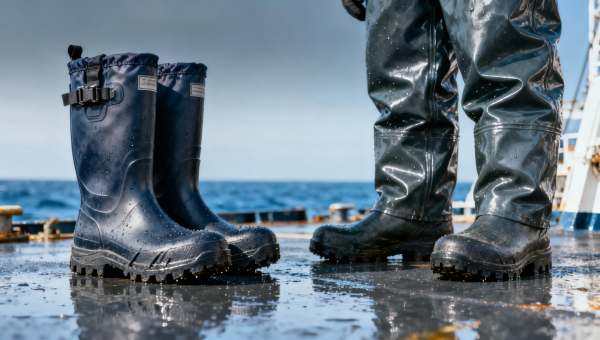
For offshore crews and procurement teams, premature boot failure is more than a cost issue—it signals broader safety and maintenance gaps. This article examines what causes early wear in fishing safety boots bulk purchases, from deck abrasion and saltwater exposure to poor material matching with heavy duty pvc rain gear, helping operators, buyers, and safety managers make more durable, compliance-conscious decisions.
In commercial fishing, aquaculture support, and wet-processing operations, safety boots are not a minor consumable. They are part of a worker’s daily protective system, often worn for 8–14 hours per shift across slippery decks, fish handling areas, loading ramps, and washdown zones. When boots crack, delaminate, lose grip, or become waterlogged too early, the impact extends to slip risk, hygiene performance, replacement budgets, and downtime.
For buyers evaluating fishing safety boots bulk orders, the key question is not simply which pair costs less at purchase. The smarter question is which construction, material, outsole pattern, and maintenance protocol can survive offshore abuse for the intended duty cycle. That requires a closer look at wear mechanisms, operating conditions, and compatibility with other protective gear used in marine environments.
Why Fishing Safety Boots Wear Out Faster Offshore
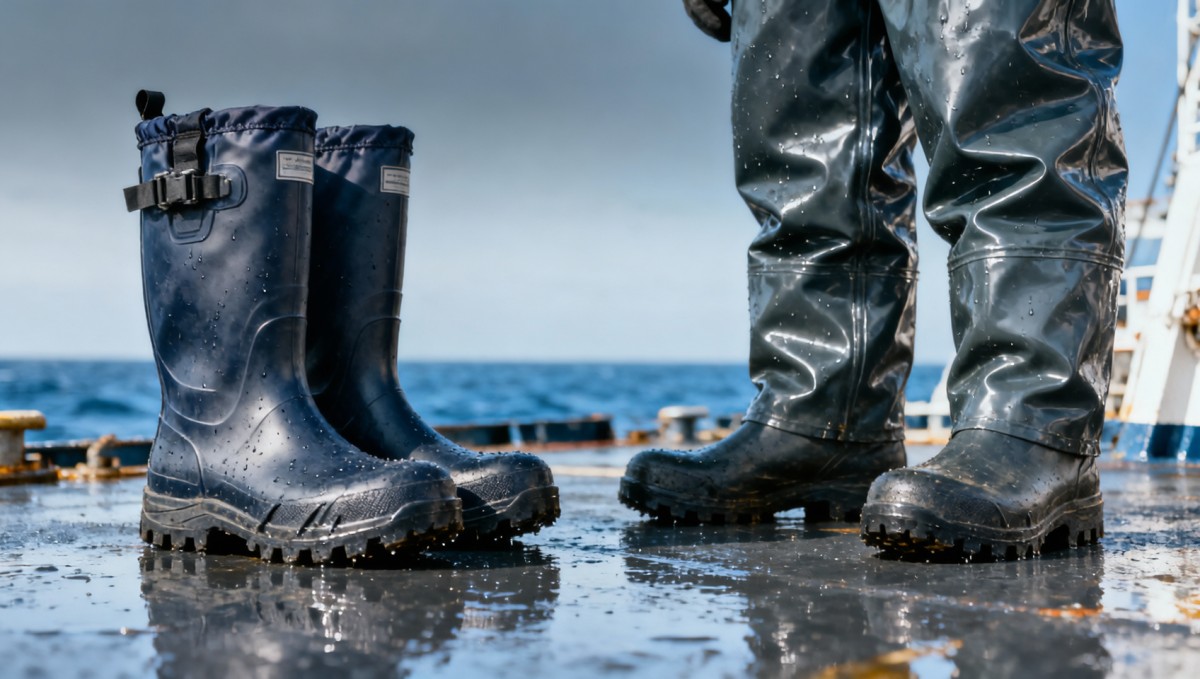
Offshore wear is usually accelerated by a combination of mechanical abrasion, chemical exposure, and repeated flex stress. On a vessel, boots are rarely exposed to just one hazard. A crew member may move from wet deck to bait station to cold storage entry in less than 10 minutes, creating repeated contamination, bending, and traction demands that many standard rain boots were never designed to handle.
Deck surfaces are one of the biggest causes of early deterioration. Non-slip steel grating, textured fiberglass, rough concrete at landing sites, and fish-scale residue act like abrasive media on outsole lugs and heel edges. In high-traffic crews, visible tread rounding can begin within 6–12 weeks if the outsole compound is too soft for the deck profile. Once tread depth drops, slip resistance declines quickly, especially during washdown or icing operations.
Saltwater is another aggressive factor. It does not simply wet the boot; it works into seams, lining transitions, and flex points. Over time, salt crystallization and repeated wet-dry cycles can stiffen some compounds, promote cracking near the vamp flex zone, and weaken adhesive interfaces in lower-grade constructions. This is why boots that perform adequately in light agricultural mud use may fail early in fishery settings.
Temperature fluctuation matters as well. Offshore crews may work between 2°C chilled rooms and 30°C deck exposure in the same shift. That thermal cycling speeds up material fatigue. PVC can become rigid in colder conditions if the formulation is not optimized, while cheaper blends may soften excessively in warmer processing zones, increasing deformation under body weight and gear load.
A final but often overlooked cause is user mismatch. Boots selected only by size and price often ignore gait, standing time, body mass, deck task, and whether the wearer also uses heavy duty pvc rain gear. If cuffs are too narrow, if the upper grabs against stiff outerwear, or if the boot shaft traps moisture, users compensate with altered movement. That increases heel drag, sidewall stress, and premature breakdown.
The main offshore wear drivers
- High-friction deck contact for 8–14 hours per shift.
- Saltwater, fish oil, blood, detergents, and disinfectants in repeated exposure cycles.
- Frequent kneeling, ladder climbing, and toe bending during sorting and net handling.
- Cold-to-warm temperature shifts that accelerate hardening or softening of polymers.
- Poor fit integration with socks, insoles, and heavy duty pvc rain gear.
Typical early failure points
Most quality teams find that failure begins in four areas: outsole lug wear, upper cracking at the flex line, seam or bond separation around the sole edge, and liner breakdown that traps moisture and odor. For procurement review, these are better indicators than appearance alone, because a boot can still look acceptable while traction and water protection are already compromised.
Material Selection Mistakes in Bulk Procurement
Many fishing safety boots bulk orders fail at the specification stage, not on the vessel. The most common mistake is treating all waterproof boot materials as functionally equivalent. In reality, PVC, nitrile-PVC blends, polyurethane variants, and rubber-based compounds respond differently to abrasion, oils, salt, low temperatures, and cleaning chemicals. A low entry price can become expensive if replacement cycles shorten from 12 months to 3–5 months.
PVC remains widely used because it is economical, waterproof, and scalable for large-volume procurement. However, PVC quality varies significantly by formulation. Lower-grade PVC may lose flexibility in cold marine conditions, while higher-performance compounds can maintain better bend resistance and abrasion life. Buyers should ask suppliers not only for the material name, but also for intended temperature range, shore hardness profile, and expected flex performance under repeated use.
Another recurring issue is mismatch with heavy duty pvc rain gear. When jackets and bibs are thick, rigid, and cut long, they may rub continuously against the boot shaft. If both materials have high surface drag, abrasion increases around the upper rim and ankle zone. Over a 90-day operating period, that friction can create cuff deformation, liner wear, and trapped water at the overlap point, especially when garments are not tapered for boot use.
Toe cap and midsole choices also matter. Steel toe protection may be necessary in some unloading and machinery areas, but it adds weight. In crews walking 10,000–18,000 steps per day, excess weight increases fatigue and changes gait. That can accelerate heel compression and outsole wear. Procurement teams should align protection level with actual hazard mapping rather than defaulting to the heaviest configuration for every role.
Material comparison for marine boot selection
The table below outlines how common boot material options perform against typical offshore stressors. It is intended as a practical screening tool for technical evaluators and buyers comparing bulk options.
The key takeaway is that material selection should be tied to the actual duty profile. For vessels with heavy washdown, fish oil exposure, and rough deck surfaces, a nitrile-enhanced or more robust marine-grade formulation often produces better total ownership value than the lowest-cost PVC offer.
What procurement documents should ask for
- Temperature-use range, such as cold flexibility expectations near 0–5°C.
- Outsole wear profile for wet deck use and anti-slip design details.
- Chemical compatibility with disinfectants, detergents, and marine contaminants.
- Shaft height, opening circumference, and compatibility with heavy rain gear overlap.
- Expected replacement cycle under medium, high, and extreme-duty operations.
Operational Practices That Shorten Boot Service Life
Even well-made boots fail early when fleet practices are weak. In many operations, safety footwear is issued correctly on day 1 but managed poorly after that. Crews may store boots upside down near engine heat, rinse only the exterior, or leave organic residue inside the shaft after a 12-hour shift. These habits accelerate odor, liner degradation, and polymer fatigue.
Cleaning chemistry is a major variable. Concentrated caustic cleaners or aggressive solvents can reduce service life if they are not diluted according to use guidance. Boots used in fish-processing support areas may be exposed to foam cleaners, chlorinated solutions, or degreasers 1–3 times per day. Without rinse control, residue remains at creases and bonding lines, increasing brittleness and discoloration.
Drying methods also matter more than many teams assume. Forced drying at excessive heat can warp some thermoplastic constructions. A more reliable approach is ambient draining, airflow drying, and rotational issue. If one employee receives only one pair and wears it every day for 6 consecutive days, internal moisture never fully dissipates. In contrast, a 2-pair rotation program often improves comfort and reduces microbial buildup.
Boot misuse during non-task movement is another cause. Workers often use the same boots for deck duty, dockside transfer, storage room movement, and workshop entry. Each surface presents different abrasion patterns. A boot suited to wet fish deck traction may wear rapidly if repeatedly dragged across sharp-edged dock concrete or metal thresholds during cargo movement.
Common maintenance failures in marine operations
- Using concentrated cleaner mixes above recommended working ratios.
- Drying boots beside heaters, engine compartments, or direct high-heat vents.
- Skipping insole removal and interior drainage after daily washdown.
- Allowing fish oil, salt slurry, and blood residue to remain overnight.
- Assigning one boot type to every role despite different traction and wear needs.
Practical service-life extension steps
Operations can reduce replacement pressure by combining purchasing discipline with daily controls. A simple 5-step routine—rinse, inspect, drain, dry, and log—takes only a few minutes but helps identify outsole loss, cracks, and cuff damage before the next shift. In larger fleets, monthly footwear inspections tied to PPE logs provide valuable evidence for reorder timing and failure trend analysis.
Where budgets permit, segregating issue by task category is effective. For example, net handling, washdown, and dock unloading may each justify different outsole priorities. This targeted approach often reduces avoidable wear better than issuing one general-purpose model across 3 or 4 distinct use cases.
How to Evaluate Fishing Safety Boots Bulk Orders More Rigorously
Bulk buying should be treated as a technical evaluation process, not only a price negotiation. For technical assessors, safety managers, and project leads, the most useful method is to score offers across fit, slip behavior, abrasion performance, chemical tolerance, and supply consistency. This is especially important when annual demand reaches 200, 500, or 1,000 pairs, where small durability differences multiply into meaningful operating cost changes.
Field trials are more informative than sample-room handling. A 2–4 week controlled wear test across at least 3 role types—deck crew, processing support, and dock transfer personnel—can reveal whether a boot remains flexible, grippy, and comfortable under real use. Procurement teams should document tread loss, visible cracking, water ingress, and user feedback at weekly intervals rather than relying on first-day impressions.
Supply chain review is equally important. In high-volume procurement, inconsistency between batches can be as costly as a poor design. If the outsole hardness or upper thickness changes from one lot to the next, replacement performance becomes unpredictable. Buyers should confirm whether the supplier can maintain stable material sourcing, repeatable production conditions, and inspection records over multiple shipments.
For financial approvers, total cost of ownership is the stronger metric than unit price. A boot priced 12% lower but replaced twice as often is not the cheaper option. Include freight, emergency reorder risk, user complaints, and incident exposure when comparing proposals. This approach creates a more accurate basis for approval than a narrow quotation table.
A practical bulk evaluation matrix
The following table can be adapted for tender review, pilot comparison, or internal PPE committee scoring. It balances technical durability with purchasing and operational priorities.
This matrix helps cross-functional teams speak the same language. Operators can comment on comfort and movement, quality teams can record visible failure modes, and finance teams can compare replacement intervals. Together, these inputs create a stronger purchasing decision than price-led selection alone.
Recommended bulk buying workflow
- Define 3–5 use environments, such as open deck, washdown zone, dock concrete, and refrigerated handling.
- Shortlist 2–3 material/construction options based on hazard profile.
- Run a controlled wear trial for 14–28 days with logged observations.
- Review defect rate, user comfort, slip events, and cleaning tolerance.
- Approve the option with the best service-life-to-cost ratio, not simply the lowest quotation.
FAQ and Procurement Guidance for Durable Marine Footwear
Because fishing safety boots bulk projects involve multiple decision makers, the same questions often recur across operations, procurement, compliance, and finance. The answers below reflect practical buying and deployment considerations in offshore and fishery-adjacent environments.
How long should fishing safety boots last in offshore use?
There is no single service-life figure because duty intensity varies. In moderate marine use with correct cleaning and drying, many boots may remain functional for 6–12 months. In severe use involving abrasive decks, frequent chemical washdowns, and 6-day wear cycles, some models can deteriorate within 8–16 weeks. The better procurement question is whether performance remains stable through the intended replacement window for that task category.
What should buyers check first when comparing samples?
Start with outsole design, flex behavior, shaft structure, and compatibility with heavy duty pvc rain gear. Then assess weight, internal comfort, and cleaning response. A sample that feels acceptable in a meeting room may still fail under wet deck abrasion. Request a use trial rather than approving based only on appearance, thickness, or claimed waterproofing.
Are heavier boots always more durable?
Not necessarily. Additional weight may come from toe protection, thicker walls, or denser compounds, but that does not automatically improve real offshore durability. If the outsole pattern is poor or the flex zone is weak, a heavier boot can still fail early. Extra mass may also increase fatigue over long shifts, affecting gait and indirectly increasing wear at the heel and forefoot.
How can safety managers reduce early replacement rates?
Introduce routine inspection every 30 days, standardize cleaning dilution, avoid high-heat drying, and separate boot issue by task exposure. Where practical, use a 2-pair rotation for high-intensity roles. These measures often reduce failure rates more effectively than switching suppliers without changing site practices.
What documentation should a supplier be ready to support?
At a minimum, buyers should expect basic technical specifications, material descriptions, size range, use limitations, inspection approach, and lead-time guidance. For institutional procurement, clear defect-handling procedures and batch consistency discussion are also important. Strong suppliers can explain where their boots are most suitable and where they are not, which is often a sign of operational credibility.
Early wear in fishing safety boots bulk programs rarely comes from one isolated cause. It usually reflects a chain of preventable issues: abrasive deck conditions, salt and chemical exposure, material mismatch, poor integration with heavy duty pvc rain gear, and weak maintenance discipline. When buyers evaluate marine footwear by duty profile, wear testing, and total ownership value, replacement cycles become more predictable and safety performance improves.
For operators, procurement teams, and safety managers seeking more durable offshore footwear decisions, a structured review process is the most effective next step. If you need support comparing material options, refining procurement criteria, or building a more reliable marine PPE selection framework, contact us to discuss your application and get a more tailored solution.
Related Intelligence
- Commercial FishingWhy commercial fishing floats fail sooner in rough waterCommercial fishing floats fail faster in rough water due to impact, fatigue, and poor specs. Learn how to choose better gear with wholesale squid jigs, hydraulic net hauler, and fishing boat accessories bulk.
- Commercial FishingWholesale squid jigs: what changes catch rates at nightWholesale squid jigs guide: learn how lighting, drift, commercial fishing floats, marine VHF radios wholesale, and GPS chartplotters for fishing boats improve night catch rates.
- Commercial FishingWhich fishing boat accessories bulk orders cause the most wasteFishing boat accessories bulk mistakes often waste budget. Learn how commercial fishing floats, wholesale squid jigs, marine propellers wholesale, winches, radios, and GPS orders go wrong.
The Morning Broadsheet
Daily chemical briefings, market shifts, and peer-reviewed summaries delivered to your terminal.
