
How Long Do Commercial Marine Life Jackets Stay Compliant?
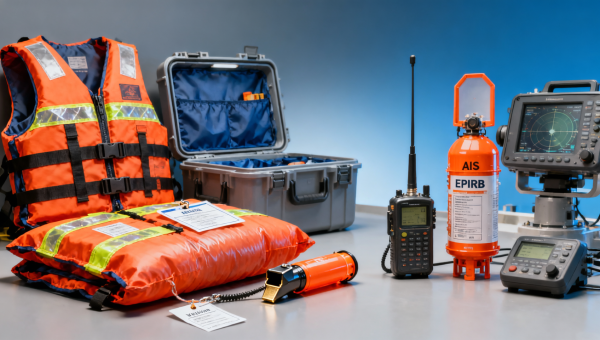
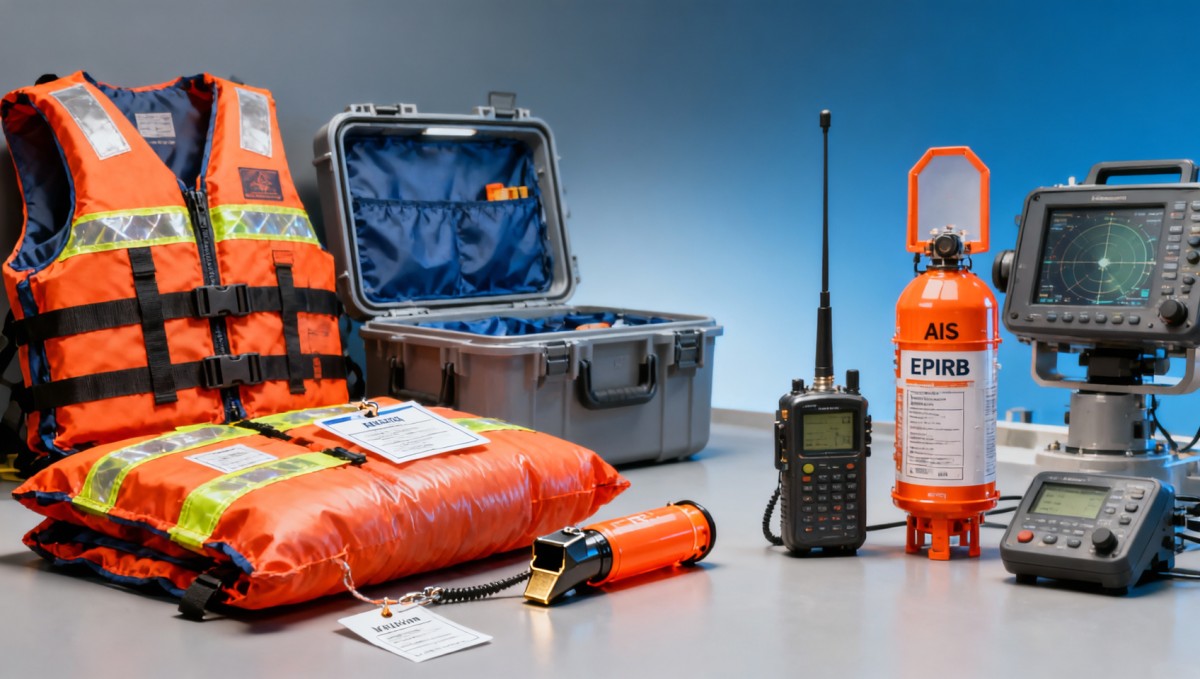
For fleet operators, safety managers, and procurement teams, understanding how long marine life jackets commercial units remain compliant is essential to controlling risk, audit readiness, and replacement costs. Beyond basic wear checks, compliance depends on certification status, maintenance routines, storage conditions, and integration with broader onboard safety systems such as EPIRB emergency beacons, automatic identification system AIS, and marine radar systems.
In commercial fishery, aquaculture support vessels, workboats, harbor service craft, and offshore processing operations, a life jacket is not simply a wearable flotation device. It is a regulated safety asset tied to vessel inspections, crew readiness, insurance exposure, and incident response planning. For buyers and technical evaluators, the key question is rarely a single number of years; it is whether each unit remains compliant throughout its service life under real operating conditions.
This matters especially in B2B environments where procurement decisions must satisfy operators, quality teams, finance approvers, and project managers at the same time. A commercial marine life jacket may appear serviceable after 5 years, yet fail compliance because of expired inspection intervals, damaged reflective tape, compromised buoyancy chambers, or outdated approval labels. The practical answer depends on standards, usage intensity, and documentation discipline.
Compliance life versus physical life: the distinction buyers must make
A common mistake in marine procurement is assuming that the usable life of a commercial life jacket is identical to its compliant life. In practice, these are different. Physical life refers to how long the unit remains wearable and functional. Compliance life refers to how long it continues to meet flag state rules, manufacturer instructions, onboard safety management procedures, and inspection requirements. A unit can remain intact but still fall out of compliance.
For inherently buoyant foam life jackets used in commercial fishing or deck operations, operators often see practical service windows of 3 to 10 years depending on exposure to UV, salt, oil, abrasion, and cleaning chemicals. Inflatable commercial units may have shorter effective compliance cycles if inspection and servicing requirements are not followed every 12 months, or more frequently when mandated by the manufacturer or vessel policy.
The highest-risk environments are those with daily wear, mechanical snagging, fish processing residue, hydraulic oil mist, and open-deck sun exposure. In these conditions, stitching, buckles, inflation components, oral tubes, and retro-reflective patches can degrade well before the expected replacement budget cycle. For procurement teams, this means planning life jacket ownership as a controlled asset program rather than a one-time PPE purchase.
What usually defines compliance status
Compliance usually depends on 4 core checks: approval label legibility, structural integrity, buoyancy or inflation performance, and documented inspection history. If one of these fails, the unit may no longer satisfy vessel audit criteria even when it still looks acceptable to the user. That is why marine safety managers track not only condition but also dates, service records, and compatibility with onboard emergency procedures.
- Certification and approval marks must remain readable and match vessel operating requirements.
- Hardware such as whistles, lights, tapes, crotch straps, and buckles must be present and functional.
- Inflatable units may require cylinder checks, automatic firing component review, and periodic pressure retention testing.
- Inspection records should be retained for at least one full audit cycle, and often longer under company policy.
For mixed fleets, this distinction is important because inland service boats, nearshore aquaculture support vessels, and offshore fishery craft may not all operate under the same inspection regime. A technically acceptable unit in one route or jurisdiction may be unacceptable in another. Buyers should therefore define compliance by route, task, and governing standard before setting replacement intervals.
The main factors that determine how long commercial marine life jackets stay compliant
Commercial marine life jackets do not age at the same rate. A spare unit stored in a dry locker at 15°C to 25°C with controlled humidity may remain compliant far longer than a vest worn on an exposed deck 250 days per year. In commercial aquaculture and fishery settings, environmental stress is often the biggest predictor of shortened compliance life.
Usage intensity is the first factor. A life jacket assigned to a crew member for daily deck work may accumulate fabric fatigue, foam compression, torn covers, and contaminated closures within 12 to 24 months. By contrast, emergency reserve units used only during drills may pass inspections for several years if packaging, storage, and labeling remain intact.
Maintenance quality is the second factor. Commercial operators that perform monthly visual checks, quarterly documented condition reviews, and annual service events where applicable usually extend compliance life and reduce surprise failures. Operators that only inspect before external audits often experience batch-level replacement costs because damage is discovered too late for selective repair or reallocation.
High-impact variables in real vessel operations
The table below summarizes the variables that most often affect compliance duration in working marine environments.
The key conclusion is that compliance duration is controlled less by calendar age alone and more by exposure profile plus service discipline. For safety managers, separating high-use, medium-use, and reserve inventory can reduce unnecessary fleet-wide replacement while improving inspection accuracy.
Related onboard systems also matter
Commercial life jackets are often evaluated as part of a wider survival and detection chain. If a life jacket is designed to support an integrated light, AIS MOB device, locator beacon, or harness attachment, damage to those mounting points can affect overall readiness. On workboats supporting aquaculture pens or fishing operations, a compliant garment must still function within the vessel’s emergency architecture, alongside EPIRB alerting, AIS visibility, and radar-assisted search procedures.
That integrated view is especially relevant during technical evaluations. A cheaper unit with shorter maintenance intervals or weak attachment compatibility can create higher 3-year ownership cost than a better-specified model. Procurement teams should therefore compare total compliance cost, not unit price alone.
Inspection intervals, service routines, and documentation requirements
A commercial marine life jacket stays compliant only when the inspection routine matches both the product type and the operating context. Most operators benefit from a 3-tier process: pre-use user check, scheduled internal inspection, and formal annual service where required. This is especially important for fleets that support fishery harvesting, aquaculture maintenance, or coastal logistics, where PPE can move between vessels and shifts.
Pre-use checks should take 1 to 3 minutes and focus on visible tears, damaged closures, missing hardware, inflation status indicators, and contamination. Monthly or quarterly internal checks are more systematic and should include serial traceability, label verification, and condition logging. Annual servicing, if required by the manufacturer or local rule, should be documented in a way that supports both audit review and internal budget forecasting.
A frequent failure point is documentation. During inspections, auditors may accept a life jacket that is physically sound only if the approval label is readable and the service history is available. If the record is missing, many operators remove the unit from service to avoid compliance uncertainty. This creates preventable replacement spending and supply interruptions during peak seasons.
A practical inspection schedule for commercial operators
The following schedule is a practical baseline for fleet planning. It should always be adjusted to manufacturer instructions and applicable marine safety rules.
This schedule helps align the interests of users, safety officers, and finance approvers. Instead of replacing all units on a fixed date, operators can classify inventory by condition and use level. In many fleets, that reduces emergency buying and improves forecast accuracy over 12 to 24 months.
What records should be retained
- Purchase date, supplier batch details, and assigned vessel or department.
- Approval label photos or serial references captured at receipt.
- Inspection dates, inspector name, findings, and corrective actions.
- Service reports for inflatable units, including replaced cartridges or firing components.
- Retirement or disposal reason, especially after failed audit, inflation test, or contamination event.
For larger fleets, digital asset logs are increasingly preferred over paper files because they support cross-vessel traceability and replacement planning. Even a simple spreadsheet with 6 to 8 data fields can materially improve compliance visibility.
How to choose life jackets with longer compliant service in commercial fleets
When selecting commercial marine life jackets, the best procurement question is not which unit lasts the longest in theory, but which unit stays compliant longest under actual duty conditions. For aquaculture barges, fish transfer vessels, hatchery service craft, and processing support boats, comfort and durability both matter because a unit that crews avoid wearing creates operational risk regardless of its certification.
Technical evaluators should start with the use case: constant wear versus emergency-only storage, warm climate versus cold wet decks, and compatibility with harnesses, rain gear, radios, and locator devices. Foam units may be more robust in high-abrasion tasks, while inflatables may be preferred where mobility and reduced bulk are critical. Each choice affects inspection burden, user acceptance, and replacement frequency over 3 to 5 budget years.
Finance teams often focus on initial purchase price, but operational teams should model cost per compliant month. A higher-spec unit that stays serviceable for 48 months with fewer failures can be more economical than a lower-cost vest replaced at 24 months. This is particularly relevant for fleets with 50, 100, or more assigned life jackets, where small differences multiply quickly.
Procurement criteria that influence lifecycle value
The table below can be used during supplier evaluation or internal procurement review.
The strongest procurement outcomes usually come from pilot testing. A 30-day to 60-day field trial across 2 or 3 vessel types can reveal discomfort issues, premature wear points, and service complexity before a full purchase commitment is made.
Common selection mistakes
- Buying by unit price without estimating annual inspection and replacement cost.
- Using one life jacket model for every task, despite different wear patterns on deck, in wheelhouse transfer, and during maintenance.
- Ignoring label durability and documentation support, which later weakens audit readiness.
- Assuming reserve-stock conditions reflect the same lifespan as daily-use crew gear.
For industrial buyers, standardization still matters, but standardization should be built around operating classes. Many fleets perform better with 2 product categories instead of 1: one for continuous wear and one for emergency reserve storage.
Replacement planning, risk control, and frequently asked questions
The most effective replacement strategy is proactive rather than reactive. Instead of waiting for audit failure or visible damage, commercial operators should assign replacement triggers based on age band, inspection history, and exposure severity. In practical terms, that often means reviewing high-use units at 24 to 36 months, medium-use units at 36 to 60 months, and reserve units on a condition-based schedule with tighter label and storage checks.
Risk control also improves when life jackets are managed alongside emergency drills and man-overboard protocols. If a vest carries a light, AIS alert device, or attachment for retrieval support, crews should verify that these features still function during quarterly drills. This closes the gap between paperwork compliance and real emergency performance.
For project managers and business evaluators, the goal is to balance 4 priorities: user acceptance, legal compliance, lifecycle cost, and supply continuity. Maintaining a 5% to 10% spare stock of approved replacement units is common in commercial fleets because it prevents operational disruption when one batch is removed after inspection findings.
How long do commercial marine life jackets usually stay compliant?
There is no universal number. In many working fleets, high-use units remain compliant for roughly 2 to 5 years, while carefully stored reserve units may remain compliant longer if labels, materials, and inspection records remain intact. Inflatable units can remain in service for multiple years, but only when annual servicing and component replacement requirements are met without gaps.
Can a life jacket fail compliance even if it still floats?
Yes. A unit may still provide buoyancy but fail because the approval label is unreadable, hardware is missing, reflective tape is damaged, the service interval has expired, or the inflation system has not been checked as required. Compliance is a combination of function, condition, and documentation.
What is the best way to reduce replacement cost without increasing risk?
Segment inventory by use level, document inspections consistently, and choose products matched to the work environment. A controlled program with monthly visual checks and annual planning often prevents large unplanned replacement events. Many fleets also reduce waste by rotating reserve stock into service only when storage conditions are verified.
Should procurement teams evaluate life jackets together with other safety electronics?
In many commercial marine operations, yes. If the life jacket is expected to support lights, AIS MOB devices, or integration with search and rescue procedures informed by EPIRB and radar, those requirements should be reviewed during technical selection. This avoids buying a compliant garment that is poorly suited to the vessel’s actual emergency workflow.
Commercial marine life jackets stay compliant for as long as their approval status, condition, maintenance record, and operational suitability remain intact. For fleet operators in fishery, aquaculture, and wider marine industrial settings, the right answer is built from inspection discipline, environmental exposure control, and smarter procurement criteria rather than a single calendar estimate.
If your team is reviewing replacement cycles, comparing product types, or aligning wearable flotation with broader vessel safety systems, a structured assessment can reduce audit risk and improve lifecycle cost control. Contact us to discuss selection criteria, compliance planning, or a more tailored marine safety equipment strategy for your operation.
Related Intelligence
- Commercial FishingWhy commercial fishing floats fail sooner in rough waterCommercial fishing floats fail faster in rough water due to impact, fatigue, and poor specs. Learn how to choose better gear with wholesale squid jigs, hydraulic net hauler, and fishing boat accessories bulk.
- Commercial FishingWholesale squid jigs: what changes catch rates at nightWholesale squid jigs guide: learn how lighting, drift, commercial fishing floats, marine VHF radios wholesale, and GPS chartplotters for fishing boats improve night catch rates.
- Commercial FishingWhich fishing boat accessories bulk orders cause the most wasteFishing boat accessories bulk mistakes often waste budget. Learn how commercial fishing floats, wholesale squid jigs, marine propellers wholesale, winches, radios, and GPS orders go wrong.
The Morning Broadsheet
Daily chemical briefings, market shifts, and peer-reviewed summaries delivered to your terminal.
