
Fish Oil Extraction Machine Choices for Low Oxidation Yield
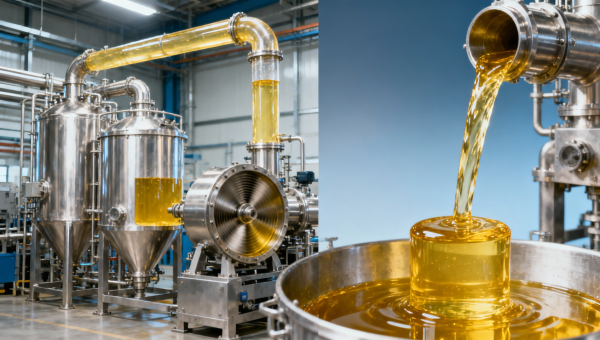
Selecting a fish oil extraction machine for low oxidation yield demands more than headline capacity figures. For buyers comparing surimi processing equipment, a fish bone separator machine, or a full fish meal processing plant, oxidation control directly affects oil quality, compliance, and margin. This guide helps technical teams, procurement leaders, and plant operators evaluate process design, material handling, and packaging integration for better, safer seafood processing outcomes.
Why low oxidation yield should guide fish oil extraction machine selection
In commercial fish processing, oxidation is not a side issue. It is a core quality variable that affects color, odor, shelf life, refining loss, and downstream acceptance in feed, nutraceutical, and industrial applications. A fish oil extraction machine that only promises throughput, such as 500 kg/h, 1 t/h, or 5 t/h, may still underperform if its thermal profile, residence time, and sealing design accelerate lipid degradation.
For operators and quality managers, low oxidation yield usually depends on controlling three linked conditions: temperature exposure, oxygen contact, and raw material delay. In practical terms, many plants try to keep the raw fish holding period as short as possible, often within 2–6 hours after landing or primary cutting, while also avoiding repeated pumping and unnecessary open-tank transfer before oil separation.
For procurement teams, this means the evaluation should move beyond the machine itself and into line design. A fish oil extraction machine may be installed alongside surimi processing equipment, fish bone separator machine units, cookers, decanters, presses, centrifuges, and storage tanks. If one upstream or downstream step introduces heat spikes, long dwell time, or poor cleaning access, oxidation can rise even when the extractor specification looks acceptable on paper.
This is where a technical publishing platform like AgriChem Chronicle adds value for institutional buyers. ACC’s cross-sector coverage of aquaculture technology, bio-extract ingredients, and primary processing helps decision-makers compare machine design choices in a broader supply-chain context, including compliance expectations, utility demand, and traceable process documentation that matter to industrial procurement and project approval teams.
What low oxidation control usually depends on
- Short and predictable residence time from raw fish reception to oil separation, often organized in 3 stages: pre-treatment, extraction, and clarification.
- Moderate thermal exposure, with many systems designed to avoid unnecessary overheating during cooking, pressing, or polishing.
- Closed or semi-closed transfer paths that reduce air entrainment between tank, pump, separator, and storage.
- Fast cleaning and sanitation routines, ideally completed in a planned 30–90 minute window depending on line size and CIP level.
Which process configurations are better for low oxidation fish oil production?
Different plant types require different machine layouts. A vessel-side compact system, a mid-scale fish meal processing plant, and a multi-product seafood factory rarely share the same oxidation risk profile. Technical evaluators should assess not only extraction efficiency but also whether the line can stabilize raw material quickly, separate water and solids effectively, and minimize rework. In many cases, low oxidation performance comes from the configuration, not a single machine feature.
A practical comparison often starts with 4 equipment paths: wet rendering lines, screw press plus decanter systems, tricanter-based separation systems, and integrated low-temperature extraction lines. Each has trade-offs in capital intensity, operator complexity, and product purity. Plants supplying feed-grade oil may accept a different balance than facilities targeting higher-value bio-extract ingredients or refined oil intermediates.
The table below compares common fish oil extraction machine configurations through an oxidation-control lens. It is designed for buyers who need to weigh line complexity, utility planning, and quality risk before requesting quotations or layout drawings.
The comparison shows why “best” depends on product route and plant discipline. A simpler line may work well when fresh raw material arrives consistently and sanitation is strict. A more advanced centrifuge-based system can justify itself when throughput is high, labor variability is a risk, or the business model depends on better oil stability. In capital reviews, finance teams should compare lifetime process loss and rework cost, not only the initial machine quotation.
How upstream seafood equipment changes oxidation risk
Many buyers assess a fish oil extraction machine in isolation, but oxidation often starts upstream. Surimi processing equipment, fish bone separator machine units, trimming conveyors, and preheating vessels all shape particle size, tissue damage, and transfer time. If mince remains warm or exposed before extraction, the oil line inherits a quality problem that cannot be corrected later by polishing alone.
A practical project review should examine at least 5 connection points: raw fish feeding, size reduction, solids separation, intermediate buffering, and final oil storage. If any of these steps relies on open-top tanks, repeated manual handling, or poorly synchronized batch transfer, the oxidation burden rises. Project managers should therefore request a line diagram showing timing, sealing method, and washdown access for each node.
For distributors and agents, this system view is especially important. A machine with strong standalone specifications may still fail in the field if it is sold into an unsuitable process environment. Reliable channel partners often win more repeat business when they qualify the full seafood processing workflow before matching the extraction technology.
What technical parameters and materials should buyers check first?
Technical buyers and engineering teams usually need a short list of screening criteria before they ask for factory layouts, utility demand sheets, or commercial offers. For low oxidation fish oil production, the first filter should cover 6 areas: feed condition, thermal control, oxygen exposure, material of construction, cleaning method, and packaging interface. These influence operating consistency more than generic sales claims about “advanced design.”
Material selection matters because fish oil lines operate in a corrosive and hygiene-sensitive environment. Stainless steel contact parts are commonly expected, but buyers should still confirm surface finish, weld quality, gasket compatibility, and dead-leg control. If the plant also handles bio-extract ingredients or regulated outputs, documentation for contact materials and cleaning validation becomes more important during qualification.
Temperature management is another priority. Not every project requires the same process window, but procurement and QC teams should ask how the supplier controls heating rate, product residence time, and post-separation cooling. A line that moves product quickly from extraction to storage, ideally with limited exposure between steps, can support lower oxidation risk even without the most complex automation package.
Short technical checklist for machine evaluation
- Capacity band under real feed conditions, such as oily by-products, whole fish trim, or mixed species residues, not just nominal dry test output.
- Temperature control range and response method across heating, separation, and holding stages, especially during continuous 8–16 hour shifts.
- Transfer design, including pump type, sealed piping, tank venting, and whether oil passes through open intermediate vessels.
- Cleaning routine, including manual washdown, semi-CIP, or full CIP, and how long a standard changeover usually takes.
- Packaging or storage integration, such as direct transfer to closed tanks, drums, or nitrogen-assisted filling if required by the application.
Evaluation matrix for technical and procurement teams
The next table can be used during supplier comparison meetings. It combines parameter review, procurement logic, and quality impact, which is useful when operations, finance, and compliance teams need a common scoring framework.
Teams that use a matrix like this usually make faster and more defensible decisions. It helps procurement compare quotations on equal terms and gives finance approvers a clearer picture of what drives lifecycle value. It also reduces the common problem of buying a high-capacity extractor that later requires extra tanks, piping revisions, or retrofitted cooling to meet quality expectations.
How should procurement, compliance, and project teams evaluate suppliers?
Supplier evaluation in this segment should follow a multi-role review process. A useful structure is a 4-step sequence: technical screening, compliance check, commercial alignment, and installation readiness. This prevents the project from being driven only by purchase price or only by laboratory preferences. For many industrial buyers, the most expensive error is discovering after PO issuance that utility loads, sanitation routines, or document packages do not match site requirements.
Compliance teams should verify whether the supplier can support common industrial expectations around food-contact materials, traceable manufacturing records, and safe cleanability. Depending on destination market and product end use, buyers may also need to align with GMP-oriented documentation practices, FDA-facing expectations for food processing environments, or environmental management obligations comparable to EPA-related operating controls. The exact requirement varies, but the need for documentation does not.
Project managers should ask for a realistic implementation plan. In typical industrial projects, the period from technical confirmation to shipment may fall within 4–12 weeks for standard equipment, while integration, commissioning, and operator training can add another 1–3 weeks depending on line complexity and local utilities. These are planning ranges, not guarantees, but they help procurement and finance teams manage approval windows and startup risk.
ACC’s editorial strength is especially relevant here because many equipment purchases now sit inside cross-border and cross-discipline supply chains. Institutional buyers do not only need machine brochures. They need coherent intelligence on process risk, regulatory alignment, and supplier transparency. That is why technical content backed by biochemical, agricultural, and trade compliance expertise is increasingly useful during tender preparation and vendor shortlisting.
Common supplier checks before purchase approval
- Confirm process scope. Is the offer for a standalone fish oil extraction machine, or does it include cooking, separation, storage, control panels, and packaging interface?
- Review document package. Request GA drawing, utility list, material contact information, recommended spare parts, and cleaning instructions.
- Check operating assumptions. Verify feed type, moisture level, expected shift length, ambient conditions, and operator skill level used in the supplier’s sizing.
- Define acceptance criteria. Agree on 5–6 measurable handover items such as throughput band, leak-free transfer, cleaning completion, vibration stability, and control response.
Where many purchasing teams misjudge total cost
A lower initial quote can become more expensive if the system needs extra buffer tanks, upgraded pumps, or more operator intervention to control oxidation. Hidden cost often appears in 3 places: higher cleaning labor, product downgrade, and unplanned shutdowns. This is particularly true in mixed-product plants where fish oil, surimi by-products, and meal streams share labor and utilities.
For distributors and resellers, there is also reputational cost. Selling a machine that cannot maintain stable oil quality in the target application often leads to disputes over performance, even when the machine technically meets a generic specification. Better pre-sale qualification reduces that risk and supports stronger after-sales relationships.
FAQ: practical questions buyers ask about low oxidation fish oil extraction
Search intent in this market is often problem-led. Buyers are not only asking what a fish oil extraction machine is. They want to know how to reduce oxidation, what capacity range fits their plant, how long installation takes, and which process details affect approval by technical and quality teams. The following FAQ addresses those decision-stage questions directly.
How do I choose between a standalone extractor and a full fish meal processing plant?
Choose a standalone fish oil extraction machine when your upstream handling is already stable and you only need to improve oil recovery or polishing. Choose a broader fish meal processing plant configuration when raw material flow, cooking, press liquor treatment, and solids management are still fragmented. If more than 3 major upstream steps remain manual or open to air, line-level redesign usually delivers better oxidation control than adding one machine.
Does higher capacity automatically mean better economics?
Not always. A 3 t/h line running steadily with controlled transfer and fast cleaning may outperform a nominal 5 t/h line that requires longer stoppages, more rework, or extra holding time. Economics should be reviewed across output quality, labor demand, maintenance frequency, and downgraded oil risk. Capacity only creates value when the plant can supply raw material and utilities consistently over the intended 8–20 hour operating schedule.
What are the most common oxidation mistakes during equipment selection?
The most common mistakes are focusing only on extraction rate, ignoring open transfer points, underestimating cleaning complexity, and failing to review storage design. Another frequent issue is pairing a quality-oriented oil line with upstream surimi processing equipment or fish bone separator machine units that create long warm-hold intervals. In many projects, oxidation is a workflow problem before it is a machine problem.
What delivery and commissioning timeline is realistic?
For standard industrial configurations, buyers often plan on 4–12 weeks for manufacturing and shipment readiness, then 1–3 weeks for installation support and startup depending on scope. Customized layouts, electrical localization, or integrated packaging systems may extend the project. A useful approach is to ask suppliers for a milestone schedule with 4 points: drawing confirmation, fabrication completion, pre-shipment inspection, and commissioning readiness.
Why consult AgriChem Chronicle when comparing fish oil extraction machine options?
AgriChem Chronicle is positioned for buyers who need more than isolated product claims. In fishery technology and primary processing, capital equipment decisions now intersect with ingredient quality, environmental controls, documentation standards, and cross-border procurement risk. ACC connects these concerns through editorial analysis shaped by biochemical engineers, agricultural scientists, and trade compliance specialists, which helps readers evaluate both machinery and market context with greater precision.
For technical evaluators, ACC can support clearer comparison of fish oil extraction machine routes, surimi processing equipment integration, fish bone separator machine compatibility, and full fish meal processing plant planning. For procurement teams, the value lies in structured decision support: what to ask suppliers, where oxidation risk hides, which documents matter before approval, and how to compare process alternatives without relying on vague sales language.
For decision-makers and finance approvers, the benefit is confidence. Better information reduces specification error, project delay, and quality-driven rework. It also helps distributors and industrial OEM partners present technically credible solutions to institutional buyers who expect traceability, compliance awareness, and process-level understanding across the full value chain.
What you can contact us about
- Parameter confirmation for fish oil extraction machine selection, including capacity band, feed type, thermal control priorities, and sanitation expectations.
- Process matching across surimi processing equipment, fish bone separator machine units, oil recovery sections, and fish meal processing plant layouts.
- Estimated delivery windows, project implementation steps, utility planning points, and documentation needed for internal approval.
- Compliance-oriented questions related to food-contact design, traceable manufacturing records, cleaning procedures, and destination-market expectations.
- Quotation preparation support, tailored comparison frameworks, and shortlisting guidance for buyers managing multi-supplier evaluations.
If your team is reviewing a new seafood processing line or upgrading an existing oil recovery section, contact AgriChem Chronicle with your target capacity, raw material profile, current equipment list, and required timeline. A focused inquiry makes it easier to identify the right fish oil extraction machine path, reduce oxidation risk early, and move faster from research to procurement decision.
Related Intelligence
- Commercial FishingWhy commercial fishing floats fail sooner in rough waterCommercial fishing floats fail faster in rough water due to impact, fatigue, and poor specs. Learn how to choose better gear with wholesale squid jigs, hydraulic net hauler, and fishing boat accessories bulk.
- Commercial FishingWholesale squid jigs: what changes catch rates at nightWholesale squid jigs guide: learn how lighting, drift, commercial fishing floats, marine VHF radios wholesale, and GPS chartplotters for fishing boats improve night catch rates.
- Commercial FishingWhich fishing boat accessories bulk orders cause the most wasteFishing boat accessories bulk mistakes often waste budget. Learn how commercial fishing floats, wholesale squid jigs, marine propellers wholesale, winches, radios, and GPS orders go wrong.
The Morning Broadsheet
Daily chemical briefings, market shifts, and peer-reviewed summaries delivered to your terminal.
