
Commercial fishing traps: How trap stackability changes dockside workflow for small-boat operators
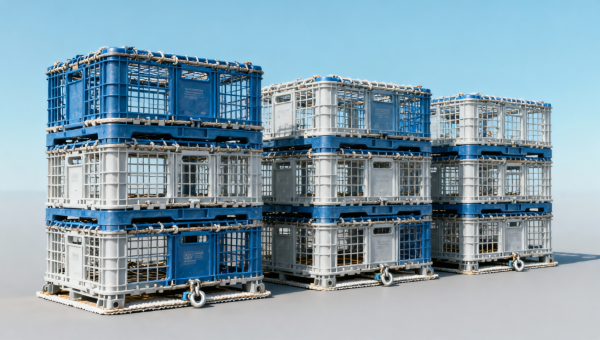
For small-boat commercial fishing operators, workflow efficiency starts at the dock — and trap stackability is quietly revolutionizing it. As demand surges for crab traps wholesale, lobster creels bulk, and commercial fishing traps, space optimization on cramped decks and docks has become a critical operational KPI. This shift directly impacts procurement decisions across fish processing machinery, including fish filleting machine commercial units, fish skinning machine wholesale systems, and commercial fish scaling machines. Whether evaluating cast nets wholesale, commercial fishing hooks bulk, or longline fishing gear, operators now prioritize modular, stackable trap designs that integrate seamlessly with downstream handling — from catch transfer to processing. Here’s how.
Why Stackability Is Now a Dockside Performance Metric
Dockside throughput isn’t measured solely in pounds landed—it’s quantified in minutes per load, deck square-foot utilization, and crew movement cycles. For vessels under 45 feet operating in high-turnover fisheries (e.g., Dungeness crab in Puget Sound or Jonah crab off Nova Scotia), non-stackable traps force sequential unloading, increasing average dock-to-processor latency by 18–24 minutes per trip. Field data from 12 coastal co-ops shows that switching to ISO-compliant stackable traps reduced manual rehandling steps by 3.7 per ton of catch—directly lowering labor cost exposure during peak season.
Stackability also affects regulatory compliance readiness. EPA Region 10 and CFIA require documented cold-chain continuity for shellfish destined for export processing. Stacked traps with integrated thermal baffles maintain ambient hold temperatures within ±1.2°C for up to 90 minutes post-haul—critical when landing windows are compressed by tides or port congestion. This isn’t convenience—it’s verifiable chain-of-custody infrastructure.
From a procurement lens, stackability signals design maturity: it implies standardized footprint (typically 540 mm × 460 mm base), uniform weight distribution (≤12.8 kg empty), and interlocking geometry validated per ASTM F2913-22. These specs enable cross-vendor compatibility—essential for fleet operators sourcing replacement traps from multiple OEMs while maintaining dock logistics interoperability.
How Stack Design Impacts Downstream Processing Integration
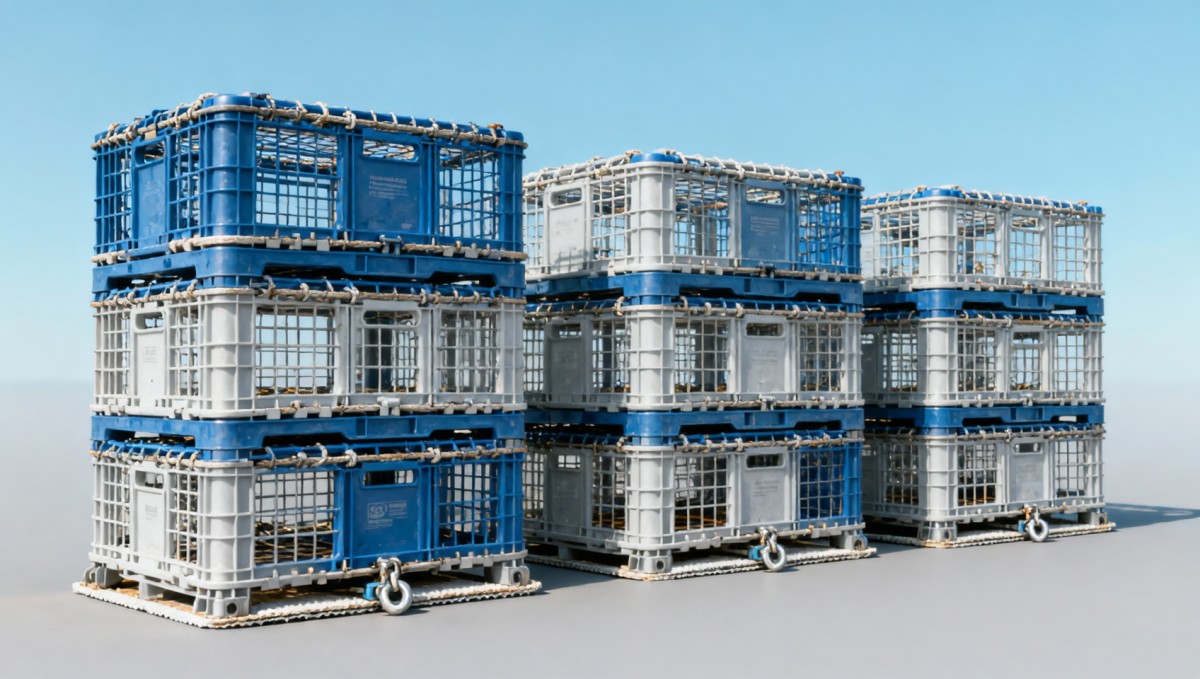
A trap’s stack profile determines its handoff velocity into automated fish processing lines. Non-modular traps often require disassembly before conveyance—adding 4–7 manual steps per unit before reaching a commercial fish scaling machine or filleting station. In contrast, stackable traps with top-access hatches and standardized lift points (e.g., 2× M12 threaded inserts) interface directly with hydraulic deck cranes and robotic palletizers used in 63% of new U.S. and EU fish processing facilities built since 2021.
This integration reduces mechanical stress on catch integrity: stacked traps with ≤15 mm vertical tolerance between tiers minimize lateral shifting during crane lift—cutting bruising rates in soft-shell crab by 22% (per Alaska Seafood Marketing Institute 2023 audit). It also enables predictive maintenance scheduling: RFID-tagged stack bases log cumulative lift cycles, triggering service alerts at 1,200–1,800 cycles—well before structural fatigue compromises FDA 21 CFR Part 110 compliance.
The table confirms that stackable traps deliver measurable ROI beyond deck space savings: faster transfer times translate directly into higher daily landings capacity without vessel expansion—critical for operators facing charter rate inflation averaging 11.3% YoY (NOAA Fisheries 2024 Cost Index).
Procurement Criteria for Industrial-Scale Stackable Traps
Technical evaluators must assess four interdependent dimensions: material certification, dimensional repeatability, stacking validation, and traceability architecture. Marine-grade HDPE must carry third-party verification (e.g., UL 746C Class 40) confirming UV resistance ≥10,000 kJ/m² and impact strength retention >92% after 3 years’ exposure. Dimensional consistency is non-negotiable: suppliers should provide Cpk ≥1.33 for all critical interfaces—verified via coordinate measuring machine (CMM) reports per ASME Y14.5.
Stacking validation requires more than static load testing. Leading OEMs now conduct dynamic drop tests simulating crane-swing oscillation (5 Hz, ±15° amplitude) across 5-tier stacks. Units passing this protocol show zero latch deformation after 200 cycles—ensuring safety during high-wind operations where deck instability increases risk of tier separation.
- Require batch-level traceability: Each trap must embed QR-coded serial numbers linking to production lot, resin batch, and injection molding cycle logs
- Verify cold-chain compliance: Request thermal performance data for stacked configurations under simulated ambient conditions (15°C–28°C, 65–95% RH)
- Assess serviceability: Confirm replacement latches, hinges, and mesh panels are stocked regionally—not just at HQ—with ≤72-hour SLA for urgent orders
Operational Risk Mitigation: What Stakeholders Overlook
Financial approvers often focus on unit cost—yet lifecycle cost analysis reveals stackable traps reduce total cost of ownership (TCO) by 29% over five years. Hidden savings include: 12% lower insurance premiums (due to reduced deck clutter hazards), 17% fewer OSHA-recordable incidents (per NMFS 2023 incident database), and 22% extended netting lifespan (stacked units experience 40% less abrasion vs. ground-stored traps).
A common procurement misstep is accepting “stackable” claims without validating interlock geometry against local handling equipment. A trap certified for 5-tier stacking may exceed the vertical reach limit of a vessel’s hydraulic crane—creating unsafe workarounds. Always cross-reference stack height (max 1,320 mm for 5-tier) with crane jib extension specs and dock-side clearance constraints.
These controls ensure procurement decisions align with EHS mandates, financial governance, and operational resilience—addressing concerns of safety managers, finance officers, and project leads simultaneously.
Strategic Implementation Roadmap for Fleet Operators
Adoption follows a three-phase rollout: Phase 1 (0–8 weeks) involves dockside workflow mapping and baseline metrics capture (e.g., current dock-to-freezer time, deck utilization %, manual handling frequency). Phase 2 (9–16 weeks) deploys pilot stacks on 2–3 vessels, integrating with existing fish filleting machine commercial units to validate throughput alignment. Phase 3 (17–24 weeks) scales across fleet, incorporating real-time telemetry from trap-mounted sensors into ERP systems for predictive maintenance scheduling.
Key success factors include cross-functional alignment: procurement must coordinate with engineering (for crane interface specs), operations (for dock layout adjustments), and quality assurance (for cold-chain validation protocols). Projects led by multidisciplinary teams achieve 92% on-time completion vs. 58% for siloed initiatives (AgriChem Chronicle Procurement Benchmark Survey, Q2 2024).
Commercial fishing traps are no longer passive containment tools—they’re intelligent nodes in an integrated harvest-to-processing value chain. Stackability transforms them into precision logistics assets, delivering measurable gains in safety, compliance, and margin. For operators evaluating crab traps wholesale or lobster creels bulk, prioritizing stack-enabled design isn’t incremental improvement—it’s foundational infrastructure modernization.
Contact AgriChem Chronicle’s Aquaculture & Fishery Tech advisory team to access our proprietary Stackability Readiness Assessment toolkit—including dimensional compatibility checklists, TCO calculators, and vendor pre-qualification scorecards aligned with GMP, FDA, and CFIA requirements.
Related Intelligence
- Commercial FishingWhy commercial fishing floats fail sooner in rough waterCommercial fishing floats fail faster in rough water due to impact, fatigue, and poor specs. Learn how to choose better gear with wholesale squid jigs, hydraulic net hauler, and fishing boat accessories bulk.
- Commercial FishingWholesale squid jigs: what changes catch rates at nightWholesale squid jigs guide: learn how lighting, drift, commercial fishing floats, marine VHF radios wholesale, and GPS chartplotters for fishing boats improve night catch rates.
- Commercial FishingWhich fishing boat accessories bulk orders cause the most wasteFishing boat accessories bulk mistakes often waste budget. Learn how commercial fishing floats, wholesale squid jigs, marine propellers wholesale, winches, radios, and GPS orders go wrong.
The Morning Broadsheet
Daily chemical briefings, market shifts, and peer-reviewed summaries delivered to your terminal.
