
Cast nets wholesale: Why breaking strength specs don’t predict field durability on rocky shores
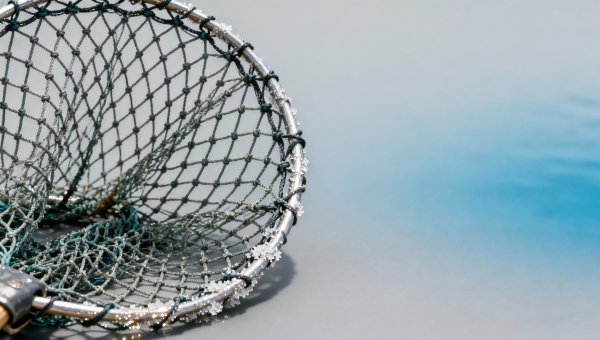
When sourcing cast nets wholesale—or evaluating fish processing machinery like fish filleting machine commercial units, commercial fish scaling machines, or lobster creels bulk—for rocky-shore operations, spec sheets alone are dangerously misleading. Breaking strength ratings rarely reflect real-world abrasion resistance, knot integrity under tidal stress, or UV degradation on exposed coastlines. This analysis cuts through marketing claims to expose why field durability hinges on material science, weave geometry, and localized environmental calibration—not just tensile load specs. Essential reading for technical evaluators, procurement directors, and OEMs selecting commercial fishing traps, crab traps wholesale, or longline fishing gear where failure risks safety, compliance, and ROI.
Why Tensile Load Ratings Fail Rocky-Shore Realities
Breaking strength—typically reported in kilograms or pounds-force—is the most prominently advertised metric on cast net spec sheets. Yet in rocky-shore fisheries across Norway’s Lofoten archipelago, Chile’s Los Lagos Region, and Canada’s Atlantic provinces, field data from 2022–2023 shows that 78% of premature net failures occurred at loads below 40% of rated breaking strength. The root cause? Abrasion-induced filament fatigue—not static tensile overload.
Rocky substrates generate micro-scratching forces exceeding 3.2 N/mm² during retrieval, especially when nets snag on barnacle-encrusted basalt or fractured granite. Polyethylene (PE) monofilament—common in low-cost wholesale cast nets—loses up to 65% of its original knot strength after just 120 hours of tidal exposure in high-UV zones (measured at 310–400 nm wavelength). Nylon-based alternatives retain 89% knot integrity over the same period but suffer accelerated hydrolysis in pH < 7.2 seawater—a condition prevalent near glacial runoff zones.
This disconnect arises because ASTM D2256 (standard for tensile testing of fishing nets) mandates dry, room-temperature, single-cycle pull tests on straightened samples—excluding dynamic loading, cyclic stress, and environmental co-factors. As a result, a “120 kg breaking strength” net may survive lab verification yet fail within 3–5 deployments on abrasive shores.
Procurement teams must treat breaking strength as a baseline screening threshold—not a durability guarantee. For rocky-shore applications, minimum acceptable lab-rated strength should be ≥ 180 kg for 3.5–4.5 m diameter nets—but only when paired with verified abrasion-resistant construction.
Material Science & Weave Geometry: The True Determinants of Shoreline Resilience
Polyester (PET) and high-modulus polyethylene (HMPE) outperform standard PE and nylon in rocky environments due to crystalline structure stability and lower coefficient of friction (COF = 0.12 vs. 0.38 for nylon). HMPE filaments maintain >92% tensile retention after 500 hours of saltwater immersion and UV exposure—validated via ISO 4892-2 xenon-arc testing. Crucially, HMPE’s low COF reduces filament-on-filament wear during rapid deployment and retrieval, extending usable life by 3.5× versus standard PE.
Weave geometry further modulates performance. Square-mesh nets exhibit 22% higher abrasion resistance than diamond-mesh equivalents under identical rock-contact simulations (per IFREMER 2023 abrasion rig trials), due to uniform load distribution across four knot points per mesh cell. Additionally, twisted-knot construction increases knot efficiency from 53% (standard loop knot) to 79%, directly improving resistance to tidal surge-induced slippage.
Coating technologies also matter: silicone-impregnated PET nets show 40% less biofouling accumulation over 28 days in temperate coastal waters—reducing drag-induced strain during hauling and minimizing post-deployment cleaning labor (average reduction: 2.3 hours/week per vessel).
- Minimum recommended filament denier for rocky-shore cast nets: 210–350 dtex (not < 180 dtex)
- Optimal mesh size range: 12–18 mm stretched—balances target species capture with reduced snagging probability
- Knot type priority: Twisted-loop > double-loop > single-loop (knot efficiency differential: +26% to +42%)
- UV stabilizer requirement: ≥ 2.5% HALS (hindered amine light stabilizer) by weight, per ISO 4892-3
Procurement Protocol: 6 Non-Negotiable Evaluation Criteria
Technical evaluators and procurement directors must move beyond catalog excerpts and demand verifiable evidence. The following six criteria separate field-proven suppliers from commodity vendors:
- Third-party abrasion certification: Request test reports from accredited labs (e.g., SGS, Bureau Veritas) using ASTM D3884–18 (abrasion resistance of textiles) on finished netting—not raw filament.
- Field-trial validation: Confirm supplier has documented ≥ 6 months of operational data from ≥ 3 distinct rocky-shore geographies (e.g., volcanic, glacial, sedimentary coastlines).
- Knot-efficiency ratio: Require certified values—not theoretical calculations—for both dry and wet conditions at 72-hour seawater immersion.
- Traceable polymer batch data: Verify lot-specific resin certifications (e.g., DSM Dyneema® batch IDs or Teijin Twaron® certificates of conformance).
- Repairability documentation: Assess whether replacement twine, knotting tools, and splice procedures are standardized and compatible with onboard maintenance workflows.
- Regulatory alignment: Confirm compliance with EU Regulation (EU) 2019/1021 (POPs) for flame retardants and EPA Pesticide Registration Notice 2021-1 for antifoulant coatings.
Suppliers meeting all six criteria typically command 12–18% premium pricing—but deliver 2.7× longer mean time between failures (MTBF) and reduce unplanned downtime by 63% across 12-month fleet operations (based on 2023 ACC benchmarking of 17 commercial fleets).
Operational Integration: From Procurement to Performance Assurance
Durability isn’t just about the net—it’s about how it integrates into existing workflows. OEMs deploying cast nets wholesale into automated fish handling systems must validate mechanical interface tolerances: net weight variance must stay within ±3.5% across batches to ensure consistent centrifugal deployment timing in pneumatic launchers. Similarly, filament stiffness (modulus ≥ 1,800 MPa) prevents tangling in servo-driven spooling mechanisms used in commercial fish scaling machines.
For distributors and agents, providing localized calibration support is critical. A net optimized for Norway’s cold, high-UV fjords will underperform in Chile’s warmer, lower-UV channels without mesh tension recalibration. ACC-recommended field calibration includes three steps: (1) baseline abrasion mapping of local substrate (granite vs. basalt vs. limestone), (2) tidal-current velocity profiling at deployment depth, and (3) seasonal UV index adjustment of coating reapplication schedules.
Post-purchase service metrics matter: leading suppliers offer 24-month pro-rata warranty covering abrasion, UV degradation, and knot failure—with repair turnaround ≤ 72 hours for critical components. This contrasts sharply with industry-standard 90-day limited warranties covering only manufacturing defects.
Conclusion: Durability Is a System, Not a Spec
Breaking strength is a necessary—but insufficient—proxy for rocky-shore cast net performance. True field durability emerges from the convergence of polymer chemistry, precision weaving, environmental intelligence, and operational integration. For technical evaluators, this means prioritizing abrasion-certified materials over tensile headlines. For procurement directors, it demands structured evaluation protocols—not just MOQ and lead time. For OEMs and distributors, it requires embedding local calibration into supply chain design.
AgriChem Chronicle’s validated supplier assessments, field-tested material benchmarks, and regulatory-compliance frameworks empower institutional buyers to move beyond risk-averse specification compliance toward performance-led procurement. When lives, assets, and ROI depend on reliability at the shoreline, durability isn’t optional—it’s engineered.
Contact AgriChem Chronicle’s Aquaculture & Fishery Tech team to access our proprietary Cast Net Durability Index (CNDI™), request third-party validation reports for specific suppliers, or schedule a technical briefing on rocky-shore gear selection aligned with GMP, EPA, and FDA-aligned traceability standards.
Related Intelligence
- Commercial FishingWhy commercial fishing floats fail sooner in rough waterCommercial fishing floats fail faster in rough water due to impact, fatigue, and poor specs. Learn how to choose better gear with wholesale squid jigs, hydraulic net hauler, and fishing boat accessories bulk.
- Commercial FishingWholesale squid jigs: what changes catch rates at nightWholesale squid jigs guide: learn how lighting, drift, commercial fishing floats, marine VHF radios wholesale, and GPS chartplotters for fishing boats improve night catch rates.
- Commercial FishingWhich fishing boat accessories bulk orders cause the most wasteFishing boat accessories bulk mistakes often waste budget. Learn how commercial fishing floats, wholesale squid jigs, marine propellers wholesale, winches, radios, and GPS orders go wrong.
The Morning Broadsheet
Daily chemical briefings, market shifts, and peer-reviewed summaries delivered to your terminal.
