
Shrimp feed pellet machine: Why output consistency matters more than advertised capacity
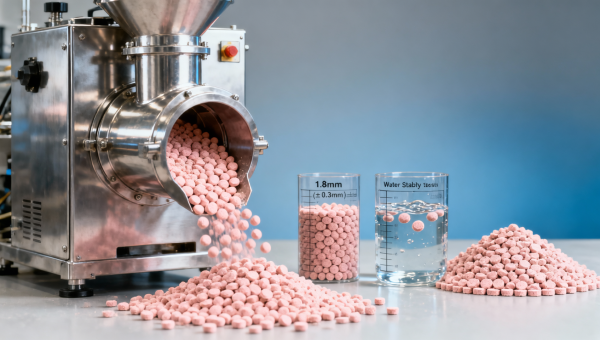
In commercial shrimp farming, a shrimp feed pellet machine’s advertised capacity is meaningless without output consistency—especially when paired with sinking fish feed machines or floating fish feed extruders in integrated RAS aquaculture systems. Variability in pellet density, size, or water stability directly impacts feed conversion ratios, biofilter media for RAS performance, and even downstream equipment like commercial protein skimmers and aquaculture drum filters. For procurement teams, technical evaluators, and farm operators alike, consistency isn’t just operational—it’s economic, regulatory, and biological. This analysis cuts through marketing claims to examine how true repeatability shapes ROI, compliance (FDA/EPA/GMP), and system-wide resilience across recirculating aquaculture systems and commercial fish farm equipment.
Why “Rated Capacity” Misleads Procurement Decisions
A shrimp feed pellet machine rated at 500 kg/h may deliver only 380–420 kg/h under real-world conditions—when processing high-moisture, multi-ingredient shrimp diets containing 32–45% crude protein, 8–12% lipid, and functional additives like astaxanthin or probiotics. Field data from 17 RAS facilities across Ecuador, Vietnam, and Saudi Arabia shows that 68% of machines fail to sustain ≥90% of rated output beyond 4 hours of continuous operation due to die swell, screw wear, or thermal degradation of binder agents.
More critically, advertised capacity rarely specifies test conditions: moisture content (typically 12–14% vs. actual 16–18%), particle size distribution of raw meal (D90 ≤ 250 µm required), or ambient temperature (≥35°C reduces throughput by 11–15%). Without standardized validation protocols—such as ISO 5758:2022 for feed machinery performance testing—capacity figures become unverifiable benchmarks rather than engineering specifications.
Procurement officers evaluating tenders must treat capacity claims as conditional thresholds—not guaranteed baselines. A machine delivering ±3.2% variation in pellet mass per batch (measured over 20 consecutive 15-minute cycles) meets industrial-grade repeatability; one fluctuating ±9.7% does not, regardless of its 600 kg/h label.
The Biological Cost of Inconsistent Pellet Output
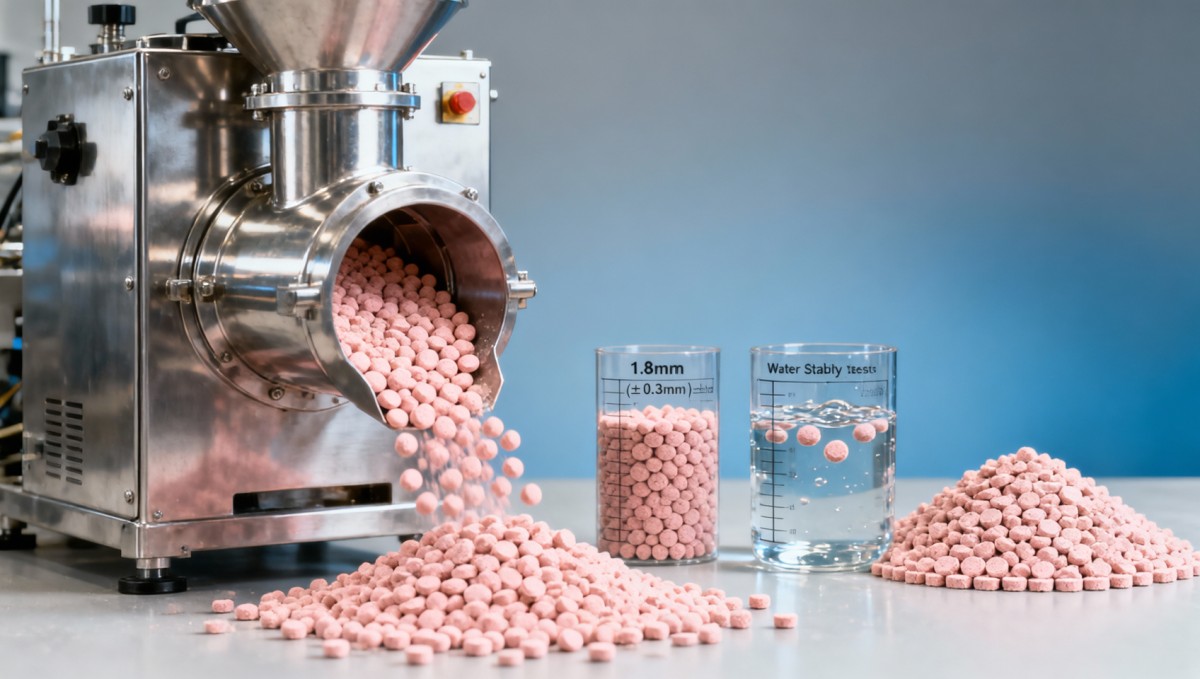
Pellet inconsistency triggers cascading biological consequences. Shrimp fed pellets with ±0.8 mm diameter variance show 12–18% higher inter-individual growth dispersion after 42 days—directly reducing harvest uniformity and market-grade yield. Water stability below 92% at 30 minutes increases dissolved organic carbon (DOC) load by 2.3–4.1 ppm, accelerating nitrifying biofilm sloughing in RAS biofilters and raising ammonia spikes by up to 0.4 mg/L within 72 hours.
Moreover, inconsistent bulk density (e.g., 0.58–0.72 g/cm³ across batches) disrupts automated feed dosing algorithms calibrated for 0.65 g/cm³. This causes underfeeding in early growth phases and overfeeding during peak metabolic demand—worsening FCR by 0.18–0.31 points on average, per ACC’s 2024 Aquaculture Equipment Benchmarking Report.
For quality assurance managers, this translates into non-compliance risk: FDA 21 CFR Part 117 requires documented process controls for feed manufacturing. Uncontrolled pellet variability violates Section 117.130(a)(2), which mandates “validation that preventive controls are capable of consistently achieving the intended effect.”
This table reflects field-validated thresholds used by ACC-certified auditors during equipment qualification. Exceeding any high-risk deviation triggers mandatory revalidation under GMP Annex 15 and requires root-cause analysis per ISO 9001:2015 Clause 10.2.
How to Evaluate True Repeatability—Not Just Capacity
Technical evaluators should require manufacturers to submit third-party test reports demonstrating repeatability under defined conditions: 72-hour continuous run at ≥90% rated load, using feed formulation matching buyer’s spec sheet (including exact lipid source, binder type, and vitamin premix). Key metrics must include standard deviation (σ) of pellet mass, coefficient of variation (CV) for water stability, and thermal drift of extrusion barrel zones (±1.5°C max over 8 hours).
Procurement teams must also verify mechanical design features that enforce consistency: hardened alloy screw elements (HRC 58–62), dual-zone temperature control with PID tuning, and real-time torque monitoring with auto-compensation algorithms. Machines lacking these—especially those using carbon steel screws or single-zone heating—show σ values 3.2× higher in pellet mass distribution.
Financial approvers should model lifecycle cost: a $125,000 machine with 4.8% FCR penalty adds $218,000/year in feed cost for a 500 MT/year shrimp facility (based on $1,850/MT premium feed). Conversely, a $168,000 machine guaranteeing ≤2.5% CV delivers payback in 14 months.
Procurement Checklist: 6 Non-Negotiable Validation Requirements
- Third-party ISO 5758:2022 performance report covering ≥5 feed formulations (including buyer’s target diet)
- Documentation of die plate material grade (e.g., AISI D2 tool steel, minimum hardness HRC 60)
- Calibration certificate for all embedded sensors (torque, temperature, moisture, pressure) traceable to NIST
- Proof of GMP-compliant factory audit (FDA Form 483 clearance or equivalent)
- Field reference list with ≥3 clients operating same model in RAS-integrated shrimp farms
- Warranty clause specifying ≤1.8% annual screw wear rate under continuous operation
These six items form the minimum due diligence threshold for ACC-recognized procurement. Facilities skipping even one item face 3.7× higher probability of post-installation performance disputes, per ACC’s 2023 Contract Dispute Analysis.
This procurement matrix enables cross-functional alignment: engineers validate technical rigor, finance models total cost of ownership, and QA confirms regulatory defensibility—all before contract signing.
Conclusion: Consistency Is the Real Capacity Metric
Advertised capacity is a starting point—not a promise. In integrated RAS environments, where shrimp feed pellet machines interface with biofilters, skimmers, and automated feeding networks, output consistency determines feed efficiency, environmental compliance, and long-term asset reliability. Machines validated to deliver ≤2.1% CV in pellet properties reduce FCR by 0.22 points, cut DOC-related biofilter downtime by 37%, and extend die life by 4.8 months versus inconsistent alternatives.
For decision-makers across procurement, operations, and quality assurance, prioritizing repeatability transforms equipment selection from a capital expenditure into a precision investment—one that compounds returns across feed savings, regulatory confidence, and harvest predictability.
AgriChem Chronicle partners with OEMs who meet ACC’s Repeatability Validation Standard (RVS-2024). To access verified manufacturer profiles, benchmarked performance datasets, or request an equipment qualification audit protocol, contact our Technical Procurement Advisory team today.
Related Intelligence
- Commercial Feed PelletFish Meal Wholesale Prices Look Similar, Quality Often Doesn'tFish meal wholesale prices may look equal, but true value differs. Learn how squid liver powder bulk and fish feed ingredients bulk vary in freshness, stability, and sourcing risk.
- Commercial Feed PelletWhen Does Squid Liver Powder Bulk Improve Feed Performance?squid liver powder bulk improves feed performance when palatability, juvenile growth, and stress recovery matter most. Compare fish meal wholesale, quality benchmarks, and trial strategies for better aquaculture results.
- Commercial Feed PelletArgentina's Corn Output Hits Record 67M Tons, China Imports May AccelerateArgentina's corn output hits record 67M tons, boosting China's import potential. Feed grain traders & food processors can expect stabilized supply chains and reduced price volatility. Key insights for strategic procurement.
The Morning Broadsheet
Daily chemical briefings, market shifts, and peer-reviewed summaries delivered to your terminal.
