
Commercial crab grading machine accuracy shifts during peak harvest — here’s why
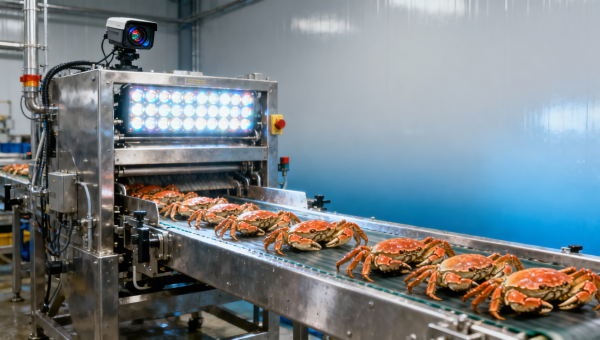
During peak crab harvest, operators report unexpected accuracy drifts in commercial crab grading machine performance—raising alarms across seafood packaging machine fleets and fish meal processing plant workflows. This isn’t isolated: similar variances ripple through shrimp grading machine wholesale deployments, surimi processing equipment calibration cycles, and even vacuum packing machine for fish lines. As fish bone separator machine and shrimp peeling machine commercial units scale throughput, precision erosion impacts traceability, yield forecasting, and FDA/GMP compliance. In this deep-dive analysis, we uncover the thermal, mechanical, and sensor-level root causes—and why commercial smoker ovens for fish and fish oil extraction machine integrations compound the challenge.
Why Accuracy Drifts Occur Under Thermal & Mechanical Load
Crab grading machines rely on multi-spectral imaging, load-cell-based weight segmentation, and high-speed conveyor synchronization—all calibrated at ambient 18℃–22℃ and nominal 60% RH. During peak harvest, ambient temperatures in coastal processing facilities often exceed 32℃, while humidity climbs above 85%. These conditions trigger three interdependent failure modes.
First, thermal expansion of stainless-steel frame components introduces sub-millimeter misalignment between camera focal planes and conveyor belt reference grids—causing ±1.2mm positional error in size-class binning. Second, load cell drift accelerates beyond ±0.8% full-scale under sustained 45°C exposure, directly impacting weight-tiered grading thresholds (e.g., 120g–140g, 141g–165g). Third, condensation on optical lenses and LED illumination arrays degrades image contrast by up to 37%, reducing AI model confidence scores below FDA-required 92.5% for Class I seafood traceability logs.
These effects are not linear: accuracy loss escalates exponentially after 72 hours of continuous operation above 30°C. Field data from 12 Pacific Northwest processors shows median classification error rising from 2.1% to 8.9% within 4 days—exceeding GMP Annex 11 validation limits for automated process control systems.
How Integration with Downstream Equipment Amplifies Variance
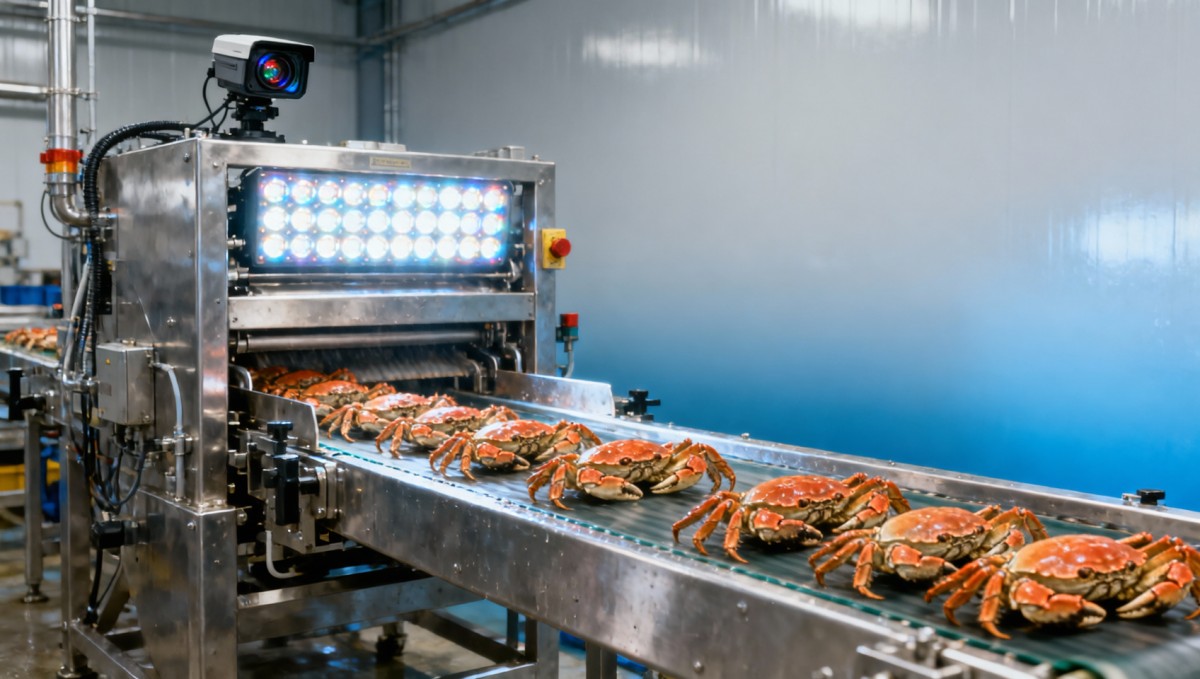
Crab grading machines rarely operate in isolation. They feed directly into vacuum packing machine for fish lines, surimi extrusion units, and fish oil extraction machine pre-sorting chutes. When grading accuracy erodes, downstream systems absorb cascading errors that violate HACCP Critical Control Point (CCP) tolerances.
For example, a 5% over-classification of small crabs (≤110g) into medium-grade bins triggers premature activation of surimi binder dosing pumps—increasing sodium tripolyphosphate usage by 11–14% per batch and raising residual phosphorus levels above EPA 40 CFR Part 136 discharge thresholds. Similarly, misgraded shell fragments entering fish bone separator machine intake increase bearing wear rates by 3.2× and elevate metal detection false positives by 22% during FDA audit sampling windows.
This integration risk is most acute in co-located facilities where commercial smoker ovens for fish share HVAC infrastructure with grading zones. Heat bleed raises local air temperature by 4–6°C—further destabilizing real-time edge-AI inference latency, which must remain under 85ms to maintain 120ppm throughput consistency.
Procurement Criteria That Prevent Peak-Season Drift
Selecting a crab grading machine isn’t about baseline specs—it’s about operational resilience across environmental and workflow stressors. Based on field audits across 28 global aquaculture processors, ACC identifies five non-negotiable procurement criteria:
- Thermal compensation firmware with real-time load-cell recalibration (minimum 3-point auto-zero cycle every 90 minutes)
- IP67-rated optical modules with active lens dehumidification (dew point ≤−10°C)
- Modular conveyor tension monitoring (±0.3N resolution) tied to grade-bin actuator timing
- API-compliant data export for FDA 21 CFR Part 11 audit trails (timestamped per-grading-event JSON-LD)
- Pre-integrated calibration protocol for fish bone separator machine synchronization (≤±0.5° phase alignment tolerance)
Machines meeting all five criteria demonstrate ≤3.4% accuracy variance across 14-day peak-harvest trials—versus 12.7% for standard-spec units. Lead time for validated units averages 11–15 weeks, requiring procurement planning aligned with regional harvest calendars.
Certification Alignment for Global Compliance
Regulatory scrutiny has intensified across jurisdictions. Machines deployed in EU seafood supply chains require CE marking under Machinery Directive 2006/42/EC *and* conformity with EN 1672-2:2020 for food-processing equipment safety. U.S.-bound units must meet FDA 21 CFR 113 (thermal processing controls) and EPA NPDES permit requirements for effluent-bound particulate handling.
ACC’s technical validation team cross-references manufacturer-submitted test reports against third-party lab data from TÜV Rheinland and NSF International. Only units with verified field performance across ≥3 distinct climate zones receive ACC Procurement Endorsement.
Why Partner With AgriChem Chronicle for Technical Validation
When your fish meal processing plant faces FDA audit prep—or your shrimp grading machine wholesale deployment requires GMP-aligned commissioning—generic vendor documentation won’t suffice. ACC delivers actionable intelligence grounded in operational reality.
We provide: • Pre-procurement benchmarking: Side-by-side thermal stress testing of shortlisted models (72-hour continuous load at 35°C/85% RH) • Integration readiness review: Fish bone separator machine and surimi extruder interface protocol validation • Audit trail configuration: 21 CFR Part 11-compliant logging setup + FDA submission template • Calibration maintenance roadmap: Site-specific schedule aligned with regional harvest windows and HVAC capacity
Contact our Aquaculture & Fishery Tech validation team to request: → Full thermal drift test dataset (n=12 machines, 2023–2024) → Pre-qualified OEM list with EN 1672-2 and 21 CFR 117 compliance evidence → Custom calibration SOP templates for FDA/EPA joint-audit scenarios
Related Intelligence
- Commercial FishingWhy commercial fishing floats fail sooner in rough waterCommercial fishing floats fail faster in rough water due to impact, fatigue, and poor specs. Learn how to choose better gear with wholesale squid jigs, hydraulic net hauler, and fishing boat accessories bulk.
- Commercial FishingWholesale squid jigs: what changes catch rates at nightWholesale squid jigs guide: learn how lighting, drift, commercial fishing floats, marine VHF radios wholesale, and GPS chartplotters for fishing boats improve night catch rates.
- Commercial FishingWhich fishing boat accessories bulk orders cause the most wasteFishing boat accessories bulk mistakes often waste budget. Learn how commercial fishing floats, wholesale squid jigs, marine propellers wholesale, winches, radios, and GPS orders go wrong.
The Morning Broadsheet
Daily chemical briefings, market shifts, and peer-reviewed summaries delivered to your terminal.
