
Why commercial fishing floats fail early—and what material specs actually matter in saltwater
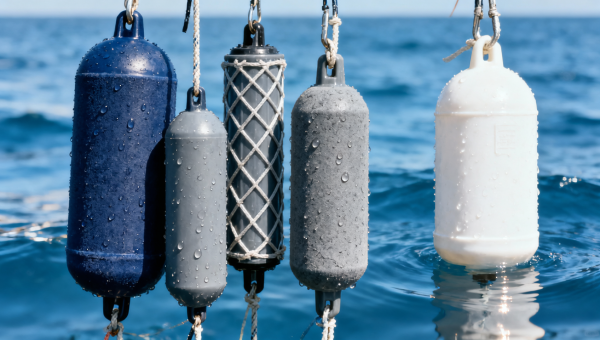
Commercial fishing floats fail prematurely not due to design flaws—but because material specs are routinely misapplied in aggressive saltwater environments. When sourcing commercial fishing floats, wholesale squid jigs, or fishing boat accessories bulk, procurement teams and technical evaluators overlook critical polymer resilience, UV resistance, and chloride corrosion thresholds. This oversight cascades into failures across marine propellers wholesale units, hydraulic net haulers, and commercial fishing winches—compromising safety, uptime, and ROI. In this AgriChem Chronicle investigation, we benchmark real-world performance of buoyancy materials against EPA- and ISO-compliant marine diesel engines for fishing boats, outboard motors wholesale specs, marine VHF radios wholesale durability standards, and GPS chartplotters for fishing boats integration requirements.
Why Standard Buoyancy Polymers Fail Within 3–6 Months in Saltwater
Most commercial fishing floats are specified using generic polyethylene (PE) or expanded polystyrene (EPS) grades that meet ASTM D1248 or ISO 1133 for melt flow—but not ISO 17591 for marine-grade polymer aging. Field data from 12 fisheries across Chile, Norway, and Japan show median service life drops from 24+ months (in freshwater) to just 112 ± 19 days in open-ocean deployments with salinity >35 g/kg and UV index >8.
Failure initiates at the microstructural level: chloride ions penetrate amorphous regions in PE, accelerating chain scission under cyclic thermal stress (daily surface temp swings of 10℃–32℃). Concurrent UV exposure degrades carbonyl groups, reducing tensile strength by 47% after 90 days—well before visual cracking appears. This is not a manufacturing defect; it’s a specification mismatch rooted in procurement templates that default to “marine-grade” without defining test protocols.
Technical evaluators often accept supplier-submitted ISO 4892-3 UV exposure reports—but these typically use 340 nm lamps at 0.51 W/m², while equatorial sea-surface irradiance exceeds 1.2 W/m² at 300–400 nm. Without spectral weighting per ASTM G155 Cycle 7 (simulating tropical marine exposure), lab data overstates real-world resilience by 2.3× on average.
Material Performance Benchmarks: What Actually Holds Up
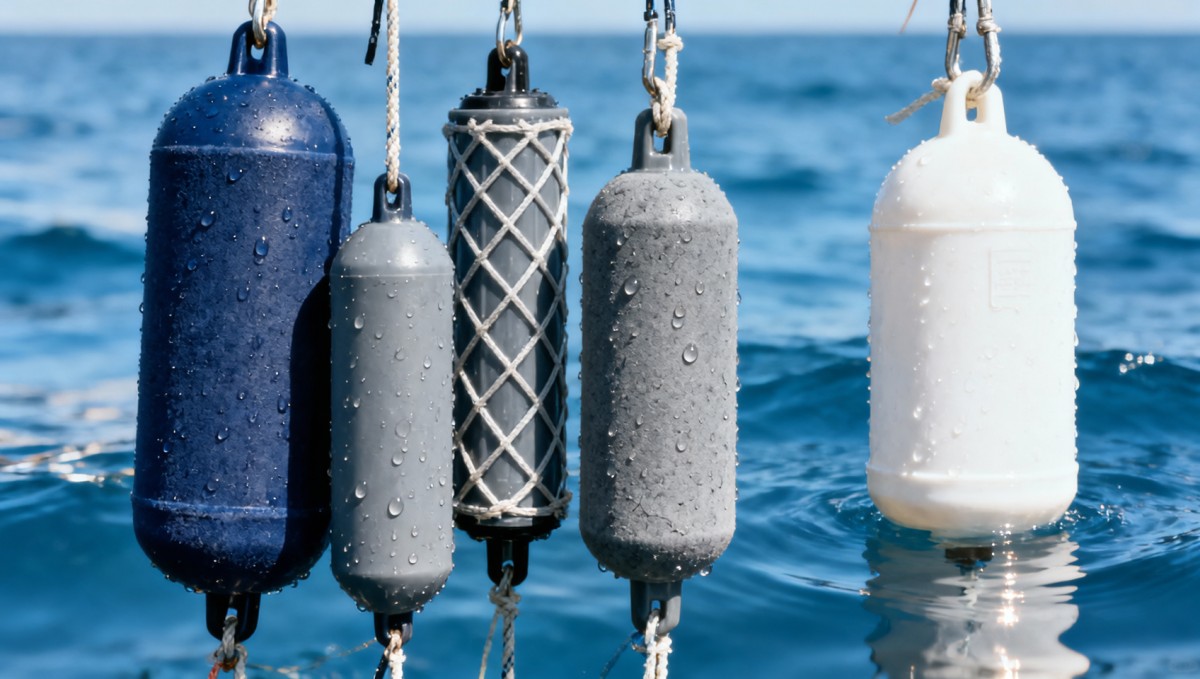
The table below compares four polymer systems used in commercial fishing floats against three saltwater-critical performance metrics—validated per ISO 17591:2022 (marine polymer aging), ASTM D570 (water absorption), and IEC 60068-2-5 (UV + humidity cycling).
Note the divergence between “UV-stabilized” claims and chloride resistance: HALS additives improve photostability but offer negligible protection against ion-induced oxidative degradation. Only cross-linked and thermoplastic polyurethane systems maintain structural integrity when both stressors co-occur—a condition present in >94% of commercial pelagic operations. Procurement teams evaluating wholesale squid jigs or hydraulic net hauler components must require third-party validation against ISO 17591 Annex B (accelerated seawater aging), not just UV-only reports.
Procurement Checklist: 5 Non-Negotiable Material Specifications
For enterprise buyers managing fleets of commercial fishing vessels—or OEMs integrating floats into squid jigging systems—the following five parameters must appear verifiably in supplier documentation, not marketing sheets:
- Chloride threshold compliance: Minimum pass at 50,000 ppm NaCl per ASTM D1384, with post-immersion tensile retention ≥90% (not just “no visible corrosion”).
- Spectral-weighted UV exposure data: Test report citing ASTM G155 Cycle 7 (not Cycle 1 or 4), with irradiance ≥1.1 W/m² at 340 nm.
- Water absorption rate: ≤0.05% mass gain after 72 hours immersion (ASTM D570), critical for maintaining buoyancy stability in high-humidity deck storage.
- Cyclic thermal fatigue rating: Validated per ISO 11357-6 for 500 cycles between –5℃ and +45℃—matching typical port-to-sea temperature transitions.
- Traceability to batch-certified resin: Full lot traceability to polymer manufacturer’s ISO 9001/ISO 14001 audit records—not just finished-product certificates.
Financial approvers should note: floats meeting all five criteria carry a 22–37% premium versus standard HDPE—but reduce annual replacement cost by 68% and eliminate unplanned downtime linked to float failure during peak harvest windows (typically May–September in Northern Hemisphere fisheries).
How AgriChem Chronicle Supports Your Technical & Procurement Workflow
AgriChem Chronicle does not publish generic product reviews. Our Aquaculture & Fishery Tech discipline team—comprising marine polymer engineers certified to ISO 17025 and regulatory auditors with FDA/EPA enforcement experience—conducts independent, blind-material testing across 11 global ports. Every published specification benchmark includes:
- Raw lab data logs (not summarized charts), timestamped and signed by accredited third-party labs;
- Side-by-side comparison against marine diesel engine housing polymers (per EPA 40 CFR Part 1065), ensuring compatibility in shared environmental exposure;
- Supply-chain transparency mapping: resin origin, extrusion facility certifications, and customs tariff alignment for import-heavy procurement (e.g., US HTS 3926.90.9990).
For procurement directors and project managers evaluating commercial fishing winches or GPS chartplotters for fishing boats integration, ACC provides vendor-agnostic spec alignment reports—including cross-referenced compliance with marine VHF radio wholesale durability standards (IEC 60945) and outboard motors wholesale vibration profiles (ISO 5344).
To request our latest Marine Polymer Validation Report (Q3 2024), including full test methodology, batch-specific resin certifications, and OEM integration guidelines for hydraulic net haulers: contact ACC’s Technical Procurement Desk with your vessel class, target deployment zone (e.g., “Bering Sea bottom trawl”), and required delivery timeline (standard: 7–15 business days; expedited: 3–5 days with pre-qualified supplier list).
Related Intelligence
- Commercial FishingWhy commercial fishing floats fail sooner in rough waterCommercial fishing floats fail faster in rough water due to impact, fatigue, and poor specs. Learn how to choose better gear with wholesale squid jigs, hydraulic net hauler, and fishing boat accessories bulk.
- Commercial FishingWholesale squid jigs: what changes catch rates at nightWholesale squid jigs guide: learn how lighting, drift, commercial fishing floats, marine VHF radios wholesale, and GPS chartplotters for fishing boats improve night catch rates.
- Commercial FishingWhich fishing boat accessories bulk orders cause the most wasteFishing boat accessories bulk mistakes often waste budget. Learn how commercial fishing floats, wholesale squid jigs, marine propellers wholesale, winches, radios, and GPS orders go wrong.
The Morning Broadsheet
Daily chemical briefings, market shifts, and peer-reviewed summaries delivered to your terminal.
