
Commercial Neoprene Chest Waders vs PVC for Daily Use
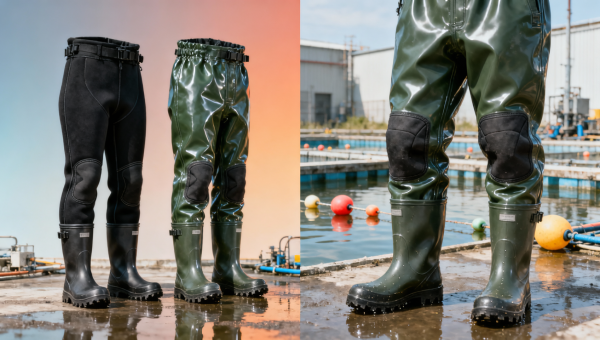
Choosing between commercial neoprene chest waders and PVC models for daily use affects comfort, durability, safety, and long-term operating cost. For buyers comparing commercial neoprene chest waders, wholesale fishing waders, and broader waterwork gear used alongside smart buoys for aquaculture or water quality online monitor aquaculture systems, this guide outlines the practical differences that matter most in demanding commercial environments.
For most daily commercial use, the right choice comes down to work environment rather than material preference. Neoprene chest waders are usually the better option for cold conditions, longer wear times, and operator comfort. PVC chest waders are often the stronger choice for warmer environments, washdown-intensive tasks, lower upfront budgets, and operations that need simple, scalable purchasing. If you are buying for a team, the key question is not which material is “best” in general, but which one delivers the lowest risk and best total value in your actual duty cycle.
What buyers really need to decide before choosing neoprene or PVC
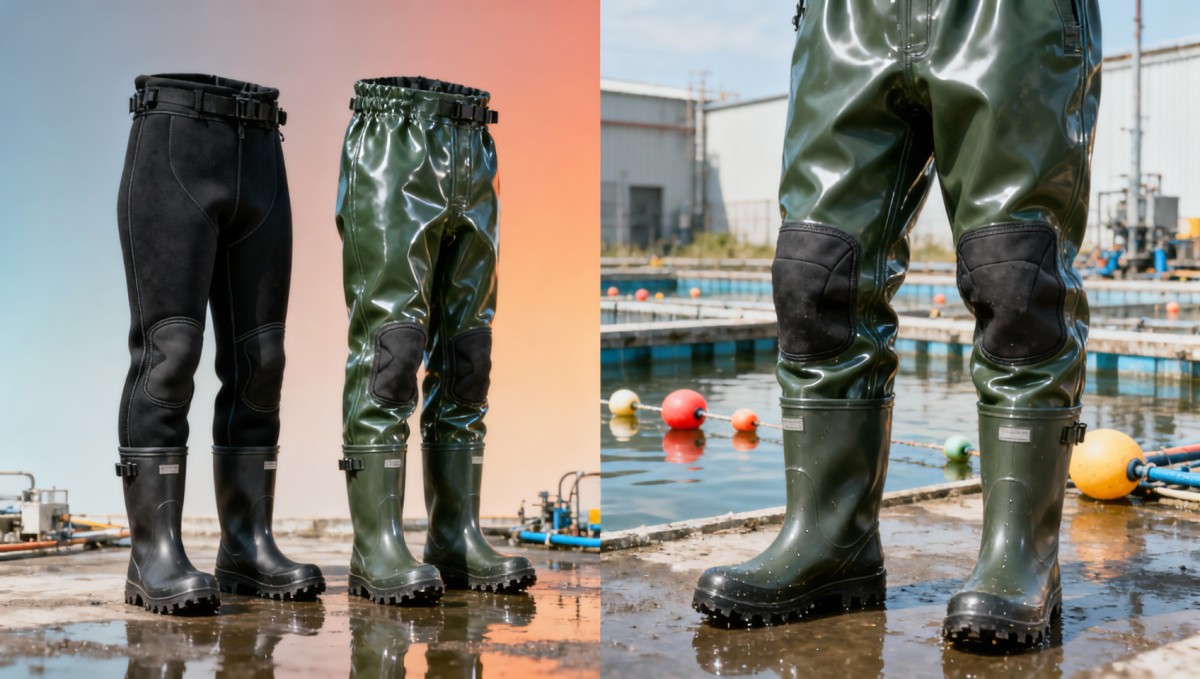
Searchers looking up “Commercial Neoprene Chest Waders vs PVC for Daily Use” are rarely looking for a basic materials lesson. They usually need a practical buying answer: which option will hold up better, keep workers safer, reduce replacement frequency, and make financial sense for repeated commercial use.
That decision typically involves several stakeholder concerns at once:
- Operators want comfort, mobility, warmth, and less fatigue during long shifts.
- Safety and quality managers want reliable waterproof integrity, slip resistance, and predictable performance in wet, muddy, or chemical-adjacent work zones.
- Procurement and finance teams want lower lifetime cost, fewer returns, and easier stock planning.
- Technical evaluators want clarity on puncture resistance, seam durability, cleanability, and suitability for aquaculture, fisheries, drainage, or agricultural use.
So the useful comparison is not simply neoprene versus PVC as materials. It is a field-use comparison across warmth, abrasion, flexibility, hygiene, downtime, and replacement economics.
In daily commercial use, neoprene usually wins on comfort while PVC often wins on simplicity and cost control
If your crews spend long hours standing or moving in cold water, neoprene usually provides the better user experience. It insulates better, feels softer against the body, and can reduce discomfort during extended wear. This matters more than many buyers expect, because discomfort often leads to lower compliance, more frequent breaks, and faster operator fatigue.
PVC waders, however, remain widely used in commercial settings for good reasons. They are generally easier to clean, often lighter in certain constructions, and typically less expensive to purchase in volume. In operations where waders are treated as high-turnover protective equipment, PVC can be easier to standardize across teams and budgets.
As a practical rule:
- Choose commercial neoprene chest waders for cold water, early-morning work, extended immersion, and tasks where comfort directly affects productivity.
- Choose PVC chest waders for warmer climates, frequent washdown, shorter wear cycles, and operations prioritizing lower unit cost and easier inventory replacement.
How neoprene performs in cold, repetitive, and physically demanding work
Neoprene is favored in many fisheries, aquaculture sites, marsh operations, and outdoor maintenance environments because it combines waterproofing with insulation. That combination is especially valuable when workers are exposed to wind, spray, shallow immersion, or prolonged standing in cold conditions.
Its main operational advantages include:
- Thermal retention: Better for cold-weather and cold-water environments.
- Comfort over long shifts: The material tends to be more forgiving during bending, kneeling, and repeated movement.
- Closer fit: Often preferred when workers need better body control and less internal slippage.
- Perceived quality: In many professional settings, neoprene is associated with higher-duty or premium-grade gear.
But neoprene is not automatically the better daily-use choice in every operation. It can feel too warm in hot climates, may take longer to dry, and often costs more upfront. If workers frequently move between water exposure and heated indoor environments, excess warmth can become a real usability issue.
Where PVC chest waders make more sense operationally
PVC waders are common in food-adjacent processing, hatcheries, pond maintenance, irrigation work, sanitation tasks, and general wet industrial environments because they are straightforward and practical. They are often selected not because they outperform neoprene in every category, but because they align well with repeatable commercial workflows.
PVC is especially useful when buyers need:
- Lower acquisition cost across larger teams
- Smooth surfaces for cleaning and routine washdown
- Consistent supply in wholesale fishing waders or industrial PPE channels
- Acceptable performance in moderate temperatures without paying for insulation that is not needed
For distributors, resellers, and operations managers, PVC also tends to be easier to position as a general-purpose product. It serves a broader range of light-to-medium duty wet work without forcing every buyer into a higher-cost specification.
Durability is not just about the material: seams, reinforcement, and boot quality matter more than many buyers think
A common mistake is assuming neoprene is always more durable or that PVC always tears faster. In real commercial use, service life often depends more on product construction than on the base material alone.
When evaluating either type, focus on:
- Seam technology: Double-stitched, taped, welded, or heat-sealed seams can dramatically affect leak resistance.
- Knee and shin reinforcement: Important for pond edges, rocky banks, trap handling, and equipment maintenance.
- Boot attachment quality: Failure often starts where the upper joins the boot.
- Outsole traction: Mud, algae, concrete, and metal grating demand different tread patterns.
- Thickness and flexibility balance: Heavier material may resist damage better, but can increase fatigue.
For technical assessment teams, it is often better to compare model-grade specifications rather than comparing “neoprene” versus “PVC” at a broad category level. A well-built PVC wader may outperform a poor-quality neoprene model in actual field life.
Comfort, safety, and fatigue: the hidden cost drivers in daily wear
For enterprise buyers, comfort should not be treated as a secondary issue. In daily-use environments, discomfort creates measurable costs. Workers who overheat, lose flexibility, or feel restricted are more likely to shorten wear time, use equipment incorrectly, or work less efficiently.
Important daily-use factors include:
- Weight over a full shift
- Range of motion when climbing, bending, or lifting
- Internal moisture buildup
- Boot support and slip resistance
- Ease of donning and removal between tasks
Neoprene usually scores better for comfort in cold conditions, but PVC may be safer and more manageable in hot or mixed indoor-outdoor conditions where overheating is a concern. The safer option is the one workers can realistically wear correctly for the full task duration.
Which option has the better total cost of ownership for commercial fleets
Upfront cost alone rarely reflects the true purchasing outcome. Buyers managing multiple sites or recurring PPE demand should look at total cost of ownership across a season or fiscal year.
That means comparing:
- Initial unit price
- Average replacement interval
- Failure rate in real site conditions
- Cleaning and drying time
- Worker acceptance and compliance
- Inventory complexity across sizes and climates
Neoprene can justify a higher purchase price if it reduces cold-related discomfort, improves retention in difficult field roles, or lasts longer under demanding use. PVC can deliver better value when turnover is high, conditions are less severe, and rapid replenishment matters more than premium wear comfort.
For finance approvers, the most practical method is to pilot both materials across representative teams for 30 to 60 days and track replacement, complaints, and task-fit. That produces far better data than catalog comparison alone.
Best-fit scenarios: when to choose commercial neoprene chest waders and when to choose PVC
Choose neoprene if your operation involves:
- Cold-water aquaculture work
- Outdoor fisheries in low-temperature climates
- Long wear periods with limited shelter
- High operator movement where flexibility matters
- Premium PPE strategies focused on retention and comfort
Choose PVC if your operation involves:
- Warm-weather pond, hatchery, or irrigation tasks
- Frequent cleaning and sanitation routines
- Large crew outfitting with tighter capital control
- Shorter or intermittent wear periods
- General-purpose wet work where insulation is unnecessary
For mixed operations, a dual-spec strategy is often smartest: neoprene for cold-season or early-shift field teams, PVC for warm-season, indoor, or washdown-focused crews. This avoids overbuying premium gear where it adds little value.
What to ask suppliers before placing a bulk order
Whether sourcing wholesale fishing waders for aquaculture teams or evaluating protective gear for broader industrial waterwork, supplier questions should go beyond material labels.
- What seam construction is used, and how is leak resistance tested?
- What is the expected performance range by temperature and work type?
- Are outsole options available for mud, algae, or concrete?
- What reinforcement zones are standard?
- Can the supplier provide consistency across repeat orders?
- What defect, return, or warranty policies apply in commercial use?
- Are sizing standards suitable for multinational or mixed-workforce deployment?
This is especially relevant in operations working around smart buoys for aquaculture, sensor maintenance, water quality online monitor aquaculture systems, and other wet-environment assets where workers need dependable PPE but may not require the same wader specification across all tasks.
Conclusion
For daily commercial use, neoprene chest waders are generally the better choice when cold exposure, long shifts, and wearer comfort are the priority. PVC waders are often the more efficient choice when buyers need lower upfront cost, simpler cleaning, and practical deployment in warmer or moderate conditions. The best decision comes from matching material performance to real operating conditions, not from assuming one option is universally superior.
For procurement teams, technical evaluators, and decision-makers, the clearest path is to compare construction quality, duty cycle, climate, and replacement economics together. In other words: buy neoprene when comfort and insulation protect productivity, and buy PVC when standardization, hygiene, and cost control drive the greater business value.
Related Intelligence
- Commercial FishingWhy Some Wholesale Fishing Waders Wear Out Too FastWholesale fishing waders wear out fast when material grade, seam design, and QC fall short. Learn how commercial neoprene chest waders and smart aquaculture buying reduce hidden replacement costs.
- Commercial FishingLeak Points to Check in Commercial Neoprene Chest WadersCommercial neoprene chest waders: learn the key leak points to inspect in wholesale fishing waders, with practical tips for safer bulk buying, longer wear life, and lower return risk.
- Commercial FishingWhat Sets Reliable Wholesale Fishing Waders ApartWholesale fishing waders and commercial neoprene chest waders compared by durability, waterproof seams, safety, and supplier transparency—plus aquaculture equipment sourcing insights.
The Morning Broadsheet
Daily chemical briefings, market shifts, and peer-reviewed summaries delivered to your terminal.
