
When Commercial Neoprene Chest Waders Fail in Cold Water
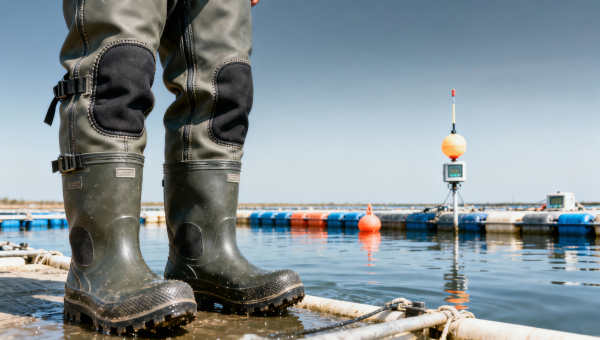
When commercial neoprene chest waders fail in cold water, the consequences extend beyond worker safety to operational continuity, procurement costs, and compliance risk. For buyers comparing wholesale fishing waders alongside smart buoys for aquaculture, water quality online monitor aquaculture systems, and fish disease treatment chemicals, understanding material failure points is essential to making sound technical and commercial decisions.
Why cold-water wader failure is a procurement issue, not just a user issue
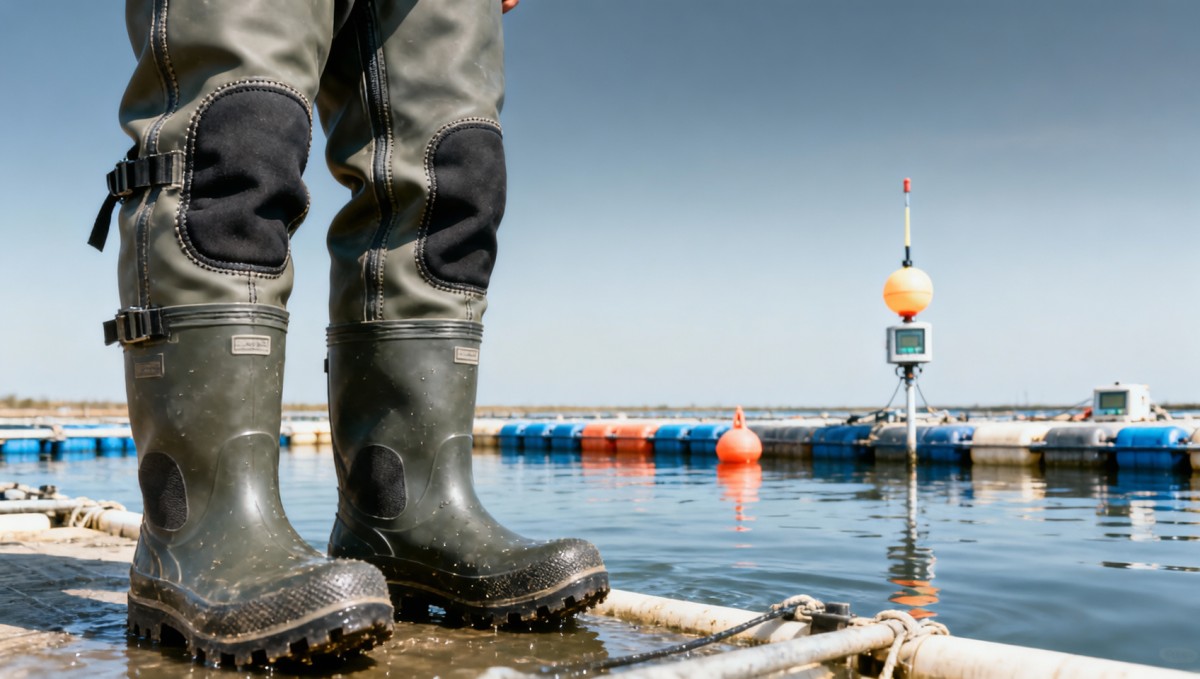
In commercial aquaculture, fishery handling, wet-feed transfer, hatchery maintenance, and shoreline inspection, chest waders are often treated as a low-complexity consumable. That assumption breaks down quickly in cold water. Once temperatures move into a typical 0°C–10°C operating range, neoprene behavior, seam integrity, flexibility, and worker fatigue all become linked. A leak or tear is no longer a minor inconvenience; it can interrupt inspections, delay stock movement, and increase exposure to slip, cold-stress, and contamination hazards.
For operators, the immediate concern is warmth and dryness during 2–6 hour shifts. For technical evaluators, the concern is where failure starts: stitched seams, boot attachment points, knee flex zones, or material delamination after repeated use. For procurement teams and financial approvers, the bigger question is total cost over one season or one annual budget cycle. A cheaper pair of commercial neoprene chest waders may require replacement in weeks rather than months if the cold-water profile and task intensity were poorly matched.
This is especially relevant in mixed procurement environments. Many institutional buyers now evaluate personal protective gear in parallel with smart buoys for aquaculture, water quality online monitor aquaculture systems, pumps, nets, liners, and treatment inputs. In such cases, waders influence field reliability even when they represent a small percentage of total spend. A sensor platform cannot be serviced properly if staff cannot stay in the water safely and efficiently long enough to complete calibration, sampling, or cage inspection routines.
AgriChem Chronicle approaches these decisions from a primary industries perspective. That means looking beyond product claims and asking how material choice affects workflow continuity, supply-chain predictability, maintenance planning, and compliance documentation. In regulated or export-facing operations, even simple protective equipment should be assessed with the same discipline applied to feed processing lines, aquaculture hardware, or chemical handling systems.
Where failure typically starts in cold-water use
Commercial neoprene chest waders rarely fail everywhere at once. Most failures begin in 4 predictable zones: seam lines, boot-to-upper junctions, abrasion contact points, and high-flex areas around knees and ankles. In cold conditions, neoprene and adhesive systems can stiffen, while repeated flexing during crouching, climbing, and loading adds concentrated stress. If the user moves between water, mud, and rough concrete in one shift, wear accelerates further.
- Seams can wick water or open under repeated tension, especially if stitched and glued construction is inconsistent.
- Boot attachments may loosen when cold water, mud loading, and foot torque combine during long walking cycles.
- Knee and shin areas often abrade against cages, pontoons, trays, and concrete edges during routine servicing.
- Inner moisture buildup can reduce thermal comfort even before a visible leak appears, leading users to misjudge the actual failure point.
The practical takeaway is simple: cold-water wader selection should not be based on thickness alone. Construction method, reinforcement layout, boot design, fit, and maintenance protocol matter just as much when evaluating wholesale fishing waders for professional use.
What causes commercial neoprene chest waders to fail in cold water conditions?
Cold water exposes weaknesses that may stay hidden in moderate climates. Neoprene itself offers insulation, but insulation is only one part of the performance equation. A 3.5 mm to 5 mm neoprene range may be suitable for many commercial tasks, yet material thickness cannot compensate for poor seam sealing, low-grade outer lamination, weak tread design, or insufficient reinforcement in high-contact zones. In other words, the wrong build specification can fail even when the nominal thermal rating looks acceptable on paper.
Another issue is mismatch between intended application and actual field use. Some waders are sold into wholesale channels as general fishing gear, but commercial users often perform more demanding routines: net lifting, feeder checks, biosecurity washing, frozen walkway movement, pump access, and emergency intervention in poor weather. These tasks create more flex cycles, more abrasion, and more exposure to chemicals, UV, salt, and disinfectants over a 3–12 month period.
Storage and care also play a major role. Even quality neoprene chest waders can degrade early if they are folded tightly, dried near direct heat, or left contaminated with salt, fish residues, treatment splash, or cleaning agents. Procurement teams that buy in volume should therefore assess not only the product but also the site’s ability to support correct drying, inspection, and replacement practices.
The table below summarizes common cold-water failure mechanisms and what buyers should ask suppliers before placing repeat or seasonal orders.
For technical and commercial teams, the most useful approach is failure-mode screening before order confirmation. Asking 5–7 structured questions about seams, bonding, reinforcement, outsole grip, and cleaning compatibility can prevent an entire season of recurring replacement claims.
Why thickness alone does not solve the problem
A thicker neoprene chest wader may retain more warmth, but it can also reduce flexibility and increase fatigue during ladder use, cage servicing, and repeated kneeling. In many aquaculture settings, a balanced specification performs better than the heaviest option. Buyers should compare water temperature, exposure duration, task intensity, and walking distance, not just the thickness number presented in a catalog.
For example, a site with 4°C–8°C water, 1–3 hour maintenance tasks, and frequent movement across rough surfaces may benefit more from reinforced knees, dependable seam sealing, and aggressive tread than from an overly heavy upper. Cold-water protection must be paired with mobility and durability if the goal is lower total operating cost.
How should buyers compare neoprene waders with other practical alternatives?
Commercial buyers often default to neoprene because it is familiar, widely distributed, and suitable for many wet tasks. However, cold-water operations do not always demand the same material strategy. Depending on shift length, worker movement, and contamination exposure, PVC, breathable layered constructions, or split-duty PPE systems may be more cost-effective. The correct decision depends on whether insulation, puncture resistance, chemical splash tolerance, or mobility is the primary requirement.
In integrated primary-industry operations, this choice matters because PPE procurement interacts with broader budget categories. A hatchery or fish farm investing in water quality online monitor aquaculture systems and smart buoys for aquaculture may still lose efficiency if field teams are slowed by poorly matched gear. The goal is not simply buying the lowest unit price; it is aligning protective performance with the task so that monitoring, feeding, disease control, and maintenance routines remain uninterrupted.
The comparison below helps procurement teams, distributors, and site managers evaluate common options without treating all chest waders as interchangeable.
The key point is that the “best” commercial wader depends on task mapping. If staff enter cold water for short intervention windows, neoprene may still be the preferred option. If they walk long distances, clean equipment, and transition in and out of water repeatedly, another system may produce better durability and worker acceptance over 1–2 seasons.
A practical 4-step selection screen
- Define water temperature bands such as 0°C–4°C, 5°C–10°C, and above 10°C for each work area.
- Separate tasks by exposure duration: under 1 hour, 1–3 hours, and over 3 hours.
- Identify dominant stress factors such as abrasion, climbing, chemical splash, or long walking distance.
- Match the product to cleaning, drying, storage, and replacement capacity already available on site.
This process gives technical and commercial teams a common decision language, which is particularly useful when procurement spans PPE, aquaculture instrumentation, and treatment supplies from different vendors.
What should technical evaluators and commercial buyers check before ordering?
A reliable procurement process for commercial neoprene chest waders should include both field criteria and supplier criteria. Field criteria cover fit, thermal suitability, grip, movement range, seam layout, and compatibility with actual site conditions. Supplier criteria cover consistency, lot traceability, packaging, replenishment speed, and the ability to support sample review before larger orders. This is particularly important for distributors or agents serving aquaculture and fishery clients across multiple climates.
In many B2B environments, the right supplier is not simply the one with the lowest quote. Buyers should ask whether the waders are intended for recreational fishing, light commercial use, or repeated industrial handling. They should also clarify normal lead times, minimum order expectations, spare inventory planning, and how defects are documented. A 2–4 week replenishment cycle may be workable for planned maintenance, but not for peak season replacement after a sudden cold snap.
The checklist below is designed for procurement teams, operations managers, and quality or safety personnel who need a structured way to screen suppliers and product options.
A disciplined review process can also support internal approvals. Financial reviewers want cost predictability, while safety teams want lower exposure risk. A short technical-commercial checklist creates evidence for both sides and helps justify why one product line costs more than another.
5 key checks before final approval
- Request confirmation of intended operating temperature range and typical exposure duration.
- Inspect seam construction and reinforcement around knee, ankle, and boot junction areas.
- Review outsole traction against wet concrete, algae-covered surfaces, and muddy banks.
- Confirm lead time for repeat orders, especially within 7–15 day urgent replenishment windows.
- Align storage and cleaning procedures with site conditions before rollout to user teams.
When these checks are built into sourcing, procurement teams can reduce both failure complaints and hidden replacement costs.
How do compliance, safety, and site procedures affect wader performance?
Chest waders sit at the intersection of PPE management, field safety, and hygiene control. While exact regulatory requirements vary by jurisdiction and task, commercial users should review product suitability against occupational risk assessments, site-specific safety procedures, and any sanitation or contamination-control protocols already in place. This matters in aquaculture and primary processing because workers may move between water contact, chemical handling, and equipment surfaces within the same shift.
For quality and safety managers, the challenge is often procedural rather than purely technical. A durable pair of neoprene chest waders can still underperform if inspection intervals are undefined, drying areas are inadequate, or contaminated gear is returned to service too quickly. A simple 3-stage control routine—pre-use check, post-use cleaning, and weekly inspection—can significantly improve reliability without increasing unit cost.
Buyers should also consider compatibility with disinfectants and treatment environments. In fish disease management zones, splash exposure from approved chemicals, saline water, and detergents may accelerate wear if the product was selected only for warmth. The procurement team should therefore ask whether the waders will be used near fish disease treatment chemicals, hatchery sanitation systems, or routine washdown areas, and then align material choice accordingly.
ACC’s editorial value in this context is the ability to connect PPE decisions with the wider operational system. The same institutional buyer comparing feed inputs, water quality online monitor aquaculture systems, or treatment products benefits from consistent, technically framed guidance that highlights failure risk, maintenance burden, and compliance implications across categories.
A practical site control routine
Pre-use
Check for seam separation, punctures, sole wear, and boot junction stress before each shift. This takes 2–3 minutes per pair and helps identify early failures before workers enter cold water.
Post-use
Rinse off salt, mud, organic residue, and chemical splash. Dry in a ventilated area away from direct high heat. Folding damp neoprene for 12–24 hours can promote odor, material stress, and seam degradation.
Weekly review
Log condition by user group or task zone. If one area shows repeated failures, such as hatchery raceways or feed barge access points, the issue may be a task mismatch rather than a product defect alone.
FAQ: common buying questions about cold-water commercial waders
The questions below reflect common search intent from information researchers, operators, technical reviewers, distributors, and business decision-makers comparing wholesale fishing waders for professional cold-water use.
How long should commercial neoprene chest waders last in cold water?
There is no single service-life figure that applies to every site. Actual lifespan depends on water temperature, exposure hours, surface abrasion, cleaning practices, and whether the waders are used for light inspection or heavy daily handling. In practical terms, buyers should evaluate them by duty cycle: occasional seasonal use, regular weekly use, or intensive near-daily use. That framework is more reliable than expecting a universal month count from a catalog description.
Are thicker neoprene waders always better for aquaculture and fishery work?
Not always. Thicker neoprene improves insulation but may reduce flexibility and increase fatigue, especially during climbing, kneeling, or long walking periods. For sites operating mostly in 5°C–10°C water with frequent movement, a balanced design with better seam quality and reinforcement can outperform a thicker but less practical model.
What should distributors or agents ask before adding a wader line?
They should ask about target use category, stock stability across sizes, repeat-order lead time, defect handling, and whether the product is suited to commercial rather than recreational duty. It is also useful to know if clients need integration with broader procurement projects involving smart buoys for aquaculture, monitoring systems, or fish disease treatment chemicals, because those customers usually expect more technical documentation and more predictable replenishment.
What are the most overlooked causes of early failure?
The most overlooked factors are poor fit, incorrect drying, mismatch between product type and actual task, and underestimating abrasion. Many teams assume leaks are purely a manufacturing issue, but repeated stress from crouching, ladder use, rough surfaces, and improper storage often drives early failure just as much as material quality does.
Why work with AgriChem Chronicle when evaluating technical buying decisions?
AgriChem Chronicle serves institutional readers who do not make isolated purchasing decisions. They compare protective equipment, aquaculture systems, process inputs, monitoring hardware, and compliance-sensitive materials within the same operational and financial framework. That is why ACC focuses on disciplined analysis, practical market interpretation, and technically literate editorial coverage rather than generic product commentary.
For manufacturers, suppliers, OEM partners, and commercial channels, ACC provides a specialized environment where technical specifications, manufacturing capabilities, laboratory findings, and procurement-relevant information can be positioned in front of agronomists, industrial farming operators, biochemical buyers, and cross-functional approval teams. This matters when the audience includes not just users, but also quality managers, compliance reviewers, and financial decision-makers.
If you are assessing commercial neoprene chest waders, wholesale fishing waders, aquaculture field gear, or related solutions such as smart buoys for aquaculture, water quality online monitor aquaculture platforms, or fish disease treatment chemicals, ACC can support a more informed comparison process. Typical consultation points include 6 core areas: parameter confirmation, application matching, material comparison, lead-time planning, documentation review, and commercial positioning.
Contact us if you need help evaluating specification fit, selecting between neoprene and alternative materials, clarifying typical delivery windows, reviewing supplier information, planning sample assessment, or aligning technical content with institutional buyers. For B2B projects, we can also help frame product advantages around use scenario, compliance language, and procurement decision criteria so that your offer is easier for the market to evaluate and approve.
Related Intelligence
- Commercial FishingWhen Commercial Neoprene Chest Waders Fail in Cold WaterCommercial neoprene chest waders fail fast in cold water if seams, fit, and reinforcement are wrong. Compare wholesale fishing waders with aquaculture gear for smarter, lower-risk buying.
- Commercial FishingFishery Equipment Choices That Raise Maintenance Costs LaterFishery Equipment buying mistakes can drive hidden maintenance costs across Industrial Farming. Learn how processing machinery fit and Supply Chain Transparency reduce downtime and protect margins.
- Commercial FishingFishery supplies that wear out fastest in harsh saltwater useFishery Supplies in harsh saltwater wear out fast across Aquaculture Systems and Aqua Tech. Learn what fails first, why Industrial Buyers should care, and how smarter selection cuts downtime and cost.
The Morning Broadsheet
Daily chemical briefings, market shifts, and peer-reviewed summaries delivered to your terminal.
