
Fishery supplies that wear out fastest in harsh saltwater use
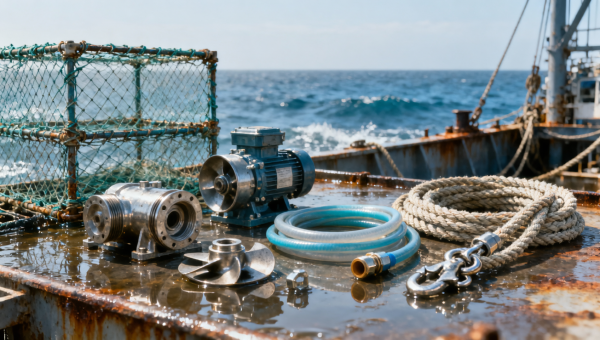
In harsh saltwater operations, Fishery Supplies often fail faster than expected, driving hidden costs across Aquaculture Systems and Aqua Tech workflows. For Industrial Buyers, operators, and technical evaluators in industrial agriculture, understanding which components wear out first is essential to safer uptime, smarter procurement, and better lifecycle planning across demanding marine environments.
Saltwater accelerates corrosion, abrasive wear, UV degradation, fatigue cracking, and seal failure at a pace many inland or freshwater operators underestimate. In commercial fishery and aquaculture settings, the fastest-wearing supplies are rarely the most expensive line items individually, yet they often create the largest operational disruption when they fail without warning.
For procurement teams, project managers, safety personnel, and finance approvers, the practical question is not simply which parts break, but which wear categories generate the highest replacement frequency, labor burden, contamination risk, and downtime exposure over a 12–36 month operating cycle.
This article examines the fishery supplies that typically wear out fastest in saltwater use, why they fail, how to evaluate service life more accurately, and what operators can do to reduce replacement costs while maintaining compliance, safety, and productivity in industrial marine systems.
High-Wear Fishery Supplies in Saltwater Environments
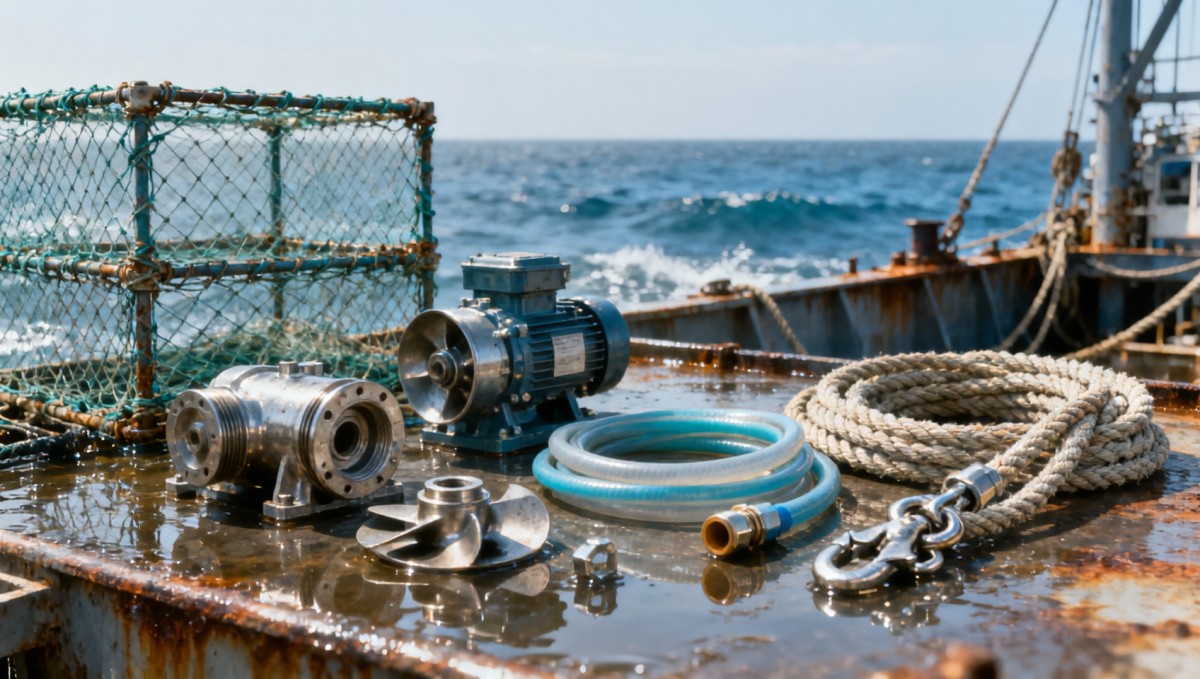
In offshore cages, nearshore farms, hatchery seawater loops, and fish handling facilities, the fastest-wearing components usually sit at the intersection of salt exposure, movement, pressure, and biofouling. These are not always complex assemblies. In many cases, they are routine consumables or semi-consumables that experience daily contact with brine, fish waste, sand, UV, and cyclic loading.
The most common high-wear categories include nets, ropes, mooring lines, shackles, impellers, pump seals, hoses, nozzles, bearings, sacrificial anodes, valves, gaskets, and electrical connectors. Depending on duty cycle, some parts may require inspection every 7–14 days and replacement in as little as 3–12 months, while heavier marine-grade assemblies may last 18–36 months.
Operators often focus on visible metal corrosion, but polymer fatigue can be just as costly. UV-exposed floats, hose jackets, cable insulation, and net coatings may lose flexibility long before complete breakage occurs. Once stiffness increases, microcracking, leakage, snagging, and failure rates tend to rise sharply during storms or peak harvest periods.
For technical evaluators, failure mode mapping is more useful than simple product categorization. A stainless fitting may fail due to crevice corrosion, while a rubber seal may fail due to heat, salinity, and cleaning chemical exposure. Two parts with similar purchase prices can produce radically different total ownership costs if one requires 4 times more shutdown labor.
Most frequently replaced items by wear mechanism
The table below summarizes common fast-wearing fishery supplies, typical wear drivers, and practical inspection intervals used in marine operations.
A key takeaway is that high-wear supplies span both mechanical and structural systems. Buyers who track only major equipment depreciation often miss the cumulative cost of mid-life consumables, which can represent a significant share of annual maintenance spend in intensive aquaculture operations.
Priority wear checkpoints
- Check net twine thinning, torn knots, and fouling load before oxygen transfer or fish welfare is affected.
- Monitor pumps for vibration, heat, and reduced flow, especially when salinity and suspended solids fluctuate seasonally.
- Inspect elastomers after each aggressive cleaning cycle, as disinfectants can shorten service life by 20%–40% in some use cases.
- Review mooring hardware after wave events, not only on calendar schedule, because overload damage often begins invisibly.
Why Saltwater Destroys Components Faster Than Buyers Expect
Saltwater wear is rarely caused by one factor alone. In most fishery systems, degradation results from 4 combined stresses: chloride corrosion, mechanical abrasion, biological fouling, and cyclic loading. When these stresses act together, service life can fall far below catalog estimates developed under controlled or intermittent-use conditions.
Chloride ions are especially aggressive toward many metals, including lower-grade stainless alloys under crevice or low-oxygen conditions. A fitting that appears acceptable in dry storage may begin pitting within weeks when mounted in splash zones, submerged joints, or poorly drained housings. Once pitting starts, crack initiation risk rises and cleaning becomes less effective.
Biofouling compounds the problem. Barnacles, algae, and microbial films add roughness, trap moisture, increase drag, and create local micro-environments that accelerate corrosion. In nets and intake systems, fouling can also reduce flow efficiency by 10%–30%, forcing pumps to work harder and increasing energy use alongside wear rates.
Mechanical wear is often underestimated in fishery supplies because the motion involved may be small but continuous. A rope rubbing only a few millimeters against a guide point over thousands of wave cycles can lose strength much faster than visual checks suggest. The same applies to hoses flexing repeatedly near clamps or seals operating under slight misalignment.
Environmental variables that shorten service life
Procurement and site teams should compare local operating conditions before selecting replacement intervals or materials. The matrix below helps align saltwater severity with wear expectations.
The conclusion for buyers is straightforward: a marine-grade label alone is not enough. Service life depends heavily on the actual combination of salinity, movement, fouling, pressure, temperature, and maintenance chemistry at the installation site.
Common evaluation mistake
One recurring error is selecting components solely by initial material grade while ignoring joint design, drainage, access for rinsing, and replacement labor time. In practice, a slightly higher-cost assembly with easier inspection and 30-minute replacement time may outperform a cheaper option that requires a 4-hour shutdown and confined access work.
How to Select Longer-Lasting Fishery Supplies for Marine Duty
A better procurement strategy starts with grouping supplies by failure consequence rather than by department. For example, a low-cost gasket on an ozone contact line or seawater pump can trigger water loss, hygiene issues, or fish stress that far outweigh the part price. Criticality ranking should therefore cover safety, biosecurity, production continuity, and replacement labor.
For metal components, buyers should compare not only alloy family but also whether the part will be submerged, splashed, buried in deposits, or exposed to dissimilar metals. For polymers and elastomers, the real screening questions are resistance to UV, salt, cleaning chemicals, compression set, flex cycles, and operating temperature range, often from 5°C to 35°C in fishery applications.
Documentation matters. Technical teams should request material declarations, maintenance guidance, recommended inspection intervals, and compatibility notes for chemicals used in cleaning-in-place or sanitation routines. This is especially important in integrated aquaculture systems where a single unsuitable seal or hose can affect water quality control and downstream equipment reliability.
Finance approvers should evaluate replacement frequency, spare stocking needs, and downtime cost together. A part with a unit cost 15% higher may still reduce annual cost if it doubles maintenance interval or cuts emergency callouts from 6 per year to 2. Total cost of ownership is the more defensible metric for B2B purchasing decisions.
Practical supplier evaluation criteria
- Confirm the supply is specified for continuous saltwater duty, not occasional marine exposure.
- Request expected wear points, not only headline service-life claims.
- Check if spare kits are available in 6-, 12-, or 24-month maintenance bundles.
- Ask for installation torque, seal compression, or tension guidance to reduce premature failure.
- Review whether field replacement requires special tools, calibration, or shutdown isolation steps.
Selection priorities by component type
For nets and flexible components, abrasion resistance and UV stability often outrank nominal tensile strength. For pumps and valves, hydraulic stability, seal design, and solids tolerance are usually more predictive of life than motor rating alone. For mooring hardware, fatigue resistance, anti-chafe measures, and corrosion pairing deserve equal attention.
Where operational risk is high, many sites benefit from a 3-tier stocking model: critical spares on site, fast-moving wear items on monthly reorder, and slower structural replacements on quarterly planning cycles. This reduces both overstocking and emergency procurement under poor weather or transport constraints.
Maintenance Planning, Inspection Routines, and Replacement Control
Even the best fishery supplies fail early when maintenance routines are reactive. In saltwater operations, the difference between a controlled replacement and a breakdown event often comes down to inspection discipline. A 10-minute visual and tactile check can prevent a multi-hour outage if it catches seal seepage, chafe marks, hot bearings, or corroded terminals before load increases.
A practical schedule uses different frequencies for different wear modes. Operators may inspect exposed nets and hoses weekly, pumps and seals every 2–4 weeks, and mooring hardware monthly plus after severe weather. Electrical connectors, junction boxes, and cable penetrations should also be reviewed at fixed intervals because salt creep can develop long before full electrical failure.
Condition-based maintenance is especially useful where access is difficult. Flow drop, vibration increase, pressure drift, motor current rise, or recurring leaks are measurable indicators that a wear part is approaching end of life. For many facilities, tracking just 5 indicators across the most critical systems provides a strong early-warning framework without excessive complexity.
Documentation should be standardized. When teams record date, location, wear symptom, action taken, and probable cause, replacement forecasting improves quickly. Within 2 or 3 maintenance cycles, procurement teams can often identify which supplies are under-specified, incorrectly installed, or exposed to unexpected site conditions.
Example inspection and replacement planning table
The following table shows a simple planning model that operations, quality, and project teams can adapt for marine fishery assets.
This type of table turns maintenance into a procurement tool. Instead of buying the same parts reactively, teams can predict demand, allocate service windows, and reduce urgent freight, which is often one of the hidden cost multipliers in remote aquaculture and fishery sites.
Common maintenance mistakes
- Rinsing exposed equipment irregularly, allowing salt deposits to harden around seals and fasteners.
- Replacing only the failed part while leaving worn mating components in service.
- Over-tightening clamps, bolts, or compression seals and shortening elastomer life.
- Using inland cleaning chemicals or lubricants without checking marine compatibility.
Procurement, Risk Control, and FAQ for Decision-Makers
From a B2B perspective, the fastest-wearing fishery supplies should be managed as a risk-controlled category, not as miscellaneous maintenance items. If a site depends on continuous circulation, oxygenation, feeding, or containment performance, then wear parts directly affect production output, compliance exposure, and worker safety. Procurement policies should reflect that operational reality.
A sound sourcing approach combines approved material lists, site-specific replacement intervals, spare holding rules, and acceptance checks on arrival. Quality and safety teams should verify packaging condition, traceability where relevant, dimensional fit, and surface integrity before parts enter critical service. This is particularly important for seals, hoses, and connectors that may degrade during storage.
Project managers overseeing new installations or retrofits should also ensure that marine wear parts are considered early in design reviews. Access for inspection, part standardization across pumps or lines, and realistic replacement clearances can reduce future maintenance hours by 15%–25% in many facilities, especially where shutdown coordination is difficult.
For organizations evaluating suppliers or publishing technical market intelligence, the most credible signals are practical ones: transparent materials information, realistic service-life guidance, stocked replacement kits, and evidence that the supplier understands saltwater duty rather than generic industrial use.
FAQ: Questions buyers and operators commonly ask
Which fishery supplies should always be stocked on site?
At minimum, most marine operations should hold fast-moving seals, gaskets, hose assemblies, clamps, electrical connectors, net repair materials, and critical pump spares. A practical target is enough stock for 30–90 days of normal wear, adjusted for site remoteness, weather delays, and supplier lead times.
How often should marine wear parts be reviewed by procurement teams?
Monthly review is suitable for high-use sites, while smaller operations may use quarterly analysis. The key is to compare actual replacement frequency against planned service life. If one category exceeds forecast by more than 20%, it usually signals a mismatch in material, installation, or operating conditions.
Are higher-grade materials always worth the premium?
Not always. Premium materials deliver value when the failure mode is clearly material-driven. If wear is caused mainly by poor alignment, excessive vibration, chafe, or improper cleaning, a costlier material alone may not solve the problem. Root-cause review should come before specification upgrades.
What is the fastest way to reduce unplanned failures?
Focus first on the top 5 repeat-failure items, define visual inspection criteria, and standardize replacement kits. In many operations, this simple step reduces emergency downtime within one or two maintenance cycles because teams no longer wait for complete failure before acting.
In harsh saltwater use, the fishery supplies that wear out fastest are typically the parts exposed to continuous chloride attack, abrasion, UV, fouling, and cyclic stress: nets, seals, hoses, pump internals, connectors, and mooring hardware. Their importance lies not just in replacement cost, but in their ability to trigger downtime, safety exposure, and reduced production efficiency across aquaculture systems.
For industrial buyers, technical reviewers, and operating teams, better outcomes come from matching materials to real marine duty, setting inspection intervals by wear mechanism, and planning spares around criticality rather than convenience. If you need deeper guidance on aquaculture wear parts, procurement evaluation, or marine equipment lifecycle planning, contact us to discuss your application, request a tailored assessment, or explore more fishery and aqua tech solutions.
Related Intelligence
- Commercial FishingFishery Equipment Choices That Raise Maintenance Costs LaterFishery Equipment buying mistakes can drive hidden maintenance costs across Industrial Farming. Learn how processing machinery fit and Supply Chain Transparency reduce downtime and protect margins.
- Commercial FishingFishery supplies that wear out fastest in harsh saltwater useFishery Supplies in harsh saltwater wear out fast across Aquaculture Systems and Aqua Tech. Learn what fails first, why Industrial Buyers should care, and how smarter selection cuts downtime and cost.
- Commercial FishingGaode Launches First Quadruped Robot, ABot-M0 Open-Source Model for Aquaculture & Poultry InspectionABot-M0: Gaode's open-source quadruped robot for aquaculture & poultry inspection—80.5% task success, field-tested in Brazil & Vietnam. Discover how it transforms autonomous farm inspections.
The Morning Broadsheet
Daily chemical briefings, market shifts, and peer-reviewed summaries delivered to your terminal.
