
Biochemical engineering bottlenecks in scale-up production
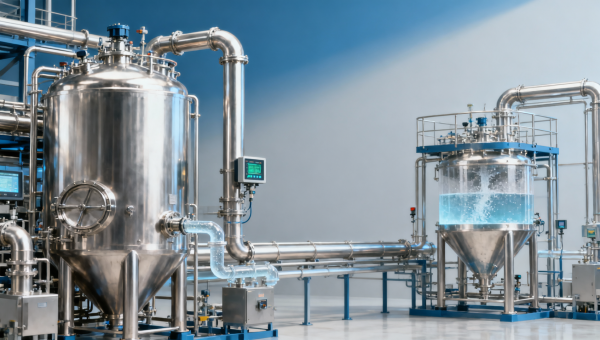
From Biochemical Engineering constraints to compliance risks, scale-up production remains a defining challenge across industrial agriculture, agrochemicals, and aquaculture systems. For industrial buyers, technical evaluators, and project leaders navigating agricultural tech, aqua tech, fishery supplies, feed formulation, and agri machinery integration, understanding these bottlenecks is essential to reducing cost, protecting quality, and accelerating reliable commercialization.
The core issue is not whether a biochemical process works in the lab, but whether it can be reproduced at commercial scale without losing yield, quality, safety, or regulatory control. In most cases, the biggest scale-up production bottlenecks come from mass transfer limits, inconsistent raw materials, bioreactor control challenges, downstream processing inefficiencies, contamination risk, and compliance gaps. For decision-makers, this means scale-up should be judged as a full-system engineering and risk-management problem—not simply a larger version of bench-top success.
Why scale-up production fails even when the lab process looks promising
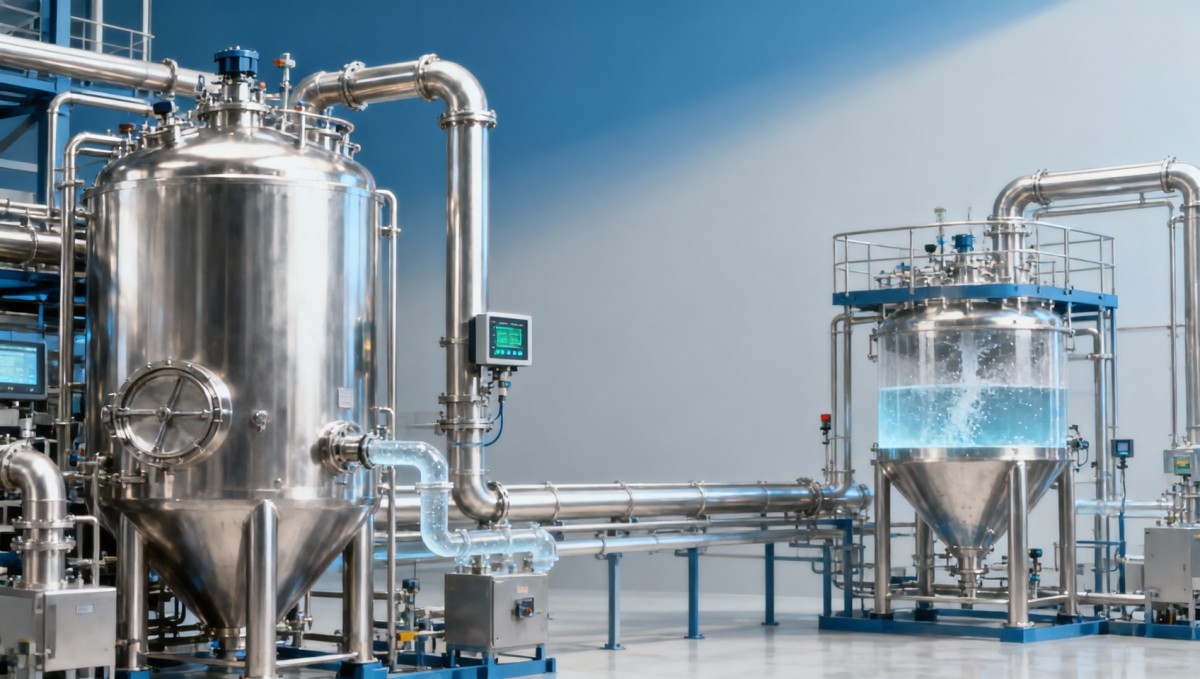
One of the most common misconceptions in biochemical engineering is that a process proven at laboratory scale will naturally translate into commercial output. In reality, scale changes the physical environment of the process. Mixing behavior, oxygen transfer, heat removal, shear stress, residence time distribution, and sensor response all behave differently as vessel volume increases.
For operators and technical reviewers, this is where the first major bottleneck appears: the biology or chemistry may still be valid, but the process window becomes narrower and harder to control. A fermentation line producing enzymes, feed additives, bio-extracts, or intermediates may show excellent titers in pilot work, yet struggle in large reactors because cells encounter uneven nutrient exposure, dissolved oxygen gradients, or thermal variation.
For business leaders and financial approvers, the consequence is straightforward. Scale-up failure is expensive because it usually appears after significant capital has already been committed to equipment, validation, staffing, and supply contracts. That is why early scale-up assessment should focus on robustness, not just peak laboratory performance.
What are the biggest biochemical engineering bottlenecks in commercial scale-up?
The most important bottlenecks typically fall into six operational categories.
1. Mass transfer and oxygen limitation
In fermentation and bioprocessing, oxygen transfer is a classic scale-up constraint. What works in a small vessel with high relative surface area and rapid mixing often becomes oxygen-limited in larger tanks. This can reduce product formation, shift metabolic pathways, and increase batch variability.
2. Mixing and concentration gradients
Larger reactors are more prone to dead zones and uneven mixing. Cells or reactants may experience localized pH shifts, nutrient spikes, substrate inhibition, or inconsistent exposure to antifoam and additives. In agrochemical intermediates, bio-based ingredients, and aquafeed inputs, these fluctuations can affect both output and specification compliance.
3. Heat transfer challenges
As process volume increases, heat removal becomes more difficult. Exothermic reactions or active microbial metabolism can create temperature gradients that were insignificant at bench scale. Even small temperature deviations can alter product quality, impurity profiles, or organism viability.
4. Raw material inconsistency
In primary industries and biochemical production, feedstocks are rarely perfectly uniform. Agricultural substrates, fermentation nutrients, natural extracts, and biologically derived inputs often vary by season, geography, moisture level, impurity load, or microbial burden. At small scale, teams may compensate manually. At commercial scale, that variability can destabilize the entire process.
5. Downstream processing inefficiency
Many scale-up programs underestimate downstream bottlenecks. Separation, filtration, centrifugation, drying, solvent recovery, purification, and waste handling often become the true capacity limit. A process may produce acceptable upstream output, but if harvest and purification cannot keep pace economically, the business case collapses.
6. Contamination, cleaning, and compliance risk
Commercial facilities must manage CIP/SIP performance, hygienic design, environmental monitoring, traceability, and regulatory documentation. In API-adjacent, feed, aquaculture, and bio-extract applications, contamination events or cleaning failures can trigger batch rejection, recalls, or certification issues. Scale amplifies exposure to these risks.
Which bottlenecks matter most to buyers, engineers, and project leaders?
Different stakeholders look at the same scale-up problem through different lenses, so a useful evaluation framework must align technical and commercial concerns.
For technical evaluators and engineers
The priority is process control under real operating conditions. They need evidence that critical parameters such as dissolved oxygen, pH, temperature, agitation, feed rate, pressure, viscosity, and microbial load remain stable across batch sizes. They also care about scale-up criteria, sensor quality, automation logic, and whether the pilot data truly reflects full production conditions.
For quality and safety managers
The key questions are traceability, reproducibility, contamination control, deviation handling, and regulatory readiness. A scale-up process that increases output but weakens quality assurance is not truly scalable.
For procurement teams and enterprise decision-makers
The central concern is reliability. They want to know whether the supplier or project can deliver specification-compliant output on time, at predictable cost, and with acceptable regulatory exposure. Yield means little if batch rejection, downtime, raw material volatility, or utility consumption make supply unstable.
For project managers and capital approvers
The decision often depends on whether the scale-up roadmap is realistic. That includes pilot validation quality, equipment fit, utility loads, commissioning time, operator training, spare parts access, and the likely timeline to commercial qualification.
How to evaluate whether a scale-up process is truly ready for commercialization
Readers assessing a new process, supplier, or plant expansion should avoid relying on headline claims such as “pilot proven” or “commercially scalable.” Instead, they should test readiness using practical indicators.
Look for demonstrated process robustness
A scalable process should perform consistently across multiple runs, not just one optimized demonstration batch. Ask for evidence of batch-to-batch repeatability, process capability, and tolerance to normal feedstock variation.
Check whether critical scale-up parameters were defined early
Strong teams identify the true engineering constraints before commercial investment. Depending on the application, this may include kLa, power input, Reynolds behavior, shear sensitivity, solids loading, filtration flux, or drying limitations. If these are not clearly defined, the process is more vulnerable than it appears.
Review downstream economics, not only upstream yield
A process with strong fermentation performance but expensive purification may not be commercially viable. Evaluate the full manufacturing chain, including utilities, labor intensity, cleaning time, consumables, waste treatment, and product loss during recovery.
Assess digital monitoring and control maturity
Commercial scale-up increasingly depends on automation, sensor reliability, historian data, alarm logic, and predictive maintenance. In aquaculture systems and bio-processing environments, weak instrumentation often turns manageable process variation into costly instability.
Confirm regulatory and documentation readiness
Where GMP, FDA, EPA, or environmental controls apply, scale-up readiness also means documentation readiness. This includes validation protocols, deviation procedures, change control, supplier qualification, and traceability of raw materials and intermediates.
Practical ways to reduce biochemical engineering bottlenecks before they become commercial failures
The most effective scale-up strategies are proactive. They address the root causes before full-capacity launch.
Use pilot design that reflects production reality
Pilot systems should mimic commercial hydrodynamics, control logic, cleaning routines, and raw material conditions as closely as possible. A pilot setup designed only for technical success can create misleading confidence.
Build scale-up around worst-case conditions
Teams should test process resilience under realistic stress conditions: variable feedstock quality, utility fluctuation, delayed harvesting, contamination pressure, longer run times, and seasonal environmental shifts. This is especially relevant in agricultural and marine-linked production systems.
Integrate upstream and downstream teams early
Many bottlenecks emerge because process development, plant engineering, and purification teams work in sequence rather than together. Commercial success improves when upstream biology, equipment selection, downstream separation, and quality systems are designed as one operating model.
Standardize raw material qualification
For feed, bio-extract, and fermentation-based products, supplier variability can undermine scale-up as much as reactor design. Clear input specifications, incoming inspection, and secondary sourcing strategies reduce that risk.
Invest in operator readiness
Even well-designed scale-up programs fail when operators lack training in process response, alarm handling, contamination control, and cleaning verification. Human execution remains a major determinant of commercial consistency.
What this means for industrial agriculture, agrochemicals, and aquaculture systems
In these sectors, scale-up production is rarely just a manufacturing issue. It affects market access, procurement confidence, environmental compliance, and capital planning. A biochemical engineering bottleneck can delay product registration, disrupt feed supply, reduce aquaculture system reliability, or weaken confidence in a machinery-linked processing line.
For industrial buyers and strategic partners, the best opportunities are often found not in the processes with the most impressive lab data, but in the ones with the clearest evidence of scale discipline. Commercially credible operations usually show balanced performance across engineering control, raw material governance, downstream recovery, quality assurance, and compliance management.
In other words, successful scale-up production depends on repeatability more than novelty. Markets may reward innovation, but operations reward control.
Conclusion: scale-up success depends on engineering realism, not laboratory optimism
Biochemical engineering bottlenecks in scale-up production usually come from predictable sources: transfer limits, process instability, feedstock variability, downstream constraints, and compliance complexity. What separates successful commercialization from costly delay is the ability to identify these constraints early and manage them as an integrated business and technical challenge.
For researchers, operators, technical evaluators, and enterprise decision-makers, the right question is not “Can this process scale?” in abstract terms. The better question is “Can this process scale while maintaining quality, cost control, compliance, and supply reliability?” That standard leads to better investment decisions, stronger supplier evaluation, and more resilient industrial production.
Related Intelligence
- Custom SynthesisANVISA Extends Custom Synthesis Traceability to 3rd-Tier SuppliersANVISA Extends Custom Synthesis Traceability to 3rd-Tier Suppliers—key update for API importers, CDMOs & global suppliers entering Brazil. Act now.
- Custom SynthesisANVISA Extends Custom Synthesis API Traceability to 3-Tier Upstream SuppliersANVISA extends Custom Synthesis API traceability to 3-tier upstream suppliers—key for pharma importers, CMOs & supply chain teams. Act now to avoid suspensions.
- Custom SynthesisANVISA Expands Custom Synthesis Review to 3-Tier Starting Material TraceabilityANVISA's new 3-tier traceability rule for custom synthesis imports demands full upstream documentation—act now to avoid delays, rejections, and compliance risks in Brazil.
The Morning Broadsheet
Daily chemical briefings, market shifts, and peer-reviewed summaries delivered to your terminal.
