
Why agricultural tech projects fail after a strong pilot
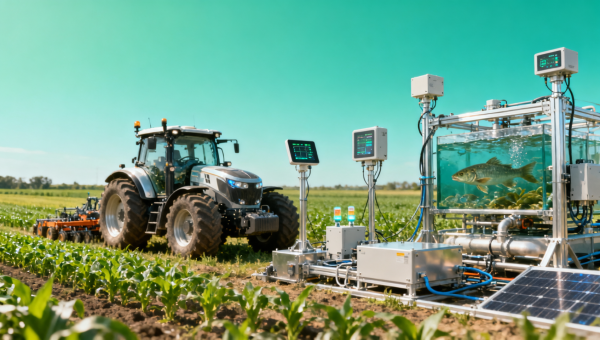
Why do so many agricultural tech initiatives collapse after a promising pilot? In industrial agriculture, the answer is rarely that the technology “didn’t work.” More often, projects fail because a successful pilot proved only technical feasibility in a controlled environment—not commercial readiness across real-world operations, procurement constraints, compliance demands, and long-term ownership costs. For technical evaluators, project leaders, finance teams, and industrial buyers, the key question is not whether a system can perform once, but whether it can scale reliably, integrate with existing workflows, and survive budget, regulatory, and operational scrutiny.
Why a strong pilot is often a poor predictor of full-scale success
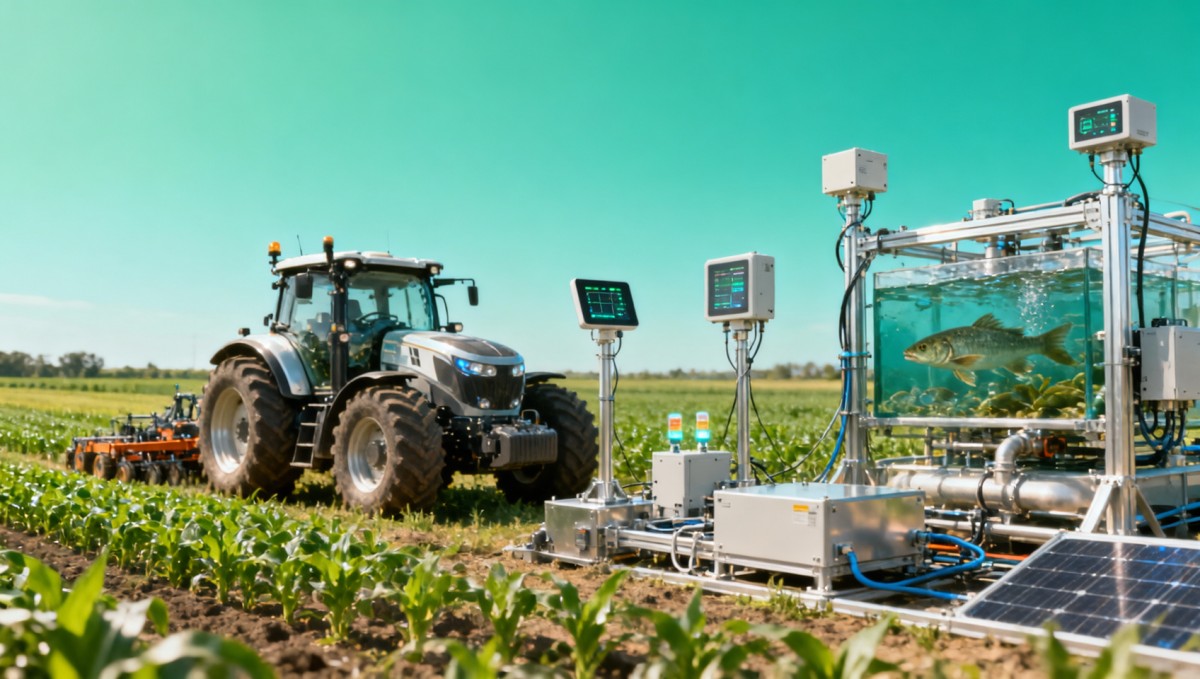
Agricultural tech pilots are designed to reduce uncertainty, but many remove too much of the real operating complexity. In a pilot, the site is usually handpicked, the vendor provides extra support, users are highly attentive, and performance is tracked closely over a short period. Under these conditions, agri machinery, aquaculture systems, monitoring platforms, or agrochemical dosing technologies can look highly promising.
The problem begins when organizations assume that pilot success automatically validates deployment at scale. It does not. A pilot may demonstrate that a system can work, but not that it will work consistently across multiple farms, climates, crop cycles, operator skill levels, maintenance regimes, or procurement structures. This gap between pilot performance and operational reality is where many agricultural tech projects fail.
For enterprise decision-makers, the practical lesson is simple: a pilot should be treated as a structured test of scale assumptions, not as proof that rollout is ready.
The most common reasons agricultural tech projects fail after the pilot stage
1. The pilot solved a narrow technical problem, but not the business problem.
Many teams pilot technology to improve one visible metric—yield, feed conversion, spray accuracy, water quality, labor savings, or downtime reduction. But once procurement, finance, operations, and quality teams review the project, they often find that the broader business case is weak. A machine may improve throughput but increase maintenance complexity. A digital platform may produce better data but not enough savings to justify annual licensing and integration costs.
2. Scale exposes infrastructure weaknesses.
A system that performs well on one site may fail across larger operations because of power instability, poor connectivity, water variability, inconsistent input quality, storage limitations, or uneven operator practices. This is especially common in aquaculture systems, automated feeding, precision spraying, post-harvest processing, and sensor-based farm management tools.
3. Procurement was not aligned from the beginning.
Industrial buyers and procurement teams often enter too late, after technical teams are already convinced by pilot results. At that point, difficult questions emerge: Are spare parts locally available? Is the supplier financially stable? Can the OEM meet documentation and traceability requirements? Are there multiple sourcing options? What is the total landed cost over five years? If these questions were not addressed during the pilot, approval frequently stalls.
4. Compliance and safety requirements were underestimated.
Technologies connected to agrochemicals, feed processing, water treatment, biologics, or regulated production environments face strict operational and documentation expectations. A pilot may run under special supervision, but scaled deployment must satisfy routine quality control, environmental standards, worker safety procedures, and, where relevant, GMP, EPA, or FDA-linked requirements. If compliance work starts after the pilot, timelines and budgets often collapse.
5. Operator adoption was mistaken for operator readiness.
In pilots, vendors often train a small group of motivated users. At scale, however, a project depends on shift-based operators, field technicians, maintenance teams, and local supervisors using the system correctly every day. If a technology requires advanced calibration, frequent software adjustments, or strict handling discipline, adoption can deteriorate quickly without robust SOPs and support structures.
6. The economics changed after pilot support disappeared.
During the pilot, suppliers may subsidize installation, provide free troubleshooting, or assign engineering staff on-site. Once the project transitions to commercial deployment, those supports disappear and the true operating cost becomes visible. This is a major reason promising agri tech solutions lose momentum after internal review.
What technical evaluators and project leaders should test before approving rollout
To move from pilot success to scalable success, technical and project teams need to expand the evaluation framework. The right question is not “Did the pilot work?” but “What conditions made it work, and are those conditions repeatable?”
Test repeatability across variable conditions.
A credible agricultural tech assessment should include different production conditions, operator groups, environmental ranges, and input quality levels. If results depend on ideal settings, the project is fragile.
Validate maintainability, not just performance.
Many systems fail not because their core engineering is weak, but because calibration, cleaning, repair, or consumables replacement are too complex for real operating environments. Maintenance burden should be measured as carefully as output performance.
Assess integration requirements early.
New equipment or platforms rarely operate in isolation. They affect ERP systems, farm management software, chemical handling protocols, warehouse processes, QA records, and purchasing cycles. Integration friction is one of the biggest hidden costs in scaling agricultural technology.
Define success metrics that matter to finance and operations.
Technical KPIs alone are not enough. A rollout case should include payback period, sensitivity to downtime, service model assumptions, labor impact, compliance cost, and replacement cycle risk.
Pressure-test supplier capability.
A strong demonstration is not the same as a strong supply partner. Buyers should verify manufacturing consistency, after-sales coverage, documentation quality, training capacity, and long-term support commitments. This is especially important for industrial buyers sourcing specialized agri machinery, aquaculture systems, or regulated processing technologies.
How enterprise buyers can tell whether a pilot is genuinely ready to scale
For business leaders and financial approvers, the decision should not rely on enthusiasm from a pilot team alone. A rollout is more likely to succeed when several conditions are already visible.
There is a clear operational owner.
Projects often fail in the transition from innovation team to operations team. If no one owns uptime, training, compliance, supplier management, and budget accountability after the pilot, rollout risk rises sharply.
The total cost of ownership is transparent.
This includes not only equipment price, but installation, validation, utilities, consumables, spare parts, software, service contracts, retraining, and compliance documentation. If cost visibility is incomplete, post-pilot enthusiasm may be misleading.
The rollout model is standardized.
If each site requires custom engineering, custom training, and custom workflows, scaling becomes slow and expensive. Technologies that scale well usually have repeatable deployment packages, documented SOPs, and measurable onboarding timelines.
Risk scenarios have been modeled.
What happens if a critical part is delayed? If connectivity drops? If a site lacks trained technicians? If environmental conditions shift? Mature projects anticipate these situations before capital is committed.
Success has been translated into procurement language.
A rollout case should be understandable not only to agronomists and engineers, but also to sourcing, finance, safety, and executive stakeholders. If the case depends on technical interpretation alone, internal approval becomes much harder.
A practical framework to prevent post-pilot failure
Organizations that consistently scale agricultural innovation usually follow a more disciplined path than “pilot first, rollout fast.” A stronger framework includes:
Stage 1: Feasibility.
Confirm that the technology works in the target use case.
Stage 2: Operational validation.
Test under realistic staffing, environmental, maintenance, and input conditions.
Stage 3: Commercial validation.
Evaluate supplier strength, total cost of ownership, compliance burden, and procurement fit.
Stage 4: Replication readiness.
Document SOPs, training requirements, spare parts plans, service levels, and site selection criteria.
Stage 5: Controlled scale-up.
Expand in phases, measuring not just output gains but operational stability and support load.
This staged approach helps organizations identify whether a project is truly scalable, merely technically interesting, or only viable under exceptional pilot conditions.
Conclusion: pilot success matters, but scale readiness matters more
A strong pilot is valuable, but it is only the beginning of agricultural technology validation. Most agri tech projects fail after the pilot not because the original idea lacked merit, but because organizations mistake early performance for deployment readiness. In industrial agriculture, success depends on more than proof of concept. It requires scalable agri machinery, dependable aquaculture systems, realistic operator adoption, compliance discipline, supplier resilience, and procurement alignment.
For technical evaluators, project managers, finance teams, and enterprise buyers, the most useful mindset is this: do not ask whether the pilot succeeded—ask whether the business, operational, and supply conditions that enabled that success can be repeated at scale. That is the real threshold between a promising trial and a durable investment.
Related Intelligence
- Smart GreenhouseVAST-2026 Climate Testing Mandatory for Smart Greenhouse Imports to VietnamVAST-2026 climate testing is now mandatory for smart greenhouse imports to Vietnam — learn how this 28-day requirement impacts delivery, compliance & market access.
- Smart GreenhouseVAST-2026 Climate Test Enforced for Smart Greenhouses in VietnamVAST-2026 Climate Test is now mandatory for smart greenhouses in Vietnam — learn how this new VAST-2026 requirement impacts exporters, distributors & certifiers.
- Smart GreenhouseVAST-2026 Climate Test for Smart Greenhouses Effective Jul 2026VAST-2026 Climate Test for Smart Greenhouses launches July 2026—mandatory for all imports to Vietnam. Ensure compliance now to avoid delays & secure market access.
The Morning Broadsheet
Daily chemical briefings, market shifts, and peer-reviewed summaries delivered to your terminal.
