
What industrial buyers miss when comparing agrochemicals
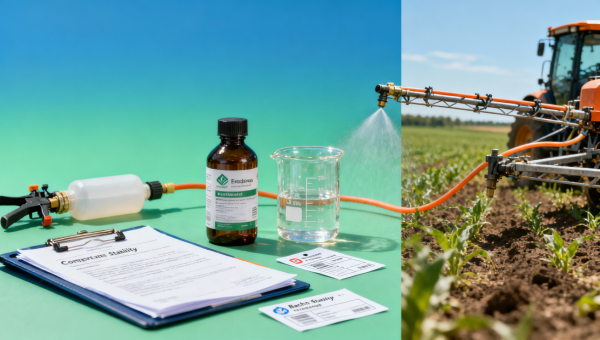
Many industrial buyers compare agrochemicals by price, assay, or lead time alone—yet that approach often misses the factors that determine whether a product will actually perform, remain compliant, and protect margin over time. In practice, the best purchasing decisions come from looking beyond the headline specification sheet and asking harder questions about formulation behavior, regulatory fit, manufacturing consistency, traceability, application compatibility, and downstream operational risk. For procurement teams, technical evaluators, QA managers, and project leads, smarter sourcing starts with understanding total performance in the real production environment, not just the quoted unit cost.
Why price, assay, and lead time are not enough
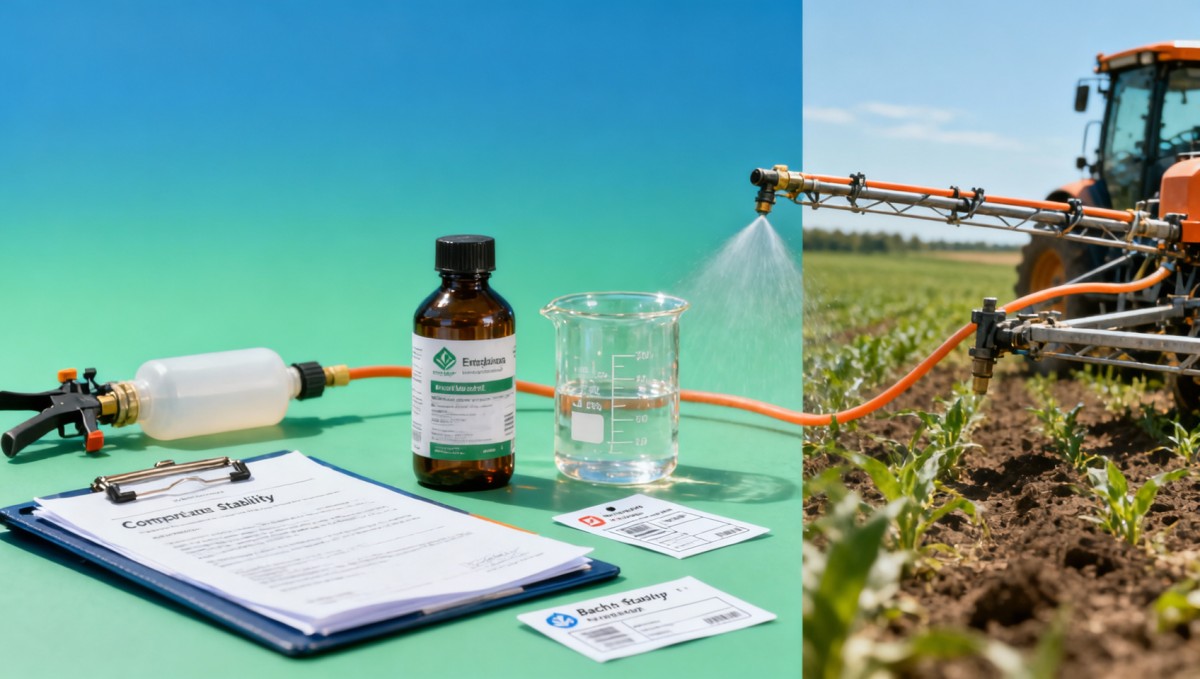
When industrial buyers compare agrochemicals, the first screen is usually simple: active content, price per kilogram or liter, minimum order quantity, and delivery schedule. Those metrics matter, but they rarely tell the full story. Two products with the same assay can behave very differently in storage, tank mixes, field application systems, feed processing environments, aquaculture operations, or integrated agricultural programs.
The core search intent behind this topic is practical and commercial: buyers want to know what hidden variables affect long-term value, technical suitability, compliance, and risk when evaluating agrochemical suppliers and products. They are not looking for basic definitions. They want a better decision framework.
What often gets missed is that procurement failure usually does not begin with the invoice price. It begins with an overlooked mismatch between the product and the operating system around it. That mismatch may show up later as reduced efficacy, equipment fouling, residue issues, registration problems, worker safety concerns, unstable shelf life, reprocessing costs, rejected shipments, or inconsistent field performance.
For decision-makers, the right question is not “Which agrochemical is cheapest today?” It is “Which option delivers the lowest technical and commercial risk across its full use cycle?”
What industrial buyers should evaluate before approving an agrochemical supplier
If the goal is a reliable sourcing decision, buyers should compare agrochemicals across five practical dimensions.
1. Regulatory fit in the target market
A product may be technically sound yet commercially unusable if its registration status, documentation package, impurity profile, labeling format, or import compliance does not match the destination country or end-use sector. This is especially important for multinational agricultural groups, feed processors, aquaculture operators, and contract production systems working across multiple jurisdictions.
Key questions include:
- Is the product registered or legally usable in the destination market?
- Do specification limits align with local residue, environmental, and worker safety requirements?
- Can the supplier provide current SDS, COA, TDS, batch records, and compliance statements?
- Are there regulatory restrictions on formulation type, packaging, transport class, or storage conditions?
2. Formulation stability and real-world performance
Industrial buyers sometimes focus heavily on active ingredient percentage while underestimating the importance of formulation quality. Yet formulation often determines dispersibility, suspension stability, compatibility, persistence, application uniformity, and performance under variable environmental conditions.
This matters in large-scale agriculture, feed formulation systems, and aquaculture treatment programs where product instability can disrupt dosing accuracy or create uneven treatment outcomes. A lower-cost product with poor storage stability or inconsistent particle distribution may create a much higher total cost in use.
Ask for evidence on:
- Shelf-life stability under expected storage conditions
- Performance in hard water or variable pH environments
- Tank-mix or system compatibility
- Foaming, sedimentation, caking, or separation tendencies
- Application performance across climate and equipment variables
3. Manufacturing consistency and batch-to-batch control
One successful batch does not prove supplier reliability. Industrial users need confidence that future lots will match the validated standard. This is where manufacturing discipline, process control, and QA maturity become decisive.
Technical evaluators and quality managers should look beyond a single certificate and examine whether the manufacturer has stable process controls, validated analytical methods, retained sample procedures, deviation handling, and impurity monitoring. Batch variability can affect efficacy, safety, downstream blending, and even equipment performance.
4. Traceability and supply chain transparency
In regulated and risk-sensitive sectors, traceability is no longer optional. Buyers increasingly need to know where raw materials originated, how intermediates were handled, whether toll manufacturing is involved, and which site actually produced the commercial batch.
Supply chain transparency reduces the risk of quality disputes, counterfeit substitution, undocumented process changes, and disruption from trade restrictions or logistics bottlenecks. It also helps finance and procurement teams evaluate continuity risk, not just transaction cost.
5. Fit with the full operating system
Agrochemicals do not operate in isolation. They interact with sprayers, dosing systems, irrigation infrastructure, aquaculture systems, feed processing lines, storage facilities, operator routines, and environmental conditions. A product that is acceptable in lab testing may create unexpected difficulties in industrial deployment.
This is why end-user and operator input matters. Procurement should not evaluate products without technical, QA, and operations feedback. The best sourcing decisions are cross-functional.
Hidden cost drivers that distort “cheap” agrochemical offers
Many low-price offers become expensive after implementation. Industrial buyers should actively quantify the hidden costs that do not appear in the initial quotation.
- Application inefficiency: Poor dispersion, nozzle blockage, sedimentation, or uneven delivery can increase use rates or reduce treatment effectiveness.
- Downtime and equipment cleaning: Incompatible or unstable formulations may create residue buildup, corrosion concerns, or additional maintenance cycles.
- Quality failures: Inconsistent product quality can force re-testing, segregation, rework, or rejection of treated output.
- Regulatory exposure: Missing or weak documentation can delay customs clearance, audits, approvals, or customer acceptance.
- Inventory loss: Shorter effective shelf life or poor packaging integrity can increase write-offs.
- Operational complexity: Products requiring tighter handling controls, special mixing sequences, or extra worker precautions can raise labor burden.
For financial approvers, this changes the evaluation model. Instead of comparing only price per unit, compare total cost per effective use, cost per compliant output, and cost per uninterrupted operating cycle.
How technical teams can make a better comparison
A stronger agrochemical comparison process should be evidence-led and use-case specific. The most useful evaluation framework combines procurement data with technical validation.
A practical review process may include:
- Define the actual use case
Specify crop, application method, water conditions, environmental range, equipment type, storage conditions, and operational constraints. - Verify documentation quality
Review COA consistency, SDS completeness, TDS clarity, registration status, and change control practices. - Run fit-for-purpose trials
Lab tests alone are not enough. Conduct pilot or field-scale validation under actual operating conditions where possible. - Assess supplier capability
Evaluate manufacturing site credibility, audit readiness, response speed, technical support quality, and contingency planning. - Score total risk, not just technical pass/fail
Include quality risk, regulatory risk, continuity risk, and implementation risk alongside quoted cost.
This approach is especially valuable for enterprise procurement teams managing broad portfolios that may include agricultural inputs, bio-extracts, feed ingredients, aquaculture systems, and industrial chemical programs. The more complex the production environment, the more important system-level comparison becomes.
Questions procurement, QA, and operations should ask before signing
To avoid late-stage surprises, cross-functional teams should ask suppliers direct, verifiable questions:
- What are the critical impurities, and how are they controlled?
- Has the formulation or manufacturing route changed in the past 12–24 months?
- Which production site manufactured the quoted material?
- Can the supplier provide recent batch trend data, not just a single sample COA?
- What is the product’s proven stability under actual shipping and storage conditions?
- What known incompatibilities exist with common mixing partners or system materials?
- How are complaints, deviations, and recalls managed?
- What backup capacity or secondary sourcing resilience exists?
- What technical support is available during commissioning or scale-up?
These questions help different stakeholders answer their own concerns: technical teams confirm performance, QA confirms control, management confirms risk exposure, and finance confirms whether the commercial offer is truly competitive.
The smarter way to compare agrochemicals
The biggest mistake industrial buyers make when comparing agrochemicals is treating them as interchangeable commodities when they are actually performance-critical inputs embedded in larger operational systems. Price, assay, and lead time are useful starting points, but they are not enough to support a confident sourcing decision.
The better comparison model looks at regulatory alignment, formulation stability, manufacturing consistency, traceability, operational compatibility, and total cost in use. That is the level of analysis that protects supply continuity, product quality, workforce safety, and long-term margin.
For industrial agriculture operators, technical evaluators, project managers, and enterprise procurement teams, the takeaway is clear: the winning agrochemical is not the one that looks cheapest on paper. It is the one that performs reliably, complies cleanly, integrates smoothly, and reduces risk across the full lifecycle of use.
Related Intelligence
- AgrochemicalsChina’s New EHS Self-Assessment Rule for Agrochemical Exports (Q2 2026)China’s new EHS self-assessment rule for agrochemical exports takes effect June 2026—learn how it impacts EU, SEA & LATAM shipments and what to do now.
- AgrochemicalsHow to Audit an Agri Supply Chain for Quality Risks?Agri Supply Chain audits start with GMP Chemicals, Feed & Grain, and Bioactive Ingredients. Discover how to assess biochemical equipment, Pharma Raw Materials, and GMP equipment risks with practical Technical Whitepapers.
- AgrochemicalsWhat industrial buyers miss when comparing agrochemicalsAgrochemicals buying guide for Industrial Buyers: compare formulation stability, compliance, traceability, and total risk—not just price—to improve industrial agriculture outcomes.
The Morning Broadsheet
Daily chemical briefings, market shifts, and peer-reviewed summaries delivered to your terminal.
