
Commercial Ice Flaker Machine Size vs Ice Demand on Deck
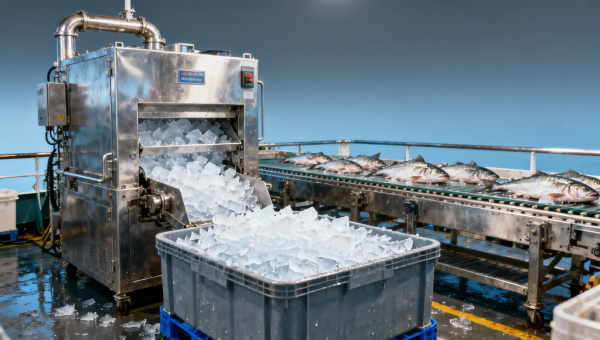
Choosing the right commercial ice flaker machine starts with matching output size to real deck-side ice demand, especially in fisheries where uptime, fish quality, and operating cost are tightly linked. For buyers comparing block ice machine for fishery setups alongside fish processing machinery, this guide explains how capacity planning affects handling efficiency, crew workflow, and cold-chain performance across commercial operations.
Why ice flaker machine size becomes a deck-side profit decision
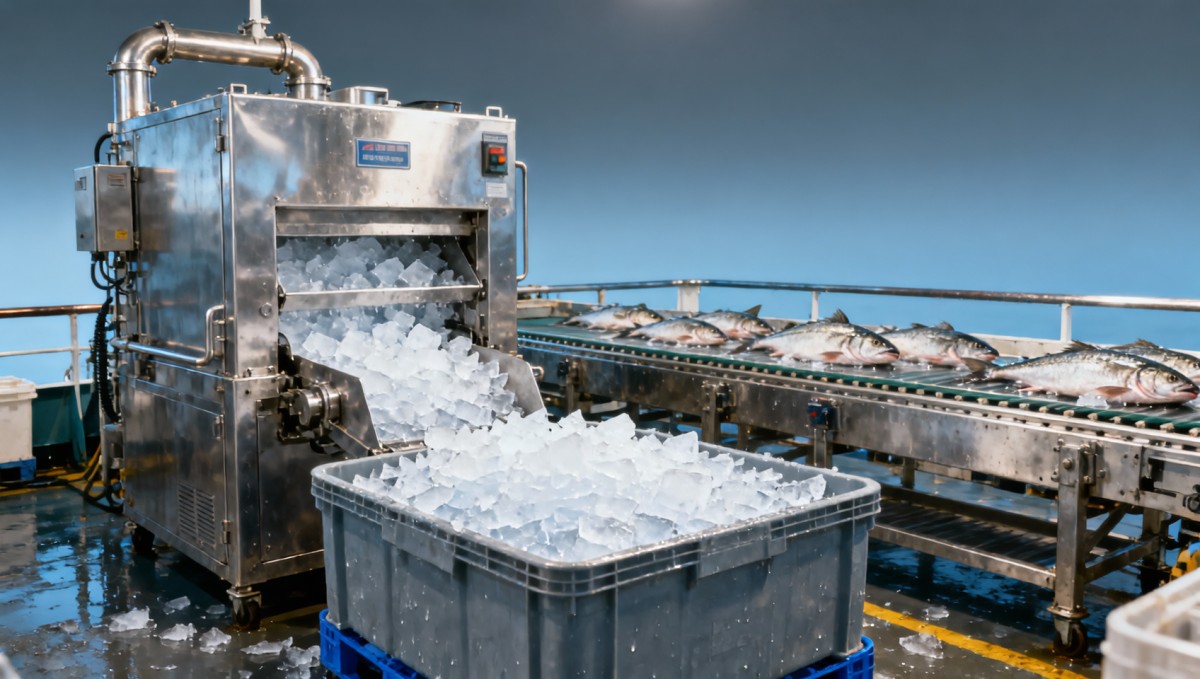
In commercial fishing and onboard processing, ice is not a convenience item. It is a control point for product temperature, hold time, grading consistency, and downstream sale value. A commercial ice flaker machine that is too small forces crews to ration ice during peak catch windows. A machine that is too large can raise fuel load, electrical demand, water use, and maintenance burden without delivering a proportional return.
For operators and technical evaluators, the sizing question is rarely about nameplate output alone. It is about matching hourly production, storage buffer, and deck workflow. On many vessels and dock-side fishery stations, real demand swings across 3 phases: loading preparation, active catch handling, and post-sort preservation. If the machine cannot keep pace during the middle phase, fish quality losses can appear within a few hours, especially in warm ambient conditions.
Procurement teams also need to compare flake ice with block ice machine for fishery applications. Block ice may suit central production and later crushing, but flake ice usually gives faster surface contact, easier shoveling, and better coverage around uneven fish loads. That matters when labor efficiency and temperature pull-down must happen quickly in a confined deck environment.
AgriChem Chronicle focuses on these practical selection issues because industrial buyers in aquaculture and fishery tech are under pressure from tighter cold-chain expectations, stricter handling documentation, and closer financial review. For enterprise decision-makers, sizing an ice flaker machine correctly can influence 4 linked outcomes: product quality, operating continuity, crew productivity, and cost per tonne handled.
What usually drives true onboard ice demand?
Most sizing errors happen because buyers estimate from daily catch only. In reality, demand depends on fish species, handling speed, ambient temperature, hold insulation, target storage duration, and whether fish are whole, gutted, or processed. A vessel handling small pelagic species may require a different ice-to-fish ratio than one processing larger premium catch intended for longer preservation windows.
- Peak catch bursts over 2–6 hours can exceed average daily demand by a wide margin, so hourly ice output matters more than daily total alone.
- Deck temperature, seawater temperature, and exposure to sun or wind alter melt loss and raise replenishment needs.
- Manual handling, conveyor transfer, and sorting speed determine whether ice is applied immediately or too late.
- Storage strategy matters: some operations rely on continuous production, while others need a 4–8 hour reserve buffer.
A practical rule for decision meetings
Instead of asking only “How many tonnes of ice per day?” ask three questions: how much ice is needed per tonne of fish, what is the highest demand window in one shift, and how long can the operation continue if the machine pauses for cleaning or service. This approach gives project managers and finance approvers a more realistic basis for comparing machine sizes.
How to match commercial ice flaker machine capacity with fish handling volume
A reliable sizing exercise starts with handling volume, not brochure categories. Buyers should map expected catch tonnage per trip, average and peak unloading rates, preservation target, and available storage. In many fishery projects, machine capacities are reviewed in bands such as small, medium, and high-throughput systems rather than one universal figure, because the correct choice depends on duty pattern and not just vessel length.
For technical teams, one useful framework is to separate demand into baseline output and surge output. Baseline output covers normal icing over a 10–24 hour operating cycle. Surge output covers heavy deck activity over shorter windows. If the machine is sized only for baseline output, crews may compensate by reducing ice coverage or delaying loading, both of which can weaken fish freshness control.
The table below gives a practical selection view for commercial ice flaker machine planning in fisheries. These are not fixed specifications. They are procurement-oriented planning ranges intended to support discussions among operators, engineers, and sourcing teams.
The key takeaway is that capacity planning should include at least 3 checks: average production, peak hourly need, and reserve coverage. A machine that looks adequate on paper may still fail operationally if it cannot support a short high-demand period or if storage disappears too quickly during warm-weather loading.
Three sizing inputs that procurement teams should verify
Before requesting quotations, buyers should standardize a short technical brief. This reduces pricing confusion and prevents suppliers from sizing around ideal conditions instead of real operating limits.
- Expected duty cycle: define whether the machine runs continuously for 8, 12, or 24 hours and whether high-load windows are predictable.
- Environmental conditions: note ambient range, ventilation, water source quality, and washdown exposure on deck.
- Process integration: state whether ice feeds bins manually, by screw conveyor, or through a hopper to fish processing machinery.
These inputs help technical evaluators compare apples to apples and allow financial reviewers to connect equipment size with measurable operational value instead of only initial price.
Commercial ice flaker machine vs block ice machine for fishery use
Many buyers evaluate flake ice and block ice in the same project. The decision should depend on handling method, labor model, transport distance, and target fish condition at landing or processing. A block ice machine for fishery operations can still be effective where centralized production and later crushing fit the workflow, but it introduces extra handling steps that are not always desirable on busy decks.
Flake ice is generally preferred when fast application, even coverage, and reduced product bruising are priorities. It spreads more uniformly around fish and can be applied repeatedly during sorting. Block ice may be suitable where supply is made ashore and distributed in batches, especially if space for crushing and storage is available. The trade-off often comes down to labor hours versus centralized production efficiency.
For decision-makers balancing CapEx and OpEx, the comparison should include more than machine purchase. Consider transport, crushing labor, delay risk, and loss from inconsistent chilling. In some fisheries, those indirect costs over 1–3 seasons may outweigh a lower initial equipment figure.
The comparison table below helps clarify which approach aligns better with common commercial fishery conditions.
This comparison does not mean one technology always replaces the other. In hybrid operations, a block ice machine for fishery supply may support port storage, while a commercial ice flaker machine handles final onboard or processing-line application. The best answer often comes from mapping the full cold-chain, not evaluating machines in isolation.
When does flake ice clearly outperform?
Use flake ice when the workflow is time-sensitive
If fish move from catch to sorting to chilled storage within a short handling window, flake ice usually fits better. It reduces preparation steps and supports repeated application every 30–90 minutes during active work periods.
Use block ice when centralized production is the main priority
If the operation relies on shore-based production, transport, and staged use, block ice can remain practical. However, buyers should budget for crushing, movement equipment, and possible variability in final ice size at the point of use.
Technical and compliance checks before you approve a purchase
For technical assessment personnel and quality or safety managers, machine size is only one part of the approval process. The equipment also needs to fit the vessel or plant utility profile, sanitation practice, and maintenance capability. In fishery environments, corrosion exposure, salt-laden air, drainage quality, and washdown frequency can affect long-term reliability as much as nominal output.
A sensible review should cover at least 5 technical areas: ice output stability, installed power demand, material suitability for wet environments, cleaning accessibility, and service access. If the machine will operate alongside fish processing machinery, also check whether ice discharge height, hopper design, and transfer path align with the broader layout. Mismatched discharge geometry can create labor bottlenecks even when production capacity looks sufficient.
Compliance matters too. Depending on project location and end market, buyers may need to review food-contact materials, electrical safety conformity, refrigerant handling rules, wastewater management, and documentation for import clearance. ACC’s coverage of regulated supply chains is especially relevant here because procurement failures often happen at documentation stage, not during initial specification review.
The following checklist can help project teams align engineering, quality, and procurement before issuing a final PO.
- Confirm whether the stated output refers to ideal lab conditions or realistic field conditions, especially if ambient temperature can vary across a 10°C–35°C range.
- Review the material specification of ice-contact and water-contact parts for marine or high-humidity use.
- Check cleaning and sanitation intervals, including whether routine maintenance can be completed within a 2–4 hour planned stop.
- Verify power supply compatibility, control panel protection level, drainage route, and vibration tolerance for onboard use.
- Ask for the documentation package needed for import, inspection, and handover, including manuals, parts lists, and service recommendations.
Common approval risks that delay projects
Project delays often come from late-stage discoveries: electrical mismatch, missing sanitary details, unclear spare parts coverage, or under-specified foundations and drainage. A practical procurement policy is to require a 4-part pre-approval file covering utility data, installation drawing, maintenance scope, and compliance documents before any shipment is scheduled.
For distributors and agents, this level of discipline also improves after-sales performance. When handover documents are complete, field teams can troubleshoot faster and reduce downtime during the first 6–12 months of operation.
Procurement roadmap, budget control, and common sizing mistakes
A good procurement process for a commercial ice flaker machine should connect technical fit with budget approval and delivery timing. In many industrial purchasing teams, the discussion stalls because engineering requests safety margin, finance focuses on initial spend, and operations worries about downtime. The solution is to structure the decision around total use value, not just equipment price.
A standard roadmap often includes 4 stages over 2–6 weeks, depending on project complexity: demand definition, technical matching, quotation comparison, and implementation review. If the machine will be integrated with a fish processing line or a block ice machine for fishery backup system, allow more time for interface confirmation and utility planning.
Many buyers under-size the machine to protect budget. Others over-size it to avoid perceived risk. Both choices can be costly. Under-sizing increases spoilage exposure, labor stress, and emergency ice purchases. Over-sizing may increase energy draw, footprint, and maintenance burden while leaving capacity unused for most of the season. The right answer usually sits in a balanced range supported by reserve planning, not in the maximum model offered.
The table below can be used during commercial review meetings to compare bids on a like-for-like basis.
This evaluation format is especially useful for enterprise buyers and distributors who must defend the purchase internally. It translates technical differences into risk, cost, and implementation language that commercial and financial stakeholders can review with confidence.
Frequent mistakes that reduce return on investment
Mistake 1: Using average demand only
Average daily demand hides short-term spikes. If peak handling lasts 3 hours, the machine must either cover that window directly or be supported by reserve storage.
Mistake 2: Ignoring labor and flow path
Even the right-sized commercial ice flaker machine can underperform if crews walk too far, bins are poorly placed, or transfer to fish processing machinery creates delays.
Mistake 3: Not planning for service access
Marine and fishery equipment should be chosen with maintenance access in mind. A compact installation that saves space today may cost more later if routine service becomes difficult during tight operational windows.
FAQ and next-step guidance for buyers, engineers, and operators
Below are common questions raised by users, technical evaluators, procurement officers, and project managers when sizing a commercial ice flaker machine for fishery use. The answers can support internal discussion before supplier engagement.
How do I know if my machine is under-sized?
Look for operational symptoms rather than waiting for a hard failure. Frequent ice shortages during the same 2–4 hour handling window, delayed fish loading, rising emergency ice purchases, or inconsistent temperature control in storage bins all point to under-sizing. If these issues repeat weekly during active season, review both output and storage buffer.
Is a block ice machine for fishery use cheaper overall?
Not always. Initial equipment or central production cost may look lower in some setups, but total cost depends on crushing, transport, extra labor, delay risk, and the quality impact of slower application. Buyers should compare the full process over one season, not the purchase line alone.
What delivery and project timing should be considered?
Timing varies by scope, but many projects should allow several steps: technical confirmation, commercial approval, fabrication or allocation, shipping, installation planning, and commissioning. For integrated systems, procurement teams often reserve 2–4 weeks for technical clarification and document review before final logistics are locked.
What should a distributor or agent ask before representing a machine?
Ask for field application range, parts support plan, documentation package, installation requirements, and the boundary between supplier scope and local contractor scope. This prevents service disputes and improves buyer confidence during tender or resale discussions.
Why work with an industry intelligence partner before final selection?
For complex B2B purchases, buyers need more than a brochure. AgriChem Chronicle supports technical and commercial evaluation by connecting machinery decisions with regulated supply-chain thinking, cross-functional review, and practical implementation logic. That is valuable when the same project involves cold-chain control, fish processing machinery, documentation scrutiny, and long-term operating economics.
Why choose us for your evaluation and next procurement step?
AgriChem Chronicle provides a specialist decision environment for industrial buyers across aquaculture, fishery technology, and primary processing. Our editorial and technical perspective is built for professionals who must justify equipment choices to operations, finance, quality, and project leadership at the same time.
If you are reviewing a commercial ice flaker machine or comparing it with a block ice machine for fishery applications, contact us for focused support on output matching, process integration, delivery planning, documentation expectations, and supplier comparison criteria. We can help frame the right questions around capacity range, installation conditions, spare parts planning, certification-related documentation, and quotation alignment before you move to final negotiation.
You can also consult on deck-side workflow analysis, ice demand mapping by shift, compatibility with fish processing machinery, and the practical trade-offs between standalone and integrated ice solutions. For procurement teams, that means clearer specifications. For project managers, it means fewer surprises at installation. For financial approvers, it means a stronger basis for investment review.
Related Intelligence
- Commercial FishingGaode Launches First Quadruped Robot, ABot-M0 Open-Source Model for Aquaculture & Poultry InspectionABot-M0: Gaode's open-source quadruped robot for aquaculture & poultry inspection—80.5% task success, field-tested in Brazil & Vietnam. Discover how it transforms autonomous farm inspections.
- Commercial FishingGaode Launches First Quadruped Robot, Open-Sources ABot-M0 for Aquaculture & PoultryGaode launches first quadruped robot & open-sources ABot-M0 — an embodied AI model for aquaculture and poultry automation, with 80.5% Libero-Plus task success.
- Commercial FishingFish Processing Machinery Upgrades That Cut ReworkFish processing machinery upgrades cut rework fast. Compare block ice machine for fishery, commercial ice flaker machine, squid peeling machine, and filleting solutions to boost yield.
The Morning Broadsheet
Daily chemical briefings, market shifts, and peer-reviewed summaries delivered to your terminal.
