
Block Ice Machine for Fishery: When Daily Output Falls Short
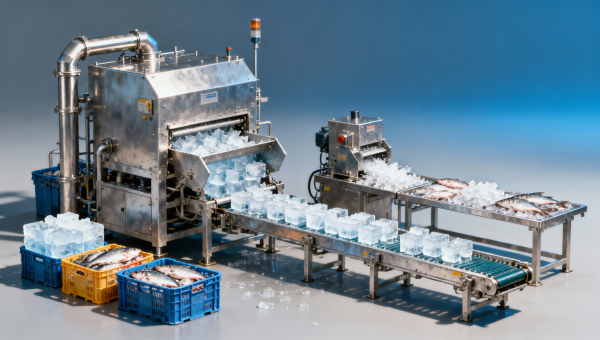
When a block ice machine for fishery can no longer keep pace with daily catch volumes, cold-chain stability, product quality, and operating margins quickly come under pressure. For buyers comparing fish processing machinery—from a commercial ice flaker machine to fish filleting machine commercial systems—understanding the true cause of output shortfalls is essential to making a reliable, scalable investment.
Why does a block ice machine for fishery start falling behind daily output?
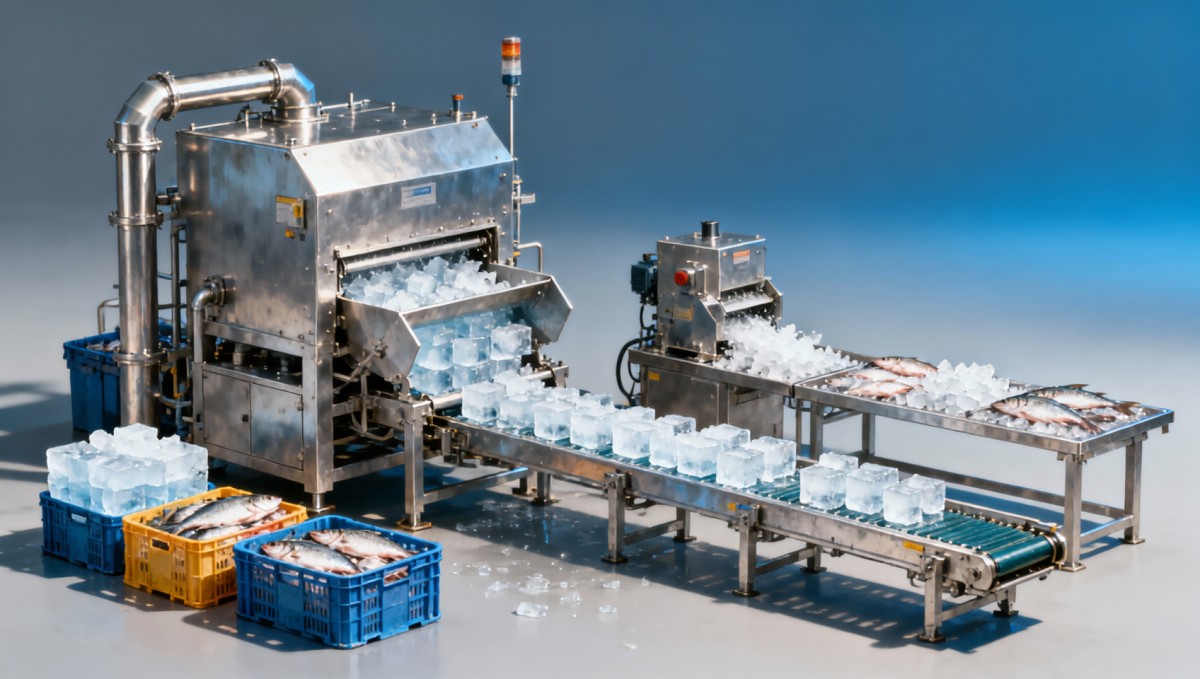
In fishery operations, an ice shortage is rarely caused by a single fault. More often, it results from a mismatch between installed production capacity and actual landing patterns. A machine rated for one shift may be forced into 16–20 hours of continuous operation during peak season, while water temperature, ambient heat, brine condition, and operator routines all move away from design assumptions.
For operators and technical evaluators, the first task is to separate nameplate output from usable daily ice. A block ice machine for fishery may be labeled at a standard test condition, yet real production can fall when inlet water rises from 20°C to 30°C, when condenser fouling increases, or when block release time stretches by 10–20 minutes per cycle. Those lost minutes accumulate quickly across a full day.
Procurement teams also need to look beyond the ice room. If a fish landing site expands from small-batch unloading to medium or high throughput, the cold chain becomes system-dependent. Delays at sorting tables, insulated bins, transport trolleys, or fish filleting machine commercial lines can make the ice machine appear undersized even when the real bottleneck lies in transfer timing and handling discipline.
At ACC, this is where disciplined technical review matters. In aquaculture and fishery tech, reliable buying decisions come from reading machinery not as isolated equipment, but as part of a regulated, cost-sensitive production chain. That approach helps business evaluators, financial approvers, and project managers avoid replacing the wrong asset.
Four common causes behind output shortfalls
- Capacity drift caused by non-standard operating conditions, including higher seawater-side temperatures, poor ventilation, and unstable power supply.
- Cycle inefficiency from scale buildup, brine contamination, delayed de-icing, or worn insulation that increases freezing time.
- Process expansion without upstream or downstream redesign, especially when new washing, sorting, or filleting stations are added within 2–4 weeks of operational scaling.
- Maintenance gaps, such as irregular condenser cleaning, refrigerant issues, and infrequent inspection of pumps, valves, and electrical control components.
A practical review should start with three measurements: actual tons of ice delivered per 24 hours, average cycle duration, and ice demand by processing stage. Once these figures are mapped, teams can decide whether they need process correction, auxiliary ice equipment, or a full capacity upgrade.
Which performance indicators matter most when evaluating fishery ice systems?
Many buyers focus too early on headline tonnage. In reality, fishery operators should compare at least five technical dimensions before choosing between a block ice machine for fishery, a commercial ice flaker machine, or a hybrid setup. These dimensions affect cold coverage, handling speed, labor intensity, and spoilage risk more directly than a single daily output figure.
Block ice remains valuable where transport distance is long, melt rate must be controlled, or operators crush ice as needed. Flake ice is often favored where fish must be covered rapidly on deck, at landing docks, or along continuous processing lines. The best choice depends on whether the operation prioritizes storage endurance, immediate contact cooling, or flexibility across multiple handling steps.
The table below summarizes how procurement personnel and engineering leads can compare typical system traits. These are not universal specifications for every model, but common operating considerations used in commercial fishery and seafood handling environments.
This comparison shows why “more tons per day” does not always equal “better operational fit.” A site that unloads fish in three short surges may benefit more from fast-distribution flake ice than from nominally larger block output. By contrast, a remote fishery with long storage intervals may still prefer block ice for transport resilience and staged usage.
The 5 indicators technical teams should verify
Output under real conditions
Ask for production expectations under local temperature ranges, not only standard reference conditions. In tropical or high-humidity ports, actual performance can differ materially over a 24-hour cycle.
Cycle time and discharge timing
If each freezing and release cycle stretches beyond design timing, daily output shrinks. Even a 15-minute increase per cycle can reduce available supply during critical handling windows.
Ice form and downstream usability
Ice must match receiving bins, deck operations, transport boxes, and processing tables. Poor compatibility raises labor cost and weakens temperature control.
Utility demand
Check power supply stability, water quality, and drainage. Utility mismatch is one of the most common reasons why installed fish processing machinery underperforms after commissioning.
How should buyers size capacity for today’s catch and tomorrow’s expansion?
Sizing should begin with operational rhythm, not catalog categories. Procurement teams should estimate daily catch volume, peak-hour unloading, intended storage duration, and the temperature exposure time before fish enters insulated containers or processing. In many projects, a 10–20% reserve is more practical than selecting a machine that only covers average days.
This matters for decision-makers and financial approvers because undersizing creates hidden costs. Emergency ice purchases, overtime handling, faster spoilage, and production delays can collectively cost more over 12–24 months than choosing a properly matched system from the start.
The following table gives a structured selection view for common fishery operating patterns. It is designed to support discussions among plant managers, distributors, engineering contractors, and commercial teams when comparing machine architecture and expansion pathways.
A useful interpretation is that equipment sizing should follow distribution logic. If fish move through 3 stages—landing, sorting, and packing—the ice plan must support each stage without creating transfer bottlenecks. That is why project leaders should evaluate both machine output and handling architecture before issuing a final purchase order.
A practical 4-step sizing workflow
- Measure real demand by shift, including peak landing windows and average hold time before chilling.
- Map how ice is consumed at each station, including transport losses and melt during transfer.
- Add reserve capacity for seasonality, maintenance intervals, and future process changes over the next 1–3 years.
- Review whether a single machine, modular expansion path, or hybrid system produces the lowest operational risk.
This workflow is especially valuable for distributors and engineering partners preparing commercial proposals, because it connects technical selection to business risk rather than focusing only on initial equipment price.
What hidden costs and compliance issues are often missed in fishery equipment procurement?
When daily output falls short, many firms consider replacement first. But cost analysis should compare three paths: rehabilitating the current machine, adding supplementary ice capacity, or replacing the system with a redesigned solution. The right answer depends on equipment age, maintenance history, sanitation requirements, and how tightly the machine must integrate with wider fish processing machinery.
Financial reviewers should separate capital cost from cost of disruption. A lower-priced purchase can become expensive if it extends commissioning, causes repeated shutdowns, or requires major civil works. Typical lead times for industrial equipment and auxiliaries may range from 2–8 weeks for straightforward supply arrangements, while complex project customization can run longer depending on utilities and site readiness.
Quality control and safety managers should also verify material suitability, drainage design, cleanability, and refrigerant-related risk management. While exact regulatory obligations vary by market, seafood handling environments often require attention to food-contact hygiene, electrical safety, wastewater handling, and documented maintenance procedures. If export processing is involved, poor sanitation design can weaken audit readiness.
ACC’s advantage in this space lies in connecting technical evaluation with compliance awareness and supply-chain transparency. For industrial buyers working across agriculture, aquaculture, and primary processing sectors, that cross-disciplinary view helps reduce the risk of selecting equipment that appears economical but is operationally misaligned.
Cost areas that deserve line-by-line review
- Utility consumption over daily and seasonal operation, including power peaks, water usage, and drainage capacity.
- Labor required for ice breaking, transfer, storage management, and cleaning at the end of each shift.
- Downtime exposure linked to spare parts access, service response timing, and preventive maintenance intervals.
- Compliance adaptation cost, especially if the installation must satisfy local food safety, environmental, or workplace safety requirements.
Common procurement mistake
A frequent mistake is evaluating a block ice machine for fishery as if it were standalone cold equipment. In reality, it should be assessed together with storage bins, transfer tools, crushing method, and adjacent seafood processing assets. If not, the plant may buy enough ice on paper but still fail to protect product temperature in practice.
FAQ: what should operators and buyers ask before the next investment?
The questions below reflect common search intent from operators, procurement teams, distributors, and project owners comparing a block ice machine for fishery with other cooling and fish processing machinery options. They are also useful as a pre-RFQ checklist.
How do I know whether low output is a machine problem or a process problem?
Track three items for at least 7 consecutive operating days: actual ice produced, cycle duration, and time from production to use. If machine output is stable but fish still wait too long for cooling, the bottleneck likely sits in handling flow, staffing, or distribution points rather than in the refrigeration unit alone.
Is a commercial ice flaker machine always better for seafood processing?
Not always. Flake ice is highly effective for direct fish contact and fast coverage, but block ice can still be the better choice for transport-heavy operations, staged usage, or sites needing stored reserve. The decision should reflect fish species, handling speed, labor structure, and whether the site runs batch or continuous processing.
What should be included in a serious quotation review?
A useful quotation review should cover at least 6 points: rated output conditions, utility requirements, installation boundary, core component scope, maintenance expectations, and delivery schedule. If the proposal relates to integrated fish filleting machine commercial lines, also verify timing coordination between icing, trimming, packing, and cold storage transfer.
How long does implementation usually take?
For standard configurations, procurement and delivery may be completed within several weeks, but installation readiness often determines the actual project timeline. Allow time for utility checks, drainage, sanitation planning, operator training, and trial runs. For larger fishery projects, a phased plan with equipment verification, commissioning, and handover is usually more reliable than a one-step launch.
Why work with ACC when comparing fishery cooling systems and processing equipment?
AgriChem Chronicle is positioned for industrial buyers who need more than product publicity. In sectors where aquaculture systems, primary processing equipment, and regulated supply chains intersect, decision quality depends on technically literate, commercially relevant analysis. That is especially true when a block ice machine for fishery becomes a limiting factor in product quality and margin protection.
Our editorial framework is built for procurement directors, technical reviewers, operating managers, and distribution partners who need to compare equipment on practical criteria: process fit, compliance implications, maintenance burden, and scale-up readiness. By integrating validated manufacturing information, technical documentation, and market-facing analysis, ACC helps turn scattered data into an actionable purchase view.
If you are evaluating a new block ice machine for fishery, a commercial ice flaker machine, or a broader fish processing machinery upgrade, you can consult on key points before moving forward. Typical consultation topics include capacity confirmation, application matching, delivery window planning, utility and installation boundaries, sanitation expectations, and quote comparison across multiple solution paths.
Contact us to discuss your operating profile, daily catch rhythm, target expansion period, and certification or site constraints. A focused review can help your team clarify whether the right next step is output recovery, modular expansion, or a fully redesigned cold-chain solution aligned with your processing and commercial objectives.
Related Intelligence
- Commercial FishingGaode Launches First Quadruped Robot, ABot-M0 Open-Source Model for Aquaculture & Poultry InspectionABot-M0: Gaode's open-source quadruped robot for aquaculture & poultry inspection—80.5% task success, field-tested in Brazil & Vietnam. Discover how it transforms autonomous farm inspections.
- Commercial FishingGaode Launches First Quadruped Robot, Open-Sources ABot-M0 for Aquaculture & PoultryGaode launches first quadruped robot & open-sources ABot-M0 — an embodied AI model for aquaculture and poultry automation, with 80.5% Libero-Plus task success.
- Commercial FishingFish Processing Machinery Upgrades That Cut ReworkFish processing machinery upgrades cut rework fast. Compare block ice machine for fishery, commercial ice flaker machine, squid peeling machine, and filleting solutions to boost yield.
The Morning Broadsheet
Daily chemical briefings, market shifts, and peer-reviewed summaries delivered to your terminal.
