
Commercial Crab Grading Machine Accuracy Depends on What
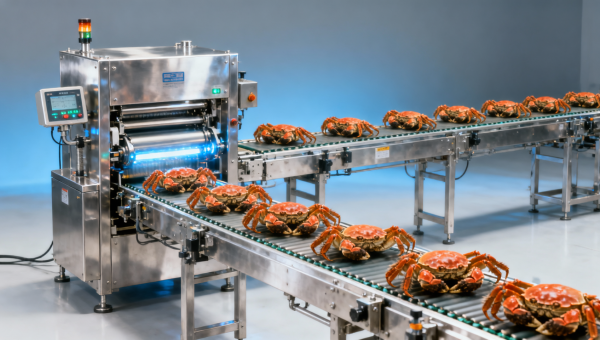
For seafood processors and buyers, commercial crab grading machine accuracy is not just about speed—it shapes yield, labor efficiency, compliance, and profit. From sensor calibration and conveyor stability to integration with shrimp grading machine wholesale systems, seafood packaging machine lines, and vacuum packing machine for fish workflows, understanding what determines grading precision helps teams compare equipment more confidently and invest with lower operational risk.
What really determines commercial crab grading machine accuracy?
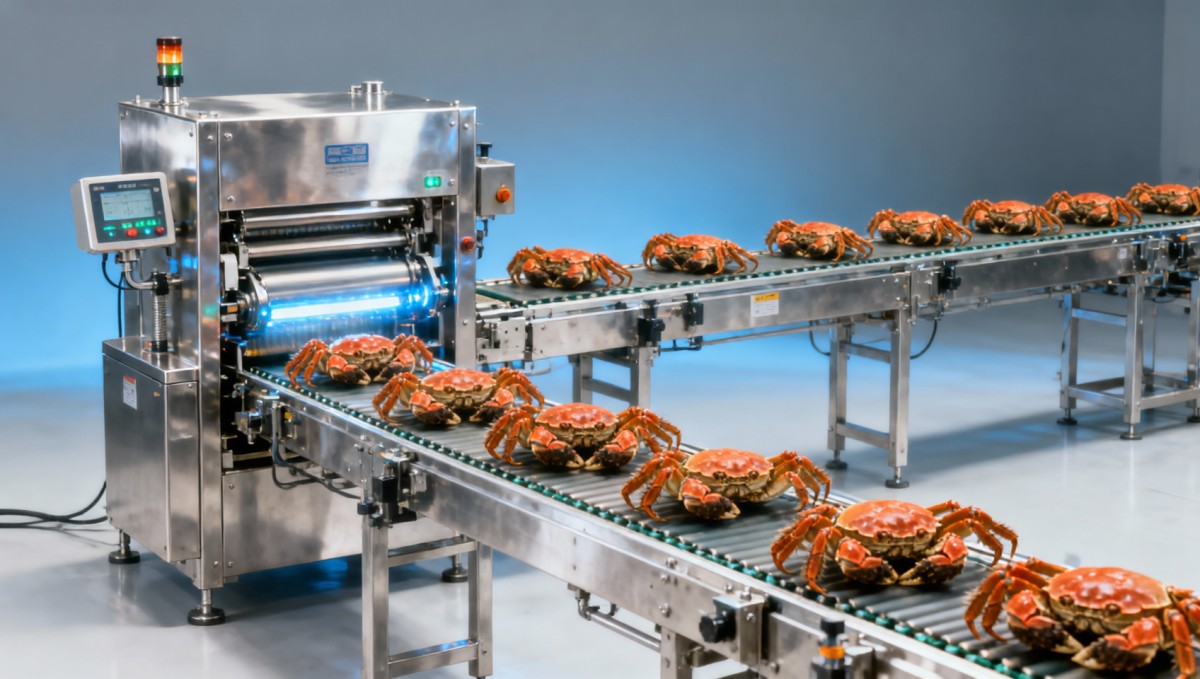
A commercial crab grading machine is expected to sort live or processed crabs into repeatable size or weight groups within a stable tolerance range. In practical factory terms, accuracy is not controlled by one component alone. It depends on a chain of factors that starts with raw material variability and ends with downstream handling. If any link is unstable, the grading result drifts, even when the machine itself appears mechanically sound.
For technical evaluators and procurement teams, the first checkpoint is the grading basis. Some systems grade by weight, some by width, and some combine image recognition with weighing. Typical commercial lines may work in several lanes and target repeatability windows such as small tolerance bands suitable for export packing, while high-throughput lines prioritize volume with slightly broader sorting bands. The required tolerance must match the sales contract, not just the brochure claim.
Accuracy is also influenced by crab behavior and presentation. Live crabs move, curl, and resist consistent positioning. Wet shells, mud, ice residue, and tied claws can affect sensor reading or weighing stability. A machine that performs well in a clean demonstration room may show different results after 6–10 hours of continuous operation in a humid seafood plant. That is why line testing under real loading conditions matters more than isolated trial data.
ACC’s industry coverage across aquaculture and primary processing consistently shows that buyers achieve better outcomes when they assess the entire grading environment: feed orientation, conveyor pitch, sensor protection, reject logic, pack-out synchronization, and washdown design. In other words, commercial crab grading machine accuracy is a systems issue, not only an equipment issue.
Core factors that usually have the biggest impact
- Sensor selection and calibration frequency. Load cells, vision sensors, and laser measurement units all require routine checks, often weekly or per shift depending on product variability and sanitation intensity.
- Conveyor stability and speed matching. Uneven belt motion, vibration, or abrupt transfer points can distort weight capture or dimension recognition within fractions of a second.
- Product singulation quality. If crabs overlap, rotate unpredictably, or arrive in clusters, even a well-designed machine cannot classify consistently.
- Environmental control. Moisture, salt mist, temperature changes, and washdown chemicals affect both electronics and mechanical repeatability over time.
These factors matter equally to operators, quality managers, and financial approvers. Operators need stable readings to avoid constant manual correction. Quality teams need consistent grade boundaries for labeling and shipment conformity. Finance teams need proof that the machine can maintain return on investment over 2–5 years rather than only during acceptance week.
Which machine components most affect grading precision in daily production?
In day-to-day seafood processing, three component groups drive most of the result: measurement hardware, product handling structure, and control logic. Measurement hardware includes load cells, cameras, laser or optical sensors, and signal filters. Product handling structure includes infeed guides, belts, rollers, cups, and discharge gates. Control logic determines how readings are interpreted, how outliers are rejected, and how timing stays aligned at operating speed.
For plants running crab grading adjacent to shrimp grading machine wholesale installations or seafood packaging machine lines, synchronization becomes especially important. If upstream flow surges and downstream packaging pauses, crab spacing changes. That spacing variation can reduce reading stability. A grading machine may be mechanically precise, yet line-level accuracy can still decline when it is forced to absorb irregular product flow from neighboring equipment.
The table below helps procurement and engineering teams connect machine parts with typical operational effects. It is useful during supplier comparison, FAT discussion, and maintenance planning because it translates accuracy claims into inspectable subsystems rather than marketing language alone.
When teams review these areas together, they gain a more realistic picture of grading precision. A supplier that explains calibration intervals, spare part wear points, and control response under variable loading is usually easier to work with than one that only quotes nominal capacity. In seafood plants, accuracy under production fluctuation is more valuable than a perfect figure measured under ideal conditions.
Why calibration and mechanical stability matter more than headline throughput
Many buyers focus first on hourly output, such as whether a line handles small, medium, or large commercial batches. Yet if calibration drifts after repeated washdown or belt tension changes after several weeks, grade consistency can deteriorate before operators notice it. This leads to rework, customer disputes, and uneven pack weights. In premium seafood channels, those hidden costs can outweigh the benefit of a faster line.
Mechanical stability is especially critical when a commercial crab grading machine is linked to a vacuum packing machine for fish or mixed seafood packaging stations. Vibration from adjacent equipment, floor unevenness, or poor frame rigidity can disturb reading points. A robust frame, corrosion-resistant fasteners, sealed bearings, and vibration control features are not cosmetic extras; they directly support sorting accuracy over long production shifts.
Practical checks during technical review
- Ask how many grade recipes can be stored and how quickly operators can switch between export sizes, domestic retail sizes, and processing grades.
- Request the recommended calibration interval, such as per shift, daily, or weekly, based on product type and sanitation schedule.
- Verify whether the machine maintains stable grading after 4–8 hours of wet operation rather than only at startup.
- Check how the system handles uncertain reads, overlap, broken appendages, and oversized product without causing line-wide stoppage.
This review approach helps project managers and quality teams build a more defensible equipment approval process. It also creates cleaner documentation for internal CAPEX review, where budget approval often depends on measurable risk reduction.
How should buyers compare grading methods, line fit, and total cost risk?
A commercial crab grading machine should never be selected only by nominal precision. Buyers need to compare grading method, production environment, labor model, and downstream connection. For example, a weight-based system may suit plants where sales contracts are written around pack weight bands, while a vision-based system may fit operations that market crabs by size category. Combined systems may offer stronger process control, but they usually add complexity, higher service expectations, and longer setup time.
Line fit matters just as much as grading method. A machine serving as a stand-alone station in a regional processing house faces different requirements from one integrated with seafood packaging machine lines, metal detection, labeling, and cold-chain dispatch. Procurement teams should model at least 3 layers of cost: acquisition cost, operating cost, and error cost. Error cost includes misgrading, repacking, lost labor, and shipment inconsistency.
The comparison table below is useful when discussing proposals with engineering, operations, and finance. It focuses on decision trade-offs rather than generic product praise, making it more suitable for real B2B evaluation.
The right comparison is rarely about which method is universally better. It is about which method matches the contract grade logic, labor availability, maintenance capability, and factory layout. For distributors and resellers, this framework also improves solution positioning because it ties equipment specification to buyer outcome instead of pure price discussion.
A practical procurement checklist for cross-functional teams
- Define 3–5 grade bands clearly before requesting quotations. Without fixed grade boundaries, supplier accuracy claims are hard to compare.
- Map upstream and downstream line speed, including any shrimp grading machine wholesale modules, packing buffers, and cold-room transfer points.
- Review sanitation protocol, washdown frequency, and the likely effect on sensors, connectors, bearings, and operator access.
- Estimate spare part and service response expectations for the first 12 months, especially for imported systems.
- Ask whether FAT, SAT, operator training, and commissioning support are included within the quoted scope.
This checklist helps purchasing and finance teams separate visible price from operational value. A lower-cost machine that needs frequent recalibration, extra labor, or repeated repacking can become more expensive over a 12–24 month cycle.
What standards, implementation steps, and common mistakes should teams watch?
Commercial crab grading equipment operates in a heavily controlled food-processing environment, so implementation should account for hygiene, materials, electrical safety, and traceability. Even if the machine is not itself a regulated food package, its design should support sanitation and process control expectations commonly seen in seafood plants. Buyers often review stainless steel contact areas, cleanability, ingress protection, and record retention in parallel with grading accuracy.
In export-oriented operations, compliance review usually includes food-contact suitability, washdown compatibility, electrical enclosure protection, and documented operating procedures. If the machine feeds directly into seafood packaging machine lines or a vacuum packing machine for fish process, then line validation becomes more important. Project teams should define acceptance criteria before delivery rather than negotiating them during startup week.
A practical implementation cycle commonly follows 4 stages: specification confirmation, factory test, site commissioning, and post-start optimization. Depending on customization level, this process may take 2–4 weeks for standard configurations or longer for integrated lines with conveyors, labeling, and packaging coordination. Clear scope control is essential because many “accuracy issues” are actually setup or material handling issues discovered late.
Typical acceptance criteria to define early
Using these acceptance items early improves alignment between technical staff, quality control, and budget approvers. It also reduces disputes with vendors because the discussion moves from vague expectations to measurable operating conditions.
Common mistakes that reduce grading machine accuracy
Mistake 1: Assuming the demo result equals plant result
Demo trials often use cleaner, more uniform samples than real production. Mixed crab sizes, wet belts, and variable infeed behavior can change the result materially. Always request testing that reflects your actual product state and line speed.
Mistake 2: Underestimating calibration workload
A machine may be technically capable, but if calibration requires specialist intervention too often, accuracy in daily production will suffer. Plants need a realistic maintenance plan that operators can follow shift by shift.
Mistake 3: Ignoring downstream constraints
If grading is precise but packaging cannot absorb the sorted output, bins overflow and product gets remixed. This is common when a crab grader is added to an existing vacuum packing machine for fish workflow without enough accumulation or control integration.
Mistake 4: Buying on throughput alone
Throughput matters, but stable classification over repeated runs matters more. When evaluating proposals, compare not just peak capacity but also accuracy under wet conditions, shift duration, and cleaning cycles.
FAQ and why industry buyers work with ACC for evaluation support
For many information researchers, engineering managers, and distributors, the challenge is not finding suppliers. It is filtering claims into decision-ready criteria. ACC supports this process by translating technical literature, processing realities, and compliance expectations into usable procurement intelligence for aquaculture and primary processing sectors.
Because ACC serves readers across aquaculture, fine chemicals, machinery, and regulated supply chains, the analysis goes beyond isolated machine specifications. The focus stays on line compatibility, operational risk, documentation quality, and commercial fit. That perspective is particularly useful when a commercial crab grading machine must work alongside shrimp grading machine wholesale sourcing, seafood packaging machine integration, or vacuum packing machine for fish projects.
Below are common questions buyers ask when comparing grading solutions. These questions often surface during early market research, internal budget review, or pre-commissioning planning.
How accurate should a commercial crab grading machine be for procurement review?
The right benchmark depends on contract requirements, grade band width, and whether you sell by weight or size. Instead of asking for one universal number, ask the supplier to define the grading tolerance, the test conditions, the sample type, and the operating speed. A narrower grade band needs tighter process control, better singulation, and more disciplined calibration.
How long does implementation usually take?
For a standard stand-alone unit, planning and commissioning may fit within 2–4 weeks after technical confirmation. Integrated projects involving conveyors, seafood packaging machine controls, or ERP traceability may require a longer cycle. Buyers should confirm FAT, shipping preparation, installation support, SAT, and operator training as separate milestones.
What should operators check each shift to maintain accuracy?
Operators should verify sensor cleanliness, infeed spacing, belt stability, grade discharge condition, and calibration status. A 5-point startup check is often more effective than waiting for visible misgrading. Quality teams may also schedule periodic sample rechecks each shift to catch drift before it affects outbound lots.
Can distributors use the same evaluation logic for multiple customer segments?
Yes, but the scoring priorities should change by segment. Export processors may rank traceability and repeatability first. Regional seafood packers may prioritize flexibility and easier maintenance. Dealers who frame proposals around 4–6 measurable criteria usually communicate value more effectively than those who lead only with machine speed.
Why choose us for insight and next-step support?
AgriChem Chronicle helps industrial buyers and suppliers move from broad market search to structured technical evaluation. If you are comparing a commercial crab grading machine, reviewing shrimp grading machine wholesale options, or planning a seafood packaging machine and vacuum packing machine for fish line upgrade, you can consult ACC for parameter confirmation, grading method comparison, delivery-cycle expectations, compliance checkpoints, and supplier communication points.
You can also use ACC content support to clarify customization scope, commissioning workflow, operator training needs, spare-parts planning, and quotation discussion priorities before formal procurement begins. For teams under time pressure, this reduces back-and-forth and helps technical, purchasing, quality, and finance stakeholders review the same decision framework with fewer blind spots.
Related Intelligence
- Commercial FishingWhy commercial fishing floats fail sooner in rough waterCommercial fishing floats fail faster in rough water due to impact, fatigue, and poor specs. Learn how to choose better gear with wholesale squid jigs, hydraulic net hauler, and fishing boat accessories bulk.
- Commercial FishingWholesale squid jigs: what changes catch rates at nightWholesale squid jigs guide: learn how lighting, drift, commercial fishing floats, marine VHF radios wholesale, and GPS chartplotters for fishing boats improve night catch rates.
- Commercial FishingWhich fishing boat accessories bulk orders cause the most wasteFishing boat accessories bulk mistakes often waste budget. Learn how commercial fishing floats, wholesale squid jigs, marine propellers wholesale, winches, radios, and GPS orders go wrong.
The Morning Broadsheet
Daily chemical briefings, market shifts, and peer-reviewed summaries delivered to your terminal.
