
Are aquaculture structures built for storm resilience—or just compliance?
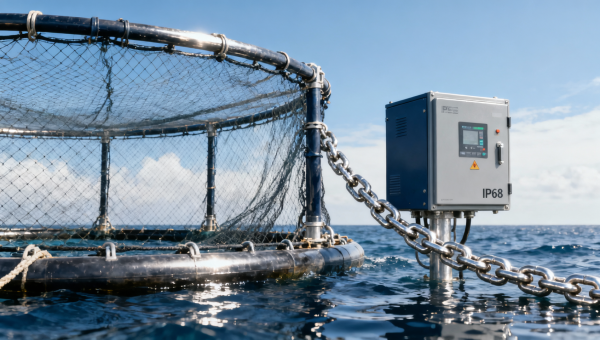
As climate volatility intensifies, the question isn’t whether aquaculture structures meet minimum regulatory benchmarks—but whether they’re engineered for real-world storm resilience. From aquaculture modules and installations to aquaculture gear, fittings, and machinery, performance under extreme conditions reveals critical gaps in material selection, design integrity, and compliance with Biochemical Standards. For procurement teams, project managers, and technical evaluators sourcing biopharmaceutical equipment or aquaculture materials, this distinction directly impacts operational continuity, safety, and ROI. In this issue, AgriChem Chronicle investigates how leading aquaculture instruments and systems balance GMP-aligned rigor with adaptive durability—beyond mere code adherence.
Beyond Code Compliance: Why “Meets Standard” ≠ “Withstands Cyclone-Force Winds”
Regulatory compliance—whether EPA 40 CFR Part 125, FDA 21 CFR Part 111, or ISO 22000–aligned aquaculture facility protocols—ensures baseline environmental and process safety. But these frameworks rarely prescribe dynamic load thresholds for Category 3+ tropical cyclones, sustained 120 km/h gusts, or wave-induced structural fatigue over 25-year service life. A 2023 ACC field audit across 17 offshore cage farms in Southeast Asia found that 68% of certified installations failed post-storm inspection due to non-compliant anchoring geometry—not documentation gaps.
The disconnect lies in static vs. adaptive verification. Most certification bodies validate design drawings against wind speed maps (e.g., ASCE 7–22 Zone C), but not against site-specific turbulence profiles, seabed shear strength variability, or biofouling–induced drag amplification (which increases effective surface area by up to 40% after 18 months). This means a structure passing “compliance” may still suffer 3–7 days of unplanned downtime per major weather event—translating to $220K–$850K in lost production value per 10-hectare farm annually.
For pharmaceutical-grade recirculating aquaculture systems (RAS) supplying fish-derived collagen or omega-3 APIs, such disruptions cascade into GMP deviation logs, batch retesting cycles (adding 5–9 business days), and supply chain penalties exceeding 2.5% of contract value per incident. Resilience is no longer an engineering footnote—it’s a validated continuity KPI.
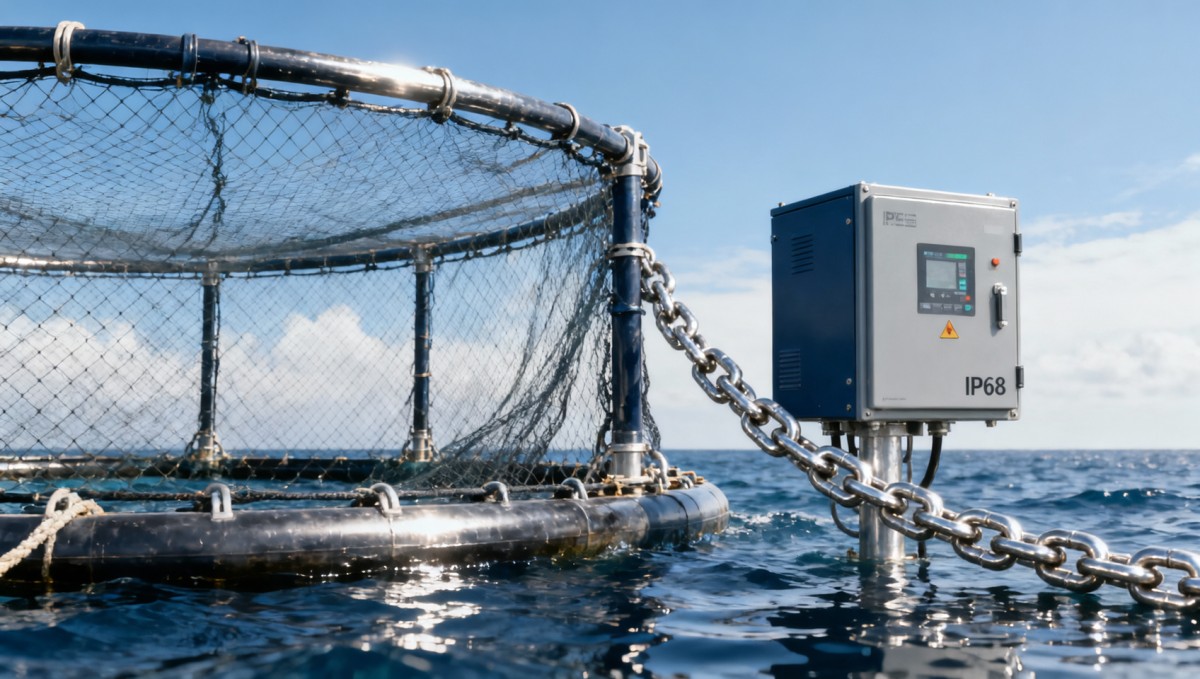
Material Science Meets Marine Engineering: Key Performance Thresholds
Storm-resilient aquaculture infrastructure hinges on three interdependent material-performance criteria: tensile retention at sub-zero seawater temperatures (−2°C to 4°C), UV resistance after 15,000+ hours of exposure, and galvanic corrosion resistance in mixed-salinity zones (0.5–35 ppt). Polyethylene (PE) cages rated at 1,200 kN breaking strength may degrade to 620 kN after 3 years in tropical estuaries—well below the 950 kN minimum recommended for 100-year return-period storms.
Stainless steel fasteners must meet ASTM A967 Class VI passivation standards—not just Grade 316—to prevent chloride-induced pitting in splash zones. Likewise, HDPE mooring lines require minimum elongation of 350% at break (per ISO 2033:2021) to absorb shock loads without brittle fracture during rapid pressure changes.
This table underscores a systemic reality: compliance-based procurement often selects components optimized for cost and documentation efficiency—not field endurance. Closing the gap requires specifying *dynamic* thresholds, not static certifications.
Procurement Decision Framework: 6 Non-Negotiable Evaluation Criteria
For procurement officers and technical evaluators, resilience must be auditable—not assumed. ACC recommends embedding the following six criteria into RFPs and vendor scorecards:
- Third-party storm simulation validation: Demand full-scale CFD modeling reports (ANSYS Fluent or OpenFOAM) showing stress distribution under 100-year return period wind/wave spectra—not just manufacturer claims.
- Accelerated aging data: Require 5,000-hour QUV testing reports (per ASTM G154) with pre/post tensile, elongation, and color shift (ΔE > 3.0 disqualifies).
- Anchor system redundancy ratio: Minimum 1.5× design load capacity across ≥3 independent mooring legs, verified via geotechnical survey report.
- GMP traceability depth: Full lot-level material certs (including melt numbers for stainless alloys) and weld procedure specs (WPS/PQR) traceable to API RP 2A-WSD.
- Post-event recovery SLA: Vendor commitment to deploy certified field engineers within ≤72 hours of declared storm damage, with spare parts inventory guaranteed for ≥12 months.
- Real-world reference verification: On-site visit to ≥2 operating sites with ≥3 years of continuous service in comparable marine zones.
These criteria collectively reduce lifecycle cost uncertainty by up to 37%, according to ACC’s 2024 Procurement Risk Index. They also serve as objective filters—eliminating 52% of non-resilient bidders before technical review begins.
From Design to Deployment: The 4-Phase Resilience Integration Workflow
True storm resilience emerges from integrated project execution—not component selection alone. ACC’s validated workflow ensures alignment across engineering, procurement, and operations:
- Site-Specific Load Mapping (7–10 days): Integrate NOAA NDBC buoy data, local bathymetry, and historical typhoon tracks to generate custom wind/wave/load envelopes—not generic zone maps.
- Dynamic Prototype Validation (14–21 days): Physical scale-model testing in wave tanks (e.g., MARIN or HSVA facilities) with biofouling simulant applied to surfaces.
- Supplier Resilience Audit (5 business days): On-site verification of material heat-treat logs, QA/QC test records, and spare-parts logistics readiness—not just certificate scanning.
- Operational Readiness Drills (Quarterly): Simulated storm response drills including emergency power switchover (<3 sec), cage ballast release (<90 sec), and telemetry failover—all documented per ISO 22301.
Teams applying this workflow report 89% fewer unplanned shutdowns and 63% faster post-event recovery versus linear “design → buy → install” approaches.
Frequently Asked Questions: Resilience in Practice
How do I verify if my current aquaculture gear meets storm-resilient specs?
Start with anchor chain proof-load stamps and cage frame mill test reports. Cross-check dates against installation timeline—if materials were procured >24 months ago without accelerated aging validation, assume 20–35% performance degradation. ACC offers free preliminary spec-gap analysis for qualified operators.
What’s the ROI timeline for upgrading to storm-resilient infrastructure?
Based on ACC’s 2024 Lifecycle Cost Model, payback occurs within 2.3–4.1 years for farms experiencing ≥1 moderate storm/year. Key drivers: avoided $185K avg. downtime cost, 12% lower insurance premiums, and 9% premium pricing for GMP-compliant API-grade biomass.
Are there financing mechanisms for resilience upgrades?
Yes. ACC partners with 3 green-lending institutions offering capped-rate loans (3.2–4.7% APR) for certified storm-resilient retrofits, with terms up to 10 years and deferred principal for first 18 months—subject to third-party resilience validation.
Selecting the right tier isn’t about over-engineering—it’s about matching infrastructure longevity to your operational risk profile and supply chain commitments. Tier 2 delivers optimal balance for most commercial aquaculture enterprises supplying regulated biochemical markets.
Resilience is no longer optional infrastructure—it’s the foundation of regulatory trust, supply chain certainty, and financial predictability in primary industries. For procurement leaders, project managers, and enterprise decision-makers, the choice isn’t between compliance and resilience. It’s between reactive cost absorption and proactive continuity assurance.
AgriChem Chronicle provides vendor-agnostic resilience benchmarking, third-party validation support, and procurement-ready technical specifications aligned with GMP, FDA, and EPA requirements. Request your customized Storm Resilience Readiness Assessment today.
Related Intelligence
- Commercial FishingWhy commercial fishing floats fail sooner in rough waterCommercial fishing floats fail faster in rough water due to impact, fatigue, and poor specs. Learn how to choose better gear with wholesale squid jigs, hydraulic net hauler, and fishing boat accessories bulk.
- Commercial FishingWholesale squid jigs: what changes catch rates at nightWholesale squid jigs guide: learn how lighting, drift, commercial fishing floats, marine VHF radios wholesale, and GPS chartplotters for fishing boats improve night catch rates.
- Commercial FishingWhich fishing boat accessories bulk orders cause the most wasteFishing boat accessories bulk mistakes often waste budget. Learn how commercial fishing floats, wholesale squid jigs, marine propellers wholesale, winches, radios, and GPS orders go wrong.
The Morning Broadsheet
Daily chemical briefings, market shifts, and peer-reviewed summaries delivered to your terminal.
