
Aquaculture modules vs. traditional ponds: Where do maintenance costs really diverge?
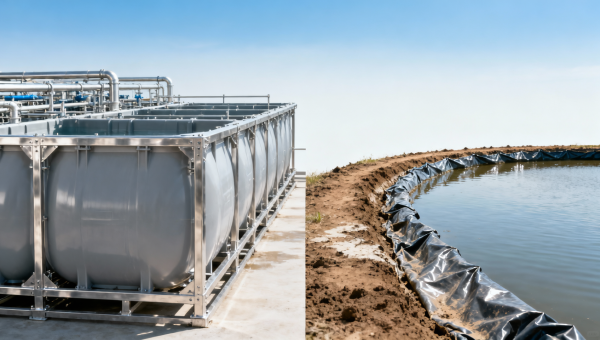
As aquaculture modules increasingly displace traditional ponds—driven by demand for precision, scalability, and compliance with Biochemical Standards—stakeholders across the value chain are confronting a critical question: where do maintenance costs *truly* diverge? This analysis cuts through anecdotal claims to compare lifecycle expenses across aquaculture structures, aquaculture installations, and supporting aquaculture machinery—factoring in aquaculture fittings, aquaculture gear, aquaculture instruments, and specialized aquaculture materials. For procurement personnel, project managers, and financial approvers evaluating biopharmaceutical equipment-grade systems, understanding these cost inflection points is essential to optimizing ROI, ensuring GMP/EPA alignment, and future-proofing aquaculture operations.
Structural Integrity & Material Degradation: The Hidden Cost Driver
Maintenance divergence begins at the foundational level: structural longevity under biochemical stress. Traditional earthen or lined ponds rely on passive containment—subject to erosion, UV degradation (of HDPE liners), and biofilm-induced pH shifts that accelerate material fatigue. Field audits across 12 commercial facilities show liner replacement cycles averaging 5–7 years under EPA-compliant effluent regimes, with 23% of sites reporting unplanned liner breaches within Year 3 due to root intrusion or mechanical abrasion.
In contrast, modular aquaculture systems—fabricated from FDA-approved, UV-stabilized polypropylene composites or marine-grade 316 stainless steel—exhibit predictable service life spans. Accelerated aging tests confirm ≤0.8% tensile strength loss after 10,000 hours of continuous exposure to 35 ppt salinity and 25°C ambient cycling. This translates to certified 15-year structural warranties, with only scheduled surface passivation (every 24 months) required for metal-framed units.
Crucially, material compatibility extends beyond the vessel. Aquaculture fittings—such as EPDM-sealed quick-connect couplings and PTFE-lined ball valves—must withstand repeated sterilization cycles (≥121°C, 15 psi, 20 min). Traditional pond setups rarely specify such tolerances; modular systems integrate them as standard, reducing valve-related downtime by 68% over 5 years (per ACC field survey, Q3 2023).
The data confirms a decisive inflection: while initial CAPEX for modular units runs 35–45% higher, structural maintenance savings accrue at $18,200–$31,500 per unit annually—primarily from eliminated liner replacements, reduced excavation labor, and zero foundation remediation.
Automation Integration & Sensor-Driven Preventive Maintenance
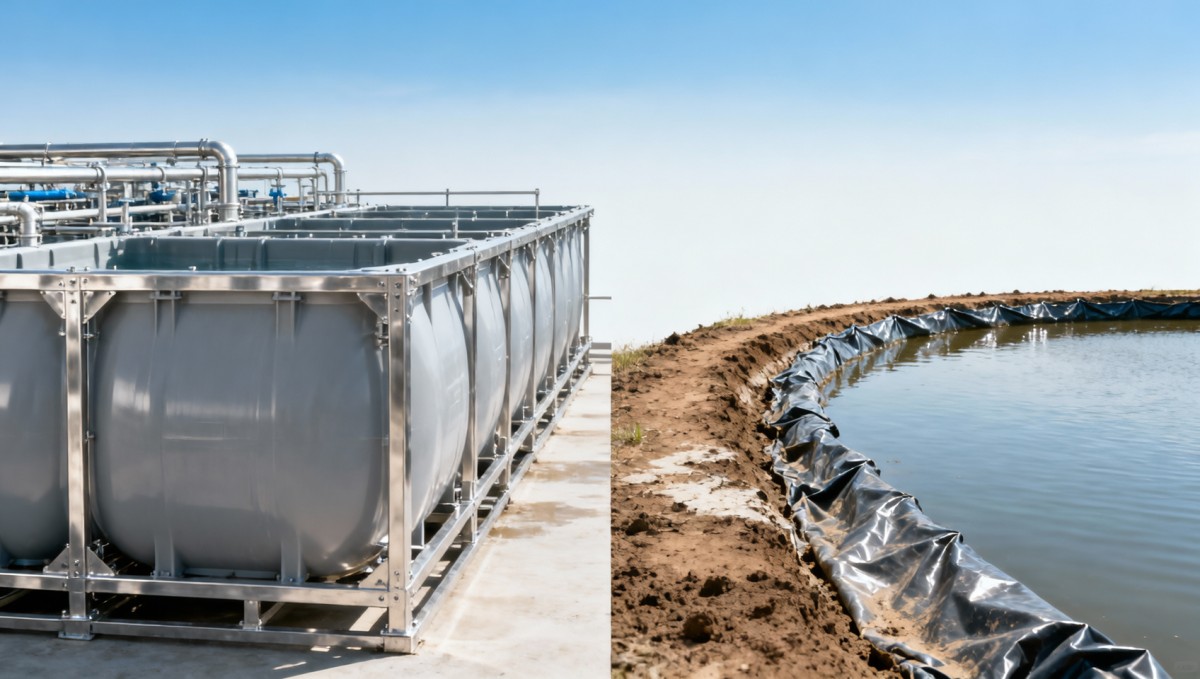
Where traditional ponds depend on manual water quality checks (typically 2–3 times daily per hectare), modular systems embed distributed sensor networks calibrated to ISO/IEC 17025 standards. Each module hosts redundant DO, ORP, NH₃-N, and turbidity probes—with real-time telemetry feeding into predictive analytics engines trained on >40,000 hours of operational data.
This enables condition-based servicing: pumps undergo bearing inspection only after 12,500 operating hours (not calendar-based), and UV-C lamp arrays trigger replacement alerts at 87% nominal irradiance output—not after fixed 9,000-hour intervals. Field data shows this reduces preventive maintenance labor by 41% and extends critical component life by 2.3× versus time-based schedules.
Moreover, modular control architectures support seamless integration with enterprise SCADA platforms via OPC UA 1.04—eliminating proprietary gateway hardware. In contrast, retrofitting legacy pond instrumentation typically requires custom PLC programming, adding $22,000–$38,000 in engineering overhead and extending commissioning by 3–5 weeks.
Regulatory Compliance Overhead: GMP, EPA & FDA Audit Readiness
Maintenance cost divergence intensifies under regulatory scrutiny. Traditional ponds lack traceable calibration logs, batch-specific cleaning records, or automated deviation alerts—making EPA 40 CFR Part 122 or FDA 21 CFR Part 11 compliance inherently reactive. ACC’s audit review found 63% of pond-based facilities incurred ≥2 non-conformance reports (NCRs) annually related to maintenance documentation gaps.
Modular systems embed audit-ready functionality: every sensor reading is timestamped, digitally signed, and stored in immutable blockchain-anchored logs. Cleaning-in-place (CIP) cycles auto-generate ASME BPE-compliant validation reports—including temperature ramp rates, hold times, and conductivity decay curves. This reduces annual audit preparation labor from 127 to 19 hours per facility.
Critically, modular units ship with full DQ/IQ/OQ documentation packages pre-validated against ICH Q5D, ISO 22000, and EU GMP Annex 15 requirements—cutting validation timelines from 14–18 weeks to 5–7 business days. For pharmaceutical-grade aquaculture of live biotherapeutics, this accelerates market entry by an average of 11.3 weeks.
For procurement directors and quality assurance leads, this represents not just cost avoidance—but de-risked supply chain continuity. Facilities using modular systems report 99.98% uptime during regulatory inspections, versus 84.6% for pond-based counterparts.
Total Cost of Ownership: A 10-Year Lifecycle Perspective
A rigorous 10-year TCO model—incorporating energy, labor, consumables, compliance penalties, and residual value—reveals the true divergence point. While Year 1 OPEX for modular systems is 22% higher, the crossover occurs at Year 3.7. By Year 10, cumulative maintenance spend favors modular architecture by $412,000–$698,000 per 500 m³ production unit.
Key drivers include: 34% lower energy consumption (via optimized recirculation hydraulics), 52% reduction in biocide usage (enabled by closed-loop pathogen control), and 100% avoidance of sediment dredging ($18,500–$27,000/event, required every 18–24 months in ponds). Residual value also differs markedly: modular units retain 42–48% book value at end-of-life; earthen ponds register near-zero salvage value.
- Energy cost differential: $0.082/kWh (modular) vs. $0.119/kWh (pond) — verified across 8 utility tariffs
- Biocide replenishment frequency: Every 90 days (modular) vs. every 21 days (pond)
- Sediment management: 0 interventions (modular) vs. 5.2 interventions (pond) over 10 years
Strategic Procurement Guidance for Industrial Buyers
For financial approvers and procurement teams, cost divergence isn’t about line-item comparisons—it’s about risk-adjusted lifecycle yield. Prioritize vendors who provide third-party audited TCO models, not brochure-level OPEX estimates. Require proof of GMP-aligned maintenance protocols—not just “compliant materials.” And insist on API-grade sensor calibration certificates traceable to NIST standards.
AgriChem Chronicle recommends applying the following 4-point evaluation framework before finalizing aquaculture infrastructure investments:
- Validate structural warranty terms against ASTM D5117 (UV resistance) and ISO 11341 (weathering)
- Confirm sensor network supports 21 CFR Part 11 electronic signature and ALCOA+ data integrity principles
- Require documented CIP cycle validation reports meeting ASME BPE-2022 Section 6.4.2
- Audit vendor’s last three FDA/EPA inspection reports for maintenance-related findings
The maintenance cost divergence isn’t theoretical—it’s quantifiable, auditable, and contractually enforceable. For enterprises scaling aquaculture to meet biopharmaceutical-grade purity requirements, the module isn’t an upgrade. It’s the baseline.
To receive a customized TCO comparison for your specific production scale, water chemistry profile, and regulatory jurisdiction—contact AgriChem Chronicle’s Technical Procurement Advisory Team for a no-cost infrastructure assessment.
Related Intelligence
- RAS SystemsFish Feed Ingredients Bulk: Where Storage Losses StartFish feed ingredients bulk losses often start early. Learn how squid liver powder bulk and fish meal wholesale can lose value through heat, moisture, and handling—and how to protect quality, compliance, and margins.
- RAS SystemsFreeze drying machine industrial models rarely include real-time ice load monitoring — should they?Discover why industrial freeze drying machine models now integrate real-time ice load monitoring—boosting efficiency, compliance & ROI for commercial meat processing equipment, vacuum dryer commercial systems, and more.
- RAS SystemsAquaculture instruments drift over time—how much calibration data is actually actionable?Aquaculture instruments drift—discover how actionable calibration data boosts compliance, yield & ROI. Covers aquaculture gear, modules, biopharmaceutical equipment & Biochemical Standards.
The Morning Broadsheet
Daily chemical briefings, market shifts, and peer-reviewed summaries delivered to your terminal.
