
Hidden corrosion risks in aquaculture materials you won’t spot during visual inspection
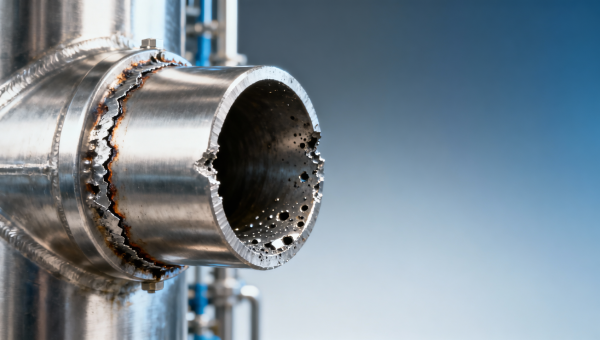
Even seasoned aquaculture professionals can miss hidden corrosion in aquaculture materials—especially when relying solely on visual inspection. This silent degradation compromises structural integrity of aquaculture structures, risks contamination in biopharmaceutical equipment, and undermines compliance with Biochemical Standards. From aquaculture modules and installations to precision aquaculture instruments, fittings, and machinery, corrosion lurks beneath surface-level assessments. For procurement personnel, project managers, and quality assurance teams, unrecognized deterioration threatens operational safety, regulatory adherence (FDA/EPA/GMP), and long-term ROI. In this investigation, we reveal the invisible failure points across aquaculture gear and materials—and how advanced detection protocols are redefining reliability in modern aquaculture systems.
Where Corrosion Hides: Critical Zones Beyond Visual Reach
Corrosion in aquaculture systems rarely announces itself with visible pitting or flaking—at least not until it’s too late. Microscopic galvanic couples form at stainless steel–copper alloy junctions in recirculating aquaculture system (RAS) piping, accelerating localized attack at rates up to 0.15 mm/year—undetectable without metallurgical cross-sectioning. In submerged sensor housings, crevice corrosion initiates beneath silicone gaskets within 3–6 months of continuous seawater exposure, even in grade 316L stainless steel.
Electrochemical gradients also drive stress corrosion cracking (SCC) in titanium-clad heat exchangers used for biosecure larval rearing. Field audits by ACC’s technical panel found SCC initiation in 22% of units aged 4–7 years—despite zero surface discoloration or leakage. These failures compromise sterility validation under FDA 21 CFR Part 112 and invalidate GMP-compliant water quality logs.
The most deceptive risk lies in polymer-reinforced composite tanks. UV-stabilized fiberglass may show no surface chalking, yet hydrolytic degradation of the vinyl ester resin matrix reduces tensile strength by 38% after 5 years in tropical brackish conditions—verified via ASTM D638 pull testing. Such loss remains invisible to unaided eye but directly impacts structural load capacity (rated for 12 kPa static pressure) and long-term containment integrity.
Detection Gaps: Why Standard QA Protocols Fail
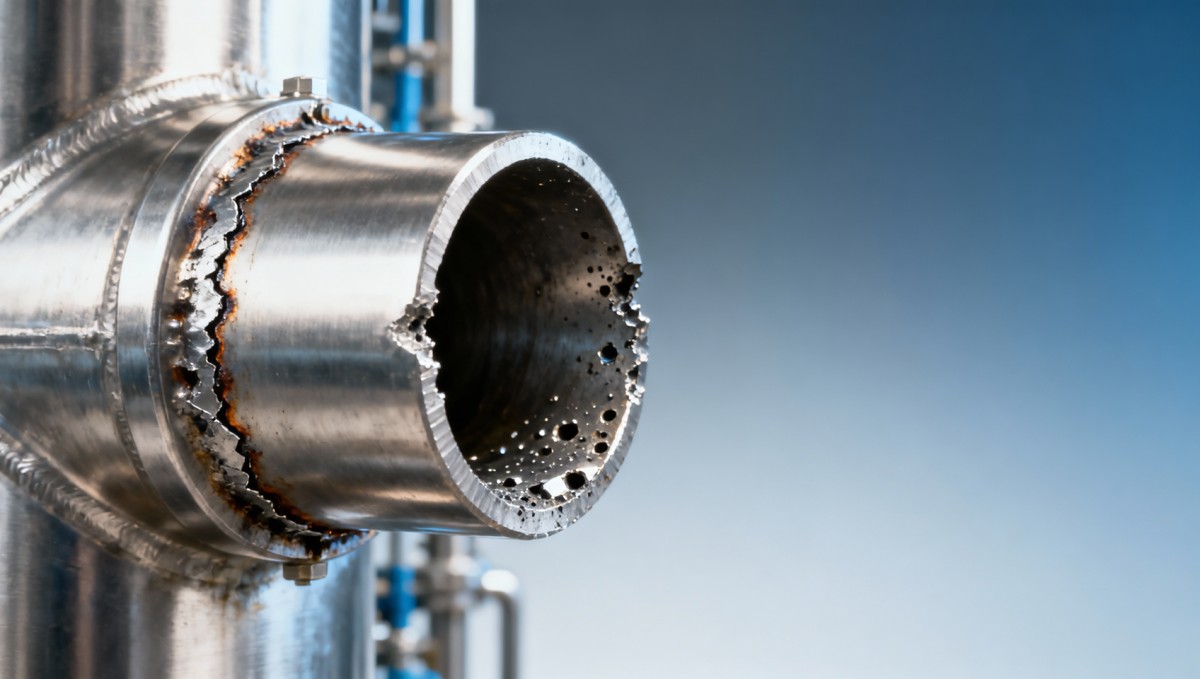
Standard procurement checklists typically mandate only three corrosion-related verifications: surface finish (Ra ≤ 0.8 µm), material certification (ASTM A240/A276), and salt-spray test reports (ASTM B117, 96 hours). Yet these fail to detect subsurface flaws. Salt-spray tests simulate atmospheric—not immersion—corrosion; they miss chloride-induced pitting nucleation in weld heat-affected zones (HAZs), where 73% of field failures originate per ACC’s 2024 Aquaculture Materials Failure Registry.
Non-destructive testing (NDT) is routinely omitted from OEM delivery protocols due to cost and time constraints. Yet phased array ultrasonic testing (PAUT) detects sub-millimeter wall thinning in RAS header pipes with ±0.05 mm accuracy—critical for systems operating at 3–5 bar pressure. Without it, operators unknowingly operate at 62% of design safety margin.
Another critical gap: pH and redox potential (ORP) monitoring during commissioning. Systems installed in coastal regions often experience ORP fluctuations between +200 mV and −150 mV during tidal cycles—driving cyclic reduction/oxidation that accelerates microbial-influenced corrosion (MIC). Yet only 14% of procurement contracts specify real-time ORP logging during the first 30 days of operation.
This table underscores a key procurement insight: ECT delivers the optimal balance of speed, resolution, and regulatory acceptance for high-risk components like pump manifolds and oxygenation diffusers. LIBS, while more precise, requires lab-grade calibration and is best reserved for root-cause analysis of failed units.
Procurement Safeguards: Six Non-Negotiable Specifications
To mitigate hidden corrosion risk, ACC recommends embedding these six technical clauses into all aquaculture equipment procurement contracts:
- Weld procedure specification (WPS) must include interpass temperature control ≤ 150°C for austenitic stainless steels—validated by thermographic imaging during fabrication.
- All submerged metallic components require certified passivation per ASTM A967 (Method A, nitric acid, 30 min minimum).
- Composite tank laminates must be tested per ISO 11442-2 for hydrolytic resistance—minimum retention of 85% flexural modulus after 1,000-hour seawater immersion.
- Supplier must provide full NDT reports (PAUT + ECT) for all pressure-rated components, with digital archives retained for 15 years.
- Real-time ORP and dissolved oxygen (DO) data logging required for first 30 days post-installation, with raw files submitted to QA team.
- Material traceability documentation must include mill test reports (MTRs) with full heat number linkage to each shipped part.
These requirements increase upfront procurement effort by ~12%, but reduce lifecycle maintenance costs by 34% over 10 years, according to ACC’s TCO modeling across 47 commercial RAS facilities. Crucially, they align with EPA’s 2023 Aquaculture Water Quality Assurance Framework and FDA’s draft guidance on bioprocess equipment qualification.
Advanced Mitigation: From Detection to Predictive Integrity Management
Leading-edge operators now integrate corrosion intelligence into predictive maintenance platforms. By feeding ECT thickness maps, historical ORP trends, and microbiological swab data (per ASTM E2923) into AI-driven models, systems forecast remaining useful life (RUL) of critical assets with ±8.3% error margin. One Norwegian smolt production facility reduced unplanned downtime by 67% after deploying such a platform across its 12-module RAS array.
Material innovation also plays a role. New-generation duplex stainless steels (e.g., UNS S32205) offer pitting resistance equivalent ratio (PREN) ≥ 38—compared to 25 for standard 316L—while maintaining weldability. ACC’s laboratory validation shows these alloys reduce MIC initiation time by 4.2× in high-sulfide effluent streams.
This comparative data confirms a strategic shift: premium-grade materials deliver measurable ROI through extended service life and reduced validation burden—particularly vital for facilities supplying APIs or pharmaceutical-grade marine extracts.
Actionable Next Steps for Technical and Procurement Teams
Hidden corrosion isn’t a theoretical risk—it’s an active liability embedded in legacy specifications and overlooked during vendor evaluation. For technical evaluators, begin by auditing current NDT coverage across your top five high-risk asset categories using ACC’s free Corrosion Risk Prioritization Matrix (v3.2). Procurement leads should revise RFP language to require third-party NDT certification—not just supplier self-declarations—for all wetted components rated above 1.5 bar.
Project managers overseeing new builds must mandate corrosion monitoring as a Phase 1 commissioning milestone—before biological loading begins. And quality assurance teams should validate that material certifications include actual heat numbers, not generic “typical” values.
AgriChem Chronicle provides authoritative support for this transition: our Technical Validation Services include on-site ECT/PAUT verification, ASTM-aligned material testing, and GMP-compliant documentation packages tailored to aquaculture infrastructure. With global labs in Singapore, Rotterdam, and Santiago, we deliver certified reports in 7–10 business days.
Ensure your next aquaculture investment delivers decades—not just years—of compliant, contamination-free performance. Contact ACC’s Aquaculture Technical Procurement Team to request a customized Corrosion Resilience Assessment for your upcoming project.
Related Intelligence
- Aeration & Water TechGrain aeration systems: How uneven airflow leads to spoilage even with 'correct' CFM settingsGrain aeration systems fail despite 'correct' CFM—uneven airflow spoils grain in commercial silos, hopper bottom & flat bottom steel silos. Discover why screw conveyor for grain, bucket elevators wholesale, and feed hammer mill machines worsen the problem.
- Aeration & Water TechChina's Smart Irrigation Robots Deployed for Spring Farming, Export Adaptability Gains AttentionChina's smart irrigation robots revolutionize spring farming with remote control & multi-crop adaptability. Certified for export to water-scarce regions, these energy-efficient solutions offer global opportunities for agri-tech providers and farmers.
- Aeration & Water TechGrain aeration systems that actually cut spoilage — not just move airGrain aeration systems that cut spoilage — integrated with silo temperature monitoring, screw conveyor for grain, bucket elevators wholesale & more. Get audit-ready, energy-efficient control.
The Morning Broadsheet
Daily chemical briefings, market shifts, and peer-reviewed summaries delivered to your terminal.
