
China's Smart Irrigation Robots Deployed for Spring Farming, Export Adaptability Gains Attention
China's Smart Irrigation Robots Deployed for Spring Farming, Export Adaptability Gains Attention
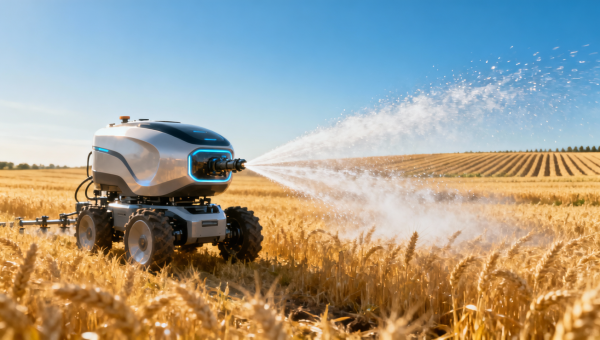
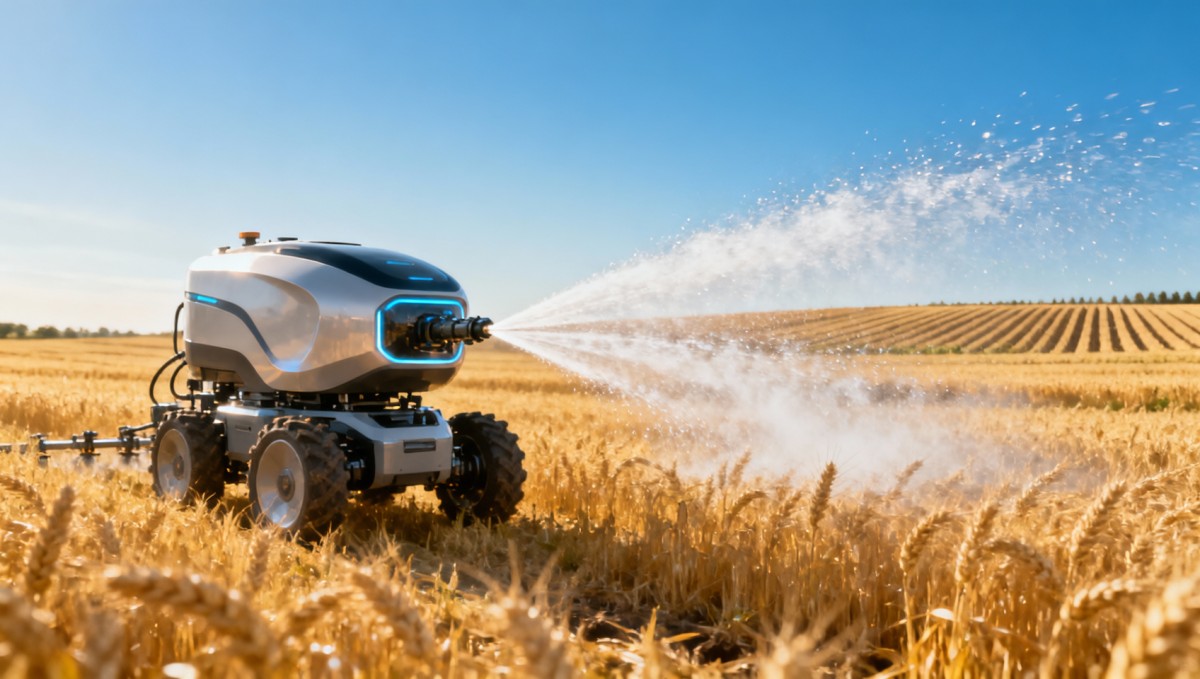
On March 27, 2026, smart irrigation robots were deployed in wheat fields in Shangqiu, Henan, for integrated water-fertilizer spraying. The system supports remote control, multi-crop adaptability, and low-power operation. This development is particularly relevant for agricultural technology providers, irrigation equipment manufacturers, and overseas farming operations, as it highlights China's growing capability to export adaptable smart irrigation solutions to water-scarce regions.
Event Overview
On March 27, 2026, smart irrigation robots were officially put into use in Shangqiu, Henan, for spring irrigation. The system features remote adjustment capabilities, compatibility with various crops, and energy-efficient operation. It has already obtained CE and ASAE certifications, enabling batch exports to water-scarce regions like the Middle East and Central Asia. Overseas farmers and agricultural service providers can now evaluate the system's rapid deployment potential under local climatic and crop conditions.
Impact on Sub-Industries
Agricultural Technology Providers
The deployment of smart irrigation robots signals advancements in precision agriculture. Providers of similar technologies may face increased competition or collaboration opportunities, particularly in markets where water efficiency is critical.
Irrigation Equipment Manufacturers
Manufacturers must now consider the export adaptability of their products, as certifications like CE and ASAE become key differentiators in global markets. The ability to customize solutions for diverse climates and crops will be a competitive edge.
Overseas Farming Operations
Farmers in water-scarce regions can leverage these technologies to optimize resource use. The system's remote control feature may also reduce labor costs, making it a viable option for large-scale farms.
Key Focus Areas and Recommended Actions
Evaluate Certification Requirements
Businesses should assess whether their products meet international standards like CE and ASAE, as these certifications are increasingly critical for export success.
Assess Local Adaptability
Overseas buyers should test the system's performance under local conditions to ensure compatibility with their specific crop and climate needs.
Monitor Supply Chain Readiness
Manufacturers and distributors should prepare for potential demand surges by ensuring robust supply chains and after-sales support networks.
Editor's Perspective / Industry Observation
From an industry standpoint, this development is more than just a technological milestone; it signals China's growing influence in global agricultural technology. The focus on export adaptability suggests that the industry is moving toward solutions that are not only advanced but also highly customizable for diverse environments. Stakeholders should view this as a signal to prioritize innovation and international compliance in their product development strategies.
Conclusion
The deployment of smart irrigation robots in China underscores the country's advancements in agricultural technology and its potential to address global water scarcity challenges. For industry players, the key takeaway is the importance of adaptability and certification in capturing international markets. This event should be understood as a stepping stone toward broader adoption of smart farming solutions worldwide.
Source Information
Primary source: Official deployment report from Shangqiu, Henan, dated March 27, 2026. Ongoing monitoring is recommended for updates on export performance and additional certifications.
Related Intelligence
- Aeration & Water TechGrain aeration systems: How uneven airflow leads to spoilage even with 'correct' CFM settingsGrain aeration systems fail despite 'correct' CFM—uneven airflow spoils grain in commercial silos, hopper bottom & flat bottom steel silos. Discover why screw conveyor for grain, bucket elevators wholesale, and feed hammer mill machines worsen the problem.
- Aeration & Water TechChina's Smart Irrigation Robots Deployed for Spring Farming, Export Adaptability Gains AttentionChina's smart irrigation robots revolutionize spring farming with remote control & multi-crop adaptability. Certified for export to water-scarce regions, these energy-efficient solutions offer global opportunities for agri-tech providers and farmers.
- Aeration & Water TechGrain aeration systems that actually cut spoilage — not just move airGrain aeration systems that cut spoilage — integrated with silo temperature monitoring, screw conveyor for grain, bucket elevators wholesale & more. Get audit-ready, energy-efficient control.
The Morning Broadsheet
Daily chemical briefings, market shifts, and peer-reviewed summaries delivered to your terminal.
