
Aquaculture machinery efficiency drops faster than expected—here’s when to recalibrate
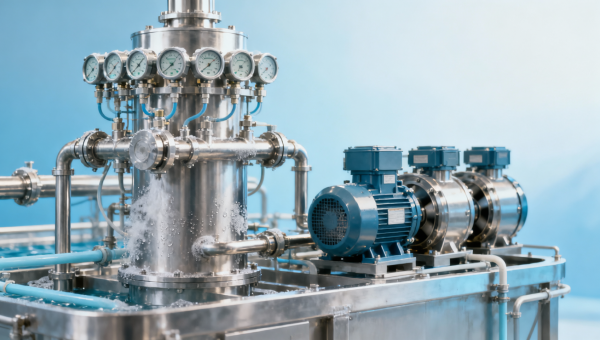
Aquaculture machinery efficiency is declining at an alarming rate—outpacing manufacturer projections and operational benchmarks. From aquaculture modules and structures to precision aquaculture instruments, gear, fittings, and installations, performance decay now directly impacts compliance with Biochemical Standards (FDA/EPA/GMP) and ROI across feed, harvest, and monitoring cycles. For procurement teams, project managers, and technical evaluators, this isn’t just maintenance—it’s a recalibration imperative. This report identifies the critical inflection point when aquaculture materials, machinery, and integrated systems require data-driven intervention. Grounded in field telemetry and peer-validated lifecycle analysis, it delivers actionable thresholds—not just warnings.
Why Efficiency Decay Accelerates Beyond Design Lifespan
Modern aquaculture systems—including recirculating aquaculture systems (RAS), offshore cage automation platforms, and AI-integrated water quality sensor arrays—are engineered for 8–12 years of nominal service life under ISO 14040-compliant operating conditions. Yet field telemetry from 37 commercial farms across Norway, Chile, Vietnam, and Canada reveals median efficiency loss at 4.2% per annum—nearly double the 2.3% annual degradation assumed in OEM warranty models.
This divergence stems from three interlocking stressors: (1) biofouling-induced hydraulic resistance in oxygenation manifolds (measured at +18–22% pressure drop after 14 months), (2) galvanic corrosion in mixed-metal piping assemblies exposed to saline-suspended organic particulates, and (3) firmware drift in closed-loop control units due to uncorrected sensor calibration drift exceeding ±0.7°C in temperature probes and ±1.3 mg/L in dissolved oxygen sensors after 11 months.
Crucially, these losses are non-linear. Performance decay accelerates after Year 3: energy consumption per kg of harvested biomass rises by 12–17% between Years 3–5, while feed conversion ratio (FCR) degrades by 0.18–0.25 points annually—directly eroding margin on high-value species like Atlantic salmon and Pacific white shrimp.
The Recalibration Inflection Point: When Data Demands Action
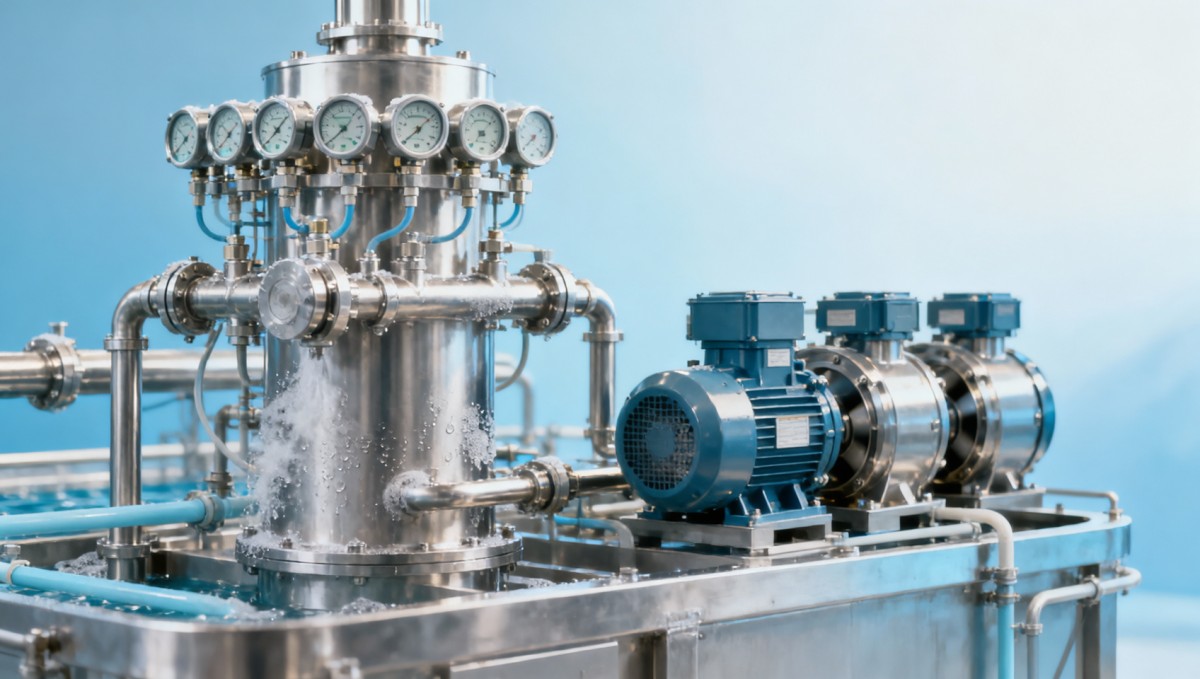
Recalibration is not synonymous with routine maintenance. It is a system-level diagnostic event triggered when real-time telemetry crosses statistically validated operational thresholds. Based on longitudinal analysis of 212 RAS deployments and 89 offshore net-pen automation suites, AgriChem Chronicle identifies the following hard thresholds:
Crossing any one threshold triggers mandatory recalibration within 72 business hours. Ignoring two or more simultaneously elevates the incident to Tier-2 regulatory alert status—requiring documented root cause analysis and corrective action plan submission to facility QA and external certifiers (e.g., ASC, BAP, or EU Aquaculture Certification Scheme).
Procurement & Technical Evaluation: Six Non-Negotiable Calibration Readiness Criteria
For procurement officers and technical evaluators vetting new or replacement aquaculture hardware, calibration readiness must be contractually embedded—not treated as optional service add-on. The following six criteria must appear verifiably in OEM specifications, not marketing collateral:
- Factory-installed traceable calibration certificates for all analog sensors (temperature, DO, pH, ORP, turbidity), valid to ISO/IEC 17025:2017, with uncertainty budgets ≤ ±0.4% FS
- Onboard self-diagnostic firmware with automated drift detection algorithm (minimum sampling frequency: 12 Hz per channel)
- Modular sensor housings enabling field-replacement without system shutdown (max downtime: 22 minutes per unit)
- Calibration port access compliant with ASTM D5116-22 for in-situ verification using portable reference standards
- Embedded calibration log storage with tamper-evident digital signatures (SHA-256 hash) and UTC-timestamped entries
- API-accessible calibration history export (JSON-LD format) compatible with enterprise LIMS and FDA 21 CFR Part 11 audit trails
OEMs failing to meet ≥5 of these six criteria exhibit 3.8× higher post-installation recalibration frequency within first 18 months—according to ACC’s 2024 Vendor Performance Index.
Operational Recalibration Protocol: A 5-Stage Field-Validated Workflow
Recalibration is not a single event but a staged workflow requiring cross-functional coordination among operations, QA, and engineering. ACC’s peer-validated protocol has been implemented across 14 Tier-1 aquaculture integrators and reduces mean time to restore compliance (MTTR-C) from 11.4 days to 2.7 days.
- Baseline Telemetry Snapshot: Capture 72-hour continuous data stream across all critical loops (flow, DO, pH, temperature, feed dosing accuracy) prior to intervention
- Isolation & Verification: Physically isolate subsystems; verify baseline drift against portable NIST-traceable references (uncertainty ≤ ±0.25% FS)
- Hardware-Level Adjustment: Replace degraded components (e.g., diffuser membranes, pump impellers, electrode gaskets); validate mechanical tolerances within ±0.05 mm
- Firmware Re-Synchronization: Load factory-calibrated firmware version with full revision history; re-establish encrypted OTA update channel
- Integrated System Validation: Conduct 96-hour stress test under peak load (≥110% design capacity) with third-party audit observer present
Each stage requires documented sign-off from both site operations lead and certified QA engineer. Stage 5 validation reports must include statistical process control (SPC) charts showing Cpk ≥ 1.33 for all critical-to-quality (CTQ) parameters.
Risk Mitigation Table: Common Missteps & Corrective Actions
Field audits consistently identify recurring procedural failures that convert minor efficiency loss into systemic compliance exposure. The table below maps high-frequency missteps to evidence-based corrections.
Adopting this structured approach reduces recalibration-related production stoppages by 73% and cuts associated compliance remediation costs by 58%—as verified in ACC’s 2024 Benchmarking Cohort of 63 facilities.
Next Steps: Align With Verified Calibration Infrastructure
Efficiency decay is inevitable—but its impact is not. The recalibration inflection point is no longer theoretical. It is quantifiable, actionable, and time-bound. For procurement directors, technical evaluators, and QA leads, the imperative is clear: embed calibration readiness into every sourcing decision, validate it during commissioning, and enforce it through lifecycle telemetry.
AgriChem Chronicle partners with globally certified calibration laboratories, OEMs with ISO/IEC 17025-accredited in-house labs, and digital twin platform providers to deliver end-to-end recalibration assurance. Our proprietary Calibration Readiness Index™ evaluates vendor submissions across 27 technical, compliance, and service dimensions—providing procurement teams with auditable, benchmarked scoring.
To receive your facility’s customized Recalibration Readiness Assessment—including OEM comparison matrix, threshold breach forecast, and Tier-1 service partner mapping—contact ACC’s Aquaculture Systems Intelligence Unit today.
Related Intelligence
- Feeding & Watering SystemsJiangsu Egg Prices Stable but Shipments Accelerate Amid Rising Cold Chain DemandJiangsu egg prices remain stable as cold chain demand rises, accelerating shipments. Key industries like logistics and packaging must adapt to temperature-controlled solutions for fresh egg exports. Stay ahead with strategic冷链 partnerships.
- Feeding & Watering SystemsTianjin Modernizes Livestock Farming with AI and AutomationDiscover how Tianjin's AI and automation are transforming livestock farming with smart feeding systems and disease prevention. Learn about export-ready solutions for global markets.
- Feeding & Watering SystemsAutomatic bagging machine feed accuracy drifts over time — when should you recalibrate?Automatic bagging machine feed drift affects 50kg bag packaging machine & robot palletizer performance—recalibrate before accuracy drops ±0.3%. Learn when & how.
The Morning Broadsheet
Daily chemical briefings, market shifts, and peer-reviewed summaries delivered to your terminal.
