

The Authority in Global Agricultural Chemistry & Bio-Resources
When sugarcane harvesters wholesale deals become costly long term
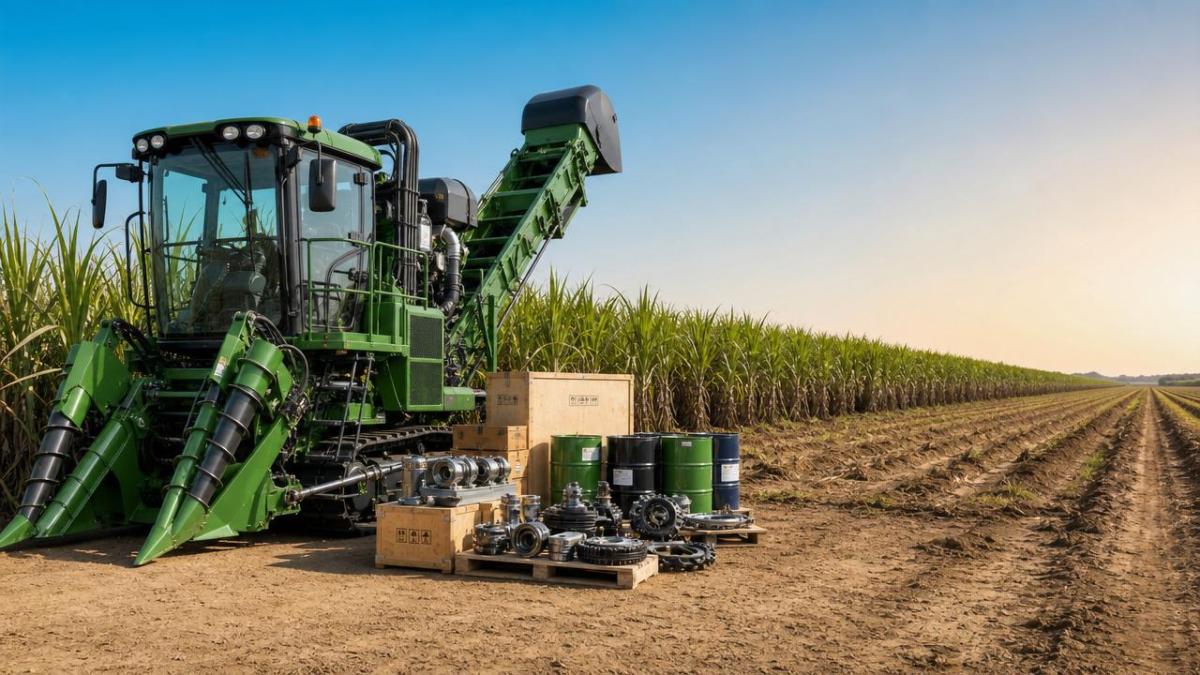
At first glance, sugarcane harvesters wholesale deals seem like a fast way to cut capital costs, but for financial approvers, the long-term numbers often tell a different story. Hidden maintenance burdens, parts availability risks, fuel inefficiency, and compliance gaps can quietly erode projected savings. This analysis examines why the cheapest bulk purchase may become the most expensive decision over the equipment lifecycle.
For procurement teams in large farming groups, contractor fleets, mill-linked harvesting operations, and cross-border agribusiness projects, the phrase sugarcane harvesters wholesale often signals negotiating power. Yet the same deal can perform very differently depending on terrain, cane variety, labor model, uptime expectations, and after-sales support. A finance leader approving five machines for one estate faces a different risk profile than a regional operator standardizing twenty units across several countries.
That is why scenario-based evaluation matters. In agricultural machinery, especially high-load harvesting equipment, the invoice price is only the first layer of cost. The more useful question is not whether a bulk purchase is cheaper today, but whether it remains cost-effective through five to eight harvesting cycles. Financial approvers who understand operating context are more likely to avoid underperforming wholesale equipment packages, delayed payback, and unplanned replacement spending.
Why scenario differences matter before approving sugarcane harvesters wholesale contracts
The main reason wholesale deals become costly over time is mismatch. A machine suited to flat, dry, high-volume cane fields may struggle in muddy plots, irregular row spacing, or mixed-variety harvest schedules. A supplier with attractive bundled pricing may have weak parts support in remote districts. A lower-cost unit may consume more fuel, require more stoppages, or deliver poor cane cleanliness, affecting both field efficiency and mill economics.
From a finance perspective, the decision should be framed around total cost of ownership, not unit discount percentage. This includes acquisition, financing, commissioning, operator training, seasonal downtime, repair frequency, wear-part cost, residual value, and even compliance exposure. In regulated supply chains, weak documentation or poor emissions alignment can become a hidden balance-sheet issue if equipment cannot be deployed as planned.
The keyword sugarcane harvesters wholesale often attracts buyers looking for scale savings, but scale only works when the usage scenario supports standardization. If field conditions vary sharply across sites, a single low-cost machine platform may increase service complexity rather than reduce it.
Typical application scenarios and where bulk deals create value or risk
Financial approvers should separate wholesale proposals by operating scenario. The same supplier can be acceptable in one use case and high risk in another.
Scenario 1: Single-estate farms seeking quick capex savings
This is the most common case where sugarcane harvesters wholesale looks attractive. A large estate may receive favorable pricing for buying several machines at once, especially before peak season. However, the hidden risk is underutilization. If harvest windows are short or acreage does not justify the fleet size, fixed ownership costs rise sharply per ton harvested. Cheap machines that sit idle for much of the year are not financially efficient, even if procurement reports a strong discount.
In this scenario, approvers should stress-test capacity assumptions. Ask whether projected daily throughput reflects real field conditions, turning radius, transport logistics, and weather interruptions. A smaller fleet of higher-reliability units may outperform a larger fleet purchased through an aggressive wholesale package.
Scenario 2: Contractor fleets that earn money only when machines run
For contract harvesters, downtime is the central cost driver. These businesses often explore sugarcane harvesters wholesale to standardize equipment, simplify training, and improve bargaining power. The strategy can work well if the supplier maintains strong field service and carries fast-moving parts in-region. It becomes dangerous when discount pricing is achieved by accepting weaker support terms.
A finance approver in this scenario should model lost revenue per day of downtime, not just repair expense. One failed hydraulic component during peak season can trigger missed contracts, penalties, and idle labor. When evaluated this way, a machine with a higher purchase price but better uptime may deliver lower lifecycle cost.
Scenario 3: Mill-integrated operations focused on cane quality
Some procurement teams assess harvesting equipment mainly through field productivity, but mills care about what arrives at the gate. In mill-linked operations, wholesale buying decisions should account for billet uniformity, trash content, cane loss, and cut quality. Low-cost machines may appear efficient in hectares covered, yet create downstream inefficiencies in transport, cleaning, and extraction.
For this use case, the real cost of a poor sugarcane harvesters wholesale deal may show up in reduced sugar recovery or inconsistent feedstock flow. Financial approvers should request test data from comparable operations and convert quality differences into monetary impact per ton processed.
Scenario 4: Multi-site or international deployment
Wholesale deals become more complex when equipment is deployed across regions. Import duties, certification requirements, operator language needs, and local maintenance capability all affect usable value. A supplier may offer excellent factory pricing but no serious infrastructure for commissioning, warranty fulfillment, or technical documentation in target markets.
In this case, the lowest quotation can produce the highest implementation cost. Financial approvers should examine landed cost, startup delays, and spare-part lead times. If a machine remains inactive for weeks awaiting customs clearance or technical support, the projected savings from the original sugarcane harvesters wholesale contract quickly disappear.
What different buyer types should evaluate first
Different organizations should prioritize different metrics before approving a bulk purchase.
- Corporate farming groups: focus on fleet utilization, depreciation strategy, and compatibility with existing maintenance systems.
- Procurement-led contractor businesses: prioritize uptime guarantees, parts stocking, and rapid field-service coverage.
- Mill-owned harvesting programs: evaluate cane cleanliness, recovery impact, and synchronization with transport capacity.
- Cross-border investors: validate compliance, import documentation, training support, and long-term resale value.
This is where many sugarcane harvesters wholesale negotiations fail internally. Procurement sees lower capex, operations see uncertainty, maintenance sees parts risk, and finance sees unclear assumptions. The best approvals happen when the purchase case links price directly to scenario-specific operating outcomes.
Common long-term cost drivers hidden inside wholesale equipment offers
Several cost categories are routinely underestimated in bulk machinery deals:
- Wear parts consumption: lower-grade components increase replacement frequency during the busiest months.
- Fuel efficiency: a small hourly difference becomes material across multi-machine seasonal usage.
- Operator learning curve: poor ergonomics or inconsistent control systems can slow output and increase damage.
- Service response: delayed repairs have compounding effects in narrow harvest windows.
- Residual value: cheaper units may depreciate faster or be difficult to resell.
- Compliance gaps: missing technical files, safety documentation, or emissions alignment can interrupt deployment.
For financial approvers, these are not operational details to leave entirely to engineering teams. They are balance-sheet risks. A discounted sugarcane harvesters wholesale package should be treated like any capital project: validate assumptions, quantify downside, and compare lifecycle scenarios.
How to decide which scenarios are suitable for wholesale purchasing
Wholesale buying works best when four conditions are present. First, operating environments are similar enough to support fleet standardization. Second, the supplier has proven local or regional service capability. Third, the buyer has enough volume to keep machines productively utilized. Fourth, technical performance has been verified in comparable cane conditions.
If one or more of these conditions is weak, the buyer should proceed cautiously. In many cases, a phased procurement strategy is smarter than a full-volume commitment. Start with pilot deployment, monitor fuel use, maintenance frequency, output quality, and downtime, then scale only after field data confirms the business case.
This is especially relevant for financial reviewers who are not expected to judge engineering details alone. Your role is to require decision-grade evidence. A supplier proposing sugarcane harvesters wholesale terms should be able to provide lifecycle cost benchmarks, service-level commitments, recommended spare-part packages, and references from similar operating scenarios.
Frequent misjudgments financial approvers should avoid
One common mistake is comparing offers only on per-unit price. Another is assuming that all harvesters in the same capacity range deliver similar field performance. A third is separating procurement from post-sale support during evaluation. In reality, service capability is part of the asset itself.
Another misjudgment is relying on supplier claims from unrelated crops or markets. Sugarcane harvesting is highly situational. Machines must be matched to row structure, residue handling needs, field moisture, haul-out coordination, and operator skill level. A successful sugarcane harvesters wholesale purchase is therefore less about buying more machines and more about buying the right supportable platform for the right scenario.
FAQ: scenario-based questions about sugarcane harvesters wholesale
Are wholesale deals always bad for long-term cost control?
No. They can be highly effective when fleet standardization, service availability, and utilization are strong. The risk arises when discount pricing hides poor fit or weak support.
Which scenario benefits most from sugarcane harvesters wholesale?
Contractor fleets and large single-region operators often benefit most, provided they can maintain high seasonal usage and access spare parts quickly.
When should a finance team reject a low-cost bulk purchase?
Reject or pause approval when there is no verified local service plan, no realistic utilization model, or no evidence of performance in comparable cane conditions.
A practical approval path for cost-conscious buyers
For financial approvers, the best next step is not simply to ask whether the supplier can reduce price further. Ask for scenario evidence. Request a five-year ownership model, downtime assumptions, parts coverage map, operator training plan, fuel performance data, and references from matching applications. Compare offers on cost per harvested ton and availability rate, not just on capex.
In other words, evaluate sugarcane harvesters wholesale as a deployment decision, not a buying event. When the application scenario is right, wholesale procurement can create real value. When the scenario is wrong, the cheapest proposal can become the most expensive long-term commitment. Financial discipline begins by matching machine strategy to field reality.
Related Intelligence
- Heavy Agri MachineryRotary tillers wholesale quality checks before placing a large orderRotary tillers wholesale quality checks: verify welds, gearboxes, blades, CE compliance, and batch consistency before large orders to reduce risk and choose suppliers with confidence.
- Heavy Agri MachineryWholesale lawn mowers or ride-ons? Matching mower type to terrainWholesale lawn mowers or ride-ons? Learn how to match mower type to terrain, acreage, labor, and obstacles to stock smarter, reduce service issues, and win more commercial buyers.
- Heavy Agri MachineryManure spreaders wholesale: the maintenance issues worth checking firstManure spreaders wholesale maintenance starts with the right first checks. Discover how to inspect chains, PTO, hydraulics, and corrosion points to reduce downtime and improve spread performance.
The Morning Broadsheet
Daily chemical briefings, market shifts, and peer-reviewed summaries delivered to your terminal.
