

The Authority in Global Agricultural Chemistry & Bio-Resources
What makes a farm wagon manufacturer reliable for export orders
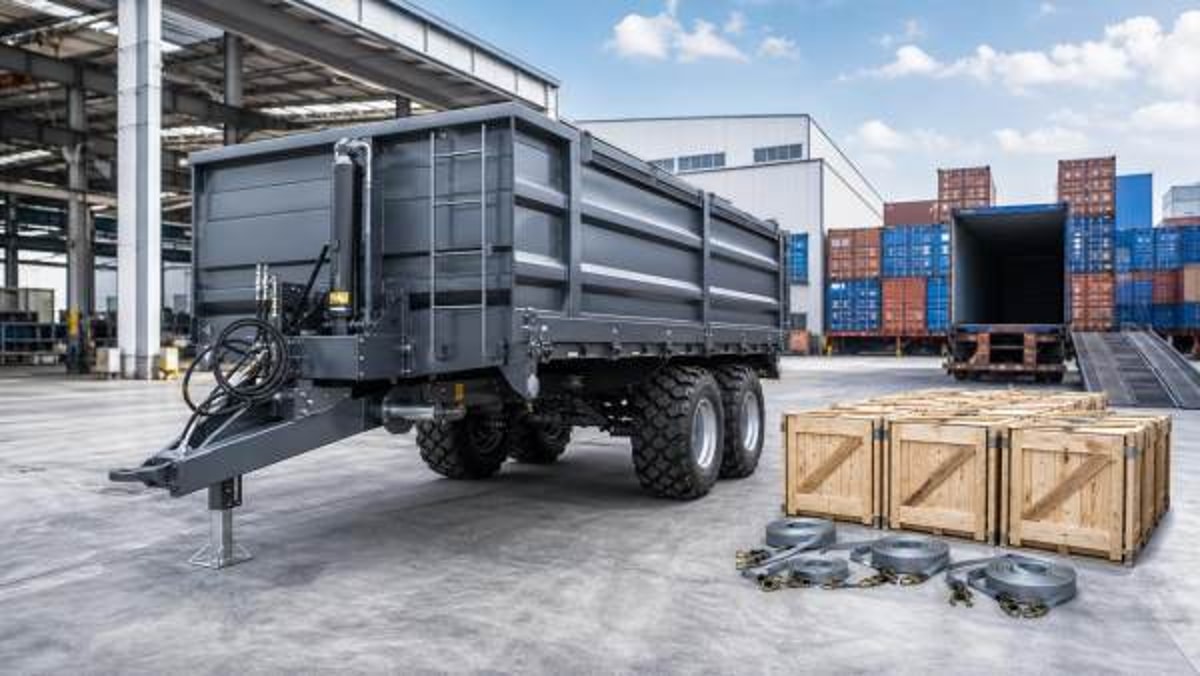
For distributors, agents, and import-focused buyers, choosing a reliable farm wagon manufacturer is about far more than price. Export readiness depends on production consistency, compliance with destination-market standards, packaging security, delivery coordination, and responsive after-sales support. This article explores the key indicators that help channel partners identify manufacturers capable of supporting stable, scalable, and low-risk international orders.
How should distributors define a reliable farm wagon manufacturer?
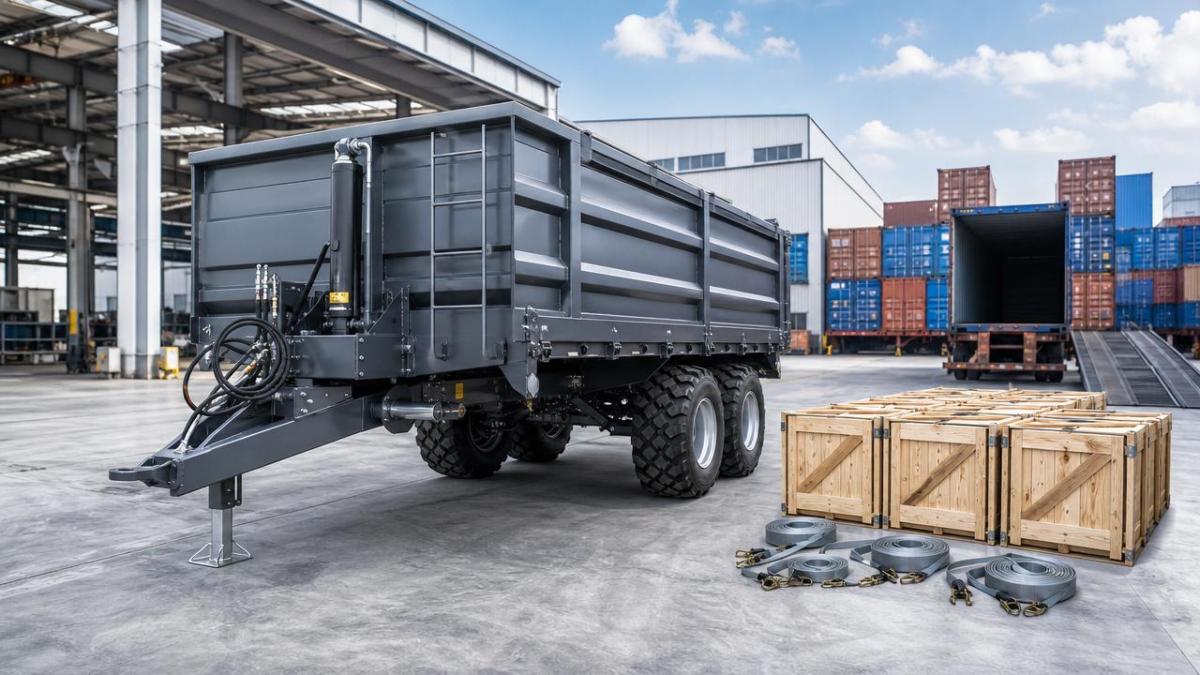
A reliable farm wagon manufacturer is not simply a factory that can produce trailers, tippers, or transport wagons at an attractive unit cost. For export buyers, reliability means the supplier can maintain repeatable quality, document key specifications, communicate clearly through the order cycle, and deliver products that match the needs of dealers in different agricultural markets.
In practical terms, reliability sits at the intersection of manufacturing discipline and trade execution. A factory may weld robust frames, yet still create risk if it cannot handle loading plans, spare parts support, carton or steel-frame packaging, or destination-specific paperwork. For channel partners, these gaps quickly translate into claims, delays, and margin erosion.
Within agricultural and forestry machinery supply chains, AgriChem Chronicle follows the same principle used in more regulated industrial sectors: procurement decisions should be based on verifiable operating capability, not sales claims alone. That editorial lens is especially useful when evaluating a farm wagon manufacturer for long-term export cooperation.
- A dependable supplier provides consistent bill of materials, axle ratings, steel thickness references, paint or coating details, and loading methods.
- A dependable supplier also understands the commercial realities of dealers, including lead time promises, replacement parts needs, and territory growth planning.
- Most importantly, a dependable supplier can scale from trial orders to repeat container programs without a sudden drop in quality or communication speed.
What separates an export-ready farm wagon manufacturer from a low-risk domestic supplier?
Many factories serve domestic agricultural equipment demand adequately but struggle when export requirements become more complex. Dealers and agents should distinguish between a workshop that can make a wagon and a farm wagon manufacturer that can support international distribution with documentation, packaging control, and after-sales coordination.
The table below outlines the practical differences channel partners should review before placing large export orders.
For distributors, this distinction matters because export failure often comes from process weakness, not from the wagon concept itself. A farm wagon manufacturer with stable export systems reduces claim rates, protects dealer reputation, and supports faster inventory turnover.
Why process maturity matters more than brochure language
When buyers compare suppliers, marketing images can make products look similar. The real difference appears in production scheduling, specification control, and whether the supplier can prove what was agreed. Experienced importers therefore ask for sample inspection routines, packaging photos, and spare parts policy before discussing annual volume commitments.
Which manufacturing capabilities deserve the closest review?
A farm wagon manufacturer should be evaluated on its operational strengths, not only on finished-product appearance. Dealers need equipment that survives field use, road transfer between plots, seasonal peaks, and varying operator habits. That means the factory’s underlying production capability must be tested against real use conditions.
Core points to verify
- Frame fabrication quality, including weld consistency, reinforcement in stress zones, and alignment of chassis components.
- Axle, suspension, wheel, and tire matching, especially whether load assumptions are realistic for uneven farm terrain rather than only static capacity claims.
- Surface treatment and corrosion protection, since export products may face sea transport, humid storage, and regional climate differences.
- Hydraulic or tipping system sourcing, if applicable, including hose routing, cylinder mounting, and spare part compatibility.
- Batch control, so later orders do not drift from the sample order in dimensions, steel gauge, fittings, or color finish.
In agricultural machinery trade, reliability also includes serviceability. Distributors often prefer a farm wagon manufacturer that uses replaceable standard components where possible, because field repairs must be practical in remote markets. A unit that looks robust but depends on difficult-to-source custom parts may increase long-term service cost.
What specifications should import buyers check before confirming an order?
A strong export decision starts with a clear specification checklist. Without that, the same farm wagon manufacturer can quote seemingly similar products that differ materially in capacity, durability, and loading efficiency. Buyers should lock down specifications early to prevent disputes after shipment.
The following table helps agents and distributors compare quotation details in a practical way.
This level of specification control is where many disputes can be avoided. A professional farm wagon manufacturer should welcome detailed confirmation because it reduces ambiguity for both sides and makes repeat ordering easier.
How important are standards, documentation, and compliance for export orders?
Compliance expectations vary by destination market, but documentation discipline is always important. Agricultural machinery buyers may need commercial invoices, packing lists, origin documents, inspection records, and product-related declarations depending on the country and the transaction structure. A reliable farm wagon manufacturer does not improvise these requirements at the last minute.
Because AgriChem Chronicle serves regulated sectors where traceability is central, the same procurement logic applies here: documents should support the physical product, and the physical product should match the agreed specification. When that chain is broken, import risk rises sharply.
- Confirm whether the destination market requires specific safety, labeling, road-use, or machinery-related conformity considerations.
- Ask the farm wagon manufacturer which export documents are routinely prepared and which depend on the buyer’s forwarder or customs broker.
- Check whether product markings, manuals, and spare parts labels need to be adapted for dealer distribution.
- Verify if wooden packaging, if used, must follow destination phytosanitary rules.
Importers should not assume that a low quotation includes documentation accuracy. In many cases, a slightly higher-priced farm wagon manufacturer becomes the lower-risk choice because the shipment clears faster and generates fewer post-arrival corrections.
What after-sales support do dealers actually need from a farm wagon manufacturer?
After-sales support is often underestimated during sourcing. Yet for distributors, service capacity determines whether a single order becomes a repeat account. A farm wagon manufacturer that responds slowly to technical questions or spare parts requests can damage dealer relationships even if the original product quality was acceptable.
Minimum support expectations for channel partners
- Exploded drawings or part-reference sheets for common wear items and replaceable assemblies.
- Clear policy for freight responsibility and resolution steps when transit damage or missing parts are discovered.
- Technical response channel for assembly questions, hydraulic setup clarification, or compatibility review.
- Reasonable spare parts planning for first orders, especially hubs, bearings, hoses, pins, lamps, and fasteners where relevant.
The strongest farm wagon manufacturer relationships usually include pre-agreed service procedures. That helps agents manage customer expectations and keeps local teams from improvising warranty solutions that later become cost disputes.
How can buyers compare quotations without choosing the wrong low price?
A lower ex-works price does not necessarily mean a lower landed cost. Dealers should compare total order economics, including rework risk, loading efficiency, assembly labor, replacement parts exposure, and claim handling. This is where experienced procurement teams often outperform price-driven traders.
Before selecting a farm wagon manufacturer, buyers should map the true commercial impact of each offer.
The lesson is simple: compare quotations on specification parity and delivery reliability, not just on headline unit price. A farm wagon manufacturer that protects landed value is usually the better partner for distribution growth.
What are the most common sourcing mistakes dealers make?
Even experienced importers can misread supplier capability when expanding into new product categories. Farm wagons may look straightforward, but the sourcing risks are often hidden in loading details, structural assumptions, and service response. Several mistakes appear repeatedly across the agricultural machinery trade.
Frequent errors to avoid
- Approving a supplier based only on sample photos, without checking dimensional tolerances, weld finish, or component sourcing consistency.
- Comparing quotations that are not technically equivalent, especially when axle options, floor thickness, or tire specifications differ.
- Ignoring packaging design until after production, which can reduce container efficiency and increase transit damage.
- Failing to define spare parts strategy for the first shipment, leaving the dealer exposed during installation or early use.
- Assuming that all export-experienced factories provide the same documentation quality or problem resolution speed.
A disciplined review process is the best defense. ACC’s industry perspective consistently shows that procurement quality improves when buyers test supplier capability across manufacturing, compliance, and service at the same time.
FAQ: what do import-focused buyers ask most often about a farm wagon manufacturer?
How do I verify whether a farm wagon manufacturer can handle repeat export orders?
Ask for evidence of repeatable order management rather than only factory photos. Review specification sheets, packing examples, quality checkpoints, production lead-time ranges, and post-shipment support method. The goal is to understand whether the supplier can reproduce the same product across future batches without specification drift.
What is more important: capacity rating or structural design?
Both matter, but structural design often reveals whether the capacity claim is credible. A farm wagon manufacturer should be able to explain how frame reinforcement, axle selection, floor design, and drawbar configuration relate to real operating conditions. A simple payload number without supporting design logic should be treated cautiously.
Should distributors start with a trial order?
In many cases, yes. A trial order helps test communication speed, packaging quality, assembly clarity, and claim resolution before larger commitments. For a new farm wagon manufacturer, this step can prevent avoidable scaling errors and gives the dealer time to validate local market response.
How much does after-sales support affect total profitability?
More than many buyers expect. Delayed spare parts, unclear installation guidance, or weak complaint handling can consume dealer labor, damage customer trust, and slow reorder cycles. In distribution markets, support quality is often the difference between a one-time transaction and a stable annual product line.
Why work with AgriChem Chronicle when evaluating suppliers?
AgriChem Chronicle operates at the point where industrial procurement, technical validation, and cross-border compliance meet. That perspective matters for agricultural and forestry machinery because equipment sourcing is no longer just a product decision. It is a supply-chain decision shaped by documentation quality, operational transparency, and destination-market fit.
Our editorial focus across machinery, primary processing, and regulated industrial sectors allows us to frame supplier evaluation in a more disciplined way. For distributors and agents reviewing a farm wagon manufacturer, that means clearer procurement criteria, sharper risk awareness, and more useful comparisons between production capability and commercial promises.
- We help buyers interpret manufacturing and sourcing signals in a way that supports real commercial decisions.
- We connect technical detail with export execution, which is where many equipment transactions succeed or fail.
- We present supplier evaluation through the lens of institutional procurement discipline, not superficial catalog comparison.
Contact us for supplier review, specification checks, and export planning
If you are screening a farm wagon manufacturer for dealership expansion, container-program sourcing, or private-label development, AgriChem Chronicle can support a more informed evaluation process. You can consult with us on parameter confirmation, product selection logic, order specification structuring, delivery-cycle assessment, packaging review, and destination-market documentation concerns.
We also welcome discussions on spare parts planning, quotation comparison, customization scope, sample-order strategy, and the operational questions that often sit between a promising supplier and a successful repeat program. For distributors, agents, and import buyers seeking lower-risk decisions, a better supplier review process starts with better questions.
Related Intelligence
- Heavy Agri MachineryRotary tillers wholesale quality checks before placing a large orderRotary tillers wholesale quality checks: verify welds, gearboxes, blades, CE compliance, and batch consistency before large orders to reduce risk and choose suppliers with confidence.
- Heavy Agri MachineryWholesale lawn mowers or ride-ons? Matching mower type to terrainWholesale lawn mowers or ride-ons? Learn how to match mower type to terrain, acreage, labor, and obstacles to stock smarter, reduce service issues, and win more commercial buyers.
- Heavy Agri MachineryManure spreaders wholesale: the maintenance issues worth checking firstManure spreaders wholesale maintenance starts with the right first checks. Discover how to inspect chains, PTO, hydraulics, and corrosion points to reduce downtime and improve spread performance.
The Morning Broadsheet
Daily chemical briefings, market shifts, and peer-reviewed summaries delivered to your terminal.
